Source Automotive Inverter for EVs, Solar Systems, and Industrial Tools
Compare 30 verified listings for Automotive Inverter solutions ranging from compact 12V units to high-power 1000W+ models. Buyers can evaluate specifications like sine wave output, CE and RoHS certifications, and variable-frequency drive options for electric vehicles, solar setups, and industrial machinery.
Key considerations
Products List
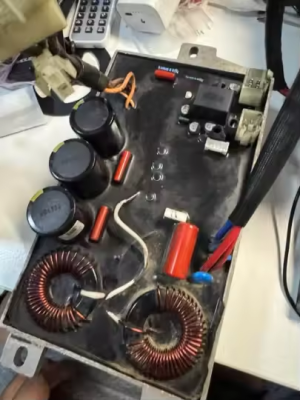


High Quality 8kw Inverters 4kw DC 12V to AC 220V 230V 240V 4000W Car Inverter
$169.41 - $203.29
MOQ: 20 Pieces


$500.00 - $998.00
MOQ: 1 Pieces


Comprehensive Sourcing Guide
Strategic Sourcing Guide for Automotive Inverter Procurement
The global automotive sector is undergoing a significant transformation driven by electrification, which has elevated the importance of power conversion systems. For procurement professionals, the Automotive Inverter represents a critical component that bridges the gap between direct current (DC) energy storage and alternating current (AC) propulsion or auxiliary systems. Sourcing these components requires a disciplined approach that distinguishes between general industrial inverters and those engineered specifically for the rigorous demands of automotive applications. This guide synthesizes available product data and industry standards to provide a framework for evaluating suppliers, verifying technical specifications, and managing procurement risks without relying on unverified claims or specific supplier names.
Technical Architecture and Power Conversion Topologies
Understanding the underlying architecture of an inverter is the first step in defining procurement requirements. In the automotive context, inverters must efficiently convert DC power from batteries into AC power for motors or other loads. The supplied product data indicates that the market includes units utilizing a Full-Bridge Type circuit topology, a configuration known for its robustness and efficiency in handling high-power switching. This topology is particularly relevant for applications requiring bidirectional power flow or high reliability.
Furthermore, the nature of the output waveform is a critical technical differentiator. The data highlights the prevalence of Sine Wave Inverter technology. Unlike square or modified sine wave outputs, sine wave inverters provide a clean, smooth power delivery that is essential for protecting sensitive automotive electronics and ensuring the longevity of electric motors. The presence of Active Inverter classifications suggests systems capable of dynamic power management, which is vital for regenerative braking scenarios in electric vehicles.
When evaluating specific models, buyers should note the variance in output power capabilities. The observed data includes units ranging from 101 - 200W to 501 - 1000W, and even units exceeding 1000W. This wide range indicates that procurement strategies must be tailored to the specific vehicle segment. A compact auxiliary inverter for a small electric vehicle may require the lower wattage range, while a heavy-duty truck or a high-performance electric vehicle will necessitate units in the >1000W category. Additionally, the DC/AC Inverter classification confirms the fundamental conversion role, but buyers must verify if the specific unit supports Variable-Frequency Drive principles, as this allows for precise control of motor speed and torque, a standard requirement in modern automotive propulsion systems.
Compliance, Certification, and Environmental Standards
In the automotive industry, compliance is not merely a regulatory hurdle but a fundamental quality indicator. The supplied product information explicitly lists CE and RoHS certifications as common attributes. These certifications are critical for market access in Europe and indicate adherence to safety and environmental restrictions on hazardous substances. Procurement teams must verify that the specific units ordered carry these certifications, as they are often prerequisites for vehicle homologation.
Beyond the listed certifications, the automotive sector demands adherence to rigorous environmental and operational standards. The data mentions a Storage Environment range of -40ºC~+70ºC, which serves as a benchmark for thermal resilience. Automotive inverters must withstand extreme temperature fluctuations, from freezing winter conditions to the intense heat generated by engine bays or prolonged summer driving. Buyers should verify that the physical casing and internal components are rated for these extremes, as standard industrial inverters may not meet these specific automotive thresholds.
The physical dimensions of the unit are also a compliance factor related to vehicle integration. Observed standard sizes include 235x95x55mm and 450x180x140mm. These dimensions dictate the mounting strategy and thermal management requirements within the vehicle chassis. Procurement specifications must align these physical constraints with the vehicle's design to ensure a proper fit without compromising cooling airflow. Additionally, the ABS material noted in the product data suggests a focus on durable, impact-resistant housing, which is essential for withstanding the vibrations and shocks inherent in automotive operation.
Cost Drivers and Economic Parameters
The economics of sourcing automotive inverters are influenced by a complex interplay of technical specifications, volume, and customization. The observed price range in the market spans from $1.03 to $30,000, a variance that reflects the difference between low-power auxiliary units and high-performance, custom-engineered propulsion inverters. This wide spectrum underscores the necessity for buyers to define their exact power and performance needs before soliciting quotes to avoid over-specifying or under-specifying the equipment.
Minimum Order Quantity (MOQ) is another significant cost driver. The data indicates an MOQ range of 1 to 200 units. For prototype development or small-batch production, suppliers offering an MOQ of 1 or low quantities are essential. However, for mass production, negotiating an MOQ closer to 200 or higher can often yield better unit economics. The Selling Units are listed as Single item, which implies flexibility in purchasing but requires careful aggregation to meet production schedules.
Customization is a key factor in cost and lead time. The product data confirms that Customization is Available. While this allows for tailored solutions, such as specific voltage inputs like 12V or outputs like 110V/220V/240V, it inevitably increases the unit cost and may extend the lead time. Buyers must weigh the benefits of a tailored solution against the standardization benefits of off-the-shelf models. Furthermore, the Function of the inverter, whether Simple Type or Constant Torque Universal Type, directly impacts the internal component count and complexity, thereby influencing the final price.
Typical Applications and Operational Context
Automotive inverters serve diverse roles depending on the vehicle architecture and intended use. The data points to several distinct application categories. General Transducer and High-performance Transducer applications suggest use in standard electric drive systems where reliability and efficiency are paramount. Textile Special and Three Phase Transducer mentions, while seemingly industrial, indicate the versatility of the underlying technology which can be adapted for specialized automotive manufacturing equipment or niche vehicle types.
The Output Type varies from Multiple to Triple, indicating the inverter's ability to support different motor configurations. Triple output inverters are particularly relevant for three-phase AC motors, which are the standard in most modern electric vehicles due to their high efficiency and power density. The Voltage specifications of 380V and 220V align with common industrial and automotive AC standards, but buyers must ensure compatibility with the specific vehicle's battery voltage, which is often 12V for auxiliary systems or much higher for main propulsion.
The Link of Transformation is another critical application indicator. The data references AC-DC-AC Variable-Frequency Drive and AC-AC Variable-Frequency Drive. The former is typical for systems that first rectify AC to DC (or vice versa) before inversion, common in grid-tied or hybrid systems, while the latter is standard for direct AC motor control. Understanding which transformation link is required is essential for selecting the correct inverter for the specific automotive application, whether it is for propulsion, HVAC systems, or auxiliary power units.
Supplier Evaluation and Quality Assurance
Evaluating suppliers for automotive inverters requires a focus on technical capability and quality assurance processes. The Place of Origin is consistently listed as China, with specific mentions of Shandong, China. While this provides a geographical baseline, buyers must look beyond location to assess the supplier's engineering depth. The presence of advanced control principles, such as Vector Control Transducer and V/F Control Transducer, indicates a supplier capable of sophisticated motor control algorithms.
Quality control should be verified through the Rated Output Current specifications. The data notes a Continuous Output of 100% Rated Current, a critical metric for ensuring the inverter can sustain full load without thermal degradation. Buyers should request test reports confirming this continuous rating under various ambient conditions. Additionally, the Switch Mode of PWM Control and High Carrier Frequency PWM Control suggests a focus on reducing electromagnetic interference (EMI) and improving efficiency, which are vital for automotive compliance.
When assessing suppliers, buyers should also examine the Principle of Work and Input Mode. The ability to accept Frequency(Speed)Input and Torque Input demonstrates a high level of integration capability with vehicle control units (VCUs). Suppliers who can demonstrate experience with these specific input modes are better positioned to deliver inverters that integrate seamlessly into the vehicle's electronic architecture. The Nature of DC Power being a Voltage Variable-Frequency Drive further highlights the need for suppliers with expertise in managing variable DC inputs, a common scenario in electric vehicles where battery voltage fluctuates with state of charge.
Long-Term Procurement and Lifecycle Management
Sourcing automotive inverters is not a one-time transaction but a long-term partnership that requires careful lifecycle management. The Packing method, listed as Carton, is a basic logistical detail, but for automotive supply chains, packaging must often meet stricter standards to prevent damage during transit and storage. Buyers should verify that the packaging provides adequate protection against moisture, vibration, and static electricity, especially given the sensitive electronic components inside.
The Model numbers, such as M800w-R003-S Universal, P4000W-B11-12vUK, and HE100, provide a clear trail for tracking and replacement. Maintaining a consistent model lineage is crucial for after-sales support and spare parts availability. Buyers should ensure that the selected model has a long-term production plan to avoid obsolescence. The Brandname Hsd and specific models like Hsd-707 indicate that some suppliers have established product lines, which can be a positive indicator of stability and support.
Finally, the Function classification, including Simple Type and Constant Torque Universal Type, should be aligned with the vehicle's expected lifespan. Automotive inverters are expected to operate for thousands of hours under varying loads. Selecting a unit with a High-performance Transducer capability ensures that the inverter can handle the dynamic demands of modern driving cycles without premature failure. Procurement strategies should include provisions for regular quality audits and performance monitoring to ensure that the inverters continue to meet specifications throughout their operational life. By focusing on these long-term factors, buyers can mitigate risks and ensure a reliable supply of high-quality automotive inverters.
FAQs
What certifications do automotive inverters typically have?
Most units carry CE and RoHS certifications for safety and environmental compliance. These marks are essential for market access in Europe and indicate adherence to strict hazardous substance restrictions.
How does the output power range vary for these inverters?
Available units range from 101 to 200 watts up to over 1000 watts. Buyers must select based on specific vehicle needs, as auxiliary systems require lower power while propulsion demands higher capacity.
Which circuit topology is common for high-reliability automotive applications?
Full-Bridge Type topology is frequently observed for its robustness and efficiency. This configuration supports bidirectional power flow and is suitable for demanding electric vehicle environments.
Can I find inverters with custom voltage inputs?
Yes, customization is available for specific voltage requirements like 12V input. This flexibility allows integration with various battery systems but may affect unit cost and lead time.
What is the typical storage temperature range for these devices?
Units are rated for storage environments between -40 and +70 degrees Celsius. This range ensures resilience against extreme winter cold and intense summer heat encountered in automotive operations.
Which output waveform type is preferred for sensitive electronics?
Sine Wave Inverter technology is the standard for clean power delivery. This waveform protects sensitive automotive electronics and ensures the longevity of electric motors compared to modified sine wave options.
How do I verify continuous output current capabilities?
Look for specifications stating a continuous output of 100 percent rated current. This metric confirms the inverter can sustain full load without thermal degradation under operating conditions.