Source Ball Screw Support Base for Hotels, Factories, and Retail
Compare 30 listings for Ball Screw Support Base units suitable for hotels, food and beverage factories, and building material shops. Buyers can review specifications like material, warranty, and customization options from suppliers in China.
Key considerations
Products List
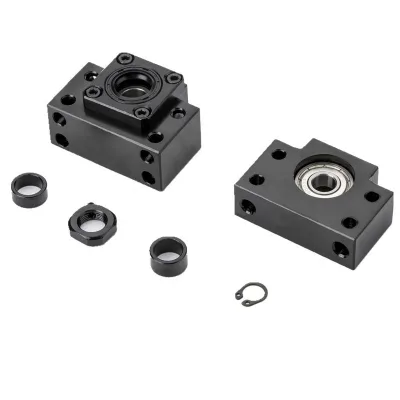


$15.00 - $40.00
MOQ: 1 Pieces


Factory Direct Sale Ball Mill Base Frame / Support Base/ Support Structure
$1000.00 - $50000.00
MOQ: 1 Pieces


Fixed Side Ball Screw Support for Accurate Ball Screw Axial Positioning
$5.00 - $20.00
MOQ: 100 Pieces


Comprehensive Sourcing Guide
Strategic Sourcing Guide for Ball Screw Support Bases
Understanding Technical Specifications and Component Variants
When sourcing ball screw support bases, buyers must first navigate a complex landscape of technical specifications that define the component's functionality and compatibility. The core keyword, Ball Screw Support Base, refers to critical machinery parts designed to support the rotational and axial loads of ball screws in precision motion systems. Based on observed product attributes, these units are frequently categorized by their structural configuration, such as the ball screw support bracket, which is a standard designation for the physical assembly.
The market presents a variety of model numbers that indicate specific design standards and load capacities. Commonly observed model identifiers include the BK10, BF10, EK10, and EF10 series, which often appear in combinations like "BK10+ BF10" or broader ranges such as "BK/BF/EK/EF/FK/FF." These alphanumeric codes typically denote the specific mounting style and size class of the support unit. For instance, the "BK" and "BF" designations often relate to fixed and free support configurations, respectively, while "EK" and "EF" may indicate variations in housing or mounting flanges. Buyers should verify that the selected model number aligns with the specific diameter and length of the ball screw they intend to support.
Material composition is another paramount technical factor. While some product listings specify the use of 45# steel, a medium-carbon steel known for its strength and machinability, other entries indicate Stainless Steel or Iron Steel as the primary material. The choice of material directly influences the component's resistance to corrosion, its weight, and its suitability for specific environmental conditions. For applications requiring high resistance to moisture or chemical exposure, stainless steel variants are preferable. Conversely, for general industrial machinery where cost and standard load-bearing capacity are the primary concerns, 45# steel or iron steel may be the standard selection.
The manufacturing process also plays a significant role in the final product's performance. The observed data highlights "Rolled Thread" as a specific manufacturing process, which generally implies a cold-forming technique that enhances the grain structure and strength of the material compared to cut threads. Additionally, surface treatment is a critical specification. Listings frequently mention "black oxide" or "electroless nickel plating" as the standard surface finishes. These treatments are essential for preventing rust and ensuring smooth operation, particularly in environments where lubrication might be intermittent. The weight of these components is also a variable; observed data indicates a standard weight of approximately 1 kg for certain models, though this will vary significantly with the physical dimensions and material density of larger units.
Compliance, Certification, and Quality Verification
In the B2B procurement of mechanical components, verifying compliance with international standards and certifications is non-negotiable for ensuring reliability and safety. The supply chain for ball screw support bases often includes suppliers who provide documentation regarding their quality management systems. Observed product attributes list certifications such as ISO 9001, ISO 14001, and ISO 18001. It is important to note that while these standards are frequently cited, buyers must treat them as claims that require independent verification rather than automatic guarantees for every listed item.
ISO 9001 represents a standard for quality management systems, ensuring that the supplier has consistent processes for design, production, and service. ISO 14001 relates to environmental management, indicating the supplier's commitment to minimizing environmental impact. The mention of ISO 18001 or ISO 14000 in some contexts suggests a focus on occupational health and safety or broader environmental standards. However, buyers should not assume that a product listing automatically includes valid, current certificates. The procurement strategy must include a request for valid, up-to-date certification documents directly from the supplier before finalizing any order.
Beyond general management system certifications, specific product testing and reporting are vital indicators of quality. Some suppliers provide a "machinery test report," which serves as empirical evidence of the component's performance under load or stress. This document is crucial for validating the "Long Operating Life" feature often advertised for these products. The presence of a test report suggests that the manufacturer has subjected the Ball Screw Support Base to rigorous quality control procedures. Buyers should explicitly request these reports to confirm that the product meets the required performance thresholds for their specific application.
The warranty terms also serve as a proxy for the manufacturer's confidence in their product. Observed data indicates warranty periods ranging from 1.5 years for the overall product to 3 years specifically for core components like bearings. This distinction is significant; it implies that while the housing or bracket might have a standard warranty, the internal bearing assembly, which is critical for the support base's function, is backed by a longer guarantee. Buyers should clarify the scope of these warranties to understand what is covered, including potential exclusions for improper installation or misuse.
Cost Drivers and Pricing Dynamics
The pricing of ball screw support bases is influenced by a multitude of factors, resulting in a wide observed range from 1 USD to 50,000 USD. This broad spectrum reflects the diversity in product complexity, material quality, customization levels, and order volumes. The base price of a standard, off-the-shelf unit, such as a single BK10 or BF10 bracket, will be significantly lower than a custom-engineered solution designed for a specific high-speed or vacuum application.
Material costs are a primary driver of price variation. Units manufactured from stainless steel will inherently cost more than those made from 45# steel or iron due to the raw material premiums and the additional processing required for corrosion-resistant alloys. Similarly, the complexity of the surface treatment affects the final cost. Electroless nickel plating, which offers superior corrosion resistance and a smoother finish compared to standard black oxide, typically commands a higher price point.
Customization is another significant cost factor. While some suppliers offer "OEM Customized Services" and "ODM" capabilities, these services come at a premium. The ability to alter the model number, length, or material composition to meet specific client requirements involves additional engineering, tooling, and setup costs. Conversely, standard parts that adhere to established standards like "BK/BF/EK/EF/FK/FF" are generally more cost-effective due to economies of scale. The observed data indicates that "Standard Parts" are available, which can help buyers reduce costs if their application does not require unique specifications.
Order volume, defined by the Minimum Order Quantity (MOQ), also impacts the unit price. The observed MOQ range spans from 1 piece to 1000 pieces. Buyers purchasing a single item for prototyping or replacement will pay a higher unit price compared to those placing bulk orders. The "Selling Units" are often listed as "Single item," allowing for low-volume purchases, but the economic efficiency increases with larger quantities. Additionally, the "Marketing Type" is noted as "Ordinary Product," suggesting that these are mass-produced items rather than niche, high-margin specialty goods, which generally keeps the baseline pricing competitive.
Typical Applications and Industry Suitability
Ball screw support bases are integral components in a wide array of industrial applications, ranging from heavy machinery to precision automation. The observed "Applicable Industries" include hotels, building material shops, food and beverage factories, restaurants, and retail environments. While these sectors may seem diverse, they all rely on machinery that requires precise linear motion, such as conveyor systems, packaging equipment, and automated sorting mechanisms.
The specific "Application" of these components is primarily for ball screws, which are used to convert rotational motion into precise linear motion. This makes them essential in CNC machines, 3D printers, robotic arms, and automated assembly lines. The "Feature" of "High Speed" indicates that certain models are designed for applications requiring rapid movement, such as high-speed pick-and-place robots or fast-acting packaging machinery. Similarly, the "Vacuum" feature suggests that specific variants are suitable for cleanroom environments or semiconductor manufacturing where air pressure differentials are a factor.
The structural design, described as a "ball screw support bracket," is optimized to handle the axial and radial loads generated during operation. In food and beverage factories, for example, the support bases must often withstand frequent washdowns, making the choice of material and surface treatment critical. Stainless steel or electroless nickel-plated units would be preferred in these hygienic environments to prevent contamination and ensure longevity. In contrast, for building material shops or retail environments, where the machinery might be less exposed to harsh chemicals but still requires durability, 45# steel with black oxide treatment may suffice.
The "Condition" of the products is consistently listed as "New," ensuring that buyers receive components that have not been previously used or worn. This is particularly important for critical motion control systems where even minor wear can lead to significant performance degradation. The "Service" offering of "OEM Customized Services" allows manufacturers to tailor these support bases to the specific needs of their machinery, ensuring a perfect fit and optimal performance in their unique operational contexts.
Supplier Evaluation and Procurement Strategy
Evaluating suppliers for ball screw support bases requires a systematic approach that goes beyond simple price comparison. The "Place of Origin" for these products is predominantly China, with specific regions like Shaanxi, Qingdao, and Zhejiang emerging as key manufacturing hubs. Each region may have its own industrial strengths; for instance, Zhejiang is known for its robust manufacturing capabilities, while Shaanxi may have a focus on heavy machinery components. Buyers should verify the specific location of the supplier to understand the logistical implications and the potential for supply chain disruptions.
The "Service" capabilities of the supplier are a critical evaluation metric. Suppliers offering "OEM Customized Services" and "ODM" options demonstrate a higher level of technical competence and flexibility. This is particularly important for buyers with unique requirements that cannot be met by standard catalog items. The ability to provide "Customized" solutions, including specific model numbers and material choices, indicates a supplier that can adapt to the buyer's specific engineering needs.
Lead time is another crucial factor in supplier evaluation. The observed "Sample Lead Time" is 7 days, which suggests a relatively quick turnaround for prototyping or small-batch orders. However, for larger production runs, the lead time may vary significantly. Buyers should inquire about the production capacity, which is noted as 1,200,000 units in some contexts, to ensure the supplier can meet their volume requirements without delays. The "MOQ" of 1 piece allows for low-risk testing, but buyers should also understand the lead times associated with larger orders to plan their production schedules effectively.
Packaging is often overlooked but is vital for protecting the components during transit. The observed packaging methods include "green bag, carton," "Plywood Carton Packed," and "Plastic Bag / Paper Tube." For heavy or precision components, plywood cartons offer superior protection against impact and moisture. Buyers should specify their packaging requirements to ensure that the ball screw support bases arrive in pristine condition, ready for immediate installation.
Quality Control and Long-Term Procurement Considerations
Ensuring the long-term reliability of ball screw support bases requires a robust quality control strategy. The "Warranty of core components" being 3 years is a strong indicator of the manufacturer's confidence in the durability of the internal bearings. However, buyers should not rely solely on warranty terms. Implementing a rigorous incoming quality inspection process is essential. This should include verifying the "machinery test report" and checking the physical dimensions against the specified "Standard Parts" or custom requirements.
The "Feature" of "Long Operating Life" is a key selling point, but it must be validated through real-world testing or third-party verification. Buyers should consider requesting sample units for testing in their own facilities before committing to large-scale procurement. This allows them to assess the actual performance, including noise levels, vibration, and load-bearing capacity, under their specific operating conditions.
Long-term procurement considerations also involve the availability of spare parts and the supplier's ability to maintain consistency over time. The "Standard Parts" designation suggests that these components are part of a standardized system, which generally ensures easier replacement and compatibility. However, for custom orders, buyers must ensure that the supplier can continue to produce the specific model numbers and specifications in the future. The "Standard" of "as per customer request" highlights the flexibility of the supply chain, but it also places the burden on the buyer to maintain detailed records of their specific requirements.
Finally, the "Marketing Type" being "Ordinary Product" suggests that these are widely available items, which can be advantageous for supply chain stability. However, buyers should remain vigilant about market fluctuations and potential changes in raw material costs that could affect pricing and availability. Establishing a long-term partnership with a reliable supplier who can provide consistent quality, timely delivery, and responsive customer service is the most effective strategy for securing a steady supply of ball screw support bases. By focusing on these key areas, buyers can mitigate risks and ensure the continued performance of their machinery.
FAQs
What materials are used for ball screw support bases?
These bases are commonly made from 45# steel, stainless steel, or iron steel. The material choice depends on the required corrosion resistance and load capacity for your specific machinery application.
Can I get customized ball screw support brackets?
Yes, OEM and ODM customized services are available for these products. Buyers can request specific model numbers, lengths, or material compositions to match their unique engineering requirements.
Which certifications do Ball Screw Support Base manufacturers hold?
Suppliers often provide ISO 9001, ISO 14001, and ISO 18001 certifications. Buyers should verify these documents directly to ensure quality management and environmental compliance standards are met.
How long is the warranty for the core components?
The warranty for core components like bearings is typically 3 years. The overall product warranty may vary, often listed as 1.5 years depending on the specific supplier terms.
What is the sample lead time for these brackets?
The sample lead time is generally 7 days for standard requests. This allows for quick prototyping before placing larger bulk orders for production machinery.
Which surface treatments are applied to these supports?
Common surface treatments include black oxide or electroless nickel plating. These finishes protect against rust and ensure smooth operation in various industrial environments.
What is the minimum order quantity for single items?
The minimum order quantity can be as low as 1 piece for single items. This allows buyers to purchase individual brackets for replacement or testing without large commitments.