Source Ballroom Princess Dress for Girls for Weddings, Parties, and Photoshoots
Explore 30 listings for Ballroom Princess Dress for Girls featuring customizable sizes, colorful designs, and various fabrics like cotton and tulle. Buyers can compare suppliers in Shanghai, Suzhou, and Guangdong with options for OEM services and quick sample orders; compare the available evidence and request quotations based on your requirements.
Key considerations
Products List


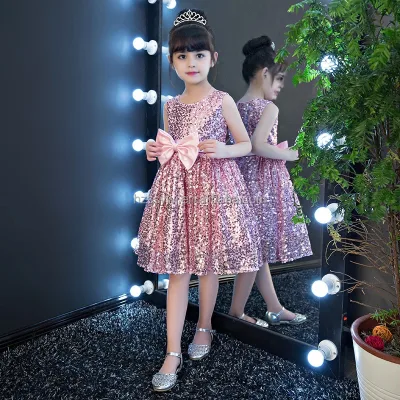


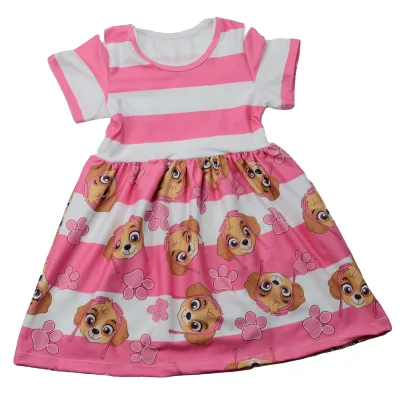
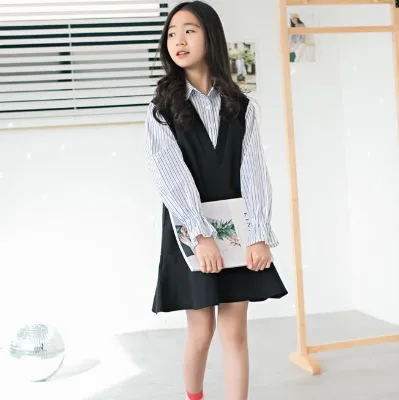


Girls' Sparkle Dance Dress with Floral Embroidery for Kids' Dance Dress
$19.00 - $26.00
MOQ: 50 Pieces

Shining and Sparkling Girls Princess Dress Sequin Party Dress Dance Costumes
$24.00 - $33.00
MOQ: 20 Pieces


Sparkly Kids' Ballroom Dance Dress for Glittery Stage Performance Costume-Bulk Price
$19.00 - $28.00
MOQ: 20 Pieces


Comprehensive Sourcing Guide
Ballroom Princess Dress for Girls Sourcing Guide
Sourcing a Ballroom Princess Dress for Girls through wholesale and OEM channels requires buyers to separate what a listing actually demonstrates from what still needs verification. The supplied product pages describe children's occasion wear spanning casual summer leisure sets to ball-gown-style dresses with tulle fabric, lace appliqué, and bow embellishments, positioned for wedding, party, and birthday use. Supply types in the observed data range from in-stock items to OEM design services, which means procurement strategy differs significantly depending on whether a buyer is replenishing existing stock or commissioning a custom silhouette.
This guide is written for B2B buyers, boutique owners, and category managers evaluating suppliers of girls' performance and occasion dresses. It focuses on how to read observed listing attributes — such as model numbers, packing formats, and stated supply capacity — and convert them into a structured verification plan. Because listing claims such as "good quality" and "nice designs" are marketing observations rather than testable guarantees, each section below identifies a specific buyer decision: scoping the product range, confirming technical specifications, reviewing compliance documentation, modeling cost drivers, qualifying suppliers, and setting up long-term procurement checks. The goal is a repeatable sourcing process rather than a one-time purchase.
Product Scope and Observed Listing Signals
The observed listings cover a broader category than the core keyword alone. Attributes include girls' casual summer leisure suits in colourful cotton, alongside ball-gown-style princess dresses made from tulle or polyester and mesh, with sleeveless styling and lace appliqué decoration. Model numbers such as 0090, 00175, 0081, 0068, 0094, 00151, and GLKV20 appear as SKU-level identifiers, and one listing references model SW-K583P under a stage and dancerwear product type with a ballroom performance category. Buyers should therefore define whether their assortment targets ballroom performance wear, flower girl and wedding use, or general princess party dress — applications the listings explicitly mention include flower girl duties, weddings, photography, princess parties, festivals, and birthdays.
Listing signals also reveal commercial posture. Observed attributes include customization availability, OEM design and OEM service supply types, in-stock items, size-and-color customization, and an OPP-bag packaging format listed as 1set/OPP bag. A stated supply ability of 5,000 sets per week and an available quantity of 10,000 sets appear in the data, alongside an observed listing price range of roughly USD 0.73 to 33 and MOQs from 1 to 1,000. Origins cited are Shanghai, Suzhou, and Guangdong in China. Treat these as observations on individual listings, not as guarantees that every supplier in the category meets them.
Technical Specifications to Verify
Material composition is the first specification to pin down. One listing states 100% cotton for a casual set, while dress-style products describe tulle fabric and polyester-and-mesh construction. These behave very differently in wear: tulle and mesh layers determine the "puffy" ball-gown silhouette, cotton governs comfort for summer leisure sets, and lining quality affects scratch feel against skin — a common complaint in children's occasion dresses. Buyers should request a full bill of materials, including shell, lining, tulle layers, appliqué base fabric, and any sequins on sequin-skirt variants, along with grams-per-square-meter weights so quotations are comparable across suppliers.
Construction details determine whether a ballroom-style gown survives fitting rooms, photo sessions, and wear. Verify stitching density at the bodice-to-skirt junction, attachment methods for bows, lace appliqué, and sequins, and whether embellishments are secure enough to resist small hands — a pull-test protocol agreed with the supplier is a practical control. Size and color customization is explicitly offered in the observed data, so confirm the graded size chart, tolerance per measurement point, and whether custom colors are matched by pantone reference or physical sample. Finally, confirm the referenced single package size of 32×32×3 cm and 0.300 kg gross weight against your own logistics calculations.
Compliance and Safety Documentation
Children's apparel carries regulatory obligations that a listing rarely proves on its own. Because these products are worn by young girls, buyers should ask each supplier for documentation appropriate to the destination market: testing for restricted substances in textiles, flammability performance for children's sleepwear-adjacent or loose-fitting garments where applicable regulations demand it, and small-parts safety for sequins, beads, and bows that could detach. The supplied facts mention a prod_standard of "100% cotton" for one item and "stock or customized" for another — neither is a certification, so do not treat them as compliance evidence. Request actual, dated test reports naming the product model rather than generic certificates.
Documentation review should extend to labeling and traceability. Confirm that country-of-origin markings match the stated origins (Shanghai, Suzhou, and Guangdong, China, in the observed data), that fiber-content labels match the declared bill of materials, and that care instructions are supplied in the languages your market requires. If embellishments such as bows or appliqués are present, ask how the supplier controls their chemical compliance and physical attachment. Keep copies of every report tied to the model numbers you actually order, because retests are typically required when fabric, trims, or the production facility change between orders.
Cost Drivers and Commercial Terms
The observed price spread — from about USD 0.73 for simple items to USD 33 at the top of the listed range — reflects real cost drivers buyers should model explicitly. Fabric choice is the largest lever: polyester-and-mesh construction is generally cheaper than heavier cotton content or multi-layer tulle with appliqué. Embellishment density (lace appliqué, sequins, bows), lining completeness, and hand-finishing all add labor cost. Customization increases unit cost through sampling, dyeing minimums, and size-range complexity, whereas in-stock items trade uniqueness for speed and lower pricing. Order the same spec sheet quoted to multiple suppliers so price differences map to spec differences.
Commercial terms deserve equal scrutiny. Observed MOQs range from 1 to 1,000 across listings, so confirm whether a low MOQ carries a surcharge and whether mixed-size or mixed-color orders count toward it. Sample lead time is split in the data — one listing supports 7-day sample orders while another explicitly does not — so verify per supplier. Confirm packaging (1set/OPP bag, 1 Lot/OPP bag) and whether retail-ready packaging costs extra. Validate the claimed supply ability of 5,000 sets per week against your reorder schedule, agree on Incoterms and payment terms in writing, and check that the quoted price holds for the full available quantity of any in-stock purchase.
Supplier Qualification and Quality Control
Supplier qualification should start with the distinction visible in the data: some listings describe in-stock items, others OEM design or OEM service, and the brands and origins differ (SHENYUAN appears as one brand name, with origins in Shanghai, Suzhou, and Guangdong). Screen suppliers by asking which models they produce in-house versus trade, requesting factory evidence, and verifying that the origin claim matches their actual production location. A supplier offering size-and-color customization should demonstrate grading capability with a physical sample, not only digital renders. Check how they handle the two flagged sample-lead-time behaviors before committing to a development timeline.
Quality control should be scheduled, not assumed. For an initial order, define an inspection plan covering: material verification against the bill of materials, workmanship on seams and embellishment attachment, measurement checks across the full size run, color consistency between production and approved sample, and packaging compliance with the stated 1set/OPP bag format. Agree on an acceptable quality level and defect classification in the purchase contract. Because listings advertise "good quality" without evidence, your own pre-shipment inspection — or a third-party inspection at the supplier's cost if contractually agreed — is the mechanism that converts a marketing claim into a verifiable standard.
Long-Term Procurement Checks
Long-term value in this category comes from repeatable fit and consistent quality across seasons, since the observed products are summer-season, leisure-and-party wear where annual replenishment is normal. Build a supplier scorecard tracking on-time delivery against any stated lead times, defect rates from each inspection, sample-to-production consistency, and responsiveness on customization requests. Reconfirm specifications at every reorder: fabric lots change, tulle stiffness varies between batches, and sequin or appliqué trims are frequently substituted. Lock approved physical samples as the arbitration reference for disputes, and update them whenever construction changes.
Finally, monitor structural risks in the supply chain. The category mixes in-stock sellers with OEM manufacturers, and a buyer who depends on one model number (such as GLKV20 or SW-K583P) should understand who owns the pattern and whether it can be produced elsewhere. Verify annually that compliance documentation remains current, that stated supply capacity (the 5,000 sets-per-week figure and 10,000-set availability in the data) still matches reality during peak season, and that packaging and origin declarations stay consistent. Diversify across at least two qualified suppliers per silhouette so that one stockout does not interrupt your seasonal assortment.
FAQs
What customization options are available for these dresses?
Customization is available for size and color on specific models. You can request tailored dimensions and color variations to match your requirements. The supplier supports OEM design services for these items, allowing for personalized adjustments to the final product.
Can I order a sample before placing a bulk order?
Some models support a seven-day sample order lead time, while others do not. You must verify the specific model number to confirm sample availability. The supplier offers in-stock items and supports sample orders for certain configurations with a short turnaround.
What is the minimum order quantity for these dresses?
The minimum order quantity ranges from one to one thousand sets depending on the specific product. Some listings indicate a minimum order of one set, while others require up to one thousand. Check the specific model details to confirm the exact MOQ for your purchase.
Which fabrics are used for these ballroom princess dresses?
The dresses are made from materials such as 100% cotton, tulle, or a blend of polyester and mesh. Different models utilize different fabrics to achieve specific styles like ball gowns or casual wear. The fabric choice depends on the specific product model and design requirements.
Where are these dresses manufactured and shipped from?
Products originate from locations including Shanghai, Suzhou, and Guangdong in China. The supply type includes both in-stock items and OEM design services. You can expect shipments to originate from these specific Chinese manufacturing hubs based on the product listing.
What is the weekly supply capacity for these dresses?
The supplier has a supply ability of 5000 sets per week for certain items. This capacity ensures a steady flow of goods for bulk orders. The available quantity is listed as 10000 sets, indicating sufficient stock for immediate fulfillment in many cases.
How are these dresses packaged for shipment?
Packaging details typically include one set per OPP bag or one lot per OPP bag. The single package size is approximately 32 by 32 by 3 cm for some models. This packaging method protects the dress during transit while keeping the unit compact for shipping.