Source Barium Carbonate for Glass, Ceramics, and Chemicals
Compare 30 listings of Barium Carbonate with varying purity levels from 90% to 99.2% and industrial grades. Buyers can evaluate specifications like whiteness, particle size, and packaging options from suppliers in China.
Key considerations
Products List


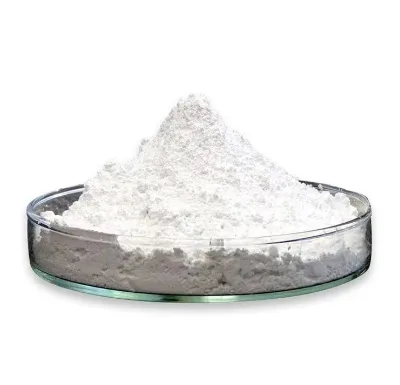
Barium Carbonate Price CAS 513-77-9 Baco3 Barium Carbonate for Ceramics
$630.00 - $760.00
MOQ: 10 Tons




Comprehensive Sourcing Guide
Strategic Sourcing Guide for Barium Carbonate Procurement
Navigating the global market for Barium Carbonate requires a disciplined approach that balances technical precision with rigorous supplier validation. As a critical inorganic compound used across diverse industries, the procurement of this material is not merely a transactional exercise but a strategic operation involving complex quality parameters. Buyers must understand that while the core chemical identity remains constant, the specific grade, purity, and physical form can vary significantly between suppliers. This guide outlines the essential factors for sourcing Barium Carbonate, focusing on verified technical attributes, compliance frameworks, and operational logistics derived from current market data.
Technical Specifications and Grade Differentiation
The foundation of any successful procurement strategy lies in a precise definition of technical specifications. Barium Carbonate is not a monolithic product; it exists in various grades tailored to specific industrial needs. The market data indicates a clear distinction between products labeled as "Industrial Grade" and those designated for "Medicine Grade" or "Food Grade." Industrial grade products often adhere to standards such as "99.2% min" purity, whereas other listings suggest a broader range of "90%~99%." This variance is critical. A buyer sourcing for ceramic glazes may require the high-purity 99.2% variant, while a buyer for general chemical fillers might accept the lower end of the spectrum.
Physical properties are equally vital. The solubility profile is a key differentiator, with the material noted as "Insoluble in Water," a characteristic that influences its handling and application in aqueous systems. Particle size distribution, often quantified by the D50 value, is another specification that must be verified. Specific listings point to a D50 of 2.5 microns, which is a crucial metric for applications requiring fine dispersion, such as in paints or coatings. Furthermore, the whiteness index is a significant aesthetic and functional parameter. Data shows whiteness values ranging from 85-90% to as high as 97-98%. For applications where color purity is paramount, such as in high-end ceramics or plastics, the higher whiteness range is non-negotiable.
| Parameter | Industrial Grade Observation | High-Purity/Observation |
|---|---|---|
| Purity Range | 90% ~ 99% | ≥99% or 99.2% min |
| Whiteness | 85-90% | 97-98% |
| Solubility | Insoluble in Water | Insoluble in Water |
| pH Value | 8.5-9.5 | 8.5-9.5 |
| Moisture | 0.3% | 0.3% |
| SiO2 Content | 0.018% | 0.018% |
Buyers must verify these specific numerical ranges against their own process requirements. The presence of "Customization: Available" suggests that suppliers may offer tailored particle sizes or purity levels, but this must be confirmed through direct technical dialogue rather than assumed from general listings.
Compliance and Certification Verification
In the chemical supply chain, compliance is not optional; it is a prerequisite for market access and operational safety. The supplied data highlights several certification standards that buyers should prioritize during the supplier evaluation phase. The most frequently observed certification is ISO, which indicates adherence to international management system standards. More specific and stringent certifications include RoHS (Restriction of Hazardous Substances) and COA (Certificate of Analysis). The presence of "ISO, RoHS, COA" on a product listing signals a higher level of regulatory compliance, particularly for exports to regions with strict environmental and safety regulations.
For applications in the food or pharmaceutical sectors, the distinction in grade becomes a compliance issue. Listings mentioning "Medicine Grade" or "Food Grade" often reference specific pharmacopoeia standards such as BP (British Pharmacopoeia) or FCC (Food Chemical Codex). These standards are distinct from general industrial specifications and require rigorous documentation. Buyers must ensure that the supplier can provide valid, up-to-date certificates that align with the specific regulatory body of the destination market.
It is important to note that while some background data mentions REACH or IEC 17025, these should not be assumed as standard attributes for every listing without explicit verification. Procurement teams must treat these as potential requirements to be confirmed rather than inherent features. The "Grade Standard" field in product data often explicitly states "Industrial Grade," which implies that food or medical compliance may not be included unless explicitly stated otherwise. Therefore, the verification of the Certificate of Analysis (COA) is the most reliable method to confirm that a specific batch meets the necessary chemical and safety standards.
Cost Drivers and Pricing Dynamics
Understanding the cost structure of Barium Carbonate is essential for budgeting and negotiation. The observed market data reveals a price range in USD from 1 to 2500. This wide disparity is not indicative of a single product's volatility but rather reflects the vast differences in product specifications, packaging, and order volumes. A unit price of $1 likely corresponds to bulk industrial grades with minimal processing, whereas a price of $2500 may reflect high-purity, customized, or small-batch medicinal grades.
The Minimum Order Quantity (MOQ) is a significant driver of unit cost. The observed MOQ range spans from 1 to 500 units. Suppliers offering an MOQ of 1 are likely catering to sample testing or R&D needs, which inherently carries a higher per-unit cost. Conversely, suppliers requiring an MOQ of 500 are optimized for bulk industrial supply, offering economies of scale. Buyers must align their procurement volume with the supplier's capacity to avoid paying premiums for small orders or facing stockouts due to high volume requirements.
Packaging also influences the final landed cost. The data lists various packaging options, including "25kg/Bag," "25kg Plastic Woven Bag," "25kg Kraft Paper Bag," and "1 Ton Jumbo Bag." The choice of packaging affects logistics efficiency and material handling costs. For large-scale operations, the "1 Ton Jumbo Bag" is often more cost-effective than multiple 25kg bags, reducing packaging waste and handling time. However, for smaller facilities or those requiring precise inventory control, the 25kg bag may be preferred despite the higher per-kilogram packaging cost. Buyers should calculate the total cost of ownership, including freight and handling, rather than focusing solely on the base price per kilogram.
Typical Applications and Material Performance
Barium Carbonate serves as a versatile raw material across multiple sectors, and its application dictates the required quality. The primary application noted in the data is the "Chemical Industry Product," where it is used as a raw material for other chemical processes. In the ceramics industry, Barium Carbonate is valued for its ability to improve wear resistance and act as a flux. The "Effect: Improve The Wear Resistance" attribute highlights its functional role in enhancing the durability of ceramic glazes and tiles.
Beyond ceramics, the material is utilized in the production of other barium compounds, such as barium sulfate and barium chloride. The "Source: Particle" and "Material: Non-Metal Mineral" attributes confirm its natural origin and physical form, which is relevant for processing equipment selection. In the rubber and plastic industries, Barium Carbonate acts as a filler and stabilizer. The specific whiteness and oil absorption values (18~30 G/100g) are critical here, as they determine the compatibility of the filler with polymer matrices. High oil absorption indicates a greater need for processing aids, which can impact the final product's mechanical properties.
For buyers in the electronics or pigment sectors, the whiteness and purity are paramount. A whiteness of 97-98% is ideal for applications where color neutrality is required. The "pH Value" of 8.5-9.5 indicates a slightly alkaline nature, which must be considered when formulating products that are sensitive to pH changes. Understanding these application-specific requirements allows buyers to filter suppliers effectively, ensuring that the purchased material will perform as expected in the final product.
Supplier Evaluation and Quality Control
Evaluating suppliers for Barium Carbonate requires a multi-faceted approach that goes beyond price comparison. The origin of the product is a key factor in the data, with "Chongqing," "Lianyungang," and general "China" origins noted. While these locations indicate the manufacturing base, they do not inherently guarantee quality. Buyers should verify the specific production facilities and their track record. The "Customization: Available" attribute suggests that suppliers are willing to adapt their production processes, which is a positive indicator of flexibility and customer focus.
Quality control is the linchpin of a reliable supply chain. The presence of a COA (Certificate of Analysis) is non-negotiable. This document should verify the specific batch's purity, moisture content, and chemical composition against the agreed-upon specifications. For example, if a buyer requires a moisture content of 0.3%, the COA must explicitly state this value for the specific shipment. The "Standard: 25kg/bag" or "Net Weight 25±0.25kg" specifications in the data highlight the importance of weight accuracy. Inconsistent packaging weights can lead to inventory discrepancies and production delays.
Buyers should also assess the supplier's ability to maintain consistency over time. The "Type: Barium Carbonate" designation is broad, and variations in the "prod_model" (e.g., F0039003, F0039005, HS-NPCC) suggest different product lines or internal SKUs. A robust supplier will have clear documentation linking these models to specific quality standards. Regular audits, third-party testing, and a history of successful deliveries are essential indicators of a supplier's reliability.
Long-Term Procurement Considerations
Sourcing Barium Carbonate is a long-term commitment that requires strategic planning. The "Lead time" and "Location" factors, while not explicitly quantified in the provided data, are critical for supply chain resilience. Products originating from "Chongqing" or "Lianyungang" may have different logistical profiles depending on the buyer's location. Buyers should consider the stability of the supply chain, including potential disruptions in raw material availability or transportation bottlenecks.
The "Standard: 99.2% min" and "Standard: BP, FCC" entries indicate that the market supports both general and highly regulated grades. As regulations evolve, suppliers must adapt. A supplier that currently holds ISO and RoHS certifications is better positioned to meet future compliance requirements than one that does not. Buyers should prioritize suppliers who demonstrate a proactive approach to quality management and regulatory adherence.
Furthermore, the "Customization: Available" feature offers a strategic advantage. As product requirements change, the ability to source customized particle sizes or purity levels without changing suppliers can streamline operations. Buyers should establish long-term partnerships with suppliers who can scale production up or down based on demand fluctuations. This flexibility is crucial for maintaining production continuity and managing inventory costs effectively.
In conclusion, successful procurement of Barium Carbonate hinges on a deep understanding of technical specifications, rigorous verification of certifications, and a strategic approach to supplier selection. By focusing on the verified attributes such as purity ranges, whiteness indices, and packaging standards, buyers can mitigate risks and ensure a steady supply of high-quality material. The market offers a wide array of options, from industrial grades to specialized medicinal variants, and the key to success lies in matching these options precisely to the buyer's specific operational needs.
FAQs
What purity levels are available for Barium Carbonate?
Available purity ranges from 90% to 99% or meets a minimum of 99.2%. Industrial grade products often adhere to the 99.2% minimum standard, while other listings suggest a broader range up to 99%.
Which certifications do Barium Carbonate suppliers typically hold?
Common certifications include ISO, RoHS, and Certificate of Analysis (COA). Some listings specifically mention ISO, RoHS, and COA together, indicating adherence to international management and safety standards.
How is Barium Carbonate typically packaged for shipment?
Standard packaging includes 25kg plastic woven bags, kraft paper bags, or 1-ton jumbo bags. Options vary by supplier, with net weights often specified as 25kg plus or minus 0.25kg.
Can buyers request customization for Barium Carbonate specifications?
Yes, customization is available for tailored particle sizes or purity levels. Buyers should confirm specific technical requirements directly with suppliers to ensure the product meets their unique process needs.
What is the solubility characteristic of Barium Carbonate?
Barium Carbonate is insoluble in water. This physical property is a key differentiator that influences how the material is handled and applied in various aqueous systems and industrial processes.
Which grades of Barium Carbonate are suitable for medical use?
Medicine grade products exist and may adhere to standards like BP or FCC. Buyers must verify that specific listings explicitly state Medicine Grade or Food Grade to ensure regulatory compliance.
What is the typical whiteness range for high-quality Barium Carbonate?
Whiteness values range from 85-90% for industrial grades to 97-98% for high-purity variants. Applications requiring color neutrality, such as ceramics or plastics, often demand the higher 97-98% range.