Source Battery Powered Precision Electric Screwdriver for Retail, Medical, and Industry
Compare 30 Battery Powered Precision Electric Screwdriver options from verified Chinese manufacturers. These tools feature coreless motors, lithium batteries, and adjustable torque for retail, medical, and industrial applications.
Key considerations
Products List


Professional Precision Control Electric Screwdriver for Ultimate Efficiency
$2590.00 - $3395.00
MOQ: 1 Pieces


Industry High Torque Pneumatic Power Cordless Precision Electric Screwdriver
$2840.00 - $3668.00
MOQ: 1 Pieces


High Torque Impact Pneumatic Brushless Cordless Electric Precision Screwdriver
$2590.00 - $3395.00
MOQ: 1 Pieces


18V Cordless Rechargeable Electric Screwdriver Interchangeable Battery
$24.50 - $25.50
MOQ: 500 Pieces


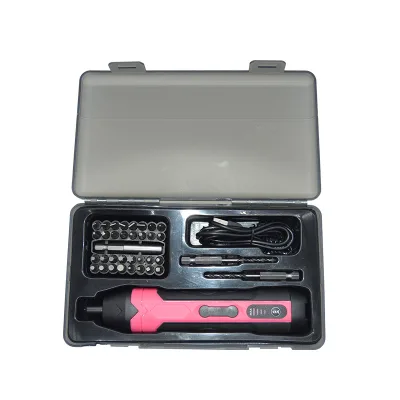
Comprehensive Sourcing Guide
Strategic Sourcing Guide for Battery Powered Precision Electric Screwdrivers
Understanding the Technical Landscape of Precision Electric Tools
When sourcing battery-powered precision electric screwdrivers, buyers must first distinguish between the specific operational modes and power architectures available in the current market. The core keyword often encompasses a wide spectrum of devices, ranging from simple handheld units to complex semi-automatic assembly stations. Based on current product observations, the market features distinct categories defined by their automation level and power source. A critical distinction exists between fully automatic systems, which often integrate PLCs and gearboxes for high-volume manufacturing, and semiautomatic units designed for more flexible, operator-assisted tasks.
The power architecture is equally vital. While some industrial-grade units operate on high-voltage AC power supplies, the specific demand for "battery-powered" tools points toward cordless solutions. These units typically rely on Lithium-ion batteries, with observed specifications including 3.6V 850mAh configurations. This voltage level is standard for precision applications where high torque is not the primary requirement, but rather control and portability. The rated input power for such devices can vary significantly, with some industrial models rated at 750W, though this likely refers to the charging station or a larger assembly unit rather than the handheld driver itself. Buyers should verify the actual operating voltage of the tool versus the charging input, which is often a standard 5V 500mAh USB input for smaller precision drivers.
The mechanical design also varies. The shank type is a fundamental specification; round shanks are common for standard bit compatibility, while the tool bit itself may be cross-type or designed for specific screw heads. The motor type is another key differentiator. Coreless motors are frequently cited in precision applications due to their high efficiency and low electromagnetic interference, which is crucial for sensitive electronic assembly environments. The rotation speed for no-load operation is another metric to consider, with observed ranges around 280 RPM, suitable for delicate work where high speed could damage components.
Critical Technical Specifications and Performance Metrics
Selecting the right tool requires a deep dive into performance metrics that directly impact production quality and efficiency. Accuracy is perhaps the most critical specification for precision screwdrivers. Market data indicates that accuracy ratings can range from 3% to 5%. A 3% accuracy rating suggests a higher-grade instrument suitable for tight-tolerance electronics or medical device assembly, whereas a 5% rating might be acceptable for general retail or light industrial applications. Buyers must align the required accuracy with the specific tolerance limits of their assembly process.
Torque adjustment capabilities are equally important. The ability to switch between electric and manual modes provides versatility. For instance, a device might offer an electric torque adjustment of 2 N·m and a manual adjustment up to 10 N·m. This dual-mode capability allows operators to fine-tune the driving force, preventing over-tightening on fragile substrates while ensuring secure fastening on standard components. The operating time, often cited as 60 minutes on no load, dictates the workflow continuity. If a production shift exceeds this duration, the buyer must plan for battery swapping or charging cycles, which typically take around 30 minutes.
Material composition plays a significant role in the tool's longevity and performance. The cutting or driving elements are often made from Tungsten Cobalt Alloy, a material chosen for its hardness and wear resistance. This ensures that the tool maintains its precision over extended periods of use. The physical weight of the device is another consideration for operator ergonomics. Weights observed in the market range from 0.6 kg to 1.8 kg. Lighter units (0.6 kg) are preferable for tasks requiring extended overhead work or high-frequency repetitive motion, while heavier units (1.8 kg) may offer better stability for specific industrial applications.
Compliance, Certification, and Safety Standards
In the realm of B2B procurement, compliance and safety standards are non-negotiable. While specific certification names are not universally listed for every product, buyers must verify that the equipment meets the safety standards of their target market. The "Applicable Industries" field often lists Retail, Medical, and Industry, implying that the devices must adhere to relevant safety protocols for these sectors. For medical applications, the equipment may need to comply with stricter hygiene and electrical safety standards to prevent contamination or electrical hazards in sterile environments.
The condition of the product is a primary compliance indicator. All observed units are listed as "New," which is a baseline requirement for B2B procurement to ensure reliability and warranty validity. However, buyers should also investigate the origin of the components. The core components, such as the PLC, gearbox, and motor, are critical. If these are sourced from reputable manufacturers, the overall reliability of the screwdriver increases. The warranty period is a tangible metric of the manufacturer's confidence in their product. A standard one-year warranty is commonly observed, but buyers should scrutinize the terms of this warranty, specifically regarding the coverage of the battery and motor, which are the most prone to wear and tear.
Video outgoing inspection is a feature provided by some suppliers, offering a layer of transparency. This allows buyers to verify the physical condition and assembly of the unit before shipment. While this is not a formal certification, it serves as a quality assurance step. Buyers should also check for any specific electrical certifications required for the voltage standards of their region, particularly since the observed voltage ranges include both 220V and 48V systems. Ensuring that the power supply matches the local grid and safety regulations is essential to avoid operational hazards.
Cost Drivers and Pricing Structure Analysis
The pricing of battery-powered precision electric screwdrivers is influenced by a complex interplay of factors, including automation level, material quality, and customization options. The observed price range in the market is vast, spanning from $0.20 to $3,668. This wide disparity reflects the difference between simple handheld drivers and fully automated assembly systems. The lower end of the spectrum likely corresponds to basic cordless screwdrivers with standard lithium batteries and minimal automation. In contrast, the higher end includes units with advanced PLC control, coreless motors, and integrated gearboxes, often designed for high-volume industrial lines.
The Minimum Order Quantity (MOQ) is a significant cost driver. The observed MOQ ranges from 1 to 3,000 units. For buyers seeking to test the market or equip a small workshop, an MOQ of 1 is ideal. However, for large-scale procurement, the MOQ may be higher, with specific OEM requirements often set at 1,000 pieces. This tiered structure allows buyers to scale their orders based on their budget and volume needs. Customization is another factor that influences cost. While some units are non-customized, others offer OEM, ODM, and OBM support. Customization typically incurs additional costs and may require a higher MOQ, but it allows for branding and specific feature integration.
The packaging and shipping costs also contribute to the total cost of ownership. Products are often packed in individual boxes, sometimes with inner and outer cartons for protection. The weight of the product, ranging from 0.6 kg to 1.8 kg, affects shipping logistics. Buyers should calculate the total landed cost, including freight, insurance, and customs duties, which can vary based on the origin of the product, typically Zhejiang, China. Understanding these cost drivers helps buyers negotiate better terms and select the most cost-effective solution for their specific production needs.
Supplier Evaluation and Procurement Strategy
Evaluating suppliers for battery-powered precision electric screwdrivers requires a multi-faceted approach. The presence of a factory, indicated by "Factory: Yes," is a strong positive signal, suggesting direct manufacturing capabilities rather than trading. This often translates to better control over quality, pricing, and lead times. Buyers should prioritize suppliers who offer customization support, including OEM, ODM, and OBM services, as this indicates flexibility and a willingness to tailor products to specific client needs.
The delivery time is another critical factor in supplier evaluation. Observed delivery times range from 3 to 7 working days, which is relatively fast for international trade. However, buyers must verify if this timeline applies to stock items or custom orders. Custom orders may require additional time for tooling and production setup. The availability of video outgoing inspection is a valuable service that allows buyers to conduct a remote quality check before the goods leave the factory. This reduces the risk of receiving defective or non-compliant products.
When evaluating suppliers, buyers should also consider the warranty terms. A one-year warranty is standard, but the specifics of the warranty, such as whether it covers the battery and motor, are crucial. Suppliers who offer comprehensive warranties demonstrate confidence in their product quality. Additionally, the supplier's ability to provide technical support and spare parts is essential for long-term maintenance. Buyers should inquire about the availability of replacement batteries, motors, and gearboxes to ensure minimal downtime during the product's lifecycle.
Quality Control and Long-Term Procurement Considerations
Quality control is paramount in the procurement of precision electric screwdrivers. The accuracy of the tool, whether 3% or 5%, must be verified through testing. Buyers should request test reports or samples to confirm that the tool meets the specified accuracy and torque requirements. The use of high-quality materials, such as Tungsten Cobalt Alloy for the tool bits, is a key indicator of durability. Buyers should also inspect the packaging to ensure that the product is protected during transit, with inner boxes and outer cartons being standard for high-quality shipments.
Long-term procurement considerations involve looking beyond the initial purchase price. The operating time of 60 minutes and charge time of 30 minutes are critical for production planning. Buyers should assess the battery lifecycle and the cost of replacement batteries. If the battery life is short, the total cost of ownership may increase significantly. The warranty period of one year provides a buffer for initial defects, but buyers should also consider the availability of extended warranty options or service contracts for critical production lines.
The style of the screwdriver, such as the straight bar design, impacts ergonomics and usability. Buyers should evaluate whether the design suits their operators' needs, especially for tasks requiring prolonged use. The condition of the product, always listed as new, ensures that the tool is ready for immediate deployment. However, buyers should also consider the maintenance requirements of the tool. Regular inspection of the motor, gearbox, and battery is necessary to maintain optimal performance.
In conclusion, sourcing battery-powered precision electric screwdrivers requires a careful balance of technical specifications, cost considerations, and supplier reliability. By understanding the nuances of automation, power sources, and quality control, buyers can make informed decisions that align with their production goals. The wide range of options available, from basic handheld units to advanced automated systems, allows for tailored solutions that meet diverse industrial needs.
FAQs
What automation levels are available for these screwdrivers?
Both semiautomatic and fully automatic models are available in the market. Semiautomatic units suit flexible tasks, while fully automatic systems integrate PLCs and gearboxes for high-volume assembly lines.
Which battery specifications are common for cordless precision drivers?
Cordless models typically use 3.6V 850mAh Lithium batteries. These units offer a no-load operating time of 60 minutes and require approximately 30 minutes to fully charge via a 5V input.
How accurate are the precision electric screwdrivers listed?
Accuracy ratings range from 3% to 5% depending on the specific model. The 3% rating indicates higher-grade instruments suitable for tight-tolerance electronics, while 5% fits general industrial applications.
Can buyers request custom OEM or ODM support?
Yes, customization is available with OEM, ODM, and OBM support options. However, custom orders typically require a minimum order quantity of 1000 pieces for manufacturing setup.
What is the typical delivery time for these tools?
The standard delivery time is 3 to 7 working days for stock items. This timeline may vary for custom orders requiring specific tooling or production adjustments.
Which materials are used for the tool bits?
Tool bits are commonly made from Tungsten Cobalt Alloy for durability. This material ensures high hardness and wear resistance, maintaining precision over extended periods of use.
What warranty coverage is provided for these units?
A standard one-year warranty is provided for the equipment. Buyers should verify if the warranty specifically covers critical components like the battery and motor against defects.