Source Battery Powered Vacuum Panel Lifter for Glass, Metal, and Boards
Compare 30 Battery Powered Vacuum Panel Lifter options from verified suppliers. These units support glass lifting, board handling, and metal sheet movement with capacities up to 800kg and 360-degree rotation.
Key considerations
Products List


Professional 300kg-800kg Battery Powered Vacuum Lifter for Heavy Glass Plates
$4900.00 - $5600.00
MOQ: 1 Pieces
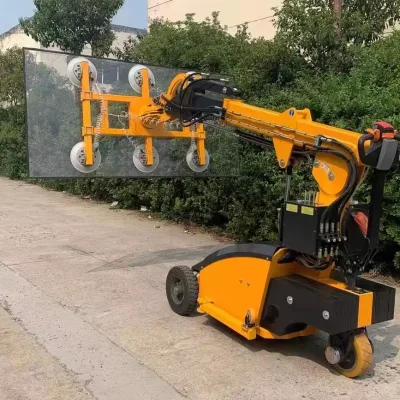
Advanced Vacuum Glass Sucker Panel Lifter Machine Battery Powered Remote Control
$1000.00 - $2000.00
MOQ: 1 Minimum
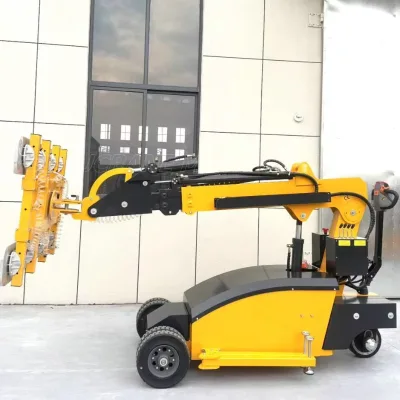
Vacuum Lifter - Reliable for Lifting Glass Panels Sheets Easy Operation Multiple Applications
$818.74 - $3581.98
MOQ: 1 Minimum


400kg Glass Panel Lifting a Long-Lasting Battery Glass Vacuum Lifter
$1500.00 - $6000.00
MOQ: 1 Pieces

High-Quality Vacuum Lifter Crane Vacuum Board Lifter for Different Panels
$1370.00 - $6000.00
MOQ: 1 Pieces


200-800kg Customized Color Battery Power Vacuum Lifter Glass Lifting Machine
$4500.00 - $6700.00
MOQ: 1 Pieces

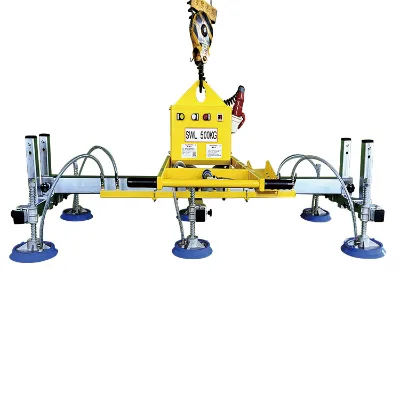


Battery Power Electric Remote Control Hydraulic Lifting Vacuum Lifter
$1688.00 - $1988.00
MOQ: 1 Pieces

250kg 500kg Portable Battery Powered Vacuum Lifter for Big Panel Glass
$300.00 - $500.00
MOQ: 1 Pieces


Portable CE Certified Battery Vacuum Sheet Lifter with Telescopic Boom
$1650.00 - $1950.00
MOQ: 1 Pieces
Comprehensive Sourcing Guide
Battery Powered Vacuum Panel Lifter Sourcing Guide
Selecting the right battery-powered vacuum panel lifter requires a careful balance of lifting capacity, power source reliability, and ergonomic design. These devices are essential for handling heavy, fragile materials such as glass panels, metal sheets, and large boards in construction, manufacturing, and logistics environments. The shift from pneumatic or AC-powered systems to battery-operated models offers significant advantages in terms of mobility and ease of use, allowing operators to work in areas without immediate access to compressed air lines or electrical outlets. However, this convenience introduces specific technical considerations regarding battery life, suction stability, and load control that procurement teams must evaluate before finalizing a purchase.
The market for these lifters is diverse, with manufacturers offering various configurations to suit different operational needs. Buyers must distinguish between models designed for light-duty tasks and those built for heavy industrial applications. Key differentiators include the number of suction cups, the maximum load capacity, and the specific mechanisms used for tilting and rotating panels. Understanding these variations is crucial for ensuring that the selected equipment matches the physical demands of the workplace while maintaining safety standards. This guide provides a structured approach to evaluating these products, focusing on technical verification, compliance, and long-term value.
Product Scope and Observed Listing Signals
The current market landscape for battery-powered vacuum panel lifters shows a wide range of specifications, with observed listing prices typically falling between $300 and $10,000 USD. This broad price spectrum reflects the diversity in build quality, load capacity, and feature sets available from different suppliers. Most listings indicate a minimum order quantity (MOQ) of one unit, suggesting that these tools are often purchased individually for specific job sites or small teams rather than in bulk. Buyers should be aware that the price point often correlates with the durability of the steel construction, the quality of the vacuum pump, and the inclusion of advanced features like remote control or automated release mechanisms.
Observed product attributes reveal a strong emphasis on versatility and customization. Many models are available in yellow or red, with steel being the predominant material for the frame and structural components. The lifting capacity varies significantly, with common ranges observed between 300 kg and 1200 kg, although some specific models are rated for 400-800 kg. The number of suction cups also varies, with options including 4, 6, 8, or even 10 pads, which directly impacts the stability and safety factor when handling large or irregularly shaped panels. Buyers should verify these specifications against their actual load requirements, as exceeding the rated capacity can lead to catastrophic failure.
Technical Specifications to Verify
When evaluating technical specifications, the power source is a critical factor. While the core keyword specifies "battery powered," observed listings show a mix of DC battery options (such as 12V or 24V) and AC power variants (including 110V, 120V, 220V, and 380V). It is essential to confirm that the selected model relies solely on a battery for its vacuum generation if the work environment lacks reliable electrical infrastructure. Some models may offer dual power sources, providing flexibility but potentially adding complexity to maintenance. Buyers should also check the battery type and expected runtime, as these factors directly influence operational efficiency and downtime.
Another vital technical aspect is the lifting and rotation mechanism. Many units offer manual rotation capabilities, including 360-degree manual rotation and 90-degree tilting functions, which are crucial for positioning panels accurately. The maximal lifting height is another key specification, with observed ranges varying from 1700 mm to 2500 mm, and in some cases, up to 17-25 meters for specialized high-reach models. The dimension of the suction pads, often around 300 mm, and the release mechanism, whether via a valve or pull lever, also play significant roles in ease of use. Buyers must ensure that the control system, whether manual or remote, aligns with the operator's comfort and safety requirements.
Compliance and Safety Documentation
Safety is paramount when handling heavy glass or metal panels, and compliance with relevant standards is non-negotiable. Buyers should request documentation that verifies the equipment meets international safety standards, such as CE certification, which indicates conformity with health, safety, and environmental protection standards for products sold within the European Economic Area. Although certification status can vary by supplier, it is a strong indicator of a manufacturer's commitment to quality and regulatory adherence. Procurement teams should also inquire about any additional certifications specific to the region of use, such as OSHA compliance in the United States or local machinery directives in other markets.
In addition to formal certifications, safety features built into the design are critical. Look for models equipped with low-vacuum alarms, battery level indicators, and emergency release mechanisms that allow for safe manual lowering in case of power failure. The warranty terms, often ranging from 2 to 3 years for core components, provide an additional layer of protection and indicate the manufacturer's confidence in their product's durability. Buyers should carefully review the warranty coverage to understand what is included, such as the vacuum pump, battery, and structural frame, and whether it covers labor costs for repairs.
Cost Drivers and Commercial Terms
Several factors influence the total cost of ownership for battery-powered vacuum panel lifters. The primary cost driver is the load capacity, with higher-capacity models generally commanding a premium price. The number of suction cups and the size of the pads also contribute to the cost, as more complex vacuum systems require more sophisticated engineering and higher-quality materials. Additionally, features such as remote control operation, automated tilting mechanisms, and specialized battery types can increase the initial purchase price. Buyers should consider these factors in the context of their specific operational needs to avoid over-specifying and paying for unnecessary features.
Commercial terms, including payment methods, shipping costs, and lead times, also impact the overall procurement cost. While observed MOQs are typically low, bulk purchases may offer discounts, although this is not guaranteed. Buyers should negotiate clear terms regarding delivery schedules, especially if the equipment is needed for a specific project timeline. It is also important to consider the cost of spare parts and maintenance, such as replacement suction pads and batteries, which can vary significantly between suppliers. Establishing a relationship with a supplier that offers competitive pricing on consumables can reduce long-term operational expenses.
Supplier Qualification and Quality Control
Evaluating supplier qualification is essential to ensure the reliability and safety of the purchased equipment. Buyers should verify the supplier's manufacturing capabilities, including their experience in producing vacuum lifters and their quality control processes. Suppliers based in regions known for industrial manufacturing, such as Henan, China, may offer competitive pricing, but buyers must ensure that these suppliers adhere to strict quality standards. Requesting factory audits or third-party inspection reports can provide valuable insights into the supplier's production practices and consistency.
Quality control measures should extend beyond the initial purchase to include post-delivery support and maintenance services. Buyers should inquire about the availability of technical support, training materials, and spare parts. A supplier that offers comprehensive training on the safe operation and maintenance of the lifter can significantly reduce the risk of accidents and extend the lifespan of the equipment. Additionally, checking customer reviews and references can provide practical insights into the supplier's responsiveness and the performance of their products in real-world scenarios.
Long-Term Procurement Checks
Long-term procurement success depends on the ability to monitor and evaluate the performance of the equipment over time. Buyers should establish a routine maintenance schedule that includes regular inspections of the vacuum system, battery health, and structural integrity. Keeping detailed records of maintenance activities, repairs, and any incidents can help identify patterns and potential issues early. This proactive approach can prevent unexpected downtime and ensure that the equipment remains safe and efficient throughout its lifecycle.
As technology evolves, buyers should stay informed about advancements in battery-powered vacuum lifters, such as improvements in battery efficiency, smarter control systems, and enhanced safety features. Periodically reviewing the market for new models and technologies can help organizations stay competitive and improve operational efficiency. However, any upgrades or replacements should be carefully evaluated against current needs and budget constraints to ensure that the investment delivers tangible benefits. By maintaining a strategic approach to procurement, organizations can maximize the value of their battery-powered vacuum panel lifters and support their operational goals effectively.
FAQs
What is the maximum lifting capacity of this lifter?
The maximum lifting capacity ranges from 300 to 800 kilograms depending on the specific model configuration. Some units support up to 1200 kilograms, while others are rated for 400 to 800 kilograms. Always verify the exact load capacity before operation to ensure safety.
How many suction cups are available on this unit?
This Battery Powered Vacuum Panel Lifter is available with 4, 6, 8, or 10 suction cups. The number of pads can vary between 8 and 10 for larger models. Select the configuration that matches your specific glass or metal panel dimensions.
Can the lifter rotate 360 degrees manually?
Yes, the device features a 360-degree manual rotation capability for flexible positioning. It also allows for 90-degree tilting and horizontal movement. This manual control system ensures precise handling during glass and board lifting operations without complex automation.
What power sources does the vacuum lifter support?
The unit operates on a 12V DC battery or can be powered by AC sources including 110V, 120V, 220V, and 380V. This dual power capability allows for versatile use in various industrial settings. The battery option provides mobility for remote lifting tasks.
What is the warranty period for the core components?
The core components come with a 3-year warranty coverage for added reliability. The general product warranty extends for 2 years. This ensures long-term support for the steel construction and mechanical parts used in the lifting mechanism.
Which materials are compatible with this vacuum lifter?
The lifter is designed to handle glass and metal materials effectively. It is suitable for lifting glass panels and metal boards in industrial applications. The suction cups provide a secure grip on these specific compatible material types during transport.