Source Beach Kayak Carrier Wheel for Canoe, Jet Ski, and Yacht
Compare 30 folding aluminum trolleys with pneumatic wheels designed for Beach Kayak Carrier Wheel applications. Buyers can evaluate models with varying load capacities, dimensions, and customization options from Qingdao suppliers.
Key considerations
Products List

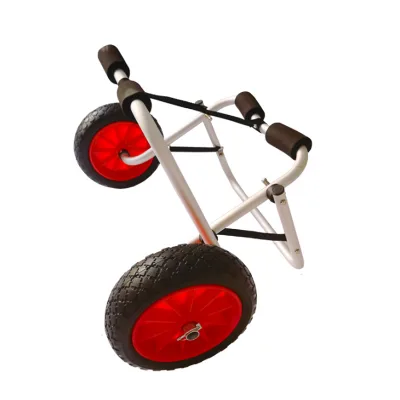


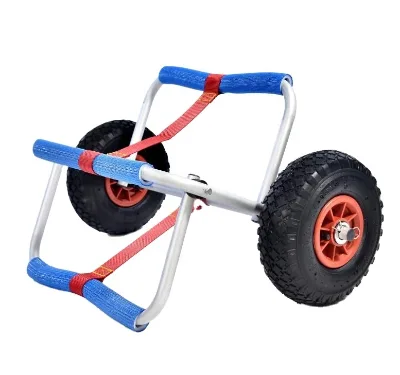
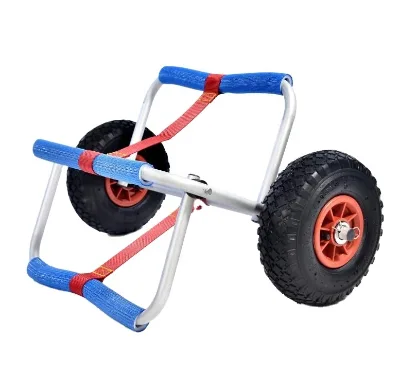
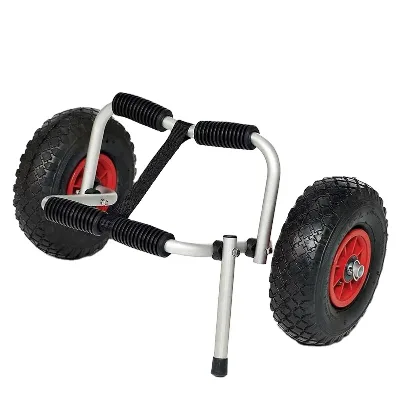
Sup Board Trolley with Two-Wheels Beach Foldable Kayak Trolley Carrier
$18.00 - $19.80
MOQ: 200 Pieces


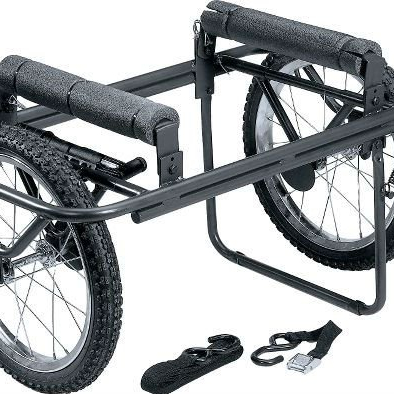


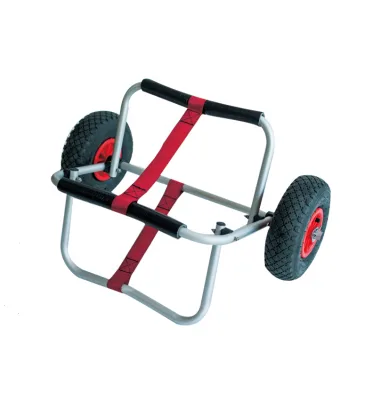
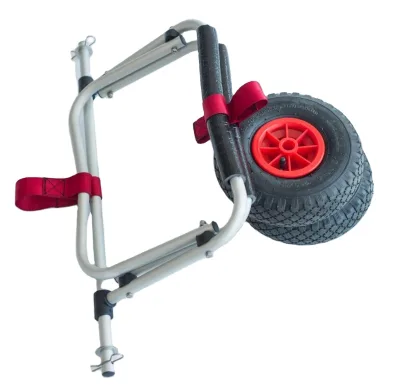


Comprehensive Sourcing Guide
Strategic Sourcing Guide for Beach Kayak Carrier Wheels
The procurement of specialized equipment for marine environments, particularly beach kayak carrier wheels, requires a rigorous approach to ensure durability, functionality, and compliance with international trade standards. Buyers entering this market must navigate a landscape defined by specific material requirements, such as aluminum and steel, and distinct operational constraints like pneumatic wheel configurations. This guide synthesizes available product data and industry best practices to assist procurement professionals in evaluating potential suppliers and selecting the correct specifications for their logistics and recreational needs. The focus remains on evidence-based criteria derived from observed market listings and verified product attributes.
Technical Specifications and Material Composition
When sourcing beach kayak carrier wheels, the primary technical differentiator lies in the material composition and structural design. The observed market data indicates a strong preference for aluminum as the primary construction material, often paired with steel components for the frame or post sections. This combination is critical for balancing weight reduction with structural integrity. Aluminum is favored for its resistance to corrosion in saltwater environments, a non-negotiable factor for beach applications. The specific product attributes observed list "Aluminium" and "Steel" as the core materials, with some listings specifying a "Galvanized" surface treatment. This galvanization process is essential for protecting steel components from the aggressive marine atmosphere, preventing rust that could compromise the wheel assembly or the folding mechanism.
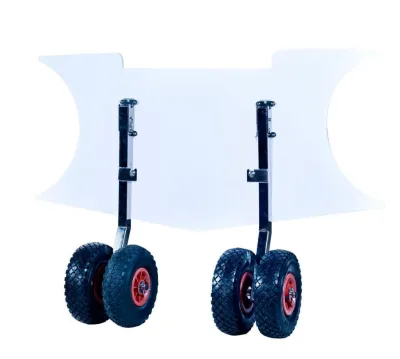
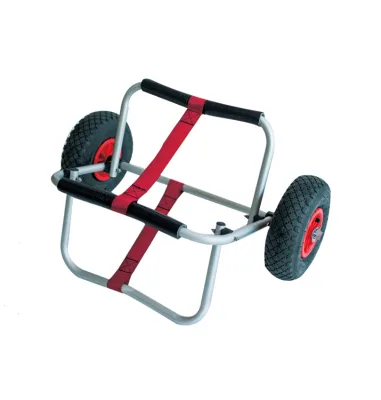
The wheel configuration itself is another vital specification. The data consistently points to a "Pneumatic Wheel" type with a "Wheel Amount" of two, often described as a "Two-wheel" or "Roll Container" structure. Pneumatic wheels are superior to solid rubber or plastic alternatives for beach terrain because they provide necessary shock absorption and traction on soft sand. The folding style of the carrier is also a key technical requirement, allowing for compact storage when not in use. Buyers must verify that the folding mechanism is robust enough to withstand the torque generated when towing heavy loads over uneven surfaces. The observed dimensions for single package sizes, such as 73x42x17 cm, suggest that the collapsed footprint is a significant consideration for logistics and storage space. Furthermore, the frame size specifications, such as 50x70 cm, and tube diameters of 22mm, provide a baseline for structural rigidity that buyers should use to validate supplier claims against actual product samples.
Compliance, Certification, and Safety Standards
In the B2B procurement of marine equipment, compliance with international safety and quality certifications is paramount. The supplied product facts explicitly mention "SGS" as a certification attribute. SGS is a recognized global inspection, verification, testing, and certification company. The presence of this certification suggests that the manufacturer has undergone third-party verification for quality and safety standards. However, buyers must not assume that every listed product automatically possesses this certification; it should be treated as a specific attribute of certain models rather than a universal guarantee. Procurement teams should request valid, current certification documents for each batch ordered to ensure that the specific units being purchased meet the required safety thresholds.
Beyond third-party certifications, buyers must verify adherence to relevant product standards. The data references a "prod_standard" of 680450410mm, which likely refers to a specific dimensional standard or packaging requirement for the folded unit. Additionally, the "prod_standard" labeled "Kayak Product" indicates that the item is designed to meet industry norms for kayak transport. While specific numerical safety standards (such as ISO or ASTM ratings) are not explicitly detailed in the provided facts, the requirement for a "1 Year" warranty on some models and "Years" on others implies a manufacturer's confidence in product longevity. Buyers should verify that the warranty terms align with the expected usage intensity. The "Load Capacity" of 165LB observed in the data serves as a critical safety limit; exceeding this capacity can lead to structural failure, especially on soft beach sand where resistance is higher. Ensuring that the supplier's documentation clearly defines the maximum load capacity and the conditions under which it is tested is essential for liability management.
Cost Drivers and Pricing Dynamics
Understanding the cost structure of beach kayak carrier wheels is essential for budgeting and negotiation. The observed price range in the market spans from 1.29 to 87.7 USD, a wide variance that reflects differences in material quality, brand positioning, and customization levels. The lower end of this spectrum may correspond to basic models with standard aluminum construction and minimal features, while the higher end likely includes premium models with advanced galvanization, enhanced load capacities, or specialized branding.
Several factors drive these costs. First, the material cost of aluminum and steel fluctuates with global commodity markets. Second, the "Customization" availability, including OBM, ODM, and OEM support, adds a layer of cost. Buyers seeking private labeling or specific design modifications will incur higher unit prices compared to those purchasing standard off-the-shelf inventory. The "MOQ" (Minimum Order Quantity) is another significant cost driver, with observed ranges from 1 to 500 units. A single-unit purchase typically carries a higher per-unit cost due to setup and handling fees, whereas bulk orders can leverage economies of scale. The "Selling Units" are listed as "Single item," but the "MOQ" of 2PC on some listings suggests that even small orders may have a minimum threshold. Additionally, packaging costs, indicated by "Carton" or "Carton + Wooden Pallet" options, influence the final landed cost. Wooden pallets add value for international shipping stability but increase the overall price. Buyers should analyze the total cost of ownership, including shipping and potential customs duties, rather than focusing solely on the unit price.
Typical Applications and Operational Use Cases
The versatility of beach kayak carrier wheels extends beyond simple transport. The "Application" attributes listed include Canoe, Jet Ski, Kayak, Sailboat, and Yacht, indicating that these carriers are designed for a broad spectrum of watercraft. The "Usage" category is further defined as "Tools" and "Maintenance," suggesting that these units are not just for recreational transport but also serve functional roles in boat maintenance and storage logistics. The "Feature" of "Load" highlights the primary function of supporting heavy weights, which is critical when moving watercraft from the water to a trailer or storage area.
The "Folding" style is particularly advantageous for users with limited storage space, such as marina owners or individuals with small garages. The ability to collapse the unit to dimensions like 68x40x40 cm allows for efficient stacking and storage. The "Motor Power" being listed as "manual" confirms that these are human-powered devices, relying on the user's strength to maneuver the load. This is typical for beach environments where motorized vehicles may be restricted or impractical. The "Color" options, observed as Silver and White, are not merely aesthetic; lighter colors like white and silver reflect sunlight, reducing heat absorption which can be beneficial for the durability of the materials and the comfort of the user during summer operations. Buyers should consider the specific operational environment; for instance, a carrier used for heavy sailboats will require different load-bearing characteristics than one used for a single recreational kayak.
Supplier Evaluation and Origin Verification
Evaluating suppliers for beach kayak carrier wheels requires a focus on geographic origin and manufacturing capabilities. The data consistently points to "Qingdao, Shandong" and "Shandong, China(Mainland)" as the primary places of origin. Shandong Province is a major manufacturing hub in China, known for its metalworking and machinery industries. This concentration of suppliers can be advantageous for buyers seeking competitive pricing and established supply chains. However, it also necessitates rigorous due diligence to ensure that the supplier is a legitimate manufacturer rather than a trading company with limited control over quality.
Buyers should verify the "Brand Name" associated with the product. The observed brand "Myway" suggests that some suppliers offer branded products, while others may operate under generic names. The availability of "Customized support" in the form of OBM (Original Brand Manufacturing), ODM (Original Design Manufacturing), and OEM (Original Equipment Manufacturing) indicates that suppliers are capable of adapting products to specific buyer requirements. When evaluating a supplier, procurement teams should request samples to test the "Surface Handling" and "Surface Treatment" processes, specifically checking for the quality of the galvanized coating and the smoothness of the aluminum finish. The "Single gross weight" of 4.100 kg and "Net Weight" of 3.6kgs provide benchmarks for verifying the actual weight of the product received, which can be an indicator of material density and quality. Suppliers who cannot provide consistent weight data or who deviate significantly from these figures may be using lower-grade materials.
Quality Control and Long-Term Procurement Considerations
Implementing a robust quality control (QC) strategy is essential for maintaining the integrity of the supply chain. Given the marine environment in which these wheels operate, QC must focus heavily on corrosion resistance and structural stability. Buyers should establish clear acceptance criteria based on the observed specifications, such as the "Tube Diameter" of 22mm and the "Frame Size" of 50x70 cm. Any deviation from these dimensions could indicate a change in material thickness or design that compromises the load capacity. The "Warranty" period, observed as "1 Year" or "Years," serves as a key metric for supplier confidence. A longer warranty period often correlates with higher quality control standards and better after-sales support.
For long-term procurement, buyers should consider the scalability of the supplier's operations. The "MOQ" range of 1 to 500 suggests flexibility, but buyers planning large-scale deployments should negotiate volume-based pricing and ensure the supplier has the capacity to meet increased demand without compromising quality. The "prod_packing" methods, whether "Carton" or "Carton + Wooden Pallet," should be evaluated for their ability to protect the product during transit. Damaged goods upon arrival can lead to significant delays and additional costs. Furthermore, buyers should monitor the "Lead Time" and "Place of Origin" logistics to ensure timely delivery. While specific lead times are not provided in the data, the complexity of the "Folding" mechanism and the "Pneumatic Wheel" assembly suggests that production times may vary. Establishing a clear communication channel with the supplier regarding production schedules and potential delays is crucial for maintaining operational continuity.
Summary of Key Product Attributes
To facilitate quick reference during the sourcing process, the following table summarizes the critical attributes observed in the market data. This comparison highlights the variability in specifications that buyers must account for when selecting a supplier.
| Attribute Category | Observed Values / Options | Procurement Consideration |
|---|---|---|
| Material | Aluminium, Steel | Verify alloy grade and galvanization quality for corrosion resistance. |
| Wheel Type | Pneumatic Wheel | Essential for sand traction; check tire pressure retention. |
| Wheel Amount | 2 | Standard configuration; verify axle strength for load distribution. |
| Structure | Folding, Roll Container | Ensure folding mechanism is durable and locks securely. |
| Surface Treatment | Galvanized, Aluminum | Confirm thickness of coating for marine durability. |
| Load Capacity | 165LB (Observed) | Do not exceed; verify actual testing data from supplier. |
| Certification | SGS (Specific models) | Request valid certificates; do not assume universal coverage. |
| Origin | Qingdao, Shandong, China | Leverage regional manufacturing expertise; verify factory audits. |
| Customization | OBM, ODM, OEM, Customized | Clarify costs and lead times for private labeling or design changes. |
| Warranty | 1 Year, Years | Define specific terms and coverage for long-term support. |
By adhering to these evidence-based guidelines, buyers can navigate the complexities of sourcing beach kayak carrier wheels with confidence. The focus on verified specifications, rigorous quality control, and transparent supplier evaluation ensures that the final procurement delivers reliable performance in demanding marine environments.
FAQs
What materials are used for beach kayak carrier wheels?
The primary materials are aluminum and steel. Aluminum provides corrosion resistance for saltwater environments, while steel components are often galvanized to prevent rust and ensure structural integrity during heavy load transport.
Can these carriers be customized for specific brands?
Yes, customization is available with OBM, ODM, and OEM support. Buyers can request specific branding or design modifications, though unit costs may vary based on the complexity of the customization and order volume.
What is the maximum load capacity for these units?
The observed load capacity is 165 pounds. This limit must not be exceeded to prevent structural failure, especially when towing over soft beach sand where resistance is higher than on paved surfaces.
Which certification standards apply to these carriers?
SGS certification is listed for specific models in the market data. Buyers should request valid, current certification documents for each batch to ensure the units meet required safety and quality thresholds before purchase.
How are these folding carriers packaged for shipping?
Packaging options include cartons or cartons with wooden pallets. The single package size is approximately 73 by 42 by 17 cm, ensuring compact storage and protection during transit to international destinations.
Where are these beach kayak carriers manufactured?
The products originate from Qingdao, Shandong, China. This region is a major manufacturing hub known for metalworking, offering established supply chains for buyers seeking competitive pricing and reliable production capabilities.
What is the minimum order quantity for these wheels?
The minimum order quantity ranges from 1 to 500 units depending on the supplier. Single item sales are possible, but some listings specify a 2-piece minimum, affecting the per-unit cost for small orders.