Source Bladeless Handheld USB Fan for Daily Use, Gift, and Decoration
Explore 30 options for the Bladeless Handheld USB Fan designed for daily use, collection, and decoration. Buyers can compare folding and round shapes, custom logos, and various power inputs to find the right supplier for their needs.
Key considerations
Products List




Comprehensive Sourcing Guide
Strategic Sourcing Guide for Bladeless Handheld USB Fans
The global demand for personal cooling solutions has driven significant innovation in the handheld fan sector, with bladeless technology emerging as a preferred choice for safety and aesthetic appeal. For procurement professionals, sourcing a Bladeless Handheld USB Fan requires a nuanced understanding of the intersection between mechanical design, electrical safety, and supply chain logistics. This guide synthesizes available market data to provide a disciplined framework for evaluating suppliers, verifying product specifications, and mitigating procurement risks without relying on unverified claims or specific vendor recommendations.
Technical Architecture and Operational Specifications
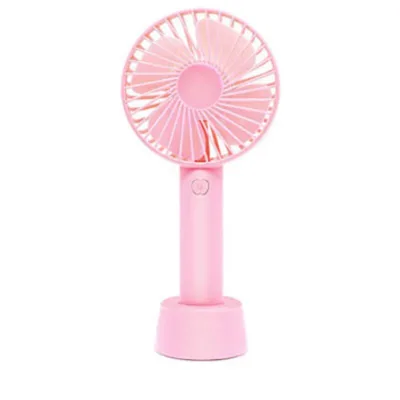
The core differentiator of a Bladeless Handheld USB Fan lies in its internal airflow mechanism, which typically utilizes an internal turbine to draw air in and expel it through a ring or nozzle, eliminating exposed rotating blades. This design fundamentally alters the safety profile and user experience compared to traditional fan models. When evaluating technical specifications, buyers must scrutinize the power input requirements and battery integration. Data indicates that many units in this category operate on a DC 5V 1A input, a standard compatible with most modern USB power sources, including wall adapters and power banks.
Power consumption is another critical variable, with observed ranges spanning from 0.3W to 1.2W. This variance often correlates with the fan's speed settings and the efficiency of the internal motor. For portable applications, the inclusion of a built-in lithium battery is a standard expectation. Specific market observations note battery capacities around 2000mAh, which provides a balance between runtime and portability. However, buyers should verify the actual discharge rate and cycle life of the battery, as these factors directly impact the product's longevity and user satisfaction.
The physical form factor is equally important. While the "bladeless" attribute is consistent, the external shape varies significantly to meet diverse consumer preferences. Observed designs include round, heart-shaped, and folding configurations. The folding feature, for instance, reduces the footprint for storage and transport, a critical consideration for logistics. Material composition also plays a role in the final product's durability and weight. Common materials include plastic and fabric, with some specialized variants incorporating PVC or rubber compounds like EPDM, SBR, and NBR for specific components. The choice of material affects the tactile feel, thermal properties, and resistance to wear.
Compliance, Certification, and Safety Standards
In the B2B procurement of electronic devices, compliance is not merely a regulatory hurdle but a prerequisite for market access. Buyers must verify that suppliers adhere to recognized international safety and environmental standards. The supply chain data highlights several certifications, including RoHS (Restriction of Hazardous Substances), which limits the use of specific hazardous materials in electrical and electronic equipment. Additionally, ISO certification is frequently cited, indicating that the manufacturer maintains a quality management system that meets international benchmarks.
Other standards observed in the market include CE, SGS, and GEM. The CE marking is essential for products entering the European Economic Area, signifying conformity with health, safety, and environmental protection standards. SGS and GEM often refer to third-party testing and quality assurance services, though the specific scope of these certifications must be confirmed with the supplier. It is crucial to note that while some product listings mention these standards, buyers should not assume every unit in a batch is certified without requesting valid test reports.
For products intended for specific applications, such as medical or automotive use, additional certifications may be required. The data suggests that some bladeless fans are marketed for applications ranging from agricultural and automotive to electronics and household use. This broad applicability necessitates a rigorous verification process to ensure the device meets the specific safety requirements of the target industry. For instance, a fan used in a medical setting might require stricter electromagnetic compatibility (EMC) testing than a standard household unit.
Cost Drivers and Pricing Dynamics
Understanding the cost structure of bladeless handheld USB fans is essential for negotiating favorable terms and maintaining healthy profit margins. The price range observed in the market spans from $0.15 to $9.00 USD, a wide spectrum that reflects differences in material quality, feature sets, and order volume. Several key factors drive these cost variations.
First, the complexity of the design significantly impacts manufacturing costs. Models with custom shapes, such as heart-shaped or folding designs, often require more complex molding processes and tooling, which increases the unit cost. Second, the inclusion of advanced features, such as LED lighting or customized logos, adds to the production expense. Third, the quality of the internal components, particularly the lithium battery and the motor, is a primary cost driver. Higher capacity batteries and more efficient motors command a premium but offer better performance and reliability.
Order volume is another critical determinant of pricing. The Minimum Order Quantity (MOQ) varies widely, ranging from 100 pieces to 10,000 pieces. Suppliers typically offer tiered pricing structures where the unit cost decreases as the order volume increases. For example, an MOQ of 500 pieces might be standard for customized orders, while smaller quantities of 100 pieces may incur a higher per-unit price. Buyers should also consider the packaging costs, which can vary from simple plastic bags to elaborate gift boxes or custom cartons. The choice of packaging not only affects the unit cost but also the overall shipping weight and volume, influencing logistics expenses.
Typical Applications and Market Segmentation
The versatility of bladeless handheld USB fans allows them to serve a diverse range of applications, making them suitable for various market segments. The primary use case is daily personal cooling, where the safety of a bladeless design is a significant advantage, particularly for households with children or pets. In this segment, the focus is often on portability, aesthetic appeal, and ease of use.
Beyond personal use, these fans find applications in collection and decoration. Creative and fashion-oriented designs, such as those with unique shapes or custom finishes, appeal to collectors and gift buyers. The "Gift" usage category is particularly relevant, as the compact size and customizable nature of these fans make them ideal promotional items or corporate gifts. In this context, the ability to customize the logo and packaging is a key selling point.
Industrial and specialized applications also exist. The data indicates that some models are designed for agricultural, automotive, and medical environments. In these settings, the fan's durability and resistance to specific environmental conditions become paramount. For example, a fan used in an automotive context might need to withstand higher temperatures or vibrations. Similarly, medical-grade fans may require specific sterilization properties or noise reduction features. Understanding the specific application requirements is essential for selecting the right product and ensuring it meets the necessary performance standards.
Supplier Evaluation and Quality Control
Selecting the right supplier is a critical step in the procurement process. Buyers should evaluate potential partners based on their production capabilities, quality control systems, and responsiveness. The presence of OEM (Original Equipment Manufacturer) services is a strong indicator of a supplier's flexibility and ability to meet custom requirements. Suppliers offering OEM services can typically accommodate requests for custom logos, packaging, and design modifications.
Quality control is another vital aspect. Buyers should inquire about the supplier's internal quality assurance processes, including in-line inspections and final product testing. The mention of certifications like ISO and RoHS suggests that the supplier has established protocols for maintaining product quality and safety. However, buyers should not rely solely on these claims and should request evidence of compliance, such as test reports or audit certificates.
Lead time is another factor to consider. The observed lead time for some products is around 10 days, but this can vary based on order volume and customization requirements. Buyers should establish clear timelines and communication channels with the supplier to ensure timely delivery. Additionally, the supplier's ability to handle large orders, as indicated by the high-end MOQ of 10,000 pieces, is a sign of robust production capacity.
Long-Term Procurement Considerations
Sourcing bladeless handheld USB fans is not a one-time transaction but a long-term partnership that requires careful planning and management. Buyers should consider the scalability of the supply chain, ensuring that the supplier can handle increased demand without compromising quality. The ability to customize products, such as changing the shape or material, provides flexibility for future product iterations and market adaptation.
Sustainability is also becoming an increasingly important consideration. Buyers should evaluate the environmental impact of the materials used, such as the recyclability of plastic and fabric components. Suppliers that prioritize sustainable practices and offer eco-friendly options can help buyers meet their corporate social responsibility goals.
Finally, buyers should maintain a proactive approach to risk management. This includes diversifying the supplier base to mitigate the risk of supply chain disruptions and establishing clear contracts that define quality standards, delivery schedules, and dispute resolution mechanisms. By focusing on these long-term considerations, buyers can build a resilient and efficient supply chain that supports their business growth and market success.
Comparative Analysis of Product Attributes
To facilitate informed decision-making, the following table summarizes key attributes observed in the market for bladeless handheld USB fans. This comparison highlights the diversity of options available and assists buyers in identifying products that align with their specific requirements.
| Attribute | Observed Variations | Relevance to Procurement |
|---|---|---|
| Shape | Round, Heart Shape, Folding | Determines portability and aesthetic appeal; folding reduces storage space. |
| Material | Plastic, Fabric, PVC, Rubber (EPDM, SBR) | Affects durability, weight, and tactile feel; critical for specific applications. |
| Battery | Built-in Lithium (e.g., 2000mAh) | Impacts runtime and portability; verify capacity and cycle life. |
| Power Input | DC 5V 1A | Standard compatibility with USB sources; ensures ease of charging. |
| Power Output | 0.3W - 1.2W | Indicates airflow efficiency and energy consumption. |
| Customization | Logo, Packaging, Shape, Color | Essential for branding and market differentiation; OEM availability is key. |
| Certification | RoHS, ISO, CE, SGS, GEM | Mandatory for market access; verify validity and scope of testing. |
| MOQ | 100 - 10,000 Pieces | Influences unit cost and inventory management; negotiate based on volume. |
| Lead Time | Approx. 10 Days (varies) | Critical for supply chain planning; confirm actual timelines for custom orders. |
| Usage | Daily Use, Gift, Decoration, Medical | Defines target market and required feature set (e.g., safety, aesthetics). |
By carefully analyzing these attributes and aligning them with business objectives, procurement professionals can make strategic decisions that optimize cost, quality, and market fit. The Bladeless Handheld USB Fan market offers a rich array of options, but success depends on rigorous evaluation and a disciplined approach to supplier selection and quality assurance.
FAQs
What customization options are available for bladeless handheld usb fans?
Customization is available for logos, shapes, and packaging. Buyers can request specific designs like heart shapes or folding configurations, along with customized gift boxes or cartons to match branding needs.
Which certifications do these fans typically meet?
Many models meet RoHS, ISO, CE, SGS, and GEM standards. These certifications ensure safety and environmental compliance, though buyers should verify specific test reports for each batch before finalizing orders.
How does the built-in battery capacity affect runtime?
A 2000mAh lithium battery is commonly observed in this category. This capacity balances portability with runtime, but actual usage duration depends on the specific power consumption and speed settings of the unit.
Can I find suppliers with a low minimum order quantity?
Yes, some suppliers offer an MOQ of 100 pieces. However, standard orders often require 500 pieces, and larger volumes up to 10,000 pieces may be needed for specific customization or pricing tiers.
What is the typical lead time for production?
The lead time is approximately 10 days for standard orders. This duration may vary based on the complexity of customization, order volume, and current production capacity at the Shenzhen manufacturing facilities.
Which materials are used for the fan housing?
Common materials include plastic, fabric, and PVC. Some specialized variants also incorporate rubber compounds like EPDM, SBR, and NBR for specific components to enhance durability and tactile feel.