Source Rechargeable Bladeless Waist Clip Fan for Daily Use, Gifts, Decoration
Compare 30 listings of Rechargeable Bladeless Waist Clip Fan options featuring battery capacities from 900mAh to 20000mAh. Buyers can evaluate working times, charging speeds, and customization availability for personal cooling needs; compare the available evidence and request quotations based on your requirements.
Key considerations
Products List


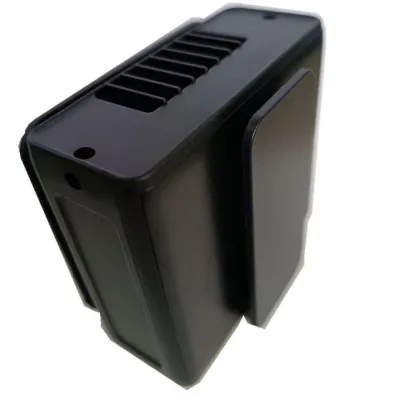


Multipurpose Portable Waist Fan USB Rechargeable Clip-on Mini Fan for Outdoor Activities
$5.00 - $5.80
MOQ: 500 Pieces

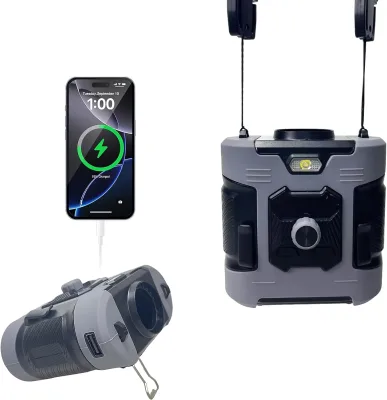


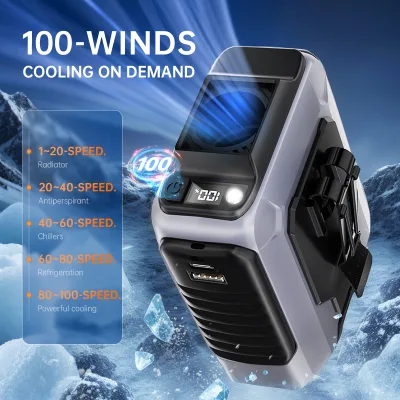


Comprehensive Sourcing Guide
Rechargeable Bladeless Waist Clip Fan Sourcing Guide
The market for rechargeable bladeless waist clip fans presents a distinct category where portability and safety converge for daily use and gifting applications. Current listings indicate a product range that includes specific models designed as portable mini waist fans and larger units with extended battery capacities, often featuring a shape resembling a small air conditioner. Buyers must distinguish between these variations, as the physical dimensions and weight vary significantly, with some units measuring approximately 89mm while others reach nearly 166mm in length.
Procurement decisions should prioritize the specific power source configuration, as observed listings show a split between built-in Li-Po batteries of 5000mAh and larger polymer batteries reaching 20,000mAh. This variance directly impacts the working time, which ranges from 4 to 13 hours for smaller units up to 36 hours for high-capacity models. Sourcing strategies must align the battery capacity with the intended usage duration, ensuring the selected unit meets the operational requirements without unnecessary weight penalties for the end user.
Product Scope and Observed Listing Signals
Buyers should verify the physical form factor, as the product scope includes items explicitly described as having a clip mechanism for both inside and outside attachment, alongside models designed specifically for waist mounting. The observed product names range from "Clip Fan" to "Waist Fan 20000mAh," indicating a broad spectrum of functional designs that may not all share identical bladeless characteristics. It is critical to confirm whether the specific listing supports the bladeless requirement, as some descriptions focus on the clip function or the battery capacity without explicitly detailing the bladeless safety mechanism.
Commercial signals in the market suggest that customization and OEM services are widely available, allowing buyers to tailor color options like white, black, pink, or green to their brand identity. The packaging is typically listed as bag or carton, which influences logistics planning for bulk orders. Procurement teams must scrutinize the product model specifications to ensure the selected item matches the intended application, whether it is a lightweight 138g unit for personal cooling or a heavier 629g unit serving as a power bank with USB output capabilities.
Technical Specifications to Verify
Technical due diligence must focus on the input and output ports, as observed data shows a mix of Type-C inputs for smaller units and DC 8.4V 2.1A inputs for larger, high-capacity models. The working time is a critical specification that varies from 4 hours to 36 hours depending on the battery capacity, which ranges from 900mAh to 20,000mAh. Buyers should verify the full charging time, which is listed as 4 hours for smaller batteries but extends to 10 hours for the 20,000mAh variants, to ensure the supply chain can support the required turnover rates.
Speed control and power consumption are also essential verification points, with some units offering three distinct speed levels and a maximum power draw of 2.8W. The physical dimensions and weight must be cross-referenced with the intended mounting surface, as the size ranges from compact 89mm units to larger 165mm models weighing up to 629g. Additionally, the presence of a USB output port rated at 5V 2A allows the fan to function as a power bank, a feature that adds value but requires specific verification of the port's actual performance under load.
Compliance and Safety Documentation
Compliance verification is paramount, as the observed listings include a variety of certifications such as CE, CCC, CB, ROHS, and GS. Buyers must ensure that the specific model they intend to purchase carries the necessary certifications for their target market, as the presence of one certification does not guarantee the others are valid for the same unit. The standard for the product is noted as square, but the safety documentation must explicitly confirm that the bladeless design meets the relevant electrical safety standards for the region of import.
Safety features should be validated against the claimed functionality, particularly regarding the battery type and the charging system. The use of built-in Li-Po or polymer batteries requires strict adherence to transport and safety regulations, especially given the high capacity options available. Procurement teams should request test reports that confirm the stability of the battery management system and the integrity of the charging circuit, ensuring that the full charging time and working time claims are backed by verified performance data rather than marketing estimates.
Cost Drivers and Commercial Terms
Cost structures are heavily influenced by the battery capacity and the complexity of the power management system, with prices observed ranging from 1.62 to 19 USD. The significant difference in cost between a 900mAh unit and a 20,000mAh unit reflects the raw material costs of the battery cells and the associated safety circuitry. Buyers should analyze the price-to-capacity ratio to determine the most economical option for their specific use case, avoiding over-specification that drives up the unit cost without adding proportional value to the end user.
Commercial terms such as the minimum order quantity (MOQ) and customization options play a vital role in the total cost of ownership. The observed MOQ range spans from 1 to 1000 units, offering flexibility for small buyers while potentially requiring larger commitments for custom branding. Since OEM services are welcome, buyers should negotiate the cost implications of custom colors and packaging, ensuring that the additional fees for customization do not erode the profit margin, especially when the base price is already low.
Supplier Qualification and Quality Control
Supplier qualification should focus on their ability to manage the diverse product specifications observed in the market, including the variation in battery types and charging times. A reliable supplier must demonstrate consistent quality control across different models, ensuring that the 4-hour charging time for smaller units and the 10-hour time for larger units are consistently met. Verification of the supplier's production capacity is essential, as the wide range of battery capacities requires different supply chains and assembly processes that must be managed without compromising quality.
Quality control protocols must address the mechanical durability of the clip mechanism and the stability of the battery performance over time. Since the product is designed for daily use and gifting, the build quality must withstand repeated clipping and unclipping without failure. Buyers should request samples to test the physical robustness of the clip and the consistency of the working time claims, ensuring that the product meets the expected standards for longevity and user satisfaction before committing to a larger order.
Long-Term Procurement Checks
Long-term procurement strategies must account for the potential obsolescence of specific battery technologies and the evolving standards for rechargeable devices. As the market shifts towards higher capacity and faster charging solutions, buyers should maintain a flexible supplier relationship that allows for updates to the product specifications without disrupting the supply chain. Regular reviews of the supplier's certification status are necessary to ensure continued compliance with changing international safety and environmental regulations.
Sustainability and end-of-life management should also be integrated into the procurement plan, given the presence of lithium-polymer batteries in the product line. Buyers should inquire about the supplier's policies on battery recycling and the availability of replacement parts to extend the product lifecycle. Establishing a clear communication channel for feedback on product performance will help identify any recurring issues with battery life or charging efficiency, allowing for proactive adjustments to the product selection in future procurement cycles.
FAQs
What battery capacity options are available for these fans?
Available battery capacities include 900mAh, 5000mAh, and 20000mAh depending on the specific model selected. The 20000mAh version offers extended working time up to 36 hours, while smaller units provide shorter runtime suitable for daily use or travel purposes.
Can I customize the product with my own branding?
Yes, customization is available for this product line, and OEM services are welcome. Buyers can request specific modifications to meet their branding needs, ensuring the final product aligns with their unique market requirements and design preferences.
Which certifications do these fans typically hold?
Common certifications include CE, CCC, CB, ROHS, and GS, ensuring compliance with international safety standards. These certifications verify that the products meet necessary regulatory requirements for electrical safety and environmental protection in various global markets.
How long does it take to fully charge the battery?
Full charging time varies by model, ranging from 4 hours for smaller batteries to 10 hours for the 20000mAh version. The charging duration depends on the specific battery capacity and the input port specifications used for recharging the device.
What is the maximum power consumption of these fans?
The maximum power consumption is 2.8W for the standard clip fan models. This low power usage ensures energy efficiency while providing adequate airflow, making the device suitable for extended operation on a single charge without draining the battery quickly.
Are these fans suitable for use as a power bank?
Yes, certain models feature a USB output port that functions as a power bank with 5V 2A output. This allows users to charge other devices on the go, adding versatility to the fan while providing emergency power solutions for mobile electronics.
What materials are used to construct these fans?
The primary material used for construction is plastic, which ensures durability and lightweight portability. This material choice contributes to the overall weight of the device, making it easy to carry or attach to various surfaces for convenient cooling.