Source Bolt Holes UHMWPE Flange Plate for Chutes Silos Bins
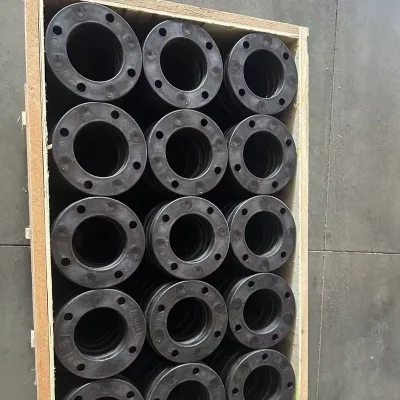
Find and compare 30 listings for Bolt Holes UHMWPE Flange Plate suitable for chutes, silos, and bins. Buyers can review specifications like density, hardness, and customization options to select the right engineering plastic sheet for industrial applications.
Key considerations
Products List


High Quality UHMWPE Sheet Plate for Marine Fender Truck Liner Wear Parts
$5.00 - $100.00
MOQ: 10 Square Meters




Comprehensive Sourcing Guide
Strategic Sourcing Guide for Bolt Holes UHMWPE Flange Plates
Procuring specialized components like bolt holes UHMWPE flange plates requires a disciplined approach that balances material science with rigorous supplier verification. These components are critical in industries where corrosion resistance, low friction, and high impact strength are non-negotiable. The market offers a variety of configurations, but buyers must navigate a landscape where product attributes vary significantly between listings. This guide provides a framework for evaluating bolt holes UHMWPE flange plates based on verified data points, ensuring that procurement decisions are grounded in observable facts rather than marketing assertions.
Technical Specifications and Material Integrity
The foundation of a successful procurement strategy lies in understanding the specific technical parameters of Ultra-High Molecular Weight Polyethylene (UHMWPE). When sourcing flange plates, the material composition is the primary determinant of performance. Available data indicates that the material grade often falls under PE1000 or PE 2000 classifications, which are standard for high-performance engineering applications. The density of these materials is a critical metric; observed values range from 0.92 g/cm³ minimum to 0.96 g/cm³, with specific listings citing densities of 0.92, 0.93, and 0.94. Buyers should verify that the supplier's material density aligns with the specific application requirements, as variations can affect weight and structural integrity.
Mechanical properties are equally vital for flange plates that must withstand bolt tension and operational stress. The tensile strength of UHMWPE flange plates is observed in ranges such as 3040 MPa and 81130 MPa, depending on the specific product model and formulation. For instance, certain models like HS672 and HS1012 exhibit tensile strengths within the higher bracket, while others may fall into the 30~40 MPa range. The ultimate tensile strength is also a key observation, with values recorded as high as 5680 in specific contexts, though buyers must confirm if this refers to a specific test condition or a different unit of measure. Hardness is another defining characteristic, with Shore D hardness values typically around 65, while other specifications note a minimum hardness of 60.
Dimensional flexibility is a major advantage of UHMWPE flange plates. The product model "Flange" is explicitly associated with custom sizes, and thickness specifications can range from 6mm to 300mm. This allows for the fabrication of flange plates with precisely drilled bolt holes to match existing piping or structural systems. The color options for these plates include Red, Blue, Black, Yellow, Green, and White, which can be utilized for safety coding or identification purposes. The contraction percentage is a critical factor for dimensional stability, with observed values of less than 0.4%, ensuring that the bolt holes do not deform significantly under thermal or mechanical load.
Compliance, Certification, and Standard Verification
In the industrial procurement of UHMWPE components, verifying compliance with recognized standards is essential for risk mitigation. While some background information references standards like ASTM D4020 or ISO 5834, these should be treated as background context rather than guaranteed specifications for every listing. Buyers must actively request and verify the specific certification status of the supplier. Available data confirms that some suppliers hold ISO certification, which serves as a baseline for quality management systems. However, the presence of an ISO certificate does not automatically guarantee that every batch of flange plates meets specific performance criteria without further testing.
The product standard for UHMWPE flange plates is often listed as "customized" or "custom," indicating that the manufacturing process is tailored to the buyer's requirements rather than adhering to a rigid, pre-existing industry standard. This flexibility is beneficial for unique applications but requires the buyer to define their own acceptance criteria. For example, while one listing mentions a B.S. Standard of B.S. 1210, this appears to be associated with a different product category (screws) and should not be assumed to apply to UHMWPE flange plates without explicit confirmation. Buyers should demand test reports that validate the material properties against their specific project specifications, particularly regarding tensile strength, impact strength, and abrasion resistance.
Cost Drivers and Pricing Structures
The cost of sourcing bolt holes UHMWPE flange plates is influenced by several variables, including material grade, thickness, and the complexity of the customization. The observed price range in the market is broad, spanning from $0.10 to $2000, reflecting the diversity of product sizes and specifications. A flange plate with a thickness of 6mm will naturally cost significantly less than one with a thickness of 300mm. Additionally, the presence of bolt holes adds a machining cost that varies based on the number of holes, their diameter, and the precision required.
Minimum Order Quantity (MOQ) is another significant cost driver. Data indicates an MOQ range from 1 unit to 10,000 units, with specific listings citing an MOQ of 300 kg. This suggests that for smaller projects, buyers may face higher per-unit costs or need to aggregate orders to meet the weight threshold. The packaging method also impacts logistics costs; options include pallets, cartons, or wooden cases. Wooden cases are typically used for heavier or larger flange plates to prevent damage during transit, which adds to the overall shipping expense. Buyers should request a detailed breakdown of costs, including material, machining, packaging, and shipping, to understand the true cost of ownership.
Typical Applications and Performance Requirements
UHMWPE flange plates are predominantly used in environments where traditional metals would fail due to corrosion or wear. The primary applications include chutes, silos, bins, launders, and various other bulk material handling systems. The material's low friction coefficient and high impact strength make it ideal for lining and connecting components in these systems. The specific product "UHMWPE Chute Liner" and "UHMWPE Parts" highlight the versatility of the material in handling abrasive materials.
The performance requirements for flange plates in these applications are stringent. The abrasion resistance, with an observed value of 85, ensures that the flange plates can withstand the constant friction of flowing materials without degrading quickly. The impact strength, measured as 24 for the V Notch test, indicates the material's ability to absorb energy from impacts, which is crucial in silos and chutes where materials may fall from heights. Furthermore, the water absorption rate of less than 0.01% ensures that the flange plates do not swell or lose mechanical properties when exposed to moisture, a common issue in mining and processing environments.
Supplier Evaluation and Origin Considerations
Evaluating suppliers for UHMWPE flange plates requires a careful review of their location, production capabilities, and customization options. The origin of the products is a key factor, with data indicating production in China and specific locations like Luoyang. Buyers should verify the supplier's ability to produce custom sizes and bolt hole configurations, as the standard product model "Flange" is explicitly linked to custom requirements. The customization availability is a high-confidence fact, meaning that suppliers generally have the capacity to tailor the product to specific needs.
When assessing suppliers, buyers should look for evidence of consistent quality control. The observation that the product is 100% recyclable is a positive attribute, but it should not be the sole criterion for selection. Instead, buyers should focus on the supplier's track record in delivering flange plates that meet the specified mechanical properties. The variety of product models, such as HS672, HS1012, CB-003, and CB-002, suggests that different suppliers may have different specializations. Buyers should request samples or detailed technical data sheets for each model to ensure they match the required specifications.
Quality Control and Long-Term Procurement Strategy
Implementing a robust quality control process is essential for ensuring the long-term reliability of UHMWPE flange plates. Buyers should establish clear acceptance criteria based on the observed technical parameters, such as density, tensile strength, and hardness. Regular testing of incoming materials can help identify any deviations from the agreed-upon specifications. The customization nature of the product means that each order may have unique requirements, making it crucial to have a clear communication channel with the supplier to define these requirements accurately.
For long-term procurement, buyers should consider the lifecycle cost of the flange plates rather than just the initial purchase price. The high impact strength and abrasion resistance of UHMWPE can lead to significant savings in maintenance and replacement costs over time. Additionally, the availability of the material in various colors can aid in visual inspections and safety management. Buyers should also consider the lead time and production capacity of the supplier, especially for large orders. The observed MOQ of 300 kg and the range of 1 to 10,000 units suggest that suppliers have varying capacities, and buyers should align their order volumes with the supplier's production capabilities to ensure timely delivery.
Comparative Analysis of Product Attributes
To facilitate a clearer understanding of the differences between available UHMWPE flange plate options, the following table summarizes key attributes observed in the market data. This comparison helps buyers identify the most suitable product for their specific needs based on verified facts.
| Attribute | Observation Range / Value | Notes |
|---|---|---|
| Material Grade | PE1000, PE 2000 | Standard for high-performance applications |
| Density | 0.92 - 0.96 g/cm³ | Specific values: 0.92, 0.93, 0.94 |
| Tensile Strength | 30 | Varies by product model (e.g., HS672) |
| Hardness (Shore D) | 60 min to 65 | Critical for wear resistance |
| Thickness | 6mm - 300mm | Customizable based on application |
| Color Options | Red, Blue, Black, Yellow, Green, White | Useful for safety coding |
| Water Absorption | < 0.01% | Ensures dimensional stability in wet conditions |
| Contraction Percentage | < 0.4% | Indicates low shrinkage during processing |
| Impact Strength (V Notch) | 24 | Measures resistance to sudden impact |
| Abrasion Value | 85 | Indicates resistance to surface wear |
| Certification | ISO (Verified) | Verify specific scope and validity |
| Origin | China (e.g., Luoyang) | Verify specific factory location |
| Customization | Available | Sizes, bolt holes, and thickness are custom |
This table highlights the variability in technical specifications and underscores the importance of verifying each parameter before making a procurement decision. By focusing on these concrete attributes, buyers can ensure that the UHMWPE flange plates they source will perform reliably in their specific industrial applications.
FAQs
What material grades are used for Bolt Holes UHMWPE Flange Plate?
These plates typically use PE1000 or PE 2000 grades for high performance. The material is identified as natural virgin UHMWPE with a density ranging from 0.92 to 0.96 g/cm3 to ensure structural integrity.
Can I customize the size and bolt holes for these flange plates?
Yes, customization is available for sizes and bolt hole configurations. The product model Flange supports custom sizes with thickness options ranging from 6mm to 300mm to match specific piping requirements.
What is the tensile strength of the uhmwpe flange plate material?
Tensile strength varies by model, with observed ranges of 30 to 40 MPa or 81 to 130 MPa. Specific models like HS672 exhibit higher strength values suitable for demanding engineering applications.
How does the density of the uhmwpe flange plate affect its weight?
The density ranges from 0.92 to 0.96 g/cm3, influencing the overall weight of the component. Buyers should verify specific density values like 0.92, 0.93, or 0.94 for their specific application needs.
Which certifications are available for Bolt Holes UHMWPE Flange Plate suppliers?
Some suppliers hold ISO certification as a baseline for quality management. Buyers must verify specific certification status as product standards are often customized rather than adhering to rigid pre-existing industry standards.
What is the minimum order quantity for uhmwpe flange plate purchases?
The minimum order quantity ranges from 1 unit to 10,000 units depending on the supplier. Specific listings cite an MOQ of 300 kg, which impacts the cost structure for smaller projects.
Where are these uhmwpe flange plates manufactured and shipped from?
Products originate from China, with specific production locations noted in Luoyang. Buyers should verify the specific factory location to ensure alignment with their logistics and sourcing strategies.
What color options are available for the uhmwpe flange plate?
Available colors include Red, Blue, Black, Yellow, Green, and White. These options allow for safety coding and identification purposes in various industrial environments like chutes and silos.