Source Breathable Knitted Sports Socks for Gym, Running, Hiking
Compare 30 listings of Breathable Knitted Sports Socks with varying features like anti-bacterial and eco-friendly properties. Buyers can evaluate styles including ankle and crew socks made from cotton, nylon, or bamboo fiber for diverse athletic needs.
Key considerations
Products List


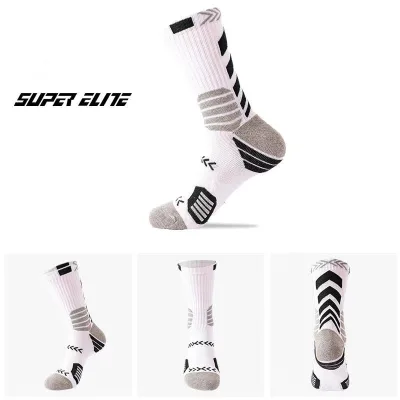


Custom Logo Sports Knitted Socks Men Cycling Compression Athletic Soft Socks
$0.30 - $1.00
MOQ: 2000 Pairs


Comprehensive Sourcing Guide
Strategic Sourcing Guide for Breathable Knitted Sports Socks
Defining Technical Specifications and Material Composition
When sourcing Breathable Knitted Sports Socks, the primary objective is to align material science with functional performance requirements. The core product category encompasses a diverse range of styles, from ankle socks to leg warmers, all sharing a common manufacturing technique: knitting. This process allows for the creation of specific structural properties essential for athletic performance. The observed market data indicates that "Knitted" is the dominant technical method, ensuring the fabric possesses the necessary elasticity and breathability required for sports applications.
Material selection is the most critical variable in determining the sock's performance profile. The supply chain offers a variety of fiber compositions, each contributing distinct characteristics. Cotton is frequently cited as a primary material, offering natural softness and high absorbency, which is beneficial for daily wear and moderate activity. However, for high-intensity sports where moisture management is paramount, Nylon and Bamboo fiber are prominent alternatives. Nylon provides durability and structural integrity, while Bamboo fiber is often associated with enhanced breathability and natural antibacterial properties. Buyers must verify the specific material blend for each SKU, as a single listing may contain variations ranging from pure cotton to synthetic blends.
The physical dimensions and thickness of the socks also vary significantly across the market. Specifications range from "Normal" thickness for everyday use to "Medium" and "Thick" variants designed for colder conditions or specific sports like hiking. Length specifications are equally diverse, including "Ankle Socks," "Crew Socks," and "Leg Warmers." The height classification further refines the product, with options ranging from "Ankle" to "Tall." Size availability typically spans from "S" to "XL," with some suppliers offering "One size" solutions or specific ranges like "S/M" and "L/XL." Foot length specifications, such as "22-24 cm," provide a precise metric for sizing accuracy. Understanding these granular details is essential for matching the product to the intended user demographic, which is predominantly adults in the unisex category.
Functional Attributes and Performance Features
The functional capabilities of Breathable Knitted Sports Socks are defined by a suite of features designed to enhance user comfort and safety during physical activity. The most prevalent feature observed in the market is "Breathable," a critical attribute that allows air circulation to regulate foot temperature and reduce sweat accumulation. This is often paired with "Eco-Friendly" claims, suggesting the use of sustainable materials or manufacturing processes, though buyers should verify the specific basis for this claim.
Hygiene and safety are addressed through "Anti-Bacterial" and "Antibacterial" functionalities. These features are particularly relevant for sports socks, as they help prevent odor and fungal infections in moist environments. The market also highlights "Anti-slip" and "Non-slip" functions, which are crucial for preventing blisters and ensuring stability during movement. These features are often integrated into the sole or heel area of the sock. Additionally, the "Pattern" and "Color" options, such as "Polka dot," "Solid," and "Black," allow for aesthetic customization, which is often a requirement for team uniforms or branded merchandise.
Customization is a significant driver in this sector. Many suppliers offer "Customized" logos and "Customized" standards, allowing buyers to tailor the product to their brand identity. The "Standard" for the product can range from specific size standards like "S-XL" to "One size" or fully "Customized" specifications. This flexibility extends to the "Season" of use, with products available for "Spring," "Summer," "Autumn," and "Winter," as well as "All" seasons. The "Applicable Scene" is typically listed as "Sports" or "Daily," indicating the versatility of the product for both athletic training and casual wear.
Cost Drivers and Pricing Dynamics
The pricing structure for Breathable Knitted Sports Socks is influenced by a complex interplay of material costs, customization levels, and order volume. The observed price range in the market spans from $0.30 to $20.00 USD per unit. This wide disparity reflects the difference between basic, mass-produced items and premium, highly customized solutions. Lower-priced items typically utilize standard materials like cotton or basic nylon blends with minimal customization. In contrast, higher-priced units often incorporate advanced materials like bamboo fiber, feature complex knitting patterns, or include significant branding work.
Order Volume is a primary determinant of the final unit cost. The Minimum Order Quantity (MOQ) observed in the market ranges from 10 to 2000 units. Suppliers offering low MOQs, such as 10 or 20 units, are often catering to small businesses or sample orders, which inherently carries a higher per-unit cost due to setup fees and lack of economies of scale. Conversely, orders approaching the 2000-unit threshold can leverage bulk material purchasing and optimized production lines, resulting in significantly lower per-unit prices. Buyers must balance their budget constraints with their inventory needs to determine the optimal order size.
Packaging also contributes to the overall cost structure. Standard packaging options include "OPP Bag" and "Polybag," which are cost-effective and suitable for general distribution. However, "Customized" packaging or "OPP Bags or Customized" options add to the production complexity and cost. The weight of the product, such as the observed "15g" for certain models, can also influence shipping costs, particularly for international procurement. Buyers should request detailed cost breakdowns that separate material, labor, packaging, and logistics to understand the true cost drivers behind the quoted price.
Supplier Evaluation and Compliance Verification
Selecting the right supplier requires a rigorous evaluation of their capabilities, reliability, and adherence to quality standards. The origin of the products is a key factor, with the majority of the observed supply chain originating from "China." Buyers should verify the specific factory location and assess the supplier's capacity to meet production demands. The "prod_model" identifiers, such as "BAT-B08," "ULD-0718174," "ULZ-0318492," "25082608," and "Ankle Socks-055Y," serve as unique references for specific product lines, helping buyers track consistency across orders.
Compliance and certification checks are essential, even though specific certification names are not explicitly listed in the general product data. Buyers must verify that the "Eco-Friendly" claims are backed by recognized environmental standards and that the "Anti-Bacterial" properties are validated through independent testing. The "prod_standard" field often indicates "Customized," which implies that the supplier may need to adhere to specific buyer requirements rather than a universal standard. It is crucial to request documentation proving that the materials and production processes meet the necessary safety and quality regulations for the target market.
Supplier reliability is further assessed through their customization capabilities. The ability to provide "Customized" logos and "Customized" standards indicates a flexible production line capable of handling bespoke orders. Buyers should evaluate the supplier's response time, communication clarity, and willingness to provide samples. The "prod_packing" options, ranging from standard "OPP Bag" to "Polybag" or custom solutions, also reflect the supplier's attention to detail and ability to meet specific branding requirements. A supplier that offers a wide range of packing options is likely more adaptable to different market needs.
Quality Control and Inspection Protocols
Implementing a robust quality control (QC) protocol is vital to ensure that the final product meets the specified technical and functional requirements. Given the variation in materials, from cotton to bamboo fiber, and the diversity in thickness and length, QC must be comprehensive. Inspection should begin at the raw material stage, verifying that the fibers match the declared composition. For instance, if a product is listed as "Bamboo fiber," the buyer should confirm the percentage of bamboo content and the quality of the fiber.
During the production phase, the knitting process must be monitored to ensure consistency in stitch density and structural integrity. Defects such as loose threads, uneven dyeing, or misaligned patterns can significantly impact the product's appearance and performance. The "Pattern" and "Color" attributes, such as "Polka dot" or "Black," require strict color matching to ensure brand consistency. Additionally, the "Anti-slip" and "Non-slip" features must be tested to ensure they provide the necessary grip and do not wear off after a few washes.
Post-production inspection should focus on the final dimensions and weight. The "Foot Length (cm)" and "Size" specifications, such as "Large" or "S/M," must be measured against the provided standards to ensure accuracy. The "Weight" of the product, noted as "15g" for some models, should be consistent across the batch to prevent discrepancies in shipping costs and customer expectations. Packaging inspection is also critical; the "OPP Bag" or "Polybag" must be sealed correctly, and any custom branding must be applied accurately. Buyers should consider hiring third-party inspection agencies to conduct random sampling and verify that the products meet the agreed-upon specifications before shipment.
Long-Term Procurement and Market Adaptation
Sourcing Breathable Knitted Sports Socks is not a one-time transaction but a strategic partnership that requires long-term planning and adaptability. The market is dynamic, with trends shifting towards sustainability and advanced performance features. Buyers should stay informed about emerging materials and technologies that could enhance the product's value proposition. The "Eco-Friendly" attribute is likely to become increasingly important, and suppliers who can demonstrate a commitment to sustainable practices will have a competitive advantage.
Inventory management is another critical consideration. The wide range of sizes, from "S" to "XL," and the variety of styles, including "Ankle Socks" and "Leg Warmers," necessitate a well-planned inventory strategy. Overstocking certain sizes or styles can lead to increased holding costs, while understocking can result in lost sales. Buyers should analyze historical sales data to predict demand for different sizes and styles, ensuring that the supply chain can respond quickly to fluctuations in demand.
The "Customization" aspect offers a significant opportunity for brand differentiation. As the market becomes more competitive, the ability to offer unique designs, logos, and packaging can set a brand apart. Buyers should work closely with suppliers to develop exclusive product lines that align with their brand identity. This may involve investing in higher MOQs to secure better pricing or collaborating on the development of new materials and features.
Finally, maintaining a strong relationship with suppliers is essential for long-term success. Open communication, regular performance reviews, and a shared commitment to quality will foster a partnership that can withstand market challenges. By focusing on technical specifications, compliance, cost efficiency, and quality control, buyers can build a resilient supply chain that delivers high-quality Breathable Knitted Sports Socks to their customers. The ability to adapt to changing market conditions and consumer preferences will be the key to sustained growth and profitability in this sector.
FAQs
What materials are used for Breathable Knitted Sports Socks?
Common materials include cotton, nylon, and bamboo fiber. Cotton offers softness, while nylon provides durability and bamboo fiber enhances breathability and antibacterial properties for athletic use.
Which features ensure safety during sports activities?
Key safety features include anti-slip, non-slip, and antibacterial functions. These attributes prevent blisters, ensure stability during movement, and reduce odor in moist environments typical of sports.
Can buyers request customized logos on these socks?
Yes, customized logos are available for many products. Suppliers often allow branding adjustments alongside customized standards to meet specific team or corporate identity requirements.
What is the typical minimum order quantity for these socks?
The minimum order quantity ranges from 10 to 2000 units. Lower MOQs suit small businesses or samples, while larger orders leverage bulk pricing and optimized production lines.
How does product thickness vary across different styles?
Thickness varies from normal to medium and thick. Normal thickness suits everyday wear, while medium and thick variants are designed for colder conditions or specific sports like hiking.
Are these socks suitable for all seasons?
Yes, options exist for spring, autumn, winter, and all seasons. Specific styles like leg warmers target winter, while ankle socks are versatile for spring and summer activities.