Source Socket Clevis Triangular Yoke Plate for Substations, Lines, and Industrial Use
Find 30 Socket Clevis Triangular Yoke Plate options from verified Chinese manufacturers. Buyers can compare specifications, materials like Q235 steel, and surface treatments such as hot-dip galvanizing for substation and line fitting applications.
Key considerations
Products List


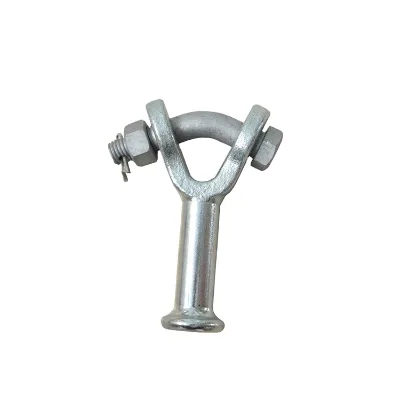
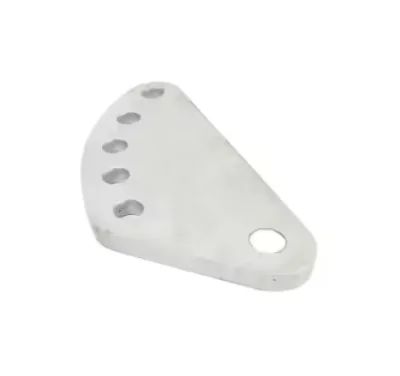
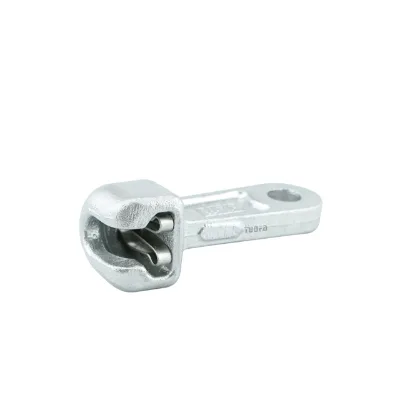
Hot Dipped Galvanized Steel Yoke Plates for Link Clamps Electrical Fittings
$0.99 - $1.50
MOQ: 1000 Pieces





Comprehensive Sourcing Guide
Strategic Sourcing Guide for Socket Clevis Triangular Yoke Plate
Understanding the Product Category and Technical Definitions
The term "Socket Clevis Triangular Yoke Plate" describes a specific subset of electrical hardware components used primarily in power transmission and distribution networks. In the context of B2B procurement, it is essential to distinguish between the general "Socket Clevis" and the specific "Triangular Yoke Plate" configuration, as the supply chain often lists these under broader categories like "Busbar Fitting," "Pull-Line Fitting," or "Link Fittings." The core function of a socket clevis is to provide a secure mechanical connection between a suspension insulator and a tower or structure, or between two tension members. The "triangular yoke" aspect typically refers to the geometry of the connecting plate or the specific arrangement of the clevis arms, designed to distribute mechanical load efficiently across the assembly.
Based on observed product attributes in the current market, these components are frequently categorized under "Busbar Fitting" and "Substation Fittings," though they also appear in "Line Fittings" and "Industrial" applications. The manufacturing process is a critical differentiator. While some listings indicate "Casting" as the primary method, others specify "Injection/Cold Pressing/Die Cast/Forge." For high-stress applications in substations or overhead lines, forged or cold-pressed variants are generally preferred for their superior grain structure and tensile strength compared to cast versions. The material composition is predominantly Q235 steel or general steel, which must be verified against the specific load requirements of the project. The surface treatment is a vital attribute, with "Hot Dipped Galvanized" (HDG) being the standard observation for corrosion resistance, appearing as "Face: HDG" or "Galvanizing: Hot-DIP" in product specifications.
Technical Specifications and Material Compliance
When evaluating socket clevis triangular yoke plates, buyers must scrutinize the technical specifications provided in the product data. The "Standard" attribute in the supply data shows a mix of non-GB (non-Chinese National Standard) and international standards such as IEC, BS, NEMA, and DIN. This variability indicates that a single product listing may not adhere to a single global standard but rather to a specific regional or customer-defined requirement. For instance, one observed product lists "prod_standard" as "Socket Clevis W Type Socket Clevis," which is a descriptive model name rather than a formal engineering standard. Another entry lists "1/2'', 5/8'', 3/4''" as the standard, which likely refers to the bolt hole diameters or thread sizes rather than a material standard.
The model numbers observed, such as "YCK-7-16," "WS-12G," "U-7," and "PT-21," suggest that manufacturers use proprietary coding systems. A "W Type" designation appears frequently, referring to the specific clevis geometry. Buyers should not assume that a "W Type" socket clevis is universally compatible with all triangular yoke plates without verifying the dimensional drawings. The "Shape" attribute is noted as "U Shape" in some listings, which may describe the cross-section of the yoke or the clevis arms. The "Color" is typically "Grey" or "Silver," corresponding to the galvanized finish.
It is crucial to verify the "prod_packing" details, as they can influence the condition of the product upon arrival. Observed packing methods include "Wooden Box," "Pallets," "Wooden Crate," "Carton," and "Bags." For heavy industrial fittings, wooden crates or pallets are preferred to prevent deformation during transit. The "Condition" is universally listed as "New," but buyers must ensure that the "Test" results, specifically "Pull Test" data, are available to confirm the mechanical integrity of the specific batch. The "Standard" attribute also lists "Non-GB," which implies that the product may not strictly follow Chinese National Standards but could be designed for export markets using IEC or DIN standards.
Compliance, Certification, and Regional Standards
Compliance is a complex area in this sector because the observed data presents a fragmented view of standards. While "ISO 9001" is mentioned in the low-confidence background, it should not be treated as a verified attribute for any specific product without direct confirmation from the supplier. The high-confidence facts list "IEC/BS/NEMA/DIN" as potential standards, but no single product is explicitly confirmed to hold all of them. Instead, the "prod_standard" field often contains model-specific text like "yck-7-16" or "Socket Clevis W Type Socket Clevis." This suggests that the "standard" is often a custom designation rather than a third-party certification.
Buyers must verify if the product meets the specific electrical or mechanical standards required by their local grid authority. For example, a project in Europe might require strict adherence to IEC standards, while a project in the US might require NEMA compliance. The "Location" data indicates origins in "Hebei, Handan, China," "West of Jiyingu Village, Yongnian County, Handan C," and "Fuzhou, Fujian, China." These regions are known for manufacturing heavy industrial hardware, but the specific factory certifications are not detailed in the product attributes.
The "Customization" attribute is marked as "Available," which is a significant advantage for buyers with non-standard requirements. However, customization often impacts the "Lead Time," which is observed to be "15-30 Days." Buyers should understand that while customization is possible, it requires a clear definition of the standard to be met (e.g., "Must meet IEC 61952" or "Must meet DIN 40449"). Without a specific standard defined in the purchase order, the supplier may default to their internal "prod_standard" which might not align with the buyer's regulatory environment.
Cost Drivers and Pricing Dynamics
The pricing for socket clevis triangular yoke plates is influenced by several factors, including material costs, manufacturing complexity, and surface treatment. The observed price range in the market is between 0 and 30 USD, but this range is extremely broad and likely includes a mix of small components, bulk pricing tiers, and varying unit costs based on the specific model. The "MOQ" (Minimum Order Quantity) ranges from 1 to 2000, indicating that the market accommodates both small procurement needs and large-scale infrastructure projects.
Material cost is a primary driver. The "Material" is consistently listed as "Q235" or "Steel." Fluctuations in the global steel market will directly impact the unit price. The "Surface Treatment" is another critical cost factor. "Hot Dipped Galvanized" is the standard observation, but the thickness of the zinc coating and the quality of the galvanizing process can vary, affecting the price. Products with "Casting" processes might be cheaper initially but could carry higher long-term risks regarding mechanical failure compared to "Forge" or "Cold Pressed" variants.
The "Type" of fitting also influences cost. "Suspension/Tension/Protective/Linking" fittings have different mechanical requirements. A "Pull-Line Fitting" designed for high tension will likely cost more than a simple "Link Fitting" used for low-stress connections. The "Packaging" method also adds to the cost; "Wooden Crate" or "Wooden Box" packaging is more expensive than "Bags" or "Cartons" but is necessary for protecting the galvanized finish during shipping. Buyers should request a breakdown of costs to understand the proportion of material, processing, and packaging fees.
Typical Applications and Operational Context
Socket clevis triangular yoke plates are integral to the stability and safety of electrical infrastructure. The "Usage" attributes observed include "Substation Fittings," "Line Fittings," and "Industrial" applications. In substations, these fittings are used to connect busbars, insulators, and grounding systems. The "Busbar Fitting" classification suggests their use in high-voltage environments where precise alignment and secure connections are paramount. In "Line Fittings," they are used in overhead transmission lines to suspend insulator strings from the tower cross-arms.
The "Triangular Yoke" design is particularly useful in applications requiring multi-directional load distribution. The geometry allows for better stress distribution compared to simple U-shaped clevises, making them suitable for "Tension" and "Suspension" applications. The "Face: HDG" (Hot Dipped Galvanized) finish is essential for outdoor line fittings exposed to weather, ensuring longevity in harsh environments. The "Test: Pull Test" is a standard verification for these components, ensuring they can withstand the mechanical loads imposed by the weight of the conductors and environmental factors like wind and ice.
In industrial settings, these fittings may be used for structural support or grounding connections. The "Color: Grey" or "Silver" finish is typical for galvanized steel, which provides a visual indicator of the protective coating. The "Condition: New" ensures that the components are free from rust or damage before installation. Buyers should consider the specific environment where the fitting will be installed; for coastal or highly corrosive areas, additional protection or higher-grade galvanizing might be necessary beyond the standard HDG observation.
Supplier Evaluation and Quality Control Protocols
Evaluating suppliers for socket clevis triangular yoke plates requires a focus on their manufacturing capabilities and quality assurance processes. The "Technics" attribute lists "Welding," "Injection/Cold Pressing/Die Cast/Forge," and "Casting." A supplier offering "Forge" or "Cold Pressing" is generally preferred for high-stress applications due to the improved mechanical properties of the metal. Buyers should verify the specific manufacturing process used for the product they intend to purchase, as a "Casting" product may not meet the same strength requirements as a "Forged" one.
Quality control should be a central part of the procurement strategy. The "Test: Pull Test" is a key indicator of mechanical strength. Buyers should request test reports that detail the results of pull tests, ensuring the product meets the required load-bearing capacity. The "Standard" attribute often lists "Non-GB" or specific model numbers, which means the buyer must define the acceptance criteria clearly. If the supplier claims compliance with "IEC/BS/NEMA/DIN," they must provide documentation or third-party certification to back this claim.
The "Location" of the supplier is also relevant. Suppliers in "Hebei, Handan, China" and "Fuzhou, Fujian, China" are established manufacturing hubs. However, the specific address "West of Jiyingu Village, Yongnian County, Handan C" suggests a specific industrial zone. Buyers should verify the supplier's physical presence and capacity to handle large orders. The "Lead Time" of "15-30 Days" is a standard observation, but for customized orders or large volumes, this may extend. The "MOQ" range of 1 to 2000 allows for flexibility, but buyers should negotiate based on their volume to secure better pricing and lead times.
Long-Term Procurement and Lifecycle Management
Long-term procurement of socket clevis triangular yoke plates involves more than just the initial purchase; it requires a strategy for maintenance, replacement, and supply chain continuity. The "Customization: Available" attribute is a strategic advantage, allowing buyers to standardize their inventory with specific models that fit their existing infrastructure. This reduces the need for multiple spare parts and simplifies maintenance procedures.
The "Packaging" options, such as "Wooden Crate" or "Pallets," are crucial for long-term storage. Proper packaging prevents damage to the galvanized finish, which is the primary defense against corrosion. If the finish is compromised during storage, the lifespan of the fitting is significantly reduced. Buyers should ensure that the packaging is robust enough to withstand the "Delivery Time" of 15-30 days and any subsequent storage periods.
For long-term supply chain stability, buyers should consider the "Standard" compliance of the products. If a project requires compliance with "IEC" or "DIN," the supplier must be able to consistently produce to these standards over time. The "Material" consistency, specifically "Q235" steel, is also vital. Variations in material quality can lead to premature failure. Buyers should establish a relationship with suppliers who can provide consistent quality and technical support, ensuring that replacement parts are identical to the original installations.
In conclusion, sourcing socket clevis triangular yoke plates requires a detailed understanding of the technical specifications, material properties, and manufacturing processes. By carefully evaluating the "Technics," "Standard," and "Test" attributes, buyers can ensure they procure high-quality components that meet the rigorous demands of electrical infrastructure. The flexibility in "Customization" and the range of "MOQ" values provide opportunities for tailored procurement strategies, but the focus must remain on verifying the mechanical integrity and compliance of the products to ensure long-term reliability and safety.
FAQs
What material is used for socket clevis triangular yoke plates?
The material is typically Q235 steel or general steel. This ensures sufficient tensile strength for substation and line fitting applications while allowing for hot-dip galvanizing.
Which surface treatment protects these fittings from corrosion?
Hot-dip galvanizing is the standard surface treatment observed. This process provides a durable zinc coating essential for outdoor line fittings and substation environments.
Can these fittings be customized for specific project needs?
Customization is available for many product models. Buyers should specify required dimensions or standards, noting that this may extend the standard 15-30 day delivery time.
What manufacturing techniques are used for these components?
Techniques include casting, forging, cold pressing, and die casting. Forged or cold-pressed variants are often preferred for high-stress applications due to superior grain structure.
How are these products packaged for safe transport?
Packaging options include wooden boxes, pallets, wooden crates, cartons, or bags. Heavy industrial fittings typically use wooden crates to prevent deformation during transit.
What standards do these fittings typically comply with?
Compliance varies and may include IEC, BS, NEMA, or DIN standards. Some listings use model-specific designations rather than formal engineering standards, requiring buyer verification.
Where are these fittings primarily manufactured?
Manufacturing origins include Hebei, Handan, and Fuzhou, Fujian in China. These regions are established hubs for producing heavy industrial electrical hardware and fittings.