Source Breathable Stainless Steel Smartwatch for fitness, health, and business
Find 30 Breathable Stainless Steel Smartwatch options with features like heart rate monitoring, blood oxygen tracking, and IP67 waterproofing. Compare specs from manufacturers in Guangdong, China, including models with touch screens and app control for diverse needs.
Key considerations
Products List


Comprehensive Sourcing Guide
Strategic Sourcing Guide for Breathable Stainless Steel Smartwatches
The global demand for wearable technology has shifted significantly toward devices that balance robust construction with user comfort, particularly in industrial and high-activity environments. For procurement professionals seeking a "Breathable Stainless Steel Smartwatch," the market presents a specific niche where durability meets skin-friendly design. Stainless steel is a preferred material for its resistance to corrosion, impact, and fluid exposure, yet it often raises concerns regarding thermal conductivity and breathability. This guide synthesizes observed market data and technical attributes to provide a disciplined framework for sourcing these devices, ensuring that buyers can identify products that genuinely meet functional requirements without relying on unverified marketing claims.
Technical Specifications and Material Analysis
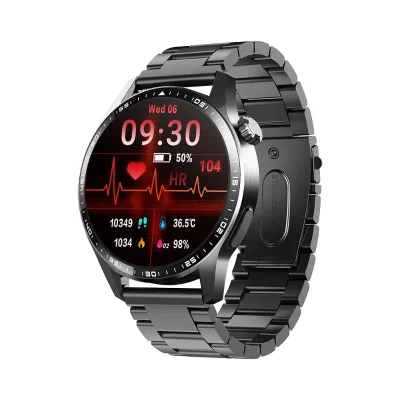
When evaluating a smartwatch constructed with stainless steel, the primary technical focus must be on the interplay between the band material and the case composition. The supplied data confirms that stainless steel is a standard material for the band, often paired with alloy cases. This combination suggests a device designed for high durability, suitable for environments where plastic or silicone bands might degrade. The "breathable" aspect of the keyword is critical; while stainless steel itself is not porous, the design of the band—such as Milanese loops, link styles, or perforated patterns—facilitates airflow and moisture management.
The display technology is another pivotal specification. Market observations indicate a prevalence of IPS (In-Plane Switching) and TFT (Thin Film Transistor) display types, with specific models featuring a 1.55-inch round screen with a resolution of 360x360 pixels. IPS technology is generally preferred for its wide viewing angles and color accuracy, which is essential for outdoor visibility. The screen size is noted to be greater than or equal to 50mm in diameter, providing ample real estate for data visualization.
Functionality is extensive, with devices supporting a wide array of health and communication metrics. Key attributes include 24-hour blood oxygen monitoring, body temperature monitoring, and heart rate tracking. The inclusion of a microphone and Bluetooth capabilities allows for direct call answering and voice assistant integration, specifically noted as Google Assistant in some configurations. The operating system compatibility is primarily listed as Android, though the presence of SDK availability suggests potential for deeper integration or customization by enterprise buyers.
| Feature Category | Observed Specifications | Procurement Verification Point |
|---|---|---|
| Case Material | Alloy | Verify alloy composition for weight and corrosion resistance. |
| Band Material | Stainless Steel | Confirm specific steel grade (e.g., 316L) for hypoallergenic properties. |
| Display Type | IPS, TFT | Check for anti-glare coating and brightness levels in nits. |
| Screen Size | ≥50mm (1.55 Inch) | Ensure physical dimensions fit the intended wrist size range. |
| Water Resistance | IP67, IPX-6 | Verify specific test conditions for immersion and dust ingress. |
| Connectivity | Bluetooth, WiFi, 3G | Confirm network compatibility with target region infrastructure. |
Compliance and Certification Verification
In the realm of industrial and health-monitoring wearables, compliance is not merely a formality but a critical risk mitigation strategy. While the supplied context mentions standards such as ASTM F136 and EN13319, these are flagged as low-confidence background information and should not be assumed as inherent certifications for every listed product. Buyers must treat these as verification targets rather than guaranteed attributes.
The most concrete standard observed is the IP67 rating, with some references to IPX-6. IP67 indicates protection against dust ingress and temporary immersion in water, while IPX-6 suggests resistance to powerful water jets. However, "breathable" does not equate to "waterproof" in the traditional sense; it refers to the band's ability to allow air circulation. Procurement teams must request specific test reports from suppliers to validate these ratings. For health monitoring features like blood oxygen and temperature sensors, buyers should inquire about the accuracy validation methods used by the manufacturer. Are these sensors calibrated against medical-grade equipment? Without specific certification data in the prompt, the buyer must demand evidence of calibration and accuracy before finalizing bulk orders.
Furthermore, the product origin is consistently listed as Guangdong, China. This geographic concentration implies a mature supply chain but also necessitates rigorous due diligence regarding intellectual property and export compliance. Buyers should verify that the "OEM Logo" and "Private Mold" capabilities do not infringe on existing patents, especially given the "Smart Watch F60" model number which may be a generic reference used by multiple factories.
Cost Drivers and Pricing Dynamics
The observed price range for these devices spans from $6.20 to $99.90 USD. This wide variance is a significant indicator of the cost drivers inherent in the market. The lower end of the spectrum likely represents devices with basic functionality, standard stainless steel bands, and minimal customization. The higher end, approaching $100, likely correlates with advanced features such as 3G connectivity, higher-grade alloy cases, superior IPS displays, and comprehensive SDK support for enterprise integration.
Material costs play a substantial role. Stainless steel bands are inherently more expensive to manufacture than silicone or leather alternatives due to the machining and polishing required. The "breathable" design, whether achieved through a Milanese mesh or a link structure, adds labor costs compared to a solid strap. Additionally, the inclusion of features like a microphone, voice assistant, and advanced health sensors increases the Bill of Materials (BOM) cost.
Minimum Order Quantity (MOQ) is another critical cost factor. The observed MOQ ranges from 1 to 3,000 units. For buyers seeking customization, such as OEM logos or private molds, the MOQ will likely be higher, potentially pushing the unit cost down through economies of scale. However, the flexibility to order as few as one unit suggests that some suppliers cater to prototyping or small-batch testing, which can be useful for validating product quality before committing to large volumes. Buyers must balance the unit price against the total cost of ownership, including potential rework costs if the initial batch fails quality checks.
Typical Applications and Use Cases
The versatility of stainless steel smartwatches allows them to serve diverse sectors. The "Fashion.Sport.Healthy.Business" style classification indicates a broad appeal. In a business context, the device serves as a communication hub with call reminders, push messages, and dial call capabilities, all housed in a professional-looking alloy and steel package. The "breathable" nature of the band is particularly valuable for professionals who wear the device for extended periods, reducing skin irritation and sweat accumulation.
In the sports and fitness sector, the device's robust construction is a key asset. The "Anti-Impact" and "Dustproof" features, combined with the IP67 rating, make these watches suitable for rugged environments where standard consumer electronics might fail. The inclusion of a pedometer, sleep tracker, and speed measurement supports athletic training. The "Male" applicable people tag suggests a design focus, but the functionality is universal.
Industrial applications are also viable, particularly where hygiene and durability are paramount. Stainless steel is easy to clean and resistant to chemical corrosion, making it suitable for food processing or chemical handling environments, provided the device meets specific hygiene standards. The "Usage: Communication, Detection" tag reinforces this dual role. However, buyers must ensure that the "breathable" design does not compromise the seal integrity required for specific industrial safety standards.
Supplier Evaluation and Selection Criteria
Selecting the right supplier for stainless steel smartwatches requires a multi-faceted evaluation process. The presence of "OEM Logo" and "Customization" options indicates that many suppliers are capable of white-labeling, but the quality of the underlying product varies. Buyers should prioritize suppliers who demonstrate transparency in their manufacturing process.
Key evaluation criteria include:
- Technical Capability: Does the supplier have the in-house capacity to produce the specific stainless steel band designs? Can they support the SDK and app integration requirements?
- Quality Control: Given the low-confidence status of some standards, the supplier's internal QC protocols are paramount. Ask for their inspection reports for water resistance and sensor accuracy.
- Supply Chain Stability: With the origin in Guangdong, China, buyers should assess the supplier's ability to manage lead times and raw material shortages. The "Private Mold" capability suggests a level of control over the production line, which can be a positive indicator of stability.
- Reputation and History: While specific supplier names should not be recommended, buyers should look for evidence of long-term partnerships with other brands. The "Brand: OEM Stainless Steel Strap Smart Watch" listing suggests a generic approach, so verifying the actual factory behind the brand is essential.
Quality Control and Long-Term Procurement
Quality control for stainless steel smartwatches must address both mechanical and electronic integrity. Mechanically, the focus should be on the clasp mechanism (noted as "Press buckle") and the link integrity of the band. A "breathable" band must not compromise the structural strength of the watch. Electronics-wise, the battery life, observed to be between 5 to 10 days, is a key performance indicator. Buyers should test units under real-world conditions to verify if the battery life holds up with continuous heart rate and blood oxygen monitoring enabled.
Long-term procurement considerations involve the lifecycle of the device. The "Android" operating system and "SDK available" features suggest that the device may require software updates. Buyers must ensure that the supplier can provide ongoing firmware support. If the supplier ceases operations, will the buyer be left with obsolete hardware? The "Customization" aspect offers a path to differentiation, but it also creates dependency on the supplier's ability to maintain the custom mold.
Furthermore, the "Single gross weight" of 0.200 kg and "Single package size" of 17.5x11.5x4 cm are critical for logistics planning. These dimensions suggest a compact packaging solution, which can reduce shipping costs. However, buyers should verify if the packaging is robust enough to protect the stainless steel components during transit, especially given the potential for scratches on the polished metal surfaces.
Conclusion
Sourcing a Breathable Stainless Steel Smartwatch requires a careful balance of technical verification, cost analysis, and supplier due diligence. The market offers a wide range of options, from basic models to feature-rich devices with advanced health monitoring and communication capabilities. By focusing on the verified attributes such as the IP67 rating, stainless steel band material, and specific display technologies, buyers can navigate the complexities of the supply chain. The wide price range and MOQ flexibility allow for various procurement strategies, but the ultimate success of the sourcing effort depends on rigorous quality control and a clear understanding of the product's intended application. As the market evolves, maintaining a focus on verified facts rather than unconfirmed claims will ensure that the procurement of these devices meets both functional and commercial objectives.
FAQs
What materials are used for the case and band?
The case is constructed from alloy while the band is made of stainless steel. This combination provides durability and a professional look suitable for business and sports environments.
Does the watch support blood oxygen monitoring?
Yes, the device supports 24-hour blood oxygen monitoring using red light technology. This feature allows for continuous health tracking alongside heart rate and body temperature monitoring.
What is the screen size and resolution?
The watch features a 1.55-inch round IPS screen with a resolution of 360x360 pixels. The display size is greater than 50mm, ensuring clear visibility for notifications and health data.
How long does the battery last on a single charge?
The battery life ranges from 5 to 10 days depending on usage patterns. This duration supports continuous health monitoring and regular Bluetooth calls without frequent recharging.
Can I customize the logo and brand on the watch?
Yes, OEM logo customization is available for this product. Buyers can request private mold services to add their branding, subject to meeting the minimum order quantity requirements.
What is the water resistance rating of the device?
The watch meets the IP67 waterproof standard and is also rated IPX-6. This ensures protection against dust ingress and temporary water immersion suitable for daily wear and light sports.
Which voice assistant is supported by the smartwatch?
The device supports Google Assistant for voice interactions. This integration allows users to perform hands-free commands while managing calls and messages directly from the wrist.