Source Breathable Rubber Sole Kids Sneakers for sports, play, and school
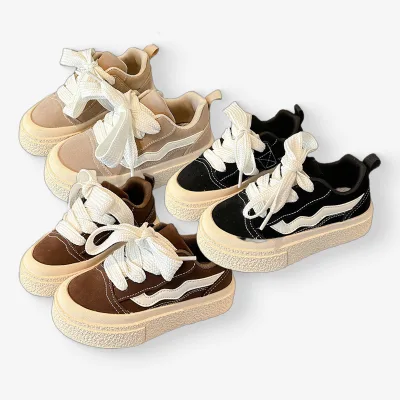
Explore 30 listings of Breathable Rubber Sole Kids Sneakers featuring varied materials like PU and woven fabric. Buyers can compare sizes, customization options, and supplier terms to find suitable footwear for children.
Key considerations
Products List


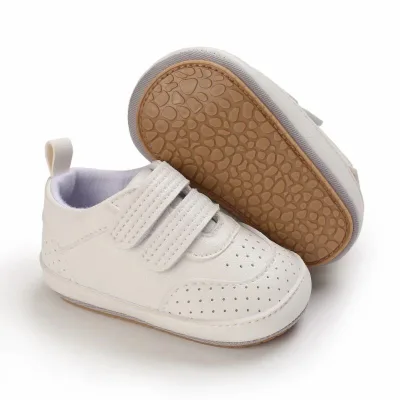
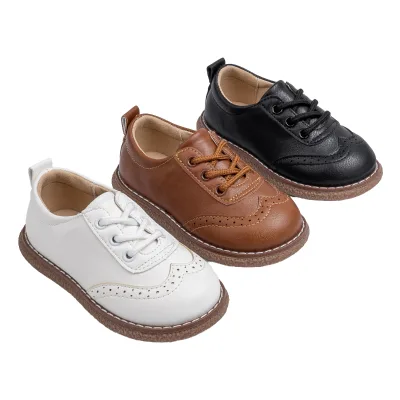
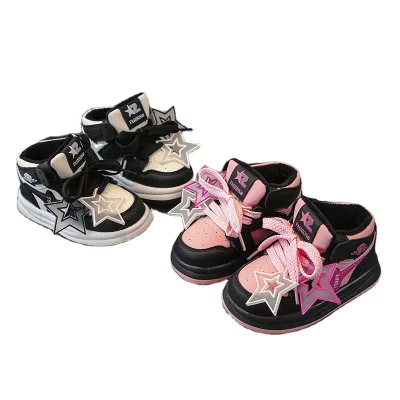
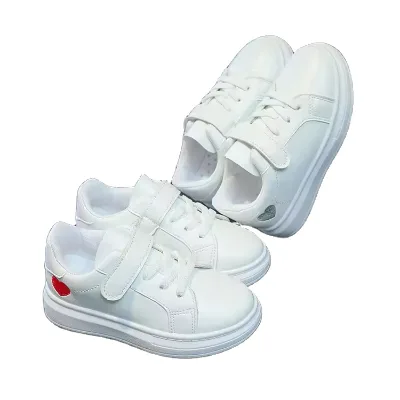


Comprehensive Sourcing Guide
Strategic Sourcing Guide for Breathable Rubber Sole Kids Sneakers
Understanding the Product Landscape and Core Specifications
When initiating a procurement strategy for Breathable Rubber Sole Kids Sneakers, buyers must first distinguish between the specific material compositions and construction methods observed in the current market. The term "rubber sole" often serves as a general descriptor, yet the supplied product data reveals a nuanced landscape where outsole materials vary significantly between EVA, PVC, and actual rubber formulations. While the core keyword emphasizes rubber, the available inventory includes models utilizing EVA (Ethylene-Vinyl Acetate) and PVC (Polyvinyl Chloride) for the outsole, which offer distinct performance characteristics regarding weight, flexibility, and durability. For instance, specific product lines feature an EVA outsole paired with a PU (Polyurethane) upper, designed to deliver a lightweight profile suitable for active children. Conversely, other entries indicate PVC outsoles, which may provide different traction properties and cost structures.
The upper material composition is equally critical for the "breathable" attribute. The market data highlights two primary categories: PU (Polyurethane) and Breathable Woven Fabric. Products utilizing woven fabric inherently support the breathability requirement more directly than solid PU, which relies on perforation or mesh integration. The lining material is consistently noted as textile, ensuring comfort against the skin. Furthermore, the sizing spectrum for these children's sneakers spans a wide range, with observed specifications covering sizes 28-34 for younger demographics and extending to 36-41 for older children. This variation necessitates precise sizing validation before bulk ordering to ensure the inventory matches the target age group. The product models identified, such as LZK0224-01, ZSK0039-07, and JL2388, represent distinct design iterations that may vary in heel height, closure type, and aesthetic patterns like stripes or bowknots.
Technical Compliance and Certification Verification Protocols
In the realm of children's footwear, technical compliance is not merely a suggestion but a mandatory requirement for market entry. Buyers must verify that suppliers adhere to strict safety standards regarding chemical composition, physical durability, and mechanical safety. While the supplied context does not explicitly list specific certification bodies (such as ASTM, EN, or ISO standards), the presence of "Not Stock" items and "Customized" logos indicates a manufacturing environment capable of meeting specific buyer requirements. However, the absence of explicit certification data in the product listings means that buyers must actively request and verify compliance documentation.
The verification process should focus on the outsole material's slip resistance and the upper material's flammability and chemical safety. For products with PVC outsoles, buyers should inquire about phthalate-free formulations, as PVC often requires plasticizers that can be regulated in children's products. Similarly, the use of PU and textile linings must be confirmed for the absence of harmful dyes or formaldehyde. The "Waterproof" attribute observed in some models (e.g., model 2866) versus "Not Waterproof" models (e.g., model LH-3005) suggests that buyers must clearly define their functional requirements. If the target market requires waterproofing, the supplier must demonstrate that the treatment does not compromise the breathability of the woven fabric or the structural integrity of the sole.
Buyers should also scrutinize the "prod_standard" dimensions provided, such as 322512cm and 454520cm, which likely refer to carton packaging standards rather than product safety standards. These packaging dimensions are crucial for logistics planning but do not substitute for product safety certifications. The "Element" and "Pattern" attributes, such as lace, hook & loop, or bowknots, also require safety checks to ensure that small parts do not pose a choking hazard for the intended age group. A comprehensive compliance check must include a request for test reports from accredited laboratories, specifically focusing on the outsole's tensile strength and the upper's abrasion resistance.
Cost Drivers and Pricing Structure Analysis
The pricing structure for breathable kids sneakers is influenced by a complex interplay of material costs, customization levels, and order volumes. The observed price range in the market spans from $0.10 to $11.30 USD, a wide disparity that reflects differences in material quality, brand positioning, and order quantity. The lower end of this spectrum likely corresponds to basic models with PVC outsoles and standard packaging, while the higher end may reflect premium EVA or rubber soles, advanced breathable woven fabrics, and complex customization features.
Material costs are a primary driver. EVA outsoles generally command a higher price point than PVC due to their superior cushioning and lighter weight, which are highly valued in the children's footwear market. Similarly, breathable woven fabric uppers are typically more expensive than standard PU or synthetic leather due to the complexity of the weaving process and the performance benefits they offer. The "Customization" attribute, including printed or embroidered logos and OEM services, adds a layer of cost that scales with the complexity of the design and the volume of the order.
Order Volume is another critical factor. The data indicates a wide range of Minimum Order Quantities (MOQ), from as low as 5 pairs to as high as 1200 pairs, with specific models requiring 500 or 1000 pairs. The "MOQ: 500 Pairs/Color" specification suggests that color variations can significantly impact the total order volume required. Buyers must balance the desire for a diverse color palette with the financial implications of meeting higher MOQ thresholds. Additionally, the "Stock: Not Stock" status implies that most items are made-to-order, which eliminates inventory holding costs for the supplier but may increase the unit price compared to off-the-shelf stock items.
Supplier Evaluation and Operational Capabilities
Evaluating a supplier for children's sneakers requires a deep dive into their operational capabilities, specifically regarding production capacity, lead times, and quality control systems. The observed lead times vary, with sample production taking between 12-15 days and 15-21 days, while full delivery dates are estimated at 45 days. These timelines are indicative of a manufacturing process that involves significant customization and quality assurance steps. Buyers should assess whether these lead times align with their seasonal planning and inventory requirements.
The "prod_origin" is consistently listed as China (Mainland) or China, indicating a concentrated supply base. While this offers access to a robust manufacturing ecosystem, it also necessitates rigorous supplier vetting. Buyers should verify the supplier's capacity to handle the specific "Type" of shoes required, whether they are "Kids Sneakers," "Sports Shoes," or "Sock Sneakers." The ability to produce "Unisex" models with specific features like "Mid Heel" or "Round Toe" styles demonstrates design versatility.
Payment terms are another critical evaluation point. The standard terms observed are T/T (Telegraphic Transfer) or L/C (Letter of Credit). These terms reflect the financial risk profile of the transaction. For new buyers, L/C may offer more security, while T/T is common for established relationships. The "Sample" availability is a key indicator of supplier responsiveness. A sample lead time of 12-21 days suggests that the supplier is not operating on a purely stock-based model but rather a production-on-demand basis. Buyers should request samples early in the process to validate the "Feature" claims of breathability, comfort, and durability before committing to a bulk order.
Quality Control and Performance Verification
Quality control in the production of breathable kids sneakers must address both aesthetic and functional attributes. The "Feature" list emphasizes breathability, comfort, and durability, which are subjective but measurable through specific testing protocols. Buyers should establish clear acceptance criteria for these features. For breathability, visual inspection of the woven fabric and testing of air permeability are essential. Comfort can be assessed through fit testing and material softness, while durability requires abrasion and flex testing on the outsole and upper materials.
The "prod_packing" specifications, such as "1pair Per Each Box, 12pairs Per Cartons," provide a baseline for packaging quality. However, buyers must ensure that the packaging protects the shoes during transit, especially given the "Delivery Date" of 45 days, which implies a long supply chain. The "Closed Form" options, including lace, hook & loop, and magic tape, must be tested for longevity. Children's footwear undergoes significant stress, and the closure mechanism must withstand repeated use without failure.
Furthermore, the "Element" and "Pattern" details, such as stripes or bowknots, must be securely attached to prevent detachment, which could pose a safety hazard. The "Waterproof" attribute requires specific testing to ensure that the treatment is effective without compromising the shoe's breathability. Buyers should request third-party test reports that validate these performance claims, ensuring that the "Comfortable" and "Lightweigt" attributes are backed by data rather than marketing language.
Long-Term Procurement Considerations and Supply Chain Resilience
Sourcing Breathable Rubber Sole Kids Sneakers is not a one-time transaction but a long-term partnership that requires strategic planning. The "Stock: Not Stock" status highlights the importance of supply chain resilience. Buyers must develop contingency plans for potential delays, given the 45-day delivery window. Diversifying suppliers across different regions or maintaining a buffer stock of critical components can mitigate risks associated with production disruptions.
The customization capabilities, including OEM logo printing and embroidery, offer opportunities for brand differentiation. However, buyers must ensure that the customization process is scalable and consistent. The "Logo" options of "Printed/Embroideryed/as OEM" suggest flexibility, but the quality of these applications must be consistent across all units. Buyers should establish a clear specification sheet for logo placement, size, and color to maintain brand integrity.
Finally, the "Payment Term" flexibility and the range of MOQs provide buyers with the ability to scale their orders based on market demand. However, the variation in MOQs (5 to 1200 pairs) requires careful financial planning. Buyers should aim to negotiate MOQs that align with their sales forecasts while maintaining a healthy cash flow. The "Season: Spring/Autumn" specification indicates that these products are seasonal, and buyers must time their orders to ensure availability during peak demand periods. By focusing on these long-term considerations, buyers can build a sustainable and resilient supply chain for breathable kids sneakers.
FAQs
What customization options are available for logos on these sneakers?
Customization is available with logos printed, embroidered, or produced as OEM. Buyers can select from these methods to brand the footwear according to their specific design requirements.
How long does it take to receive samples for these children's shoes?
Sample production typically takes between 12 to 21 days depending on the specific model. This lead time allows for the creation of custom prototypes before bulk manufacturing begins.
Which outsole materials are used for these breathable kids sneakers?
Outsoles are made from either EVA or PVC materials depending on the product model. These materials offer distinct characteristics regarding weight, flexibility, and durability for active children.
Can I order these sneakers with a minimum quantity of 500 pairs?
Yes, the minimum order quantity is set at 500 pairs for most models. Some specific variations may require 500 pairs per color or up to 1000 pairs for bulk orders.
What are the payment terms for purchasing these children's sports shoes?
Payment terms are accepted via T/T or L/C for secure transactions. These standard methods ensure financial clarity for both the buyer and the manufacturer during the order process.
How are the shoes packed for shipping to international destinations?
Shoes are packed one pair per box and twelve pairs per carton. This standard packaging ensures protection during transit while optimizing space for logistics and delivery.