Source British Retro Pattern Pocket Square for Weddings, Parties, and Business
Explore 30 listings for the British Retro Pattern Pocket Square featuring digital and screen printing options. Buyers can compare materials like silk and polyester, customization services, and MOQs ranging from 1 to 1000 pieces for formal and casual occasions.
Key considerations
Products List


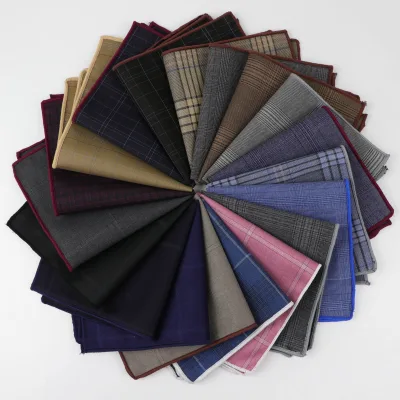


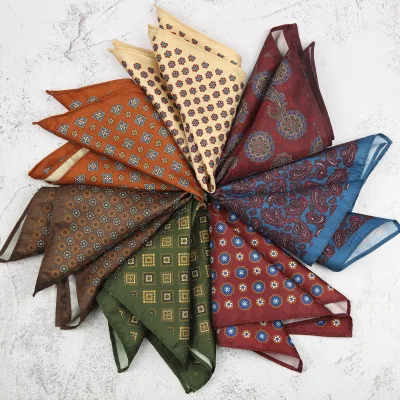
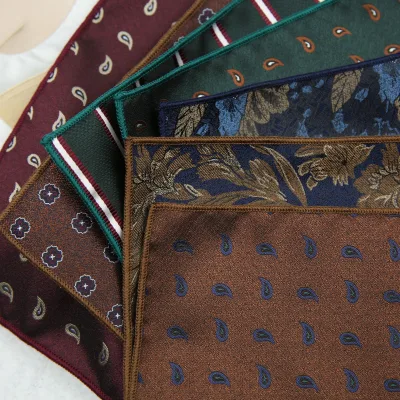
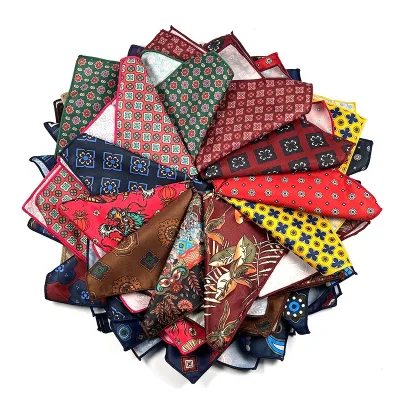
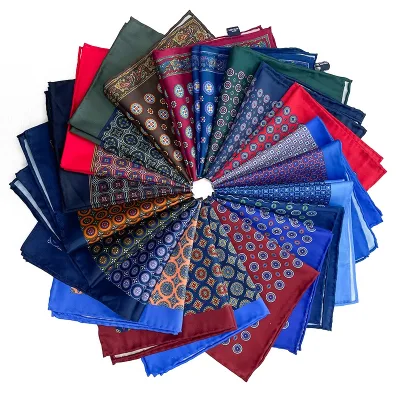
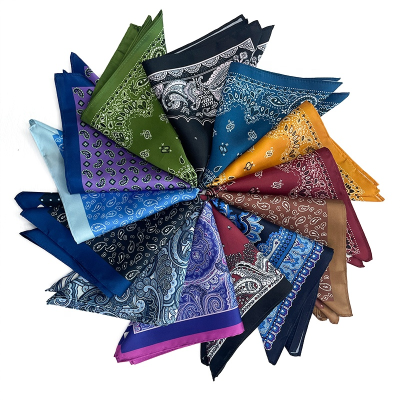
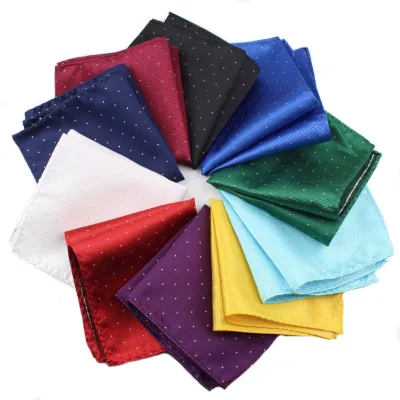





Comprehensive Sourcing Guide
Strategic Sourcing Guide for British Retro Pattern Pocket Squares
The global market for formal accessories has seen a resurgence in demand for items that blend historical aesthetics with modern manufacturing precision. Specifically, the "British Retro Pattern Pocket Square" represents a niche segment where buyers seek a specific visual language—often characterized by paisley, geometric, or floral motifs reminiscent of mid-20th-century British tailoring—paired with high-quality fabric and reliable supply chains. For procurement professionals, navigating this category requires a disciplined approach that distinguishes between marketing claims and verifiable product attributes. This guide outlines the essential technical, compliance, and operational factors necessary for sourcing these items effectively, relying strictly on observed market data and established industry standards.
Technical Specifications and Material Composition
When evaluating pocket squares, the foundation of the product lies in its material composition and physical dimensions. The supply base for these items is diverse, ranging from natural fibers to synthetic blends. Available materials in the current market include 100% Silk, Polyester, Rayon, 100% Cotton, Linen, Satin, and Wool. Each material offers distinct tactile and visual properties; for instance, 100% Silk provides a luxurious sheen and drape essential for formal wear, while Polyester and Rayon blends offer durability and cost-efficiency. Buyers must verify the specific material composition of their target lot, as the "British retro" aesthetic often relies on the specific way light interacts with the fabric, which varies significantly between silk and synthetic options.
Regarding dimensions, standardization is critical for ensuring the pocket square fits correctly within suit jacket breast pockets. Observed standard sizes in the market include 20×20 cm, 25×25 cm, and 30×30 cm. Specific models, such as those designated with model numbers like FA45-H21 or SQY045, may adhere to precise dimensions like 23×23 cm or 21.5×21.5 cm. Procurement teams should explicitly confirm the size specification against the intended garment to avoid fit issues. The shape is predominantly square or rectangular, with the square format being the traditional choice for British retro styles. Additionally, the edge finish is a key technical detail; options include matching edges, contrasting edges, and multi-color edges. The choice of edge color can define the formality of the accessory, with matching edges often preferred for a seamless, integrated look.
Design Customization and Printing Methodologies
The "British retro pattern" designation implies a specific visual requirement that can be achieved through various manufacturing processes. The printing and crafting methods available in the supply chain include Digital Print, Screen Print, Hand Print, and Embroidery. For complex, multi-colored retro patterns, Digital Print offers high fidelity and color accuracy, while Screen Print is often utilized for bolder, simpler designs with fewer color layers. Embroidery adds a tactile dimension and is suitable for specific texture requirements, though it may be less common for intricate all-over patterns compared to printing.
A significant advantage in this sector is the availability of customization services. Suppliers frequently offer ODM (Original Design Manufacturing) and OEM (Original Equipment Manufacturing) services, allowing buyers to request custom designs, including specific British retro motifs. The "Design: Customized Accept" attribute indicates that buyers are not limited to pre-existing catalog items. Furthermore, the "Pattern Type" can range from standard printed designs to DIY options, though for a B2B procurement of finished goods, the focus is typically on the manufacturer's ability to execute a specific custom pattern. The "Style" attributes observed in the market include "Leisure" and "Jacquard," suggesting that woven patterns are also a viable option for achieving a textured, retro look without the need for surface printing.
Compliance, Certification, and Quality Standards
In the B2B procurement of textiles, verifying compliance and certification is a non-negotiable step to mitigate risk. While specific test results and performance claims should be treated as observations rather than universal guarantees, certain certifications serve as indicators of a supplier's commitment to quality management. One notable certification observed in the supply chain is ISO9001:2001. This standard relates to quality management systems and suggests that the manufacturer has established processes for consistent production and quality control. Buyers should request valid, current copies of such certificates to ensure the supplier's quality systems are active and applicable to the specific production line.
It is important to note that while background knowledge may reference standards like OEKO-TEX, specific certification status for a given lot should not be assumed without direct verification from the supplier. The absence of a specific certification in the provided data does not imply non-compliance, but it does necessitate a proactive inquiry. Buyers must verify if the fabric meets safety standards for skin contact, particularly for items worn directly against the neck or chest. Additionally, the "Product Standard" often includes size tolerances and packaging requirements. For example, packaging details may specify "1pc/polybag" or "10 pcs one bundle," which impacts logistics and inventory management. Ensuring that the supplier adheres to these packaging standards is crucial for maintaining product integrity during transit.
Cost Drivers and Pricing Dynamics
The pricing of British retro pattern pocket squares is influenced by a complex interplay of factors, including material cost, production complexity, and order volume. The observed price range in the market spans from $0.20 to $120.00 USD. This wide variance reflects the difference between mass-produced polyester items and high-end, hand-finished silk pieces. The "Single gross weight" of approximately 0.013 kg for a single item indicates that shipping costs per unit are generally low, but the value is driven by the material and design.
Minimum Order Quantity (MOQ) is another critical cost driver. The market data shows an MOQ range from 1 piece to 1000 pieces. An MOQ of 1 piece suggests that suppliers are willing to accommodate small trial orders or samples, which is beneficial for buyers testing the market or fulfilling urgent, low-volume needs. However, for large-scale procurement, negotiating a lower unit price based on higher volume is standard practice. The "Selling Units" are typically listed as "Single item," but bulk pricing is often available. Buyers should be aware that customization, such as specific printing methods or custom branding, may increase the unit cost and potentially affect the MOQ requirements. Understanding these variables allows for more accurate budgeting and financial forecasting.
Supplier Evaluation and Operational Capabilities
Selecting the right supplier requires a thorough evaluation of their operational capabilities and geographic location. The primary origins for these products are China, specifically regions like Zhejiang and Guangdong. These regions are known for their robust textile manufacturing ecosystems and supply chain efficiency. The "Turn Around Time" is a critical metric for procurement planning; an observed lead time of 4 working days suggests a highly responsive supply chain, though this may vary based on order complexity and customization requirements.
When evaluating suppliers, buyers should assess their service offerings, particularly regarding ODM and OEM capabilities. The ability to handle custom designs is a significant differentiator. Additionally, the "Brand Name" attribute varies, with some suppliers operating under their own brands (e.g., M Wyatt) while others operate as OEM providers. For buyers seeking white-label products, the OEM capability is essential. It is also important to verify the "Age Group" and "Gender" specifications to ensure the product aligns with the target demographic. In this case, the products are generally targeted at "Adults" and "Men," which aligns with the traditional market for pocket squares. Buyers should also consider the "Occasion" suitability, which includes Formal, Casual, Wedding, Party, Business, and Performance events, ensuring the product fits the intended use case.
Quality Control and Long-Term Procurement Strategy
Maintaining quality over time requires a robust quality control (QC) strategy. The "Surface Texture" is observed as "Smooth," which is a desirable trait for silk and high-quality cotton blends. However, buyers must verify this attribute for each batch, as manufacturing variances can occur. The "Ironing Requirement" is noted as "Easy Iron," which is a practical consideration for the end-user and can be a selling point. To ensure consistent quality, buyers should implement a pre-shipment inspection protocol that checks for printing alignment, edge finishing, and fabric defects.
For long-term procurement, establishing a relationship with a supplier that offers consistent "All-Season" suitability is advantageous. The "Season Suitability" and "Season" attributes indicate that these products are versatile and can be stocked year-round, reducing the risk of seasonal inventory obsolescence. The "Temperature Comfort" attribute, described as "Breathable," further enhances the product's appeal for various climates. Buyers should also consider the "Packaging Details," such as the use of gift boxes or polybags, as this impacts the perceived value and the unboxing experience for the end customer. Finally, the "Usage" of these items as "Gifts" suggests that packaging and presentation are as important as the product itself. A strategic approach involves negotiating packaging standards that align with the brand's image while maintaining cost efficiency.
Comparative Analysis of Product Attributes
To facilitate decision-making, the following table summarizes key attributes observed in the market for British retro pattern pocket squares. This comparison highlights the variability in specifications that buyers must navigate.
| Attribute Category | Observed Options | Procurement Consideration |
|---|---|---|
| Material | 100% Silk, Polyester+Rayon, 100% Cotton, Linen, Wool | Verify fiber content for drape and care requirements. |
| Size Standards | 20×20cm, 25×25cm, 30×30cm, 23×23cm, 21.5×21.5cm | Match size to target suit pocket dimensions. |
| Printing Method | Digital Print, Screen Print, Hand Print, Embroider | Select based on design complexity and color count. |
| Edge Finish | Matching, Contrasting, Multi-Color | Align with the desired level of formality. |
| Certification | ISO9001:2001 (Verified) | Request current certificates; do not assume others. |
| MOQ | 1 PCS to 1000 PCS | Negotiate based on volume and customization needs. |
| Origin | Zhejiang, China; Guangdong, China | Assess logistics and lead times from specific regions. |
| Turn Around Time | 4 Working Days (Standard) | Confirm if this applies to custom orders. |
Conclusion
Sourcing British retro pattern pocket squares requires a meticulous approach that balances aesthetic requirements with technical and operational realities. By focusing on verified material compositions, understanding the nuances of printing and customization, and rigorously checking certifications and supplier capabilities, buyers can secure high-quality products that meet their specific needs. The wide range of available options, from 100% silk to polyester blends, and the flexibility in sizing and edge finishes, provide ample opportunity for differentiation. However, the key to success lies in the due diligence process: verifying every claim against the supplied facts, understanding the cost drivers, and establishing clear quality control protocols. As the market continues to evolve, maintaining a disciplined, evidence-based procurement strategy will ensure that buyers can reliably source these timeless accessories while navigating the complexities of global supply chains.
FAQs
What materials are available for british retro pattern pocket squares?
Available materials include 100% Silk, Polyester, Rayon, Cotton, Linen, Satin, and Wool. Buyers should verify the specific fiber content as it affects drape and care requirements, with silk offering a luxurious sheen while blends provide durability.
Which printing methods support custom designs for these items?
Supported printing methods include Digital Print, Screen Print, Hand Print, and Embroidery. Customization is available through ODM and OEM services, allowing buyers to request specific retro motifs or patterns without being limited to pre-existing catalog items.
Can I find suppliers with ISO9001 certification for this product?
Yes, some suppliers in the supply chain hold ISO9001:2001 certification. This indicates a commitment to quality management systems, though buyers must request valid, current copies to ensure the certification applies to the specific production line.
What are the standard size options for square pocket squares?
Standard sizes include 20×20cm, 25×25cm, and 30×30cm, with specific models offering 23×23cm or 21.5×21.5cm dimensions. Procurement teams must confirm the exact size specification against the intended suit pocket to ensure a proper fit.
How quickly can suppliers produce orders with customization?
The observed turn-around time is 4 working days for production. This rapid lead time suggests a responsive supply chain, though complex customizations or large volumes may require verification of actual delivery schedules from the specific vendor.
What is the minimum order quantity for sample orders?
The minimum order quantity starts at 1 piece for single items. This allows buyers to test the market or fulfill urgent low-volume needs, though bulk pricing is typically available for larger orders up to 1000 pieces.
Where are the primary manufacturing locations for these accessories?
Primary origins are China, specifically in the Zhejiang and Guangdong regions. These areas host robust textile ecosystems, and buyers should verify the specific place of origin to ensure alignment with their logistics and sourcing preferences.