Source Broadband Circulator for Telephone, Server, and Computer
Compare 30 Broadband Circulator options with frequencies from 2.0 to 40.0 GHz and various connector types. Buyers can review specifications for impedance, weight, and usage in telecommunications, automotive, and satellite applications.
Key considerations
Products List


Manufacturers Direct Sales of The Highest Quality Broadband Circulators
$20.00 - $199.00
MOQ: 1 Pieces


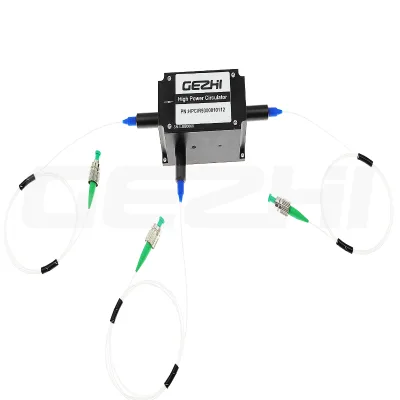
High Power Circulator for Bi-Direcction Communication for Catv Wdm Fiber Optical Receiver
$128.00 - $169.00
MOQ: 1 Minimum
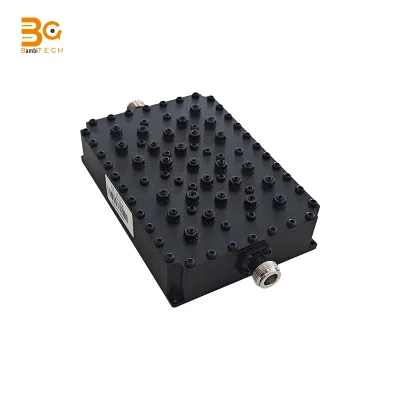
High Stability Radio Frequency Filter Wide Range of Applications Strong Controllability
$130.00 - $200.00
MOQ: 1 Minimum

75ohm, 8dB, Frequency 5-1250MHz, for Broadband and Wireless Communications.
$0.20 - $0.50
MOQ: 2000 Pieces


High Power 300W UHF Band 400 to 470MHz RF Coaxial Circulator for Base Station
$32.00 - $38.00
MOQ: 1 Pieces


10 to 12MHz Low Frequency RF Coaxial Circulators for Broadcast Transmitter Antenna
$300.00 - $550.00
MOQ: 1 Pieces

Comprehensive Sourcing Guide
Strategic Sourcing Guide for Broadband Circulator Acquisition
Understanding Core Technical Specifications and Frequency Ranges
When initiating a procurement strategy for broadband circulators, the primary focus must be on aligning technical specifications with the intended operational environment. These components are critical non-reciprocal devices that direct signal flow in a specific sequence, ensuring that transmitted energy does not reflect back to the source, thereby protecting sensitive equipment. The supplied product data indicates a diverse range of operational frequencies, necessitating a rigorous verification process before selection. Buyers must distinguish between units operating in the 2.0 to 6.0 GHz range and those designed for higher frequencies spanning 26.5 to 40.0 GHz. This distinction is not merely a matter of model numbers but dictates the physical construction, connector compatibility, and application suitability.
The impedance standard for these devices is consistently observed at 50 Ohms, which is the industry baseline for most radio frequency (RF) systems. Deviations from this standard can lead to significant signal loss and reflection issues. Furthermore, the bandwidth capability is a crucial metric; the available data suggests "Full" bandwidth configurations, implying a design optimized for wideband signal processing rather than narrowband filtering. Buyers should verify if the specific unit selected offers the necessary isolation levels, with observed minimum isolation values reaching 23 dB in certain configurations. This parameter is vital for preventing interference between transmit and receive paths in duplex systems.
Connector types vary significantly across the product spectrum, ranging from N-Female connectors made of nickel-plated brass or plated ternary materials to 2.92-Female connectors constructed from passivated stainless steel. The choice of connector material and type directly impacts durability, corrosion resistance, and signal integrity at higher frequencies. For instance, the 2.92-Female connector is typically preferred for applications requiring performance at millimeter-wave frequencies due to its superior mechanical stability and lower loss characteristics compared to standard N-type connectors. Additionally, the physical weight of the components, observed at 24 grams and 31 grams respectively, serves as a proxy for the internal mass and shielding effectiveness, which can be relevant for aerospace or mobile applications where weight is a constraint.
Compliance, Certification, and Regulatory Standards
Navigating the compliance landscape is a non-negotiable aspect of sourcing broadband circulators, particularly for international trade and deployment in regulated industries. The product data confirms that suppliers in this sector frequently adhere to a robust set of certifications, including ISO, GS, RoHS, CE, CCC, and FCC. These certifications are not merely marketing labels but represent adherence to specific safety, environmental, and electromagnetic compatibility standards. The presence of RoHS compliance indicates that the manufacturing process restricts the use of hazardous substances, which is a prerequisite for selling into the European Union and many other global markets. Similarly, CE marking demonstrates conformity with health, safety, and environmental protection standards for products sold within the European Economic Area.
For buyers targeting the North American market, the FCC certification is essential, ensuring that the device does not emit harmful levels of radio frequency interference. The inclusion of CCC (China Compulsory Certification) suggests that the manufacturer is also compliant with Chinese domestic regulations, which is often a baseline requirement for goods originating from or passing through China. The data also lists ISO certification, which generally implies adherence to quality management systems, though the specific standard (e.g., ISO 9001) should be verified against the supplier's actual documentation. It is critical for procurement teams to request current, valid certificates for each specific batch or model, as certification status can change over time or vary by production line.
Beyond the listed certifications, buyers must verify the material composition and manufacturing standards. The observed use of materials such as aluminum for the housing and specific plating on connectors suggests a focus on durability and signal performance. However, the exact standards governing the plating thickness or the alloy composition of the aluminum should be confirmed through technical datasheets. The product origin is consistently listed as Shaanxi, China, which provides a geographical context for the supply chain but does not inherently dictate quality. Buyers should treat the origin as a logistical factor while relying on the certifications and technical data for quality assurance. The absence of specific REACH or ISO 9001 references in the high-confidence data suggests that while these may be relevant background standards, they should not be assumed without explicit verification from the supplier.
Cost Drivers and Economic Factors in Procurement
The economic landscape for broadband circulators is characterized by a wide variance in pricing and minimum order quantities (MOQ), reflecting the diversity of applications and production scales. The observed price range spans from $0.20 to $25,000 USD, a disparity that underscores the difference between low-cost, general-purpose components and high-performance, specialized units designed for demanding environments. The lower end of the price spectrum likely corresponds to standard models with basic specifications, while the upper end may include custom-engineered solutions, high-frequency variants, or units with specialized packaging and extended warranties.
MOQ requirements also vary significantly, ranging from a single piece to 3,100 units. This flexibility allows buyers to procure small quantities for prototyping or testing without incurring prohibitive costs, while also accommodating large-scale production runs. The ability to order single units (1 PCS) is particularly valuable for research and development phases, enabling engineers to validate performance before committing to bulk orders. However, buyers must be aware that unit costs often decrease as order volume increases, a standard economic principle in manufacturing. The observed MOQ of 1 Set for certain models suggests that some products are sold as complete assemblies rather than individual components, which can impact the total cost of ownership.
Packaging and logistics also play a role in the overall cost structure. The data indicates that products are packed in cartons, wooden cases, or wooden boxes, with specific standard dimensions provided for certain models (e.g., 20×40×36 cm and 50×71×65 cm). These variations in packaging size and material affect shipping costs and handling requirements. For international shipments, the choice between cartons and wooden cases can influence customs clearance procedures and insurance premiums. Additionally, the warranty period of one year is a standard offering, but buyers should clarify what this warranty covers, including whether it extends to shipping damage or manufacturing defects. Understanding these cost drivers helps in budgeting accurately and negotiating favorable terms with suppliers.
Typical Applications and Usage Scenarios
Broadband circulators serve a multitude of critical functions across various industries, driven by their ability to manage signal flow efficiently. The usage data highlights applications in telecommunications, including telephone, server, workstation, and computer systems, where signal integrity is paramount. In these environments, circulators help isolate transmitters from receivers, preventing feedback loops that could degrade network performance. The data also points to specialized applications in automotive, home theater, and handheld devices, indicating the versatility of these components in consumer electronics and mobile platforms.
Beyond consumer and general telecommunications, the usage scope extends to high-stakes sectors such as automotive, ship, plane, satellite, observatory, television, and radio. In aerospace and maritime applications, the robustness of the circulator is essential to withstand harsh environmental conditions. The observed "Work Mode" of FDD (Frequency Division Duplex) is particularly relevant for these applications, as it allows simultaneous transmission and reception on different frequencies, a common requirement in modern wireless communication systems. The information content supported by these devices includes audio, video, picture, and text, demonstrating their role in handling diverse data streams.
The application categories are further defined as residential/general-purpose, commercial, and industrial. This classification suggests that broadband circulators are adaptable to both low-complexity home networks and high-reliability industrial automation systems. For instance, in industrial settings, the isolation capabilities of the circulator protect sensitive control equipment from RF noise generated by heavy machinery. In residential and commercial settings, they ensure stable connectivity for broadband internet and multimedia services. The specific model numbers, such as EF-H301B-N26 and EF-H2640, correspond to these varied applications, with each model tailored to specific frequency ranges and connector types. Buyers must match the application requirements with the specific technical capabilities of the circulator to ensure optimal performance.
Supplier Evaluation and Quality Assurance Protocols
Evaluating suppliers for broadband circulators requires a multifaceted approach that goes beyond price comparisons. The presence of a support network, specifically Bluetooth connectivity mentioned in the data, suggests that some modern circulators may integrate with smart monitoring systems, allowing for real-time performance tracking. However, the core evaluation criteria should focus on the supplier's ability to meet technical specifications, maintain consistent quality, and provide reliable after-sales support. The observed "Condition: New" and "Customization: Available" attributes indicate that suppliers are capable of delivering brand-new units and offering tailored solutions to meet unique project requirements.
Quality control should be a central component of the supplier evaluation process. Buyers should request detailed test reports that verify key performance indicators such as VSWR (Voltage Standing Wave Ratio), which is observed to have a maximum value of 1.25 in certain models. This metric is a critical indicator of impedance matching and signal reflection; a lower VSWR value generally indicates better performance. Additionally, the forward power handling capability, ranging from 20 to 150 Watts, must be verified to ensure the component can handle the expected power levels in the intended application without failure. The isolation value of at least 23 dB should also be confirmed through independent testing or certified test data.
The supplier's location, identified as Shaanxi, China, provides insight into the supply chain logistics but does not guarantee quality. Buyers should assess the supplier's track record, production capacity, and quality management systems. The availability of certifications like ISO, CE, and FCC is a positive indicator, but these should be cross-referenced with the specific products being purchased. Furthermore, the customization options available allow buyers to request modifications to standard specifications, such as connector types or frequency ranges, which can be a significant advantage for specialized projects. A reputable supplier will be transparent about their manufacturing processes and willing to provide samples for pre-production testing.
Long-Term Procurement and Lifecycle Management
Sourcing broadband circulators is not a one-time transaction but part of a long-term procurement strategy that requires careful planning for lifecycle management. The warranty period of one year is a standard baseline, but buyers should negotiate terms that extend beyond this period for critical applications where downtime is costly. The "Customization: Available" attribute suggests that suppliers can adapt products to evolving technical requirements, which is essential for maintaining system compatibility over time. As technology advances, the need for higher frequencies or different connector types may arise, and a flexible supplier can facilitate these transitions without requiring a complete system overhaul.
Inventory management is another critical consideration. The wide range of MOQs, from single units to thousands, allows for strategic stockpiling based on demand forecasts. For high-volume applications, securing a steady supply chain with favorable lead times is essential to prevent production delays. The packaging standards, such as wooden cases for larger shipments, should be evaluated for their ability to protect components during storage and transit, especially in humid or corrosive environments. The weight of the components, ranging from 24 to 31 grams, is a factor in logistics planning, particularly for large-scale deployments where cumulative weight impacts shipping costs.
Finally, buyers should consider the obsolescence risk associated with specific models. The observed model numbers, such as EF-H301B-N26 and EF-H2640, represent current production runs, but suppliers may discontinue these models in favor of newer technologies. Establishing a relationship with a supplier that offers long-term support and backward compatibility can mitigate this risk. Additionally, the "Support Network: Bluetooth" feature hints at future-proofing capabilities, where circulators may integrate with IoT ecosystems for remote monitoring and diagnostics. By focusing on these long-term factors, buyers can ensure a sustainable and efficient procurement process that supports the ongoing success of their RF systems.
FAQs
What certifications do broadband circulators typically have?
Broadband circulators typically hold ISO, GS, RoHS, CE, CCC, and FCC certifications. These ensure compliance with safety and environmental standards for global markets, though specific batches may vary in their documentation.
Which frequency ranges are available for these devices?
Available frequency ranges include 2.0 to 6.0 GHz and 26.5 to 40.0 GHz. Buyers must select the specific range based on their operational environment to ensure proper signal flow and impedance matching.
Can I order a single unit for testing purposes?
Yes, you can order a single unit as the minimum order quantity is one piece for some models. This flexibility supports prototyping and validation phases before committing to larger production runs.
What connector types are used for broadband circulators?
Connector types include N-Female made of nickel-plated brass and 2.92-Female made of passivated stainless steel. The choice depends on the required frequency and durability needs for the specific application.
How is the product packed for shipping?
Products are packed in cartons, wooden cases, or wooden boxes depending on the model. Standard dimensions vary, such as 20×40×36 cm or 50×71×65 cm, affecting logistics and handling requirements.
What is the warranty period for these components?
The standard warranty period is one year for the supplied units. This coverage typically applies to manufacturing defects, but specific terms should be verified with the supplier for each batch.
Where are these broadband circulators manufactured?
These components originate from Shaanxi, China, as indicated by the product origin data. This location serves as the primary supply chain node for the listed models and specifications.