Source FPV Drone Video Transmission Vtx and Vrx for Racing, Racing, and Long-Range Flight
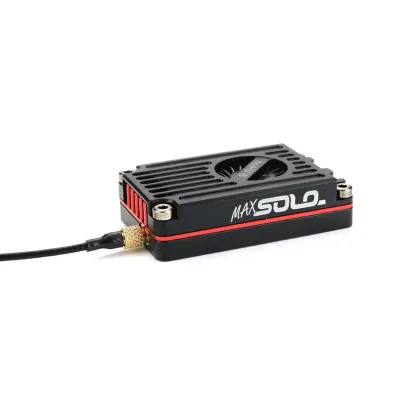
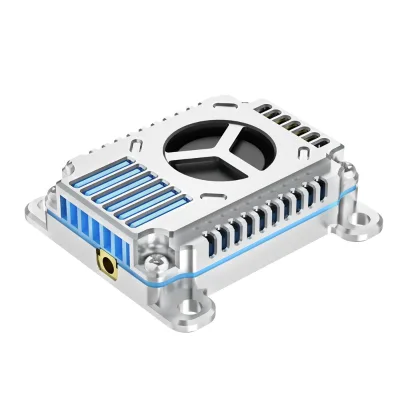
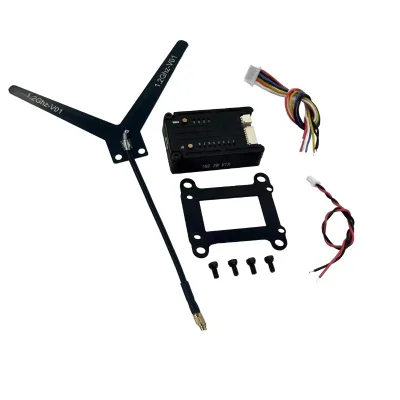
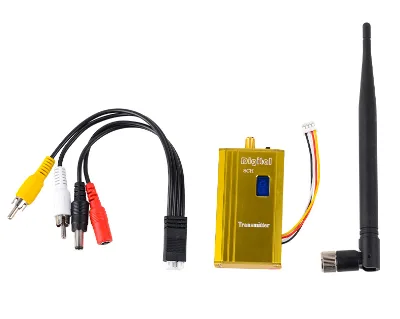
Explore 30 listings for FPV Drone Video Transmission Vtx and Vrx units designed for racing, long-range flight, and aerial photography. Buyers can compare power outputs, channel counts, and voltage ranges to find the right component for their specific build requirements.
Key considerations
Products List


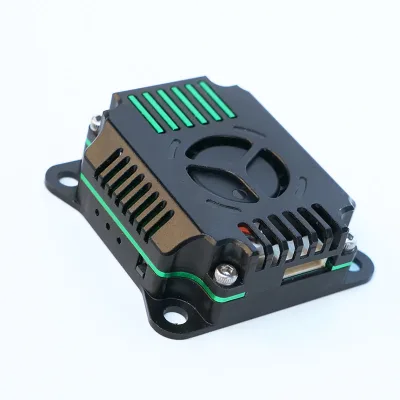
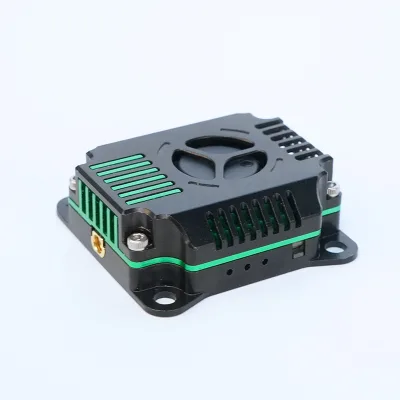
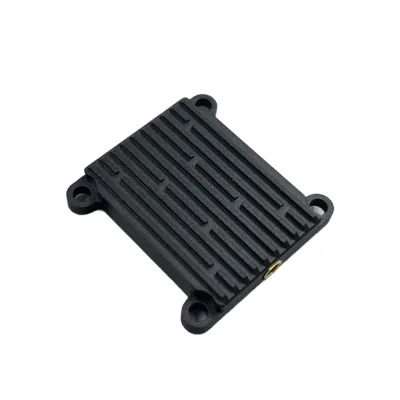
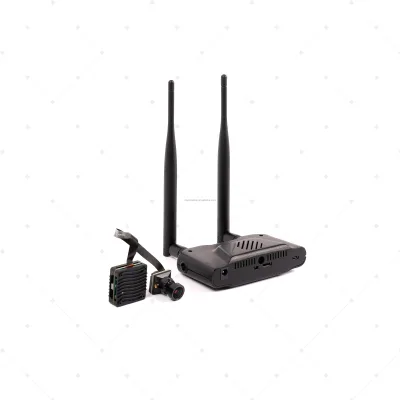
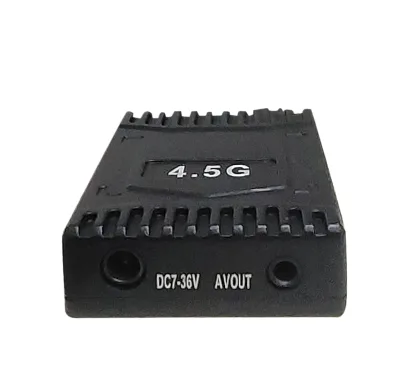
Uav Video Transmitter Wireless Fpv Vtx Drone Transmitter Image Transmission
$40.00 - $50.00
MOQ: 10 Pieces




Comprehensive Sourcing Guide
Strategic Sourcing Guide for FPV Drone Video Transmission Systems
The global market for First-Person View (FPV) drone technology has expanded rapidly, driven by advancements in remote piloting, competitive racing, and professional cinematography. At the heart of this ecosystem lies the video transmitter (VTX) and video receiver (VRX) hardware, which serves as the critical link between the drone's camera and the pilot's display. For procurement professionals, sourcing these components requires a nuanced understanding of frequency bands, power output, modulation standards, and supply chain reliability. This guide provides a disciplined framework for evaluating FPV video transmission systems, grounded in observable product attributes and industry standards.
Technical Specifications and Frequency Band Analysis
When evaluating FPV video transmission hardware, the primary technical differentiator is the operating frequency band. The supplied product data indicates a diverse range of available models, spanning from 1.2 GHz to 6 GHz. Specifically, the 5.8 GHz band is the most prevalent, with multiple listings referencing "5.8g" models. This band is the industry standard for consumer and professional FPV applications due to its balance between range and penetration capabilities. However, the data also highlights specialized units operating at 1.2 GHz, 1.3 GHz, 1.6 GHz, 4.9 GHz, and 6 GHz. These lower and alternative frequencies are often utilized for long-range applications or to avoid interference in crowded spectrums.
Power output is another critical specification that dictates the effective range of the video link. The observed product models include a wide spectrum of wattage ratings. Common configurations listed include 2.5W, 3W, 4W, and 1.6W variants. The 4W models, such as those labeled "5.8g 4W," represent high-power options suitable for extended range operations, while 1.6W and 2.5W units are typical for indoor racing or short-range freestyle flying. The input voltage requirements are equally specific, with many units designed to operate on a DC 7-36V range, compatible with 2S to 8S battery configurations. This wide voltage tolerance is essential for integration into various drone power systems.
The modulation and channel availability also vary significantly across the catalog. Some units support 72 channels, offering extensive flexibility to avoid signal interference in competitive environments, while others are limited to 48 channels. The standard video formats supported include NTSC and PAL, which must be matched with the receiving equipment. Furthermore, the physical interface for antennas is a key consideration; the MMCX interface is explicitly noted in the product attributes, ensuring compatibility with a vast array of standard FPV antennas. Buyers must verify that the selected VTX matches the specific frequency and power requirements of their intended application, as mismatched bands or power levels can lead to signal loss or regulatory non-compliance.
Compliance, Certification, and Regulatory Standards
Navigating the regulatory landscape for radio frequency (RF) equipment is a paramount concern for international procurement. While the product data mentions a "CE" certification in a low-confidence context, buyers must exercise extreme caution. The presence of a CE mark does not automatically guarantee compliance with all local regulations, particularly regarding RF spectrum usage, which varies significantly by country. In the United States, the Federal Communications Commission (FCC) sets strict limits on unlicensed radio devices, often capping power output for 5.8 GHz systems. In Europe, the ETSI standards govern similar parameters.
The supplied facts list "NTSC/PAL" as a standard, which refers to video encoding rather than RF transmission legality. However, the RF transmission itself must adhere to local spectrum regulations. Procurement teams should not rely solely on supplier claims regarding certification status. Instead, they must request specific test reports and documentation that verify the device's compliance with the target market's regulatory body. For instance, a device marketed as a "5.8GHz 4W" transmitter might be legal in one jurisdiction but illegal in another if the local limit is lower.
Additionally, the product origin is listed as Guangdong and Shenzhen, China, which are major manufacturing hubs. While these regions have a robust supply chain, the concentration of manufacturers does not equate to uniform quality or compliance. Buyers should verify that the specific batch of products being purchased has undergone the necessary testing for the destination market. Relying on generic "CE" labels without supporting documentation is a high-risk strategy that can lead to customs seizures or legal penalties. The procurement process must include a verification step where the supplier provides the specific test reports for the exact model number, such as "GW-96933" or "GC-99632A," rather than generic compliance statements.
Cost Drivers and Pricing Dynamics
The pricing of FPV video transmission systems is influenced by several distinct factors, including power output, frequency band, and build quality. The observed price range in the market data spans from 18 to 96 USD. This wide variance suggests that price is not merely a function of the component's basic function but is heavily tied to performance specifications. Higher power outputs, such as the 4W models, generally command a premium over lower wattage options like the 1.6W or 2.5W units. Similarly, units supporting a wider range of frequencies or advanced channel configurations may be priced higher due to the complexity of the internal circuitry.
Material composition also plays a significant role in cost determination. The product attributes indicate that units are constructed from a combination of Plastic and Metal. Metal housings, often aluminum, provide better heat dissipation, which is crucial for high-power transmitters operating at 4W or higher. These units typically cost more than those with plastic enclosures, which may overheat under sustained high-power operation. The inclusion of features like "Customization" availability can also impact the final price, as bespoke engineering or branding adds to the manufacturing overhead.
Minimum Order Quantity (MOQ) is another critical cost driver. The observed MOQ range is between 1 and 100 units. For small-scale buyers or prototyping teams, suppliers offering an MOQ of 1 or 10 units provide flexibility, though the unit price may be higher. Conversely, bulk buyers can leverage the lower end of the price spectrum by ordering in larger quantities, potentially reaching the 100-unit threshold. However, buyers must balance the savings from bulk purchasing against the risk of inventory obsolescence, especially given the rapid evolution of drone technology. The "Carton" or "Box" packing methods noted in the data also affect logistics costs, with carton packing often being more suitable for bulk shipping than individual retail boxes.
Typical Applications and Use Cases
The versatility of FPV video transmission systems allows them to serve a wide array of applications, from recreational hobbies to professional industrial tasks. The product data explicitly lists "Use for FPV Drones" and "Drone Accessories" as primary usage categories. This confirms that the core market remains the hobbyist and semi-professional drone community. Within this sector, the 5.8 GHz band is the dominant standard for racing and freestyle flying, where low latency and high bandwidth are essential for real-time control.
Beyond recreational use, these systems are increasingly deployed in professional settings. The "RF" application attribute and the "Communications Wiring Harness" industry type suggest that these components are integral to more complex communication setups. For example, search and rescue operations often utilize long-range VTX units, such as the 1.2 GHz or 4W models, to maintain video links over distances that exceed the capabilities of standard 5.8 GHz systems. Similarly, agricultural monitoring and infrastructure inspection may require the robustness and range provided by higher wattage transmitters.
The compatibility with "nearly all popular brands" indicates that these components are designed for integration into a wide ecosystem of drones and ground stations. This universality is a key selling point for procurement teams looking to standardize their inventory across different drone platforms. Whether for a fleet of racing drones or a mixed fleet of inspection UAVs, the ability to source a single type of VTX that works across multiple brands simplifies logistics and reduces the need for specialized training on different interfaces. The "72CH" and "48CH" channel options further support applications in crowded environments, such as drone racing events or large-scale public demonstrations, where signal interference is a constant challenge.
Supplier Evaluation and Quality Assurance
Evaluating suppliers for FPV video transmission systems requires a rigorous approach that goes beyond price and basic specifications. The product data reveals that manufacturers are located in specific regions like Guangdong and Shenzhen, China. While these are established manufacturing centers, the density of suppliers can make differentiation difficult. Buyers should prioritize suppliers who provide detailed technical documentation, including schematics, test reports, and clear specifications for operating temperature and current draw.
The operating temperature range of -10 to 60ºC is a critical quality indicator. Suppliers who can consistently meet this specification demonstrate a commitment to durability and reliability. Similarly, the working current range of 120-860mA at 12V suggests a need for efficient power management. Buyers should verify that the supplier's quality control processes include thermal testing to ensure that the VTX does not overheat under the specified load conditions. The "Customization" attribute is also a positive signal, indicating that the supplier is capable of adapting products to specific client needs, which often correlates with a higher level of engineering expertise.
When assessing suppliers, buyers should also look for transparency regarding the "Product Name" and "Model Number." The data lists specific models like "GW-96933" and "FA1G2T800." A reputable supplier will maintain consistent model numbering and provide traceability for each batch. This traceability is essential for quality control and warranty claims. Furthermore, the "Single package size" and "Carton Packing" details should be used to evaluate the supplier's logistics capabilities. Consistent packaging dimensions suggest a mature supply chain that can handle large orders efficiently. Buyers should avoid suppliers who provide vague or inconsistent model descriptions, as this often indicates a lack of quality control or a reliance on generic, unbranded components.
Long-Term Procurement and Inventory Management
Sourcing FPV video transmission systems involves more than a one-time transaction; it requires a strategy for long-term inventory management and supply chain stability. The rapid pace of technological advancement in the drone industry means that specific models may become obsolete quickly. For instance, the transition from 5.8 GHz to higher frequencies or the adoption of digital transmission systems like DJI O3 or Walksnail could render certain analog VTX models less relevant. Buyers must balance the need for current stock with the risk of holding inventory that may soon be outdated.
The "MOQ" of 10 pieces for some suppliers offers a middle ground, allowing buyers to maintain a small stock of critical components without committing to large inventories. However, for high-volume users, negotiating a lower MOQ or establishing a consignment agreement with a supplier may be necessary to manage cash flow and storage costs. The "Customization" option also plays a role in long-term planning, as it allows buyers to secure a supply of components that are tailored to their specific drone platforms, reducing the risk of compatibility issues in the future.
Finally, the "Location" of the supplier, specifically Shenzhen and Guangdong, offers logistical advantages for global buyers due to the region's extensive export infrastructure. However, buyers should be mindful of potential lead time variations due to geopolitical factors or supply chain disruptions. Establishing a relationship with a supplier who can provide accurate lead time estimates and maintain consistent stock levels is crucial for maintaining operational continuity. By focusing on suppliers with a proven track record of quality, compliance, and logistical reliability, procurement teams can ensure a steady supply of high-performance FPV video transmission systems for their drone fleets.
FAQs
What is the operating voltage range for these VTX units?
These units operate on a DC 7-36V input, compatible with 2S to 8S batteries. This wide voltage tolerance allows integration into various drone power systems without needing a separate regulator for standard configurations.
Which antenna interface is standard for these video transmitters?
The standard antenna interface for these devices is MMCX. This ensures compatibility with a vast array of standard FPV antennas used in racing and freestyle applications across the industry.
Can I find VTX units with 72 channel options available?
Yes, specific models support 72 channels to avoid signal interference in competitive environments. Other variants offer 48 channels, so buyers must verify the channel count matches their intended use case.
What is the typical working current for these transmitters?
The working current ranges from 120 to 860mA depending on the power setting and voltage. This range supports operation from low-power indoor flying up to high-power long-range outdoor transmission scenarios.
How do these units handle different video standards?
The devices support both NTSC and PAL video standards to ensure compatibility with various receivers. Buyers must match the transmitter setting to their specific display or receiver equipment to ensure proper signal decoding.
What is the minimum order quantity for these products?
The minimum order quantity starts at 10 pieces for some models, while others allow orders as low as 1 unit. Buyers should check specific listings as MOQs vary between 1 and 100 units.
Which frequency bands are available for these transmitters?
Available frequency bands include 5.8 GHz, 1.2 GHz, 1.3 GHz, 1.6 GHz, 4.9 GHz, and 6 GHz. The 5.8 GHz band is the most prevalent, while others serve specialized long-range or interference-avoidance needs.