Source Broadband Seismometer for Land Survey, Exploration, Monitoring
Compare 19 Broadband Seismometer models from verified Chinese manufacturers. These three-component instruments support land geophysical surveys, seismic exploration, and ground motion observation with varying bandwidths, waterproof ratings, and channel configurations to meet diverse monitoring needs; compare the available evidence and request quotations based on your requirements.
Key considerations
Products List





Comprehensive Sourcing Guide
Broadband Seismometer Sourcing Guide
Procuring a Broadband Seismometer requires distinguishing between general seismic instruments and specialized three-component sensors designed for precise ground motion analysis. Buyers must verify that the selected unit matches specific application needs, such as land geophysical surveys or wideband seismic monitoring, rather than assuming all listed devices offer identical performance capabilities. The observed market includes models like the GD-1C/3C and GL series, which vary significantly in bandwidth, dynamic range, and physical dimensions.
Sourcing decisions should prioritize the functional definition of the device, ensuring it serves as a Broadband Seismometer observer capable of capturing a wide frequency spectrum. While some listings indicate a bandwidth of 1s to 400Hz, others specify ranges like 0.00167Hz to 100Hz, necessitating a careful review of technical datasheets before finalizing a purchase. Understanding these distinctions is critical for aligning the instrument's capabilities with the specific geological or research objectives of the project.
Product Scope and Observed Listing Signals
The current market for broadband seismometers presents a diverse range of product configurations, with observed listing prices spanning from $1 to $36,000 USD. This wide variance often reflects differences in sensor sensitivity, channel count, and included accessories rather than simple brand premiums. Buyers should note that minimum order quantities are typically low, ranging from 1 to 2 units, which facilitates the acquisition of single-item prototypes or small-scale deployment kits without requiring bulk commitments.
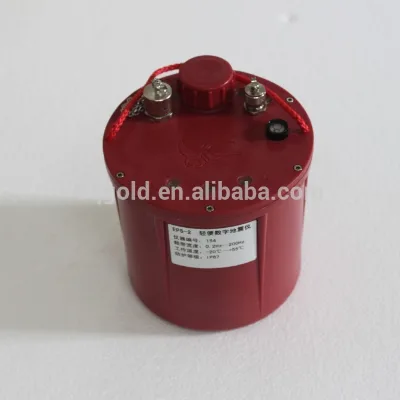
Product attributes observed in listings include specific packing standards such as wooden cases, export cases, or standard carton boxes, which directly impact shipping costs and equipment safety. The physical form factors vary, with some units measuring 55x55x148mm while others are cylindrical with dimensions like φ150 mm*140 mm. Procurement teams must evaluate these physical specifications alongside the stated weight of the bare machine, which ranges from 5.5 Kg to 11.7 Kg, to ensure compatibility with existing installation infrastructure and transport logistics.
Technical Specifications to Verify
Technical verification must begin with the seismic sensor frequency response, as observed listings cite options for 2Hz or 5Hz sensors alongside varying bandwidth specifications. A critical decision point involves confirming whether the device supports the required dynamic range, with some models explicitly stating a range greater than 155db, which is essential for capturing both weak and strong seismic events without distortion. Buyers should cross-reference these claims against the specific frequency resolution needed for their target geological environment.
Power consumption and operational duration are equally vital parameters that influence field deployment strategies. Observed data indicates a power requirement of 150mW with an electronic power source, and charging durations can extend up to 9 hours for full operation. Additionally, the waterproof grade is a decisive factor for outdoor installations, with listings showing IP67 or IP68 ratings. Procurement teams must ensure the selected unit's ingress protection level matches the environmental conditions of the deployment site to prevent premature failure.
Compliance and Safety Documentation
Compliance verification extends beyond basic product functionality to include adherence to international quality management standards and safety certifications. While some product listings reference ISO9001 certification, others mention CE and FC standards, indicating varying levels of regulatory alignment depending on the manufacturer and intended market. Buyers should request current certification documents to confirm that the specific batch of equipment meets the safety and quality requirements of their region, rather than relying solely on general brand claims.
Documentation regarding the product origin and port of dispatch is essential for managing import logistics and ensuring supply chain transparency. Observed listings indicate origins in Chongqing and Beijing, China, with dispatch ports located in Chongqing. This geographical data helps procurement teams estimate lead times and calculate accurate freight costs. Furthermore, verifying the warranty terms, which are observed as one year in some listings, provides a baseline for after-sales support and liability coverage in case of manufacturing defects.
Cost Drivers and Commercial Terms
The total cost of ownership for a Broadband Seismometer is driven by a combination of unit price, packaging requirements, and the complexity of the technical specifications. While the base price range is broad, the inclusion of specialized packing like wooden cases or export cases can significantly alter the final landed cost. Buyers must also consider the supply ability of the vendor, which is observed at 100 sets per month, to ensure that the supplier can meet the project timeline without causing delays in equipment delivery.
Commercial terms should explicitly address the selling units and the scope of after-sales service provided. Most listings indicate single-item selling units, allowing for flexible procurement of individual sensors or complete systems. However, the availability of after-sales service and the specific warranty duration must be clearly defined in the purchase agreement. Procurement teams should negotiate terms that cover potential maintenance needs, ensuring that the supplier remains accessible for technical support throughout the operational life of the instrument.
Supplier Qualification and Quality Control
Supplier qualification requires a rigorous assessment of the manufacturer's production capabilities and their ability to maintain consistent product quality. The observed supply ability of 100 sets per month suggests a moderate production scale, which buyers should evaluate against their own volume requirements. It is crucial to verify that the supplier has established quality control processes that align with the stated standards, such as ISO9001, to ensure that every unit delivered meets the specified performance criteria.
Quality control checks should focus on the consistency of critical attributes like the waterproof grade and the accuracy of the seismic sensor. Since product attributes are treated as observations rather than universal guarantees, buyers must request sample testing or third-party verification reports before committing to a large order. The presence of a one-year warranty is a positive indicator, but it should be backed by a clear protocol for handling returns or repairs, ensuring that the buyer is protected against potential quality failures in the field.
Long-Term Procurement Checks
Long-term procurement success depends on establishing a reliable relationship with a supplier who can provide consistent support and spare parts availability. Buyers should verify the supplier's commitment to after-sales service, as the longevity of a Broadband Seismometer often relies on timely maintenance and calibration. The observed warranty period of one year serves as a starting point, but procurement teams should negotiate extended support agreements to cover the full lifecycle of the equipment.
Continuous monitoring of the product's performance in the field is essential for validating the initial technical specifications and identifying any degradation over time. Buyers should maintain a record of the specific model numbers, such as GD-3C or GL-CS120, and track their performance against the expected bandwidth and dynamic range. Regular reviews of the supplier's supply ability and quality control records will help ensure that future procurement cycles remain efficient and that the equipment continues to meet the evolving needs of the seismic monitoring project.
FAQs
How many channels does a three-component Broadband Seismometer provide?
A three-component Broadband Seismometer provides three channels, capturing ground motion in vertical and two horizontal directions simultaneously. This configuration allows full characterization of seismic wavefields during land geophysical survey work. When selecting a unit, confirm the channel count in the specification sheet, since some models list three channels while others may be configured differently for specific observation tasks.
What bandwidth can broadband seismometers cover for seismic observation?
Listed Broadband Seismometer models cover bandwidths such as 1s to 400Hz and 0.00167 or 0.0083Hz up to 100Hz, depending on the model. The appropriate range depends on whether your application targets local event monitoring or wider broadband recording. Always match the stated bandwidth to your survey objectives before ordering, and request the full frequency response curve from the supplier.
Which seismic sensor frequencies are available for Broadband Seismometer models?
Available models list seismic sensor options of 2Hz or 5Hz. The 2Hz sensors generally suit broadband recording where lower frequencies matter, while 5Hz sensors are common in portable land geophysical survey setups. Check the model designation, such as GD-1C/3C or GL-series variants, to confirm which sensor frequency ships with the unit you plan to purchase.
Can broadband seismometers be customized for specific survey requirements?
Yes, customization is listed as available for these Broadband Seismometer products. Buyers can typically discuss sensor frequency, channel configuration, packaging, and accessories with the supplier before ordering. Custom builds may affect lead time and pricing, so clarify your technical requirements early, confirm what changes are feasible, and request written confirmation of the customized specification before placing a purchase order.
What warranty and after-sales service do Broadband Seismometer suppliers offer?
These Broadband Seismometer products list a one year warranty with after-sales service available. Warranty terms typically cover manufacturing defects under normal use, though coverage details should be confirmed in writing before purchase. Ask the supplier how service requests are handled, what diagnostics support is provided remotely, and whether spare parts or calibration assistance is offered after the warranty period ends.
How are broadband seismometers packed and shipped for export orders?
Packing options include wooden cases, wooden cases with carton boxes, and standard export packages with carton cases. Wooden export packing protects sensitive seismic instruments from shock and moisture during long-distance transport. Confirm the packing method for your specific model when ordering, and verify dispatch details, since the listed port of dispatch is Chongqing, China, which affects freight arrangements and delivery timelines.
What protection ratings do Broadband Seismometer models offer for field use?
Listed protection ratings include IP68 and IP67, indicating strong resistance to dust and water ingress for demanding field conditions. An IP68 unit can withstand continuous immersion, while IP67 handles temporary immersion, both useful for land geophysical survey deployments. Confirm the rating attached to the exact model you order, since ratings can vary between product lines within the same catalog.
What is the supply capacity for Broadband Seismometer orders?
Supply ability is listed at 100 sets per month, with minimum order quantities observed between 1 and 2 units. This supports both small trial purchases and larger program orders. For volume requirements beyond standard capacity, discuss production scheduling with the supplier in advance, confirm realistic lead times for your quantity, and align delivery milestones with your project installation schedule.