Source Brushless Deep Tissue Massage Gun for Home Recovery
Compare 27 Brushless Deep Tissue Massage Gun models from verified Chinese manufacturers. Buyers can evaluate specs like motor type, battery life, and weight to find the right device for home recovery, shoulder relief, and arm massage; compare the available evidence and request quotations based on your requirements.
Key considerations
Products List


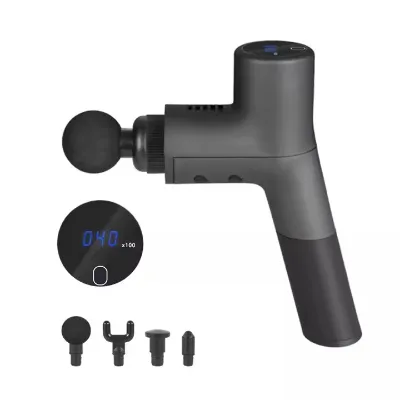
Massage Gun Deep Tissue, Percussion Back Massager Gun for Athletes Muscle
$9.70 - $9.90
MOQ: 1000 Pieces


2020 New Private Label Cordless Deep Tissue Vibration Muscle Massage Gun
$49.00 - $56.00
MOQ: 1 Pieces


Comprehensive Sourcing Guide
Brushless Deep Tissue Massage Gun Sourcing Guide
The market for brushless deep tissue massage guns presents a diverse range of options, from compact handheld units to larger shoulder and arm massagers. Buyers must distinguish between models designed for home use and those intended for professional applications, noting that observed listings include specific models like the M5 and S12 with varying dimensions and weights. The presence of brushless motors in certain listings indicates a focus on durability and reduced noise, which is a critical differentiator for high-volume procurement.
Procurement teams should verify that the specific unit selected matches the intended application scene, as observed data shows products ranging from 0.51kg to 1.69kg in weight. The availability of customization options allows buyers to tailor color schemes, such as purple, blue, beige, red, or gray, to their brand identity. Understanding these physical and functional variations is essential before engaging with suppliers to ensure the final product aligns with the specific needs of the target consumer base.
Product Scope and Observed Listing Signals
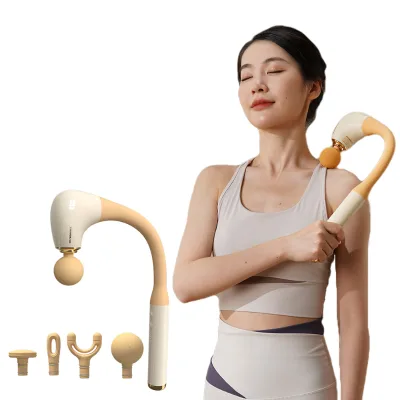
Buyers must carefully analyze the observed product attributes to determine the correct scope for their inventory, as the data reveals significant variation in contact types and massage points. Some units feature convex round contacts for deep tissue work, while others are designed specifically for shoulder or arm massage. The presence of multiple gear settings, such as the six gears observed in specific listings, suggests a need to verify if the target market requires variable intensity levels or a fixed-speed device.
The power supply and charging capabilities observed in the listings, including rechargeable batteries and specific charging times of four to five hours, are critical for user experience. Procurement teams should note that some models support a wide voltage range of 110-240V, making them suitable for international distribution, while others may have specific voltage requirements. Confirming the working time, which ranges from four to ten hours depending on the model, ensures the product meets the endurance expectations of end-users in different usage scenarios.
Technical Specifications to Verify
Technical verification must begin with the motor type, as the presence of a brushless motor is a key indicator of longevity and performance efficiency. Buyers should request detailed specifications regarding the rated power and voltage, noting that observed listings include units with 25W ratings and 7.4V battery systems. It is essential to confirm that the motor specifications match the claimed performance, particularly regarding the number of gears and the consistency of the massage intensity across different speed settings.
Dimensional accuracy and packaging standards are equally critical for logistics planning, as observed data shows a wide range of product sizes from 9.5cm to 35.5cm in length. Procurement teams must verify the carton dimensions and the quantity per carton, such as the 12 pieces per carton observed in specific listings, to optimize shipping costs and warehouse space. Additionally, confirming the charging type, such as 5V/2A, and the specific charging time ensures that the product can be safely and efficiently powered in the target market's electrical environment.
Compliance and Safety Documentation
Safety compliance is paramount when sourcing electric massage devices, and buyers must ensure that all products meet the electrical safety standards of their destination markets. While specific certification names are not provided in the observed data, the presence of a rated voltage range suggests that manufacturers should provide documentation proving compliance with regional electrical codes. Procurement teams should explicitly request test reports that verify the insulation, thermal safety, and electromagnetic compatibility of the brushless motor systems.
Documentation regarding the battery safety and charging circuitry is also essential, given the rechargeable nature of the observed products. Buyers should verify that the charging time and working time claims are supported by independent testing data to prevent overheating or battery failure risks. Ensuring that the product origin, such as Shenzhen or general China manufacturing, is clearly documented helps in tracing the supply chain and verifying that the manufacturing facilities adhere to recognized quality management systems.
Cost Drivers and Commercial Terms
The cost of brushless deep tissue massage guns is heavily influenced by the complexity of the motor system and the quality of the battery components. Models featuring brushless motors and multiple gear settings typically command a higher price point compared to simpler brushed motor alternatives. Buyers should analyze the observed price range of 9 to 56 USD to understand the market segmentation, noting that higher prices often correlate with advanced features like longer working times and more durable materials.
Commercial terms such as the minimum order quantity (MOQ) and lead times are significant factors in the total cost of ownership, with observed MOQs ranging from 1 to 1000 units. Procurement teams must negotiate based on the specific model requirements, as bulk orders for standard models like the M5 or S12 may offer better unit economics. Additionally, the packaging type, whether color boxes or brown cartons, impacts the final landed cost and should be factored into the overall budget planning.
Supplier Qualification and Quality Control
Supplier qualification requires a thorough assessment of the manufacturer's ability to deliver consistent quality, particularly regarding the brushless motor assembly and battery integration. Buyers should verify the company's production capacity and quality control processes, ensuring that they can maintain the specific product standards observed, such as the 9.583.8cm dimensions for certain models. It is crucial to confirm that the supplier has a track record of meeting the specific weight and material requirements, such as the use of ABS plastic, for the entire production run.
Quality control protocols must include rigorous testing of the charging cycles and working time performance to ensure they match the advertised specifications. Procurement teams should implement pre-shipment inspections that verify the physical dimensions, color accuracy, and functional performance of the massage points. Establishing a clear communication channel with the supplier regarding the customization options, such as color variations and branding, ensures that the final product meets the buyer's specific market requirements without compromising on quality.
Long-Term Procurement Checks
Long-term procurement success depends on establishing a reliable supply chain that can adapt to changing market demands and product iterations. Buyers should monitor the supplier's ability to maintain consistent quality over time, particularly for models with complex features like brushless motors and multiple gear settings. Regular audits of the manufacturing process and periodic re-testing of product samples help ensure that the performance metrics, such as working time and charging efficiency, remain stable.
Strategic planning for future orders should include evaluating the supplier's flexibility in handling customization requests and managing inventory levels. As the market evolves, buyers must remain vigilant about potential changes in component availability, such as battery cells or motor parts, which could impact production timelines. Building a strong partnership with the supplier allows for better negotiation of terms and ensures a steady supply of high-quality brushless deep tissue massage guns for the long term.
FAQs
What power options are available for these massage guns?
Electric rechargeable models are available, including units with 7.4V voltage and 25W rated power. Some devices support 110-240V input for broader compatibility. Charging typically takes 4 to 5 hours, providing 4 to 10 hours of working time depending on the specific model selected for home use.
Which materials are used in the construction of these devices?
ABS plastic is the primary material used for the housing of these massage guns. This durable material ensures lightweight handling while maintaining structural integrity. The devices are available in various colors including purple, blue, beige, black, red, and gray to suit different aesthetic preferences.
Can these massage guns be customized for specific branding needs?
Yes, customization is available for these massage gun products. Buyers can request specific modifications to meet unique branding or functional requirements. This flexibility allows businesses to tailor the devices for their target audience while maintaining the core electric and rechargeable performance features.
What are the standard packaging dimensions for bulk orders?
Packaging varies by model, with some units packed in color boxes or brown cartons. Standard carton sizes include 62*33*46 cm and 47*33*46 cm. Each carton typically holds 12 pieces, facilitating efficient shipping and storage for international buyers sourcing these electric massage devices.
Where are these massage guns manufactured and shipped from?
These products originate from China, with specific manufacturing locations in Shenzhen. The devices are designed for home application scenes and are exported globally. Buyers can source these electric massage guns directly from verified suppliers in this region, ensuring reliable supply chain logistics.
What are the weight specifications for the different models?
Weight specifications vary significantly across models. Some compact units weigh approximately 0.51kg, while larger devices can weigh up to 1.69kg. These weight differences correspond to varying motor types and battery capacities, allowing buyers to select the optimal balance between portability and power.