Source Turn Signal Switch for Vehicle Repair, Maintenance, and Replacement
Find 14 verified turn signal switch options for vehicle repair, maintenance, and replacement. Compare specifications from suppliers in Shanghai and Wenzhou, including models like Opt-G-7036 and Jx-EV-7002 with ISO and CE certifications.
Key considerations
Products List


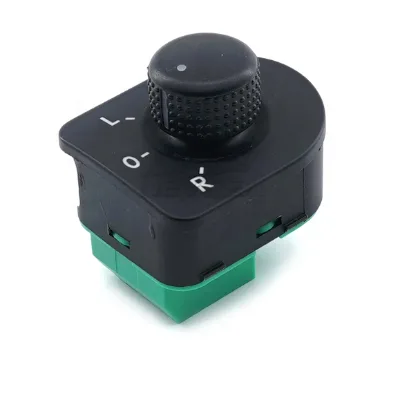

Auto Parts Turn Signal Switch for Headlamp Dimmer Switch 2009-2011 96806619
$1.00 - $100.00
MOQ: 100 Pieces
Comprehensive Sourcing Guide
Strategic Sourcing Guide for Automotive Turn Signal Switches
Understanding Product Specifications and Technical Variability
When sourcing turn signal switches for automotive applications, buyers must first recognize that this component is not a monolithic product but a category defined by specific mechanical and electrical configurations. The core function involves the mechanical actuation required to control vehicle lighting systems, yet the physical implementation varies significantly based on the vehicle make, model, and year. In the current market, observed specifications indicate that turn signal switches are often categorized alongside related components such as clutch switches, stop light switches, and brake light switches, suggesting a shared supply chain for mechanical actuation devices.
Technical due diligence begins with verifying the exact model number and physical dimensions. Market data reveals a diverse range of model identifiers, including Opt-G-7036, Opt-N-7041, Opt-P-7055, Jx-EV-7002, Opt-Mi-7001, and Opt-N-7004. These identifiers are critical for inventory management and compatibility checks. Furthermore, the physical packaging standards provide insight into the product's intended handling and logistics requirements. Observed dimensions for packaging vary from 201010cm to 351815cm, indicating that the internal component size and protective packaging are not uniform across all suppliers. Buyers must ensure that the selected switch matches the specific vehicle's mounting points and electrical interface, as the "Universal Fitment" attribute is not guaranteed for all units and must be verified against the specific vehicle make.
The material composition is another vital technical specification. While some listings reference "Standard Material" or "Original" materials, others specify housing types such as "lastic iron housing," which implies a specific durability profile. The color is predominantly black, and the detection method is frequently listed as "Push on," which defines the actuation mechanism. Crucially, many of these units are supplied "Without Lamp," meaning the switch is a control mechanism rather than an integrated lighting assembly. This distinction is essential for procurement teams to avoid purchasing redundant lighting components when only the control switch is required for repair or replacement.
Compliance, Certification, and Quality Standards
In the B2B automotive sector, compliance is not merely a regulatory formality but a prerequisite for market entry and liability protection. The supply chain for turn signal switches often involves rigorous certification processes to ensure safety and interoperability. Available data indicates that reputable suppliers in this sector frequently hold ISO and CE certifications. The ISO certification suggests adherence to international management system standards, while CE marking indicates conformity with health, safety, and environmental protection standards for products sold within the European Economic Area.
However, buyers must exercise caution when interpreting certification claims. The presence of a certification label on a product listing does not automatically validate the specific batch or model being purchased. Verification should include requesting current, valid certificates that correspond to the specific manufacturing facility. For instance, while some products list "ISO" and "CE" together, others may only list "ISO," and a few may lack explicit certification data in the initial listing. The "Standard" attribute is also frequently mentioned, but this is a generic descriptor that requires clarification against specific automotive industry standards such as ISO 26262 for functional safety or SAE J standards for electrical connectors.
Furthermore, the origin of the product plays a significant role in compliance. The observed supply chain includes origins in Shanghai, Wenzhou, and general China-based manufacturing. While these regions are major hubs for automotive components, the specific factory location can influence the consistency of quality control and the ability to meet regional regulatory requirements. Buyers should verify that the "Standard Material" used in the construction of the switch meets the fire resistance and electrical conductivity requirements mandated by the destination market. The "Mechanical Structure Type" component mentioned in some listings further emphasizes the need for mechanical integrity testing, ensuring that the switch can withstand the vibration and wear associated with vehicle operation over its 12-month warranty period.
Cost Drivers and Pricing Dynamics
The pricing structure for turn signal switches is influenced by a complex interplay of factors, including material costs, certification status, packaging complexity, and order volume. The observed price range in the market spans from 1 to 100 USD, a wide spectrum that reflects the diversity of product quality, brand reputation, and technical complexity. A unit priced at the lower end of this range may be a generic replacement part with basic "Standard Material" construction, while a unit at the higher end likely includes premium materials, advanced certification, or specialized engineering for specific vehicle models.
Order Volume (MOQ) is a primary driver of unit cost. The market data indicates an MOQ range of 10 to 500 units. Buyers purchasing near the lower end of this range (e.g., 10 units) may face higher per-unit costs due to the fixed overhead of production setup and logistics. Conversely, orders approaching the 500-unit threshold often benefit from economies of scale, potentially reducing the unit price significantly. However, the "Customization" attribute is available in the market, which introduces a variable cost element. Customized switches, which may require unique moldings, specific wiring harnesses, or tailored packaging, will inherently carry a higher price point and potentially a higher MOQ to justify the tooling and setup costs.
Packaging and shipping methods also impact the final landed cost. The observed packaging options range from simple "PE Bag" to "White Box," "Box and Carton," and "Box Carton Pallet." The choice of packaging affects the volume efficiency of shipping containers and the protection level of the goods. For instance, "Box Carton Pallet" configurations are suitable for large-scale industrial shipments but increase the unit cost due to the materials and labor involved. Shipping methods listed as "Express/Sea/Air" offer different cost-to-speed trade-offs. Air freight is the most expensive but fastest, suitable for urgent replacements, while sea freight is cost-effective for bulk orders but requires longer lead times. Buyers must calculate the total cost of ownership, including freight, duties, and potential inventory holding costs, rather than focusing solely on the unit price.
Typical Applications and Market Segmentation
Turn signal switches are primarily designed for the "OEM After Market" segment, serving both original equipment manufacturers and independent repair networks. The "Purpose" is explicitly stated as "for Replace/Repair," indicating that the primary use case is maintenance and restoration rather than initial vehicle assembly. This distinction is crucial for procurement strategies, as aftermarket parts often require higher durability to compensate for the variable conditions of repair environments.
The "Car Make" attribute is listed generally as "Car," but specific compatibility is often defined by reference numbers. For example, specific models may be associated with reference numbers like 99591485001 or OE numbers such as 1J1959565A and 1J1959565B. These identifiers are the key to ensuring fitment. The "Universal Fitment" attribute suggests that some switches are designed to be adaptable across multiple vehicle platforms, reducing the need for buyers to maintain extensive SKU inventories. However, this universality must be verified against the specific vehicle's electrical system to prevent compatibility issues.
The applications extend beyond simple lighting control. The "Usage" attribute lists "Digital Products, Electrical Appliance, Machinery, Communication, Vehicle," indicating that the technology behind these switches may be adaptable to other sectors. However, for automotive procurement, the focus remains on the vehicle application. The switches are often used in conjunction with other mechanical structures, such as clutch and brake light switches, suggesting that buyers may benefit from sourcing these components as a bundle to ensure mechanical and electrical consistency. The "Brand Name" ESPEED AUTO appears in the market data, representing a specific supplier identity, but buyers should remain open to other brands that offer similar technical specifications and warranty terms.
Supplier Evaluation and Selection Criteria
Selecting the right supplier for turn signal switches requires a rigorous evaluation process that goes beyond price comparison. The first step is verifying the supplier's ability to provide consistent quality and reliable delivery. The "Condition" of the products is listed as "New," which is a baseline requirement, but buyers must also assess the supplier's track record for delivering new, non-refurbished components. The "Warranty" period of 12 months is a standard offering in the market, serving as a key indicator of the supplier's confidence in their product quality. A supplier willing to offer a 12-month warranty is generally more reliable than one offering a shorter or no warranty period.
The "Product Status" of "IN STOCK" is another critical factor for buyers who require immediate fulfillment. Suppliers with significant inventory levels can reduce lead times and mitigate the risk of production delays. However, buyers should also inquire about the supplier's capacity to handle large orders if stock levels fluctuate. The "Shipment" options of Express, Sea, and Air provide flexibility, but the supplier's ability to manage these logistics efficiently is paramount. A supplier that can offer multiple shipping methods and handle customs documentation effectively will reduce the administrative burden on the buyer.
Certification and origin are also vital evaluation criteria. Suppliers originating from established manufacturing hubs like Shanghai and Wenzhou may have better access to raw materials and skilled labor. However, the specific factory's quality control processes are more important than the city of origin. Buyers should request evidence of the supplier's quality management systems and their ability to trace materials back to the source. The "Standard" attribute, whether listed as "Standard," "Customized," or specific dimensions, should be clearly defined in the supplier's documentation to avoid ambiguity.
Quality Control and Long-Term Procurement Strategy
Implementing a robust quality control (QC) strategy is essential for maintaining the integrity of the supply chain. Given the mechanical nature of turn signal switches, QC should focus on the durability of the "Mechanical Structure Type" and the reliability of the "Push on" detection method. Buyers should consider implementing incoming inspection protocols that verify the physical dimensions, material composition, and electrical continuity of the switches. The "Weight" attribute, listed as "Standard," can serve as a quick verification metric; significant deviations from the standard weight may indicate material substitution or manufacturing defects.
Long-term procurement considerations involve building a resilient supply chain that can adapt to market fluctuations. The "Customization" availability suggests that buyers should establish relationships with suppliers capable of producing tailored solutions as vehicle designs evolve. This flexibility can be a competitive advantage, allowing buyers to source parts that fit specific, perhaps older or niche, vehicle models. Additionally, the "12 Months" warranty period should be leveraged as a negotiation tool. Buyers can use the warranty terms to secure better pricing or faster replacement protocols in case of defects.
Finally, buyers should maintain a diversified supplier base to mitigate risk. Relying on a single source for turn signal switches can lead to supply disruptions if that supplier faces production issues or quality failures. By engaging multiple suppliers with different origins and certifications, buyers can ensure continuity of supply. The "Market" being "OEM After Market" implies a high level of competition, which should benefit buyers through better pricing and service levels. However, buyers must remain vigilant in monitoring the market for changes in certification standards or material regulations that could impact the availability of specific switch models. By adhering to these strategic principles, buyers can secure high-quality turn signal switches that meet the rigorous demands of the automotive industry.
FAQs
What is the warranty period for these switches?
The warranty period is 12 months for all listed units. This coverage applies to new condition parts sourced from Shanghai or Wenzhou, ensuring reliability for replacement and repair purposes in automotive applications.
Which certifications do the manufacturers hold?
Reputable suppliers hold ISO and CE certifications for quality and safety compliance. Some listings specify ISO certification alone, verifying adherence to international management standards for mechanical structure types used in vehicle systems.
How can I find switches with specific model numbers?
You can locate switches by searching for model numbers like Opt-G-7036 or Jx-EV-7002. These identifiers correspond to specific packaging dimensions and ensure the correct fitment for various car makes and repair needs.
Can I order customized turn signal switches?
Customization is available for buyers requiring specific configurations. This option allows for tailored packaging or specifications, though it may influence the minimum order quantity and pricing structure compared to standard units.
What is the minimum order quantity for these parts?
The minimum order quantity ranges from 10 to 500 units depending on the supplier. Lower MOQs suit small repair shops, while larger orders may benefit from economies of scale and customized shipping methods.
Which materials are used in the switch construction?
Switches are constructed from standard material or original components with black color finishes. The housing often features a mechanical structure type, ensuring durability for push-on detection methods in vehicle electrical systems.
What packaging options are available for shipment?
Packaging options include PE bags, white boxes, and carton pallets. The choice depends on the order size and shipping method, with dimensions varying from 20x10x10cm to 35x18x15cm for different model numbers.