Source Carbon Fiber Air Intake Connector for Racing, Tuning, and Performance Upgrades
Explore 30 listings for the Carbon Fiber Air Intake Connector, featuring varied specifications like universal fitment and customizable dimensions. Buyers can compare materials, certifications, and packaging options to find suitable components for vehicle modifications.
Key considerations
Products List
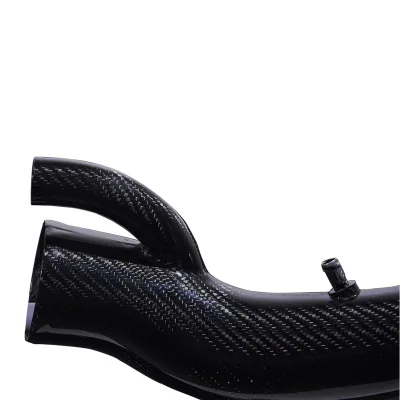

$1.00
MOQ: 3000 Pieces


High Quality Universal 3K Twill Glossy Carbon Fiber Cold Air Intake Pipe
$15.00 - $200.00
MOQ: 100 Pieces


Comprehensive Sourcing Guide
Strategic Sourcing Guide for Carbon Fiber Air Intake Connectors
Understanding the Technical Architecture and Material Composition
When sourcing carbon fiber air intake connectors, buyers must first distinguish between the raw material properties and the final engineered component. The core material specification for high-performance applications is consistently identified as pitch-based carbon fiber. This specific variant of carbon fiber is selected for its superior mechanical properties, offering a high-strength type that is essential for maintaining structural integrity under the thermal and pressure fluctuations found in automotive air intake systems. The physical state of the raw material often varies; some suppliers provide the fiber in a chopped form, while others utilize woven configurations such as twill or plain weave patterns. These weave patterns directly influence the surface finish and the mechanical strength of the final connector.
The geometry of the connector is a critical technical parameter. In the observed market data, specific dimensions are frequently cited, such as a neck diameter of 76mm or 100mm, and a height specification of 160mm. However, the "Universal" car model specification indicates that these connectors are often designed to be adaptable across various vehicle platforms rather than being exclusive to a single make. The surface treatment is another vital technical attribute, with options including twill, plain, or forged finishes. The forged option suggests a specific manufacturing process that may enhance density and strength, distinguishing it from standard woven layups. Furthermore, the product is often described as a "Carbon Fiber Air Filter" or "Air Intake Pipe" in terms of function, indicating that the connector serves as a critical junction point for airflow management, potentially integrating with DSI (Direct Source Inlet) adjustable air inlets.
Compliance Verification and Certification Standards
Navigating the compliance landscape for automotive components requires rigorous verification of certification status. While the product data references "International Standard" and specific certifications like "ISO," buyers must treat these as observations of the supplier's claims rather than guaranteed universal attributes. The term "ISOMain Market:North America" suggests a potential alignment with North American regulatory expectations, but the specific ISO standard number (e.g., ISO 9001 for quality management) is not explicitly detailed in the general product attributes. Therefore, the procurement strategy must prioritize direct verification of the ISO certification scope with the supplier.
In addition to general quality management systems, the product standard is listed variously as "air filter," "auto intercooler," or "custom size." This variance highlights the need for buyers to clarify the specific regulatory framework applicable to their target market. For instance, if the connector is part of an intercooler system, it may need to meet specific thermal and pressure standards distinct from those for a simple intake pipe. The "OEM" (Original Equipment Manufacturer) attribute being marked as "Yes" implies that the component is designed to meet the rigorous standards of vehicle manufacturers, but this does not automatically equate to a specific third-party safety certification. Buyers should request documentation proving that the "High-Strength Type" and "High-Performance Type" claims have been validated against relevant automotive industry standards, particularly regarding fire resistance and thermal stability, which are critical for components located near the engine bay.
Cost Drivers and Pricing Dynamics
The pricing structure for carbon fiber air intake connectors is influenced by a complex interplay of material costs, manufacturing complexity, and order volume. The observed price range in the market spans from $1 to $1,000 USD. This wide disparity is not indicative of a single product tier but rather reflects the vast differences in customization, size, and production method. A basic, off-the-shelf connector with a standard 76mm neck will likely fall at the lower end of this spectrum, whereas a custom-sized, forged, or high-performance variant with specific branding and packaging will command a premium price.
The Minimum Order Quantity (MOQ) is a significant cost driver. The data indicates an MOQ range from 1 to 3,000 units. Suppliers offering an MOQ of 10 pieces or even a single item (Single item selling unit) allow for low-risk prototyping but often carry a higher unit cost due to the lack of economies of scale. Conversely, an MOQ of 3,000 units suggests a bulk manufacturing run that can significantly reduce the per-unit price but requires substantial capital commitment. The "Custom Size" and "Custom Length" attributes further complicate pricing; non-standard dimensions require custom tooling and mold creation, which adds to the initial setup costs. Additionally, the "OEM/ODM" capability implies that branding and logo customization are available, which typically incurs additional fees. Buyers must balance the need for customization against the volume requirements to optimize their total cost of ownership.
Typical Applications and Performance Requirements
The application scope for carbon fiber air intake connectors extends beyond simple aesthetic upgrades. The primary function is to facilitate efficient airflow, often integrating with systems like the "Radiator Core Type: Pipe Belt" or "Intercooler Silicone Hose Air Filter." This suggests that these connectors are integral to the cooling and intake systems of high-performance vehicles. The "Cold Style: Water-cooled" attribute points to applications where thermal management is critical, requiring the connector to withstand heat transfer from adjacent components while maintaining the integrity of the air stream.
The "Universal" specification indicates that these components are designed for retrofitting or aftermarket use across a wide range of vehicles, making them versatile for performance tuning shops and enthusiasts. However, the presence of specific models like "GV-AF42" and "GV-IC 027" suggests that some manufacturers produce model-specific variants for particular vehicle platforms. The "High-Strength Power" and "High-Performance Type" mechanical properties are essential for applications involving forced induction, where the connector must resist the high pressures generated by turbochargers or superchargers without deforming or cracking. The "Carbon Fiber Tube" shape and "Chopped Fiber" state also imply applications where weight reduction is a priority, as carbon fiber offers a superior strength-to-weight ratio compared to traditional metals like steel or aluminum, which are also listed as body materials in some related components.
Supplier Evaluation and Manufacturing Capabilities
Evaluating a supplier for carbon fiber air intake connectors requires a deep dive into their manufacturing capabilities and geographic footprint. The "Place of Origin" is frequently listed as Guangdong, China, with specific mentions of Ningbo and Weihai. These regions are known for their robust manufacturing ecosystems, but buyers should verify the specific factory location to ensure it aligns with their logistical and quality expectations. The "Brand: Sw" and "OEM/ODM" attributes indicate that many suppliers operate as contract manufacturers capable of producing private-label goods.
When assessing suppliers, buyers should look for evidence of their ability to handle "Custom Size" and "Custom Length" specifications. The ability to produce "Twill /Plain /Forged" surface finishes suggests a versatile production line capable of different weaving and molding techniques. The "prod_packing" details, ranging from "Plastic Bag+Small Box+Big Cardboard Box" to "Box Package" and "Carton," indicate that packaging is a variable factor that can affect shipping costs and product protection. A supplier that offers robust packaging solutions is better equipped to handle international shipping, especially for fragile carbon fiber components. Furthermore, the "Adjustable Air Inlet: DSI Inlet" feature requires precise engineering; buyers should request technical drawings or CAD files to verify that the supplier has the design capability to integrate such adjustable mechanisms accurately.
Quality Control and Long-Term Procurement Strategy
Ensuring consistent quality in carbon fiber components requires a structured approach to quality control (QC). Given the "International Standard" claim, buyers should implement a QC protocol that includes visual inspection for weave defects, dimensional verification against the "76/100mm" or "160mm" specifications, and mechanical testing for the "High-Strength" claims. The "State: Chopped Fiber" and "Raw Materials: Pitch-Based Carbon Fiber" details suggest that material traceability is crucial. Buyers should request material certificates to confirm that the pitch-based carbon fiber meets the required purity and mechanical property standards.
For long-term procurement, the "Customization: Available" and "Logo: OEM/ODM" attributes offer significant strategic value. Establishing a long-term relationship with a supplier who can provide consistent customization allows a buyer to build a unique product line without the high costs of developing proprietary tooling from scratch. However, the variability in "prod_model" (e.g., T-138, Bk-A1, GV-AF42) suggests that product lines may change frequently. Buyers should secure a formal agreement that guarantees the continuity of critical specifications even if the model number changes. Additionally, the "Selling Units: Single item" availability suggests that suppliers are flexible, but for large-scale operations, securing a contract with a fixed MOQ and lead time is essential to maintain inventory stability. The "Standard: air filter" or "auto intercooler" classification should be locked into the purchase agreement to ensure that the product meets the specific functional requirements of the end application, preventing the receipt of generic parts that may not perform adequately in high-stress environments.
Final Procurement Considerations and Risk Mitigation
The final stage of the sourcing process involves mitigating risks associated with the diverse product attributes observed. The wide range of observed prices and MOQs necessitates a clear definition of requirements before engaging with suppliers. Buyers must explicitly state whether they require a "Universal" fitment or a model-specific connector, as this decision will dictate the supplier's ability to fulfill the order. The "Carbon Fiber Air Filter" and "Air Intake Pipe" functional descriptions should be cross-referenced with the actual component to ensure the terminology matches the physical product.
Risk mitigation also extends to the supply chain location. With origins in Guangdong, Ningbo, and Weihai, buyers should be aware of potential logistical challenges, such as port congestion or shipping delays, and factor these into their lead time planning. The "Cold Style: Water-cooled" and "Radiator Core Type" attributes indicate that these components are part of a larger system; therefore, compatibility testing with the rest of the intake and cooling system is mandatory before full-scale deployment. Finally, the "Certification: ISO" and "International Standard" claims should be treated as starting points for verification rather than end points. By maintaining a disciplined approach to verifying material composition, mechanical properties, and manufacturing capabilities, buyers can successfully navigate the complex market for carbon fiber air intake connectors and secure high-quality components that meet their specific performance and compliance needs.
FAQs
What is the raw material used for carbon fiber air intake connectors?
The raw material is pitch-based carbon fiber, which provides high-strength performance. This material is often processed into chopped fiber or woven patterns like twill and plain weave to ensure structural integrity under thermal stress.
Which certifications are typically associated with these connectors?
Products often reference International Standard and ISO certifications. Buyers should verify the specific ISO scope with the supplier, as claims vary and do not guarantee universal compliance without direct documentation.
Can buyers request custom sizes for these air intake components?
Yes, customization is available for both size and length. Suppliers offer custom dimensions to fit specific vehicle platforms, though this may require custom tooling and affect the minimum order quantity requirements.
What is the typical minimum order quantity for these parts?
The minimum order quantity ranges from 1 unit to 3,000 units depending on the supplier. Lower MOQs allow for prototyping, while bulk orders of 3,000 units often reduce the per-unit cost significantly.
Where are these carbon fiber connectors typically manufactured?
Manufacturing locations include Guangdong, Ningbo, and Weihai in China. Buyers should verify the specific factory origin to align with logistical expectations and ensure quality control standards match their requirements.
How are these connectors packaged for international shipping?
Packaging varies from plastic bags with small boxes to cartons and big cardboard boxes. Robust packaging is essential to protect the fragile carbon fiber components during transit and prevent damage from impact.
What surface finishes are available for these air intake pipes?
Available surface finishes include twill, plain weave, and forged options. The forged finish suggests a specific manufacturing process that enhances density and strength compared to standard woven layups.