Source Carbon Fiber Door Handle Cover for Honda, Ferrari, and General Use
Find 30 listings for Carbon Fiber Door Handle Cover options tailored for Honda Freed 2024 and Ferrari 488 models. Compare lightweight, high-strength exterior parts with OEM customization and polished mirror finishes from Chinese manufacturers; compare the available evidence and request quotations based on your requirements.
Key considerations
Products List


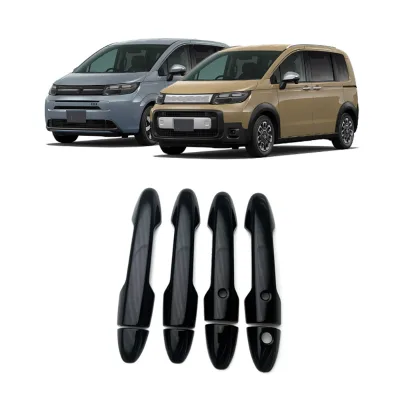


3K Glossy Black Carbon Fiber 2PCS Car Door Handle Cover for Ferrari 458
$2080.00 - $2330.00
MOQ: 1 Sets
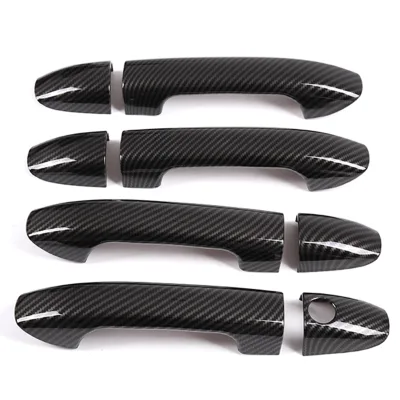
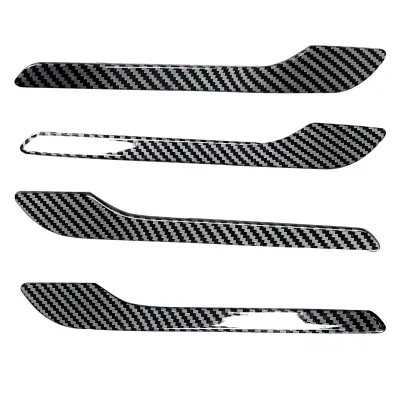


Thickened Safe Door Handle Cover with Anti-Static and Anti-Collision Protection
$0.20 - $0.40
MOQ: 1000 Pieces


Comprehensive Sourcing Guide
Carbon Fiber Door Handle Cover Sourcing Guide
Sourcing carbon fiber door handle covers requires a nuanced understanding of material properties, fitment precision, and supplier capabilities. These components serve as both aesthetic upgrades and protective elements for exterior vehicle doors, enhancing the visual appeal while offering resistance to minor abrasions and environmental wear. Buyers must distinguish between genuine woven carbon fiber and printed alternatives, as the latter lacks the structural integrity and premium finish expected in high-end automotive applications. The decision to source these parts often hinges on the balance between cost efficiency and the desire for authentic material characteristics, such as weight reduction and high strength.
Procurement teams should prioritize suppliers who demonstrate transparency in their manufacturing processes and material sourcing. The market offers a wide range of options, from universal fitment covers to model-specific designs tailored for vehicles like the Honda Freed or Ferrari 488. Understanding the specific requirements of your target vehicle models is crucial, as fitment accuracy directly impacts installation success and customer satisfaction. Additionally, buyers need to evaluate the supplier’s ability to handle customization requests, including logo placement and color variations, which are common demands in the aftermarket automotive sector.
Product Scope and Observed Listing Signals
The current market landscape for carbon fiber door handle covers reveals a diverse array of product listings, with observed price ranges spanning from $0.05 to $2,330 USD. This wide variance reflects differences in material quality, brand positioning, and the complexity of the design. Minimum Order Quantities (MOQs) also vary significantly, ranging from single units for sample testing to 3,000 pieces for bulk industrial orders. Buyers should interpret these signals carefully, recognizing that lower prices may indicate composite materials or lower-grade carbon fiber, while higher prices often correlate with authentic, high-modulus carbon fiber and superior finish quality.
Listing attributes frequently highlight features such as lightweight construction, high strength, and good toughness, which are critical for automotive applications. Many suppliers offer OEM customization services, allowing for tailored solutions that match specific vehicle models and design preferences. The observed product names and keywords, such as "Side Mirror Cover" and "Door Handle Cover," indicate a broad scope of exterior trim components available from the same suppliers. Buyers should verify whether the listed specifications apply to the exact product variant they intend to purchase, as some listings may encompass multiple product types under a single supplier profile.
Technical Specifications to Verify
Verifying technical specifications is essential to ensure that the carbon fiber door handle covers meet the required performance and aesthetic standards. Key attributes to confirm include the material composition, surface treatment, and installation method. Suppliers often specify polished mirror finishes and OEM-style designs, which require precise molding and finishing techniques to achieve a seamless look. Buyers should request detailed specifications regarding the weave pattern, resin type, and curing process, as these factors influence the durability and visual appeal of the final product. Additionally, confirming the single package size and gross weight helps in planning logistics and storage requirements.
Fitment accuracy is another critical technical aspect that must be validated before placing large orders. Listings may indicate compatibility with specific car models, such as the Honda Freed 2024 or Ferrari 488, but buyers should obtain exact fitment data for their target vehicles. Installation methods, such as original car hole installation, should be clearly defined to ensure ease of assembly and secure attachment. Suppliers may also provide information on production capacity, such as 50,000 pieces per month, which can be relevant for large-scale procurement projects. Verifying these details helps mitigate the risk of fitment issues and ensures that the products align with the intended application.
Compliance and Safety Documentation
While carbon fiber door handle covers are primarily aesthetic components, compliance with relevant safety and quality standards remains important for B2B transactions. Buyers should inquire about the materials used in the manufacturing process, ensuring that they meet environmental and safety regulations in the destination market. Although specific certification statuses are not always disclosed in general listings, reputable suppliers should be able to provide documentation regarding material safety and manufacturing practices. This includes verifying that the resins and adhesives used do not contain harmful substances that could off-gas or degrade over time.
Documentation related to product quality and testing should also be requested to ensure consistency and reliability. Buyers may ask for quality assurance reports that confirm the structural integrity and durability of the carbon fiber components. While specific test results are not always available in public listings, suppliers with established quality control processes should be able to share relevant data upon request. Additionally, understanding the packaging standards, such as safe carton boxes with bubble wrap, helps ensure that products arrive in pristine condition, reducing the risk of damage during transit and minimizing returns or complaints.
Cost Drivers and Commercial Terms
Several factors influence the cost of carbon fiber door handle covers, including material quality, customization requirements, and order volume. Genuine carbon fiber is more expensive than composite alternatives, and complex designs or custom logos can increase production costs. Buyers should consider the trade-off between price and quality, recognizing that lower-cost options may compromise on material authenticity or finish quality. Commercial terms, such as MOQs and lead times, also play a significant role in total procurement costs. Suppliers may offer flexible MOQs starting from one piece, which is beneficial for testing and small batches, while larger orders may benefit from volume discounts.
Shipping and logistics costs are additional considerations that can impact the overall expense. Options for shipping by sea, air, or express courier offer different balances of speed and cost, with sea freight being more economical for large volumes. Buyers should evaluate the supplier’s production capacity and delivery time, which can range from 15 to 30 days, to ensure alignment with their supply chain requirements. Clear communication regarding payment terms, warranty policies, and after-sales support is essential to avoid unexpected costs and ensure a smooth procurement process. Understanding these commercial dynamics helps buyers make informed decisions that balance cost efficiency with quality assurance.
Supplier Qualification and Quality Control
Evaluating supplier qualification is a critical step in sourcing carbon fiber door handle covers, as it directly impacts product quality and reliability. Buyers should assess the supplier’s manufacturing capabilities, including their experience with carbon fiber processing and their ability to handle OEM and ODM orders. Suppliers located in regions like Zhejiang and Guangdong, China, often have established supply chains and expertise in automotive trim components. Verifying the supplier’s production facilities and quality control processes helps ensure that they can consistently deliver products that meet specified standards. Buyers may also consider requesting samples to evaluate the material quality, finish, and fitment before committing to larger orders.
Quality control measures should be clearly defined and agreed upon with the supplier. This includes establishing inspection criteria for material authenticity, surface finish, and dimensional accuracy. Buyers should inquire about the supplier’s defect rate and their process for handling non-conforming products. Additionally, understanding the supplier’s commitment to continuous improvement and their ability to adapt to changing requirements is important for long-term partnerships. Clear communication regarding quality expectations and regular feedback loops help maintain high standards and ensure that the sourced components meet the buyer’s needs.
Long-Term Procurement Checks
Establishing long-term procurement checks is essential for maintaining consistent quality and supply chain stability. Buyers should implement regular audits and performance reviews to assess the supplier’s adherence to agreed-upon standards and delivery schedules. Monitoring key performance indicators, such as defect rates, on-time delivery, and responsiveness to issues, helps identify potential problems early and allows for corrective actions. Building a strong relationship with the supplier through open communication and mutual trust can lead to better pricing, priority treatment, and collaborative problem-solving.
Continuous market monitoring is also important to stay informed about trends in materials, design, and pricing. Buyers should regularly evaluate alternative suppliers and product options to ensure they are getting the best value for their investment. Additionally, staying updated on regulatory changes and industry standards helps ensure ongoing compliance and reduces the risk of disruptions. By implementing robust long-term procurement checks, buyers can mitigate risks, optimize costs, and maintain a reliable supply of high-quality carbon fiber door handle covers for their customers.
FAQs
Can carbon fiber door handle covers be customized for specific car models?
Yes, customization is available for these covers. Suppliers offer OEM and ODM services to match specific vehicle requirements. You can request customized packaging and standard specifications tailored to your needs. This ensures a precise fit for various car brands and models, including specific fits for Honda Freed 2024 or Ferrari 488 applications.
What is the typical MOQ for ordering carbon fiber door handle covers?
The minimum order quantity varies by supplier and product type. Some listings indicate an MOQ of 10 pieces, while others may require only 1 set. Buyers should verify the specific MOQ with the supplier before placing an order. This flexibility allows small businesses to test products without committing to large initial inventory purchases.
How long does delivery take for carbon fiber door handle covers?
Delivery times typically range from 15 to 30 days. This lead time depends on the order quantity and production schedule. Suppliers often produce up to 50,000 pieces per month. Buyers should confirm the exact delivery timeline with the manufacturer to ensure it aligns with their project deadlines and inventory planning requirements.
What materials and features are used in carbon fiber door handle covers?
These covers are made from carbon fiber material, offering lightweight and high-strength properties. They feature good toughness and a polished mirror surface treatment. The design is often OEM style, ensuring excellent fitment. These attributes provide durability and aesthetic appeal, making them suitable for exterior door installations on various vehicle models.
Where are carbon fiber door handle covers typically manufactured?
Manufacturing locations include Zhejiang and Guangdong in China. Suppliers in these regions provide standard or customized packaging solutions. Products are often shipped via sea, air, or express methods from ports like Guangzhou. Buyers can source from these established manufacturing hubs to access competitive pricing and reliable production capabilities for their automotive accessory needs.
What packaging options are available for carbon fiber door handle covers?
Packaging options include standard cartons, poly bags, and safe carton boxes with bubble inserts. Some suppliers offer customized packaging to meet specific branding or protection requirements. The single gross weight is approximately 2.0 kg, with package dimensions around 40x20x20 cm. These options ensure safe transit and protect the polished mirror surface during shipping.