Source Carton Box Stitcher for Apparel, Food, and Machinery
Find 30 verified suppliers offering Carton Box Stitcher machines for diverse industries. Buyers can compare semi-automatic and automatic models with customizable features for packaging cardboard and corrugated materials.
Key considerations
Products List


Supplier Automatic Carton Box Stitcher Folder Gluer Machinery for Carton Box
$25000.00 - $45000.00
MOQ: 1 Pieces

Automatic Gluing Stitching Machine Corrugated Carton Box Making Machine
$25000.00 - $45000.00
MOQ: 1 Pieces


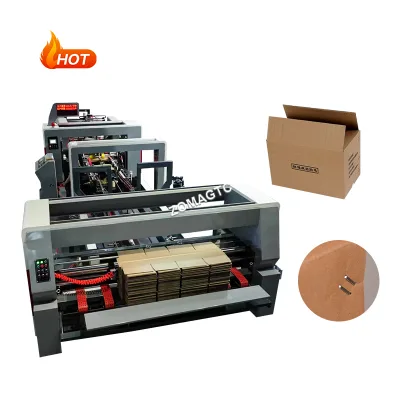


Automatic Corrugated Carton Gluing Machine Carton Box Stitching Machine
$15000.00 - $55000.00
MOQ: 1 Sets


Comprehensive Sourcing Guide
Strategic Sourcing Guide for Carton Box Stitcher Machinery
Understanding the Technical Landscape of Carton Stitching
The procurement of Carton Box Stitcher machinery requires a precise understanding of the operational mechanics that define modern packaging efficiency. These machines are engineered primarily for the transport, storage, and sales packing of goods, serving a critical function in the circulation of products across various industries. The core technology involves the automated stitching of cardboard and corrugated materials, replacing traditional tape or glue methods with high-speed mechanical fastening.
When evaluating technical specifications, buyers must distinguish between different grades of automation. The market offers both semi-automatic and fully automatic configurations. Semi-automatic models often require operator intervention for loading or alignment, whereas automatic grades are designed for continuous operation with minimal human oversight. A critical performance metric is the mechanical speed, which can reach up to 600 nails per minute in high-capacity units. This rate is essential for facilities handling high-volume distribution where throughput is a primary constraint.
The physical capabilities of the machine are equally vital. The effective height of table lifting is a standard specification that determines the range of box sizes the machine can accommodate, with observed capabilities extending up to 900mm. Furthermore, the nail pitch, which dictates the spacing of the staples, is typically adjustable between 30mm and 120mm. This adjustability allows the machinery to handle diverse packaging requirements, from small retail boxes to large industrial shipping containers. The driven type is predominantly electric, operating on standard industrial voltages such as 380V, 415V, or 440V, though some configurations may support voltage customization to match local grid standards.
Compliance, Certification, and Safety Standards
In the global B2B market, compliance is not merely a formality but a prerequisite for operational legality and safety. When sourcing carton box stitchers, buyers must verify that the machinery adheres to recognized international standards. The supply chain often features equipment certified under frameworks such as CE, ISO, GMP, and TUV. These certifications indicate that the machine has undergone rigorous testing for electrical safety, mechanical integrity, and operational reliability.
Specifically, the presence of CE certification suggests compliance with European health, safety, and environmental protection standards, which is often a requirement for exporting machinery to international markets. ISO certifications, particularly those related to quality management, ensure that the manufacturing process meets consistent quality benchmarks. GMP (Good Manufacturing Practice) is particularly relevant if the machinery is intended for use in food, pharmaceutical, or cosmetic packaging lines, as it ensures the equipment does not introduce contaminants.
Buyers should also scrutinize the "Machinery Test" documentation provided by the supplier. A provided test report serves as empirical evidence that the machine functions according to its stated specifications before shipment. This is distinct from a generic warranty and represents a tangible verification of performance. Additionally, the condition of the machinery is a key compliance factor; new units are the standard expectation for modern procurement, ensuring that the equipment has not suffered from wear and tear that could compromise safety or efficiency. The origin of the machinery, often traced to manufacturing hubs like Hebei or Dong Guang in China, should be cross-referenced with the certification documents to ensure the stated origin matches the place of manufacture.
Cost Drivers and Pricing Dynamics
The pricing of Carton Box Stitcher machinery is influenced by a complex array of factors, resulting in a significant variance in market rates. Observed price ranges in the current market span from approximately $10 to $60,000 USD. This wide spectrum reflects differences in automation levels, build quality, capacity, and the inclusion of advanced features.
Several key drivers influence where a specific unit falls within this range. First, the level of automation is a primary cost determinant. Fully automatic models with integrated conveyor systems and advanced control panels command higher prices compared to semi-automatic units. Second, the customization options available play a substantial role. Buyers seeking specific voltage configurations, custom dimensions, or specialized packaging modes (such as wheel gluing integration) will incur additional costs. The "Support Customization" attribute for voltage and size indicates that bespoke engineering is a premium service.
The material composition and weight of the machine also impact pricing. A unit weighing 1.5 tons, for instance, implies a robust steel construction capable of withstanding high-speed operations, which naturally increases the raw material and manufacturing costs compared to lighter, smaller units. Furthermore, the packaging method for shipping, whether "Export Packing" or "Standard Packaging," affects the final landed cost due to the materials and labor required for safe transit.
Buyers must also consider the total cost of ownership beyond the initial purchase price. This includes the cost of spare parts, the availability of after-sales service, and the potential for overseas service center support. While a lower initial price might be attractive, the long-term cost of maintenance and downtime can render a cheaper machine less economical than a higher-priced, more reliable alternative.
Typical Applications and Industry Versatility
Carton Box Stitcher machines are designed for versatility, serving a broad spectrum of industries beyond simple cardboard packaging. The application scope is extensive, covering sectors such as food, medical, dining, gifts, apparel, chemical, toys, alcohol, textiles, and general commodities. This adaptability makes the machinery a valuable asset for mixed-use manufacturing facilities.
In the food and beverage sector, the machines are utilized for packaging items like rice, flour, snacks, fish, meat, vegetables, fruit, tea, drinks, dairy products, and oils. The ability to handle these diverse products often requires adherence to hygiene standards, which is where certifications like GMP become critical. Similarly, in the personal care and cosmetics industry, the machines are employed for packaging hair care products, skin care items, and cleaning detergents, where the aesthetic quality of the packaging is paramount.
The functional role of the stitcher extends to various stages of the supply chain. It is used for transport packaging, which ensures the integrity of goods during logistics; storage and packaging, which optimizes warehouse space; and sales packing, which prepares products for retail display. The "Frequency of Use" is noted as "Several Packaging," indicating that these machines are built for repeated, high-volume cycles rather than sporadic, low-volume tasks. Whether the application involves leather belts, shoes, or heavy machinery hardware, the stitcher provides a secure and efficient closure method that withstands the rigors of global shipping.
Supplier Evaluation and Operational Reliability
Selecting the right supplier is as critical as selecting the right machine. Buyers should evaluate suppliers based on their ability to provide comprehensive after-sales support and their track record in the industry. A key indicator of supplier reliability is the availability of an overseas service center or engineers who can travel to service machinery abroad. This capability ensures that technical issues can be resolved quickly, minimizing production downtime.
The "Productive Cycle" of the supplier, often cited as 30 days, is a metric that reflects their manufacturing capacity and lead time efficiency. Buyers should verify this timeline against their own project schedules to ensure timely delivery. Additionally, the "Delivery Time" of one to two months is a standard expectation that should be confirmed in the contract. Delays in delivery can disrupt entire production lines, making this a critical factor in supplier selection.
Suppliers should also be evaluated on their transparency regarding the machine's condition and origin. The "Place of Origin" should be clearly stated, and the "Condition" should be verified as "New." Buyers must ensure that the supplier provides all necessary documentation, including the "Machinery Test" results and certification copies. The "Mode of Operation" described by the supplier should align with the buyer's specific needs, such as the packaging of export products or specific circulation functions.
Quality Control and Long-Term Procurement Strategy
Implementing a robust quality control (QC) strategy is essential for ensuring that the purchased machinery meets performance expectations. Before finalizing a purchase, buyers should request detailed specifications regarding the machine's dimensions, such as the standard size of 2.81.72.2 meters, and verify these against their facility's layout. The "prod_packing" method, whether "Export Packing" or "Film," should be assessed to ensure the machine arrives without damage.
Long-term procurement considerations involve planning for the lifecycle of the equipment. The "Automatic Grade" of the machine, whether semi-automatic or automatic, dictates the level of training required for operators and the potential for future upgrades. Buyers should also consider the "Nail Pitch" adjustability and the "Mechanical Speed" as factors that may need to be adjusted as production demands change.
The "Soft and Hardness" of the package the machine can handle, described as "Semi-Rigid Package," is another QC parameter. Buyers must ensure that their product packaging aligns with these capabilities to avoid jams or misfeeds. Finally, the "After-Sales Service Provided" should be a contractual obligation, ensuring that the supplier remains a partner in the machine's operational life rather than just a vendor. By focusing on these technical and service-oriented aspects, buyers can secure a reliable, high-performance Carton Box Stitcher that delivers value over the long term.
Comparative Analysis of Machine Specifications
To assist buyers in making informed decisions, the following table summarizes key specifications observed in the market for Carton Box Stitcher machinery. This comparison highlights the variability in models and their respective capabilities.
| Specification | Model YK-3600 | Model YK-2000 | Model YK-2500 | Model DG2800 |
|---|---|---|---|---|
| Automatic Grade | Semi-Automatic | Automatic | Automatic | Automatic |
| Mechanical Speed | 600 Nails/Min | N/A | N/A | N/A |
| Nail Pitch | 30-120mm | N/A | N/A | N/A |
| Table Lifting Height | 900mm | N/A | N/A | N/A |
| Machine Weight | 1.5t | N/A | N/A | N/A |
| Voltage | 380V/415V/440V | Support Customization | N/A | N/A |
| Certification | CE, ISO, GMP, TUV | CE, ISO, GMP, TUV | Standard | CE, ISO, GMP, TUV |
| Application Scope | Apparel, Machinery | Food, Medical, Textile | Leather, Shoe, Apparel | Leather, Shoe, Apparel |
| Delivery Time | 1 Month | 2 Months | 1 Month | 30 Days |
This table illustrates that while core functions remain consistent, specific models offer different advantages regarding speed, customization, and application focus. Buyers should match these specifications to their specific operational needs rather than assuming a single model fits all scenarios. The presence of "Standard" or "Support Customization" for voltage and size underscores the importance of verifying these details before purchase to ensure compatibility with existing infrastructure.
FAQs
What is the mechanical speed of the Carton Box Stitcher?
The mechanical speed reaches up to 600 nails per minute for high-capacity units. This rate supports facilities handling high-volume distribution where throughput is a primary constraint.
Which certifications are required for the machinery?
The machinery often features CE, ISO, GMP, and TUV certifications. These indicate compliance with international safety standards and are essential for exporting to global markets.
Can the nail pitch be adjusted for different boxes?
Yes, the nail pitch is adjustable between 30mm and 120mm. This flexibility allows the machine to handle diverse packaging requirements from small retail boxes to large industrial containers.
What is the delivery time for new machines?
The delivery time ranges from one to two months for new units. Buyers should verify this timeline against their project schedules to ensure timely production line setup.
Where are the machines manufactured?
The place of origin is Hebei, China, with some units from Dong Guang. This origin should be cross-referenced with certification documents to ensure the stated location matches the manufacturer.
Is after-sales service available for overseas buyers?
Overseas service centers and engineers are available to service machinery abroad. This capability ensures technical issues can be resolved quickly to minimize production downtime.