Source Carton Boxes Kraft Paper for Food, Electronics, Cosmetics
Compare 30 listings for Carton Boxes Kraft Paper from verified Chinese manufacturers. Buyers can evaluate customization options, certifications like FSC and ISO, and pricing for food, electronics, and household packaging needs.
Key considerations
Products List


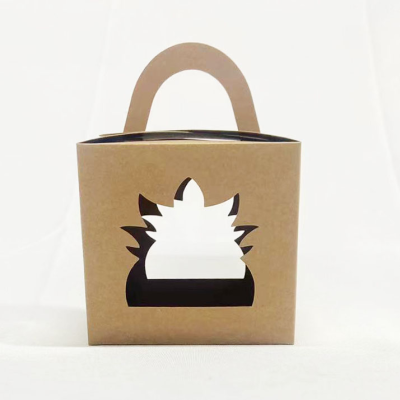


$0.36 - $0.56
MOQ: 1000 Pieces


Comprehensive Sourcing Guide
Carton Boxes Kraft Paper Sourcing Guide
Sourcing carton boxes made from kraft paper requires a disciplined approach that balances material integrity, regulatory compliance, and commercial flexibility. Buyers must navigate a market where customization is the norm rather than the exception, with suppliers offering a wide range of models, sizes, and finishing options. The following guide provides evidence-based procurement strategies to help buyers evaluate listings, verify technical specifications, and manage supplier relationships effectively.
Product Scope and Observed Listing Signals
The current market for kraft paper carton boxes is characterized by significant variability in product attributes, with observed price ranges spanning from $0.02 to $1,150 USD and minimum order quantities (MOQs) ranging from 1 to 30,000 units. This broad spectrum indicates that buyers are not limited to a single product tier; instead, they can source everything from small, single-sided printed samples to large, custom-dimensioned master cartons for industrial use. The presence of such diverse pricing and MOQs suggests that suppliers cater to both prototyping needs and high-volume production runs, requiring buyers to align their order volume with the supplier’s production capacity and pricing structure.
Listing signals reveal that customization is a primary driver in this category, with attributes such as "Customized Layer," "Customized Dimension," and "Customized Support" for packing frequently appearing. Products are often described with specific model numbers like FT, KP, LK3102, LK3103, LK3104, and LK3105, alongside standard dimensions such as 25018060 mm. Buyers should interpret these model numbers as internal supplier identifiers rather than universal standards, using them to cross-reference specific design capabilities. Additionally, the raw material is consistently identified as wood pulp, with the final product classified as kraft paper, often featuring greaseproof properties and available in single or two-sided printing configurations.
Technical Specifications to Verify
When evaluating technical specifications, buyers must prioritize the verification of material composition and structural integrity. The core material is wood pulp, processed into kraft paper, which is often coated to enhance its greaseproof capabilities. This coating is critical for applications involving food packaging, where barrier properties are essential. Buyers should request detailed material data sheets to confirm the basis weight, tensile strength, and specific coating type, ensuring that the greaseproof feature meets the specific requirements of the product being packaged. The ability to customize layers allows for tailored performance, but this requires clear communication of functional needs to the supplier.
Printing and dimensional accuracy are equally critical technical factors. Listings indicate support for various printing methods, including CMYK, Pantone/PMS, Flexo, and Offset, with accepted art file formats such as PDF, CDR, AI, and CAD. Buyers must verify that the supplier can accurately reproduce colors and graphics, particularly when using Pantone standards for brand consistency. Furthermore, while "any size" and "customized as requirements" are common claims, buyers should confirm the supplier’s ability to maintain precise tolerances for dimensions like 25018060 mm or other custom sizes. The printing page option, whether single or two-sided, should be selected based on the packaging design and functional requirements, ensuring that the final product meets both aesthetic and structural expectations.
Compliance and Safety Documentation
Compliance with international standards is non-negotiable for carton boxes, especially those intended for food contact or export. Listings frequently cite certifications such as ISO, HACCP, FSC, BSCI, SGS, BV, and FDA, indicating that suppliers may adhere to various quality and safety frameworks. Buyers must verify the validity and scope of these certifications, ensuring that they cover the specific products and manufacturing processes involved. For instance, FSC certification is crucial for ensuring sustainable sourcing of wood pulp, while FDA compliance is essential for food-grade applications. The presence of ISO91001/14001 suggests a focus on quality management and environmental responsibility, which can be valuable for buyers with sustainability goals.
Material certification is another key area of verification. Suppliers may provide BV, FSC, or ECT (Edge Crush Test) certifications, which attest to the material’s quality and performance. Buyers should request these documents to confirm that the kraft paper meets the required standards for strength and safety. Additionally, the mention of SGS and BV certifications implies that third-party testing is available, which can provide an additional layer of assurance. Buyers should not assume that all listed certifications apply to every product; instead, they should specify their compliance requirements in the inquiry and request documentation that directly supports those needs.
Cost Drivers and Commercial Terms
Cost in the kraft paper carton market is influenced by several factors, including material quality, customization level, printing complexity, and order volume. The observed price range of $0.02 to $1,150 USD reflects the diversity of products, with lower prices likely corresponding to standard, high-volume items and higher prices to custom, low-volume, or premium quality boxes. Buyers should analyze the cost structure by considering the raw material costs, which are tied to wood pulp prices, and the additional costs associated with customization, such as die-cutting, coating, and printing. Understanding these drivers helps buyers negotiate more effectively and avoid unexpected cost overruns.
Commercial terms, including MOQ, delivery time, and payment conditions, vary significantly among suppliers. MOQs can range from 1,000 to 30,000 pieces, with some suppliers offering lower MOQs for samples or custom orders. Delivery times are often cited as 7 days for samples and 7 days per 100,000 pieces for production, indicating a relatively fast turnaround for standard orders. Buyers should clarify these terms early in the sourcing process, ensuring that they align with their production schedules and inventory needs. Additionally, the availability of OEM services and logo customization according to customer requests adds value but may impact the overall cost and lead time.
Supplier Qualification and Quality Control
Supplier qualification is a critical step in ensuring the reliability of the supply chain. Buyers should verify that suppliers are manufacturers, as indicated by the "Manufacturer: Yes" attribute, which suggests direct control over the production process. This can lead to better quality control, faster response times, and more competitive pricing. Additionally, suppliers with a stated productivity of 100,000 pieces per month demonstrate the capacity to handle large orders, which is essential for buyers with high-volume requirements. Buyers should also assess the supplier’s ability to handle custom orders, as indicated by the "Customization: Available" attribute, ensuring that they can meet specific design and functional needs.
Quality control measures should be established through clear specifications and regular inspections. Buyers should request samples to evaluate the physical quality of the carton boxes, including the strength of the kraft paper, the accuracy of the printing, and the integrity of the coating. The acceptance of art files in various formats (PDF, CDR, AI, CAD) indicates that suppliers are equipped to handle complex designs, but buyers must ensure that the final product matches the approved artwork. Establishing a quality control plan that includes pre-production samples, in-process inspections, and final random inspections can help mitigate risks and ensure consistent product quality.
Long-Term Procurement Checks
Long-term procurement success depends on building a sustainable and resilient supply chain. Buyers should regularly review supplier performance metrics, including on-time delivery, product quality, and responsiveness to issues. The ability of suppliers to support customized packing, such as kraft paper or master carton cases, and to handle shipments via sea, air, or courier, adds flexibility to the supply chain. Buyers should leverage this flexibility to optimize logistics costs and ensure timely delivery, particularly for international shipments. Additionally, the acceptance of OEM services and logo customization allows for brand consistency, which is valuable for long-term marketing strategies.
Continuous improvement and relationship management are key to long-term procurement success. Buyers should maintain open communication with suppliers, providing feedback on product quality and delivery performance. This can help identify areas for improvement and foster a collaborative relationship. Furthermore, buyers should stay informed about changes in industry standards and regulations, such as updates to FSC or FDA requirements, to ensure ongoing compliance. By proactively managing these factors, buyers can secure a reliable supply of high-quality kraft paper carton boxes that meet their evolving business needs.
FAQs
What customization options are available for kraft paper carton boxes?
Customization is available for layer, size, and packing support. Buyers can request specific dimensions and customized packing methods like master cartons to meet unique product requirements.
Which certifications do these kraft paper carton boxes hold?
The products hold ISO91001/14001, Fsc, BSCI, SGS, and FDA certifications. Material certification also includes BV and Fsc to ensure compliance with international safety and environmental standards.
Can I order small quantities of kraft paper carton boxes?
Yes, the minimum order quantity can be as low as 1 piece. However, some specific listings may require a minimum of 1000 pieces depending on the supplier configuration.
How long does it take to deliver kraft paper carton boxes?
Sample delivery takes 7 days, while bulk delivery is 7 days for 100,000 pieces. Production capacity reaches 100,000 pieces per month to support timely fulfillment.
What materials are used to make these kraft paper carton boxes?
The raw material is wood pulp, and the product type is kraft paper. The material is also described generally as paper with a greaseproof feature for food packaging applications.
Which printing methods are accepted for kraft paper carton boxes?
Accepted printing methods include CMYK, Pantone, Flexo, and Offset. Artwork files in PDF, CDR, AI, or CAD formats are accepted for single or two-sided printing pages.
Where are these kraft paper carton boxes manufactured?
Products originate from China, specifically from Zhejiang and Shanghai regions. Manufacturers confirm they are direct producers offering OEM services for various industrial applications.