Source Cartoon Pull Back Mouse Toy for retail, gifts, and promotions
Explore 30 listings for the Cartoon Pull Back Mouse Toy, comparing specifications like age range, material, and packaging options. Buyers can evaluate diverse styles including animal designs and pull-back mechanisms from verified suppliers in Guangdong.
Key considerations
Products List


Comprehensive Sourcing Guide
Strategic Sourcing Guide for Cartoon Pull Back Mouse Toys
The global market for children's toys continues to evolve, with a persistent demand for interactive, character-driven playthings. Among the most enduring categories are pull-back vehicles and character-based figures that combine mechanical action with visual appeal. For procurement professionals specializing in the "Cartoon Pull Back Mouse Toy" segment, the sourcing landscape presents a unique set of technical, regulatory, and logistical challenges. This guide provides a structured approach to evaluating suppliers, verifying product specifications, and ensuring compliance without relying on unverified market claims. The focus remains strictly on observable facts and established industry practices derived from current product data.
Technical Specifications and Mechanical Design
When evaluating a Cartoon Pull Back Mouse Toy, the primary technical differentiator lies in the mechanism that drives the product's movement. The core functionality of these items relies on an inertia-based system. This means the toy does not require batteries or external power sources; instead, it stores kinetic energy when the user pushes it backward and releases it to move forward. This "INERTIA" forward moving method is a critical specification that simplifies the supply chain by eliminating the need for electronic components, batteries, or complex assembly lines.
Physical dimensions are another vital technical parameter. Based on observed product data, specific models in this category, such as those with model number BL143849, feature a compact footprint of 7.564cm. This size is optimized for small hands and fits within standard retail packaging constraints. The material composition is equally significant. While some variations in the market may utilize different polymers, the supplied data indicates a prevalence of plastic and PVC materials. PVC is often chosen for its durability and ability to hold fine details, which is essential for rendering cartoon characters. However, the use of PVC necessitates rigorous scrutiny regarding chemical safety, as discussed in the compliance section below.
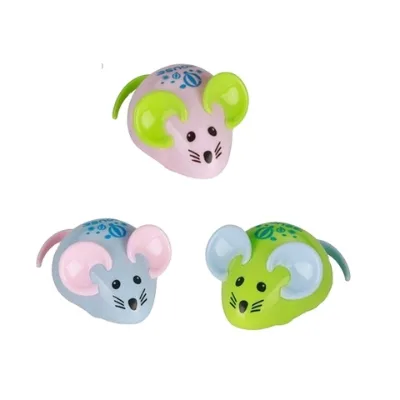
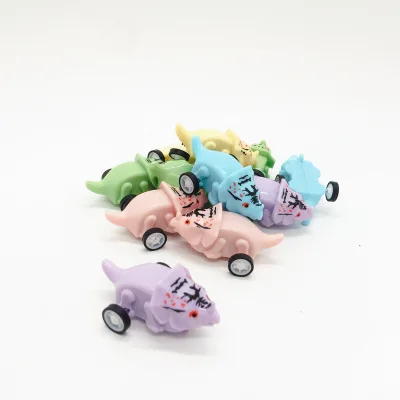
The design aesthetic is heavily influenced by the "Animal" and "Cartoon Toy" styles observed in the inventory. Specific models, such as the CH-TB141, are noted for a "Sitting Animal" style, suggesting a static pose that transitions into motion. The color palette typically includes primary and secondary colors like Green, Pink, and Blue, or Multi-Colored variants to appeal to a broad demographic. The target age range for these products is generally segmented between 3-8 years and 5-7 years, indicating that the mechanical complexity and part size must be calibrated to prevent choking hazards while remaining engaging for toddlers and early school-aged children.
Compliance and Certification Verification
For any toy intended for the international market, particularly in North America and the European Union, compliance is not optional; it is a prerequisite for market entry. The supplied product data explicitly lists several critical certifications that buyers must verify with their suppliers. These include CE, EN71, ASTM, CPSIA, and REACH. Each of these standards addresses specific safety concerns:
- CE and EN71: These are mandatory for the European market, covering mechanical safety, flammability, and chemical migration.
- ASTM and CPSIA: These are the primary regulatory frameworks for the United States, focusing on lead content, phthalates, and physical safety.
- REACH: This European regulation restricts the use of hazardous substances, which is particularly relevant given the use of PVC and plastic materials.
It is important to note that while the data mentions "ISO" certification, it does not specify the standard number (e.g., ISO 9001 for quality management). Buyers should not assume that a generic "ISO" label implies adherence to specific toy safety standards. Instead, procurement teams must request the specific test reports from accredited third-party laboratories that correspond to the EN71, ASTM F963, and CPSIA standards.
Furthermore, the presence of PVC in the material list requires immediate attention. PVC often contains plasticizers to remain flexible, and certain phthalates used in these plasticizers are restricted under CPSIA and REACH. Buyers must ensure that the supplier provides a Declaration of Conformity (DoC) and test reports confirming that the PVC used is phthalate-free or compliant with the specific limits set by the destination market. Relying on the supplier's word without physical documentation is a high-risk strategy that can lead to customs seizures or product recalls.
Cost Drivers and Pricing Dynamics
Understanding the cost structure of cartoon pull back mouse toys is essential for budgeting and margin analysis. The observed price range in the market spans from $0.04 to $105 USD. This wide disparity is not indicative of a single product type but rather reflects the diversity of the category. The lower end of the spectrum, likely around $0.04 to $1.00, typically corresponds to simple, single-item pull-back cars or basic plastic figures sold in bulk. The higher end, potentially reaching $105, may involve complex sets, large plush hybrids, or premium packaging configurations.
Several factors drive these costs. First is the material composition. While plastic is standard, the grade of PVC or the inclusion of other materials like plush fabric (noted in the "Plush Length" specification) will significantly alter the unit cost. Second is the customization level. The data indicates that OEM/ODM services are welcome and that customized logos are accepted. Customization adds layers of cost, including mold development fees, setup charges for printing, and minimum order quantity (MOQ) premiums.
The MOQ range observed is between 100 and 10,000 units. This variability suggests that suppliers offer different tiers of engagement. A buyer seeking a small batch for a test market might find a supplier with a 100-unit MOQ, while a large retailer requiring 10,000 units might negotiate a lower per-unit price. Packaging also plays a role; options range from simple OPP bags to carton packing with specific standard configurations like "30pcs24boxes/ctn" or "4g12pcs*36boxes/ctn." More complex packaging, such as surprise eggs or detailed boxes, increases the cost per unit due to additional materials and assembly labor.
Typical Applications and Market Segmentation
The applications for cartoon pull back mouse toys extend beyond simple play. The data highlights a unique intersection of toys and confectionery, with entries labeled as "Toy Candy" and "Pull-Back Car Surprise Egg Toy Candy." This indicates a dual-use application where the toy serves as a premium inside a candy package, or the toy is marketed alongside edible treats. This segment targets the "Department: Toy Candy" niche, appealing to parents looking for value-added gifts and children attracted to the surprise element.
The age segmentation is critical for application. Products listed for "3-8 Years" and "5-7 Years" suggest that the design must balance safety with engagement. For the younger end of this spectrum (3-5 years), the toy must be robust, with no small detachable parts that could pose a choking hazard. The "Sitting Animal" style and "Mouse" type mentioned in the data suggest that character recognition is a key driver. Children are drawn to familiar cartoon characters, making the "Modelling Source: Cartoon Characters" a vital marketing asset.
In terms of gender, these products are generally "Unisex," allowing for broad market appeal. However, color choices like Pink, Blue, and Green can be leveraged to target specific preferences within the unisex category. The "Funny" usage attribute suggests that the toys are designed for entertainment and humor, often relying on the exaggerated movements of the pull-back mechanism to elicit laughter. This makes them suitable for party favors, classroom rewards, and promotional giveaways.
Supplier Evaluation and Sourcing Strategy
When evaluating potential suppliers for cartoon pull back mouse toys, buyers must look beyond the basic product listing. The data indicates that the "Place of Origin" is Guangdong, China, a major manufacturing hub for toys. While this region offers a mature supply chain, it also means competition is fierce, and quality can vary widely between factories.
Key evaluation criteria should include:
- Certification Authenticity: Verify that the listed certifications (CE, EN71, ASTM, etc.) are current and issued by recognized bodies. Request copies of the actual test reports, not just a certificate of compliance.
- Customization Capability: Confirm the supplier's ability to handle OEM/ODM requests. The data shows that customized logos and designs are accepted, but the lead time and cost implications must be clarified.
- Production Capacity: Assess the supplier's ability to meet the observed MOQ range of 100 to 10,000 units. A supplier that can handle both small and large orders offers more flexibility.
- Quality Control Processes: Inquire about the supplier's internal QC protocols. Given the mechanical nature of pull-back toys, testing the inertia mechanism for durability is essential.
- Payment Terms: The data specifies "T/T" (Telegraphic Transfer) as a payment term. Buyers should negotiate terms that protect their interests, such as a deposit upon order confirmation and a balance before shipment.
It is crucial to avoid suppliers who cannot provide clear documentation regarding their materials and safety standards. The presence of "Simple Color" logo printing suggests that some suppliers may offer basic customization, while others might require more complex molding. Buyers should clarify the extent of customization before committing to an order.
Quality Control and Long-Term Procurement Considerations
Quality control for pull-back toys must focus on both mechanical integrity and material safety. The "INERTIA" mechanism must be tested for consistency; a toy that moves too fast or too slow fails to provide the intended play experience. Additionally, the "Plush Length" and "Modelling Source" specifications suggest that some products may combine hard plastic with soft materials. This hybrid construction requires careful inspection to ensure that the materials are securely bonded and do not separate during play.
Long-term procurement considerations involve building a sustainable relationship with suppliers. The data indicates that "Customization" is available, which allows buyers to differentiate their products in a crowded market. However, customization should be approached with a clear understanding of the "Standard" packaging requirements, such as "30pcs20trays/ctns" or "20pcs30PVC/ctns." Deviating from standard packing can increase logistics costs and complicate shipping.
Buyers should also consider the "Storage Type" and "Shelf Life" if the product involves any edible components or sensitive materials. While most toys are stored at room temperature, the data mentions "Refrigerated" storage for certain items, which is unusual for toys but relevant if the product is part of a candy bundle. Ensuring that the supply chain can maintain the required storage conditions is vital to prevent spoilage or degradation.
Finally, the "Design" aspect, particularly the "Animal" and "Mouse" themes, should be aligned with current market trends. While the data shows a specific model (BL143849) and others (CH-X070, CH-X098, CH-X101), the longevity of a specific character design depends on its popularity. Buyers should monitor the "Age Range" and "Gender" trends to ensure that the products they source remain relevant as the target demographic grows. By focusing on these technical and strategic factors, procurement professionals can secure high-quality cartoon pull back mouse toys that meet safety standards and market demands.
FAQs
What certifications do cartoon pull back mouse toys typically hold?
These toys typically hold CE, EN71, ASTM, CPSIA, and REACH certifications to ensure safety. Buyers must verify these specific standards with suppliers rather than assuming generic ISO labels cover toy safety requirements.
How is the movement mechanism of these toys powered?
The movement relies on an inertia-based system that requires no batteries or external power. Users push the toy backward to store kinetic energy, which releases to move it forward automatically.
Which materials are commonly used for these cartoon toys?
Common materials include plastic and PVC to ensure durability and fine detail rendering. Buyers should request test reports to confirm the PVC is phthalate-free and compliant with safety regulations.
Can suppliers provide customized logos for these products?
Yes, suppliers welcome OEM and ODM services and accept customized logo printing. However, customization adds costs for mold development and setup, and minimum order quantities may increase.
What is the typical age range for these pull back toys?
The typical age range spans from 3 to 8 years and 5 to 7 years. Designs must balance mechanical complexity with safety to prevent choking hazards for younger children.
Where are these toys typically manufactured?
These toys are typically manufactured in Guangdong, China, a major global hub for toy production. This location offers a mature supply chain but requires strict quality control verification.
What packaging options are available for bulk orders?
Packaging options range from simple OPP bags to carton packing with specific configurations like 30 pieces per box. Complex packaging like surprise eggs increases unit costs due to additional assembly labor.