Source Gel Ball Blaster for Outdoor Play, Training, and Events
Compare 27 Gel Ball Blaster options from verified suppliers. Buyers can evaluate electric and non-electric models, soft bullet and water gun types, and customized features for children's games and summer activities; compare the available evidence and request quotations based on your requirements.
Key considerations
Products List


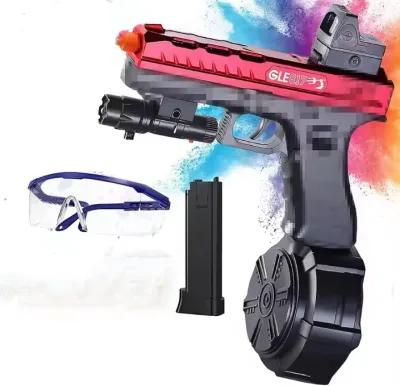


Gel Ball Blaster Awm Electric Splatter Ball Blaster with Water Ball Gun Toy for Outdoor Game
$12.30 - $13.85
MOQ: 360 Pieces




Comprehensive Sourcing Guide
Gel Ball Blaster Sourcing Guide
Sourcing gel ball blasters requires a nuanced understanding of the product’s dual nature as both a recreational toy and a potential safety concern. Buyers must navigate a market where listings often conflate manual, electric, and water-based variants, necessitating strict verification of the power source and firing mechanism. The core keyword "Gel Ball Blaster" typically refers to devices that shoot hydrogel beads, but the supplied data reveals a fragmented landscape including soft bullet guns, water guns, and electronic toys. Procurement teams must therefore define their exact operational requirements before engaging suppliers, ensuring that the selected model aligns with intended use cases, whether for indoor play, outdoor games, or competitive scenarios.
The procurement process is further complicated by the wide variance in product specifications and certifications observed across listings. While some products are explicitly labeled as non-electric or manual, others claim electric modes and advanced features like customized logos or environmental protection advantages. This inconsistency demands a rigorous due diligence process where buyers verify every claim against physical samples and third-party test reports. Establishing clear technical boundaries early in the sourcing journey helps prevent mismatches between supplier offerings and buyer expectations, reducing the risk of receiving products that fail to meet safety standards or functional requirements for the target demographic.
Product Scope and Observed Listing Signals
The observed product scope for gel ball blasters is highly diverse, encompassing manual soft bullet guns, electric models, and water guns. Listings indicate a price range of 1-106 USD, with minimum order quantities (MOQs) varying significantly from 1 to 5300 units. This wide MOQ range suggests that suppliers cater to both small-scale retailers seeking sample orders and large distributors requiring bulk shipments. Buyers should note that the term "Gel Ball Blaster" may be used interchangeably with "toy gun" or "play gun," requiring careful examination of product descriptions to confirm the actual projectile type and firing mechanism.
Key attributes observed include materials such as ABS and plastic, with dimensions ranging from compact 20CM models to larger 57CM variants. Some listings specify age ranges like 3-8 years or 14 years and up, indicating that product design and safety features are tailored to different user groups. Additionally, features like "funny summer game" or "kids outdoor play" suggest seasonal demand patterns. Buyers must correlate these observed signals with their specific market needs, ensuring that the selected product’s size, material, and intended age group align with their target customer profile and regulatory constraints in their destination market.
Technical Specifications to Verify
Technical verification must begin with the power source, as listings show conflicting data regarding electric modes. Some products are explicitly marked as "Not Electric" or "Manual," while others claim "Electric" functionality with specific models like ZHURUDIANDONGMP5. Buyers must confirm whether the device uses batteries, rechargeable cells, or manual pumping mechanisms, as this impacts performance, maintenance, and safety. Additionally, the model numbers provided, such as SHOUDONG1911 or Glock, should be cross-referenced with physical samples to ensure consistency and to identify any potential intellectual property issues or design similarities to real firearms.
Dimensional specifications and packaging details are critical for logistics planning and shelf placement. Observed standards include sizes like 35CM17cm5cm and 57CM20cm8cm, with packing configurations such as 10PCS per pack or individual color boxes. Buyers should verify the master carton dimensions, such as 574861 CM, and weight metrics like N.W. 14 KG and G.W. 16 KG to calculate shipping costs accurately. Furthermore, the presence of accessories or specific features like "customized logo" options should be confirmed, as these can add value but also complicate the supply chain if not properly managed during the production phase.
Compliance and Safety Documentation
Compliance is paramount when sourcing gel ball blasters, given the potential for misuse and safety risks. Listings mention certifications such as ASTM, EN71, RoHS, CE, and 6P, which are critical for market access in regions like the United States and Europe. Buyers must verify that these certifications are valid and specific to the exact product model being purchased, as generic claims may not apply to all variants. It is essential to request test reports from accredited laboratories to confirm that the products meet the specific safety standards for toys, including mechanical, physical, and chemical safety requirements.
Age appropriateness is another critical compliance factor, with listings indicating age ranges from 3-8 years to 14 years and up. Buyers must ensure that the product’s design, including small parts and projectile velocity, aligns with the stated age group and relevant safety regulations. For instance, products intended for younger children must adhere to stricter choking hazard and toxicity limits. Additionally, buyers should check for any local regulations regarding the appearance of toy guns, such as orange tips or distinct coloring, to avoid legal issues upon importation. Proper documentation and clear labeling are essential to demonstrate compliance to customs authorities and retailers.
Cost Drivers and Commercial Terms
Cost drivers for gel ball blasters include material quality, electronic components, and customization options. Products made from ABS plastic with electric modes typically command higher prices than manual plastic variants. The observed price range of 1-106 USD reflects this variance, with higher-end models offering features like customized logos, advanced packaging, and superior build quality. Buyers should analyze the cost structure to understand the value proposition of each option, considering factors such as durability, performance, and aesthetic appeal. Additionally, the MOQ significantly impacts the unit price, with larger orders often resulting in lower per-unit costs due to economies of scale.
Commercial terms, including payment methods, lead times, and shipping arrangements, must be clearly defined in the purchase agreement. Buyers should negotiate terms that protect their interests, such as partial payments before production and balance payments before shipment. It is also important to clarify responsibilities for shipping costs, insurance, and customs duties. Given the variability in supplier capabilities, buyers should establish clear communication channels and regular updates to monitor production progress. Understanding these commercial dynamics helps buyers optimize their procurement strategy, balancing cost efficiency with risk management and supply chain reliability.
Supplier Qualification and Quality Control
Supplier qualification involves assessing the manufacturer’s production capabilities, quality management systems, and track record. Buyers should verify the supplier’s location, such as Guangdong, China, and their ability to meet specific production standards and certifications. Requesting factory audits or third-party inspections can provide insights into the supplier’s operational efficiency and quality control processes. Additionally, buyers should evaluate the supplier’s responsiveness, communication skills, and willingness to accommodate custom requirements, such as logo printing or packaging modifications. A reliable supplier should demonstrate transparency and a commitment to delivering products that meet agreed-upon specifications.
Quality control measures must be implemented throughout the production process to ensure consistency and safety. Buyers should establish clear quality standards and inspection criteria, including visual checks, functional tests, and packaging verification. Conducting pre-shipment inspections is crucial to identify and rectify any defects before the goods leave the factory. Additionally, buyers should implement a robust sampling plan to test product performance and durability under various conditions. By maintaining strict quality control protocols, buyers can minimize the risk of receiving substandard products, protect their brand reputation, and ensure customer satisfaction in the end market.
Long-Term Procurement Checks
Long-term procurement success depends on continuous monitoring of supplier performance and market trends. Buyers should regularly review supplier metrics, such as on-time delivery rates, defect rates, and responsiveness to issues. Establishing a scorecard system can help objectively evaluate suppliers and identify areas for improvement. Additionally, buyers should stay informed about changes in regulations, safety standards, and consumer preferences that may impact the Gel Ball Blaster market. Adapting to these changes ensures that the product portfolio remains relevant and compliant, maintaining a competitive edge in the marketplace.
Building strong relationships with suppliers is essential for securing favorable terms and priority access to new products. Buyers should engage in regular communication, sharing feedback and insights to foster collaboration and mutual growth. Exploring opportunities for joint product development or exclusive agreements can further strengthen the partnership. Additionally, buyers should diversify their supplier base to mitigate risks associated with single-source dependencies. By implementing a strategic and proactive procurement approach, buyers can ensure long-term supply chain resilience and sustained business success in the dynamic toy and recreational product sector.
FAQs
What materials are used to make these Gel Ball Blaster toys?
The listed Gel Ball Blaster products are made mainly from ABS plastic, which offers good strength and impact resistance for toy gun applications. Some listings also describe the material simply as plastic. Because material composition can vary between models, buyers should confirm the exact resin grade, color options, and any eco-friendly material requirements with the supplier before ordering.
Which certifications do the Gel Ball Blaster products carry?
Listed certifications include ASTM, CE, RoHS, EN, and 6P testing, which cover common toy safety and chemical requirements for export markets. Certification coverage may differ by model, so always request the current test reports for the specific item and quantity you plan to order. Some listings note that customized certification requirements can be arranged with the factory.
Can I customize the logo and packaging on Gel Ball Blaster orders?
Yes, customization is available. Listings indicate that custom logos are accepted and that the products support customized configurations. Color box packing is offered on some models, with master cartons around 57 by 48 by 61 centimeters holding 36 sets. Discuss artwork files, logo placement, packaging style, and any extra cost with the supplier before confirming your order.
What is the typical MOQ range for Gel Ball Blaster orders?
Observed MOQ values across the listings range from 1 piece to 5,300 pieces, depending on the model and supplier. Low-MOQ items are often sample-friendly or stocked designs, while high-MOQ items may involve customized tooling or packaging. Ask each supplier to confirm the exact MOQ, sample availability, and how unit pricing changes at higher order quantities.
How are Gel Ball Blaster products packed for shipping?
Packing varies by model. Some items ship 10 pieces per pack, while others use a color box with sizes around 27.5 by 19.5 by 7.5 centimeters or 35 by 17 by 4.8 centimeters. Master cartons for one listed model measure 57 by 48 by 61 centimeters, holding 36 sets with a gross weight of about 16 kilograms. Confirm packing details per model.
What age ranges are the listed Gel Ball Blaster toys suitable for?
Listings show two declared age groups: some models are marked for ages 3 to 8 years, while others are rated for 14 years and up. Age ratings affect safety requirements and market eligibility, so verify the age grading on the target model and ensure the labeling matches the rules of the destination market before placing a bulk order.
Which Gel Ball Blaster models are electric and which are manual?
Both options appear in the listings. Electric gun models are marked as electric with the electric mode enabled, while soft bullet gun and water gun variants are non-electric and operated by hand. Product sizes range from about 20 centimeters up to 57 centimeters depending on the model. Choose based on your target users, and confirm power source details with the supplier.
Can I source Gel Ball Blaster products from a specific location?
The listings indicate production origins in China, with one model explicitly placed in Guangdong, China. Guangdong is a common sourcing region for toy manufacturing. When contacting suppliers, confirm the actual factory address, whether production is in-house or outsourced, and the production capacity, since the trading company location and the manufacturing site are not always the same.