Source Casting Diesel Engine Cylinder Liner for Trucks, Lawnmowers, Excavators
Compare 30 listings for Casting Diesel Engine Cylinder Liner suitable for trucks, lawnmowers, and excavators. Buyers can evaluate specifications, certifications, and pricing from verified Chinese manufacturers offering custom options and quality assurance.
Key considerations
Products List


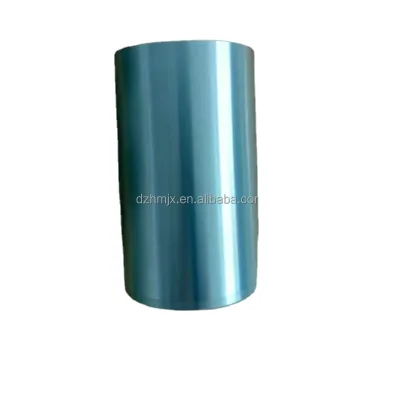
Comprehensive Sourcing Guide
Strategic Sourcing Guide for Casting Diesel Engine Cylinder Liners
Procuring high-performance casting diesel engine cylinder liners requires a disciplined approach that balances technical precision with supply chain reliability. The global market for these critical engine components is vast, yet the specific requirements for a casting liner vary significantly based on the engine architecture, material composition, and intended operational environment. Buyers must navigate a complex landscape of certifications, material standards, and manufacturing tolerances to ensure that the sourced components meet the rigorous demands of heavy-duty applications. This guide outlines the essential factors for evaluating potential suppliers and selecting the right cylinder liners for your specific needs, relying strictly on observable product attributes and established industry standards.
Technical Specifications and Material Composition
The foundation of a successful procurement strategy lies in a deep understanding of the technical specifications that define a quality cylinder liner. The core keyword, "Casting Diesel Engine Cylinder Liner," implies a specific manufacturing process where molten metal is poured into a mold to form the liner. However, the resulting product attributes can differ widely. In the current market, observed materials for these components include Aluminum Alloy, Stainless Steel, and Iron. Each material offers distinct advantages; for instance, Stainless Steel is often cited for its corrosion resistance and durability in high-stress environments, while Iron remains a standard for its thermal mass and wear characteristics.
Dimensional accuracy is paramount. Buyers should verify that the supplier can meet tight tolerance levels, with observed market standards indicating a tolerance of +/-0.05mm for critical dimensions. The diameter of the liner is another critical specification, with specific models observed in the market having a diameter of 105mm. However, this is not a universal standard; the actual diameter must be matched precisely to the engine block specifications. Furthermore, the manufacturing technique plays a vital role in performance. Advanced suppliers utilize CNC Machining to ensure precision, while others may employ Push Technics for specific forming processes. The physical condition of the product is typically listed as "New," and the type of component is explicitly identified as a "Cylinder" or "Cylinder Liner."
When reviewing product data, buyers must distinguish between standard and non-standard components. While some listings describe the item as a "Standard Component," others classify it as "Non-Standard," indicating a custom fit for specific engine models like the 1115-01015, 6BG1, or C223. The part number is a definitive identifier; for example, specific liners are associated with part numbers such as 9.11261.230.0 or 4009233. It is essential to cross-reference these numbers with the engine manufacturer's documentation to ensure compatibility. The engine type, such as Cummins, and the specific engine model, like the K series, must align with the liner's design to prevent mechanical failure.
Compliance, Certification, and Quality Standards
In the B2B procurement of industrial components, compliance is not merely a formality but a critical risk mitigation strategy. The market for diesel engine parts is heavily regulated, and suppliers must demonstrate adherence to international quality management systems. Observed certifications for cylinder liners include ISO standards, specifically ISO9001, which validates the supplier's quality management processes. Some listings also reference ISO TSMaterial or TSISO, indicating compliance with specific technical standards for automotive components. Additionally, CE certification is frequently observed, signaling that the product meets European health, safety, and environmental protection standards.
The distinction between "Standard Component" and "Non-Standard Component" often correlates with the level of certification required. Standard components may adhere to general ISO standards, while non-standard or custom-machined parts often require more rigorous validation. The "Standard Component" classification in some contexts refers to the product's interchangeability, whereas "Non-Standard Component" suggests a bespoke manufacturing approach. Buyers should verify that the supplier holds a valid ISO9001 Quality Certificate, as this is a recurring attribute in high-quality listings. The presence of a "Good" quality rating and "Original Factory" status further reinforces the likelihood of a compliant product, though these are subjective attributes that must be backed by objective test data.
It is crucial to note that while certifications like ISO9001 and CE are common, they do not guarantee performance in every specific application without verification. The "Standard" attribute in product listings can also refer to the product standard itself, such as "STD" or specific manufacturer standards like Cummins, Weichai, Yuchai, Isuzu, Yanmar, and Lovol. Buyers must ensure that the supplier's certification covers the specific standard required for their engine type. The "Quality: Original Factory" attribute suggests that the product is manufactured directly by the engine maker or an authorized partner, which often implies a higher level of traceability and adherence to original equipment manufacturer (OEM) specifications.
Cost Drivers and Pricing Variables
Understanding the cost structure of casting diesel engine cylinder liners is essential for budgeting and negotiation. The price range observed in the market is extensive, spanning from 1 to 100,000 USD. This vast disparity is driven by several key factors, including the material used, the complexity of the casting process, and the level of customization required. A liner made from Aluminum Alloy or Stainless Steel will generally command a higher price than one made from standard Iron due to material costs and processing complexity.
Customization is a significant cost driver. The "Customization: Available" attribute indicates that suppliers can produce liners to specific dimensions or specifications, which inevitably increases the unit cost compared to off-the-shelf standard parts. The "Lead Time" of 30 days is a common observation, but this can vary based on the order volume and the complexity of the custom requirements. Larger orders may benefit from economies of scale, reducing the per-unit cost, while smaller, urgent orders may incur premium pricing.
The "MOQ" (Minimum Order Quantity) also influences the total cost of ownership. The observed MOQ range is 1 to 1000 units. Buyers purchasing small quantities may face higher per-unit costs, whereas those ordering in bulk can negotiate better rates. The "Warranty" period, observed as 24 Months in some listings, adds value to the purchase but may be reflected in the initial price. Additionally, the "Packing" method, whether "Wooden Case," "Neutral Cardon," "Wooden Packing Box," or "Plastic Bag+Carton," can affect shipping costs and overall pricing. Heavy-duty packaging like wooden cases is more expensive but necessary for protecting high-value liners during international transit.
Typical Applications and Engine Compatibility
The versatility of casting diesel engine cylinder liners is evident in their wide range of applications. These components are not limited to a single industry but are integral to various sectors requiring robust diesel engines. The observed applications include Trucks, Lawnmowers, and Excavators. This diversity highlights the need for buyers to specify the exact application when sourcing, as the stress, temperature, and wear patterns differ significantly between a heavy-duty truck engine and a small lawn mower engine.
For heavy machinery like excavators, the cylinder liner must withstand extreme loads and continuous operation. The "Application: Excavator" attribute is frequently cited, indicating a high demand for these components in the construction and mining sectors. Similarly, the "Application: Truck" suggests a need for liners that can handle long-haul durability and high-mileage requirements. Even smaller engines, such as those in lawnmowers, require precise liners to ensure efficient combustion and minimal emissions.
The engine model compatibility is a critical factor in application matching. Specific models like 1115-01015, 6BG1, and C223 are listed as compatible with certain liners. The engine type, such as Cummins, and the engine model, like the K series, must be explicitly matched to the liner's design. The "Part Number" serves as the primary link between the engine and the liner, ensuring that the component fits the cylinder bore correctly. Buyers should always verify the engine model and part number against the supplier's product data to avoid compatibility issues that could lead to engine failure.
Supplier Evaluation and Manufacturing Capabilities
Evaluating a supplier for casting diesel engine cylinder liners requires a thorough assessment of their manufacturing capabilities and quality control processes. The "Location" of the supplier is a key factor, with many observed listings originating from China, specifically from regions like Laiyang, Shandong, Dongguan, and China (Mainland). These regions are known for their robust manufacturing infrastructure and expertise in diesel engine components. However, the geographic location should not be the sole determinant of supplier quality; the specific capabilities of the factory are more important.
Manufacturing techniques such as "CNC Machining" and "Push" technics are observed in the market, indicating the level of precision and automation in the production process. Suppliers utilizing CNC machining are likely to offer higher dimensional accuracy and consistency, which is crucial for cylinder liners. The "Test Equipment" available at the supplier's facility, such as CMM (Coordinate Measuring Machine) and Projectors, is a strong indicator of their ability to verify product quality. These tools allow for precise measurement of dimensions and tolerances, ensuring that the liners meet the specified +/-0.05mm tolerance.
The "Condition" of the product, typically listed as "New," and the "Quality" rating of "Good" or "Original Factory" are positive indicators, but they should be supported by tangible evidence. Buyers should request samples, as the "Sample: Yes" attribute suggests that suppliers are willing to provide product samples for evaluation. This allows the buyer to physically inspect the liner for surface finish, dimensional accuracy, and material quality before committing to a large order. The "Shipping" options, including FedEx, DHL, and UPS, indicate the supplier's ability to handle international logistics efficiently, which is essential for timely delivery.
Quality Control and Long-Term Procurement Considerations
Ensuring the long-term reliability of casting diesel engine cylinder liners requires a robust quality control strategy. The "Tolerance" of +/-0.05mm is a critical specification that must be consistently met. Buyers should verify that the supplier has a documented quality control process that includes regular testing using CMM and Projectors. The "Standard Component" or "Non-Standard Component" status should be clearly defined, and the supplier should provide documentation that confirms the component meets the relevant standards, such as ISO9001 or specific OEM standards.
The "Warranty" of 24 Months is a significant factor in long-term procurement considerations. A warranty period of this length suggests that the supplier is confident in the durability and performance of their product. However, buyers should carefully review the terms of the warranty to understand what is covered and what constitutes a claim. The "Lead Time" of 30 days is a standard observation, but buyers should plan for potential delays, especially for custom orders or during peak demand periods.
Packaging is another aspect of quality control. The "prod_packing" attribute, which includes options like "Wooden Case," "Neutral Cardon," "Wooden Packing Box," and "Plastic Bag+Carton," plays a crucial role in protecting the liner during transit. Proper packaging prevents damage and ensures that the liner arrives in "New" condition. Buyers should specify the required packaging based on the value and fragility of the product.
Finally, the "Keywords" associated with the product, such as "Cylinder Liner" and "Stainless Steel Diesel Engine Cylinder," help in identifying the correct product category. Buyers should use these keywords to search for suppliers but must verify that the specific attributes match their requirements. The "Material" attribute, whether Aluminum Alloy, Stainless Steel, or Iron, must be confirmed to ensure the liner is suitable for the intended application. By focusing on these detailed specifications and maintaining a rigorous evaluation process, buyers can secure high-quality casting diesel engine cylinder liners that meet their operational needs and ensure long-term reliability.
FAQs
What materials are used for casting diesel engine cylinder liners?
Casting diesel engine cylinder liners are commonly manufactured using Aluminum Alloy, Stainless Steel, or Iron. The choice depends on specific application needs, as Stainless Steel offers corrosion resistance while Iron provides standard thermal mass and wear characteristics for heavy-duty engines.
How can I verify the quality and certification of these liners?
You can verify quality by checking for ISO9001 Quality Certificates and CE certification on the product listings. Look for attributes indicating Original Factory status and Good quality ratings, which suggest adherence to international standards and reliable manufacturing processes.
Which engine models are compatible with these cylinder liners?
These liners are compatible with various engine models including 1115-01015, 6BG1, and C223. They are designed for engines from manufacturers like Cummins, Weichai, Yuchai, Isuzu, Yanmar, and Lovol, ensuring fitment for trucks, lawnmowers, and excavators.
Can I order custom specifications for these cylinder liners?
Yes, customization is available for these cylinder liners to meet specific dimensional or design requirements. Buyers should confirm lead times, which are typically around 30 days, and verify if the supplier can handle non-standard component requests for unique engine architectures.
What is the typical tolerance for casting diesel engine cylinder liners?
The typical tolerance for these components is +/-0.05mm for critical dimensions. Suppliers utilize advanced test equipment like CMM and Projectors to ensure these tight tolerances are met, guaranteeing precision for high-performance applications in heavy machinery and vehicles.
How long is the lead time for ordering these liners?
The standard lead time for ordering these liners is approximately 30 days. This duration may vary based on order volume and whether the request involves custom specifications, so buyers should confirm specific timelines with the manufacturer before placing an order.