Source Casting Enamel Badge for Gifts, Decorations, and Souvenirs
Compare 30 options for Casting Enamel Badge products featuring die casting, stamping, and enamel techniques. Buyers can review specifications like plating, attachment types, and customization availability for gifts, decorations, and souvenirs.
Key considerations
Products List


Hard Enamel Badge Black Nickle Plating Badge Custom Car Badge Good Quality Badge
$0.45 - $0.80
MOQ: 50 Pieces


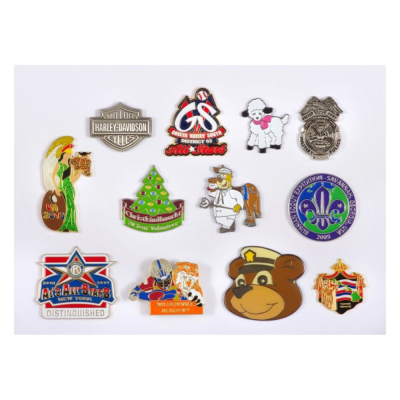
Comprehensive Sourcing Guide
Strategic Sourcing Guide for Casting Enamel Badges
Understanding Technical Specifications and Manufacturing Processes
When sourcing casting enamel badges, buyers must first distinguish between the primary manufacturing techniques observed in the market. The core keyword "Casting Enamel Badge" often implies a specific blend of metallurgy and surface finishing. Based on current market observations, the production of these items frequently utilizes a hybrid approach involving Die Casting & Stamping alongside Enamel application. This combination allows for the creation of complex, three-dimensional shapes that are then filled with colored enamel to achieve the desired aesthetic depth.
The material composition is a critical technical variable. The supply base predominantly utilizes Metal and Alloy substrates. These materials provide the necessary structural integrity for die-casting processes while allowing for intricate detailing. The plating options observed in the market range from Gold and Silver to Antique finishes. These plating layers serve both decorative and protective functions, preventing oxidation and enhancing the visual appeal of the badge.
A significant technical differentiator is the attachment mechanism. While some products feature a Butterfly Clutch for secure fastening on fabric, others may utilize different backing systems depending on the intended use. The standard dimensions for these badges often revolve around a 25mm size, though Custom sizing is widely available. This flexibility allows organizations to tailor the badge to specific branding requirements, ensuring the emblem is neither too small to be seen nor too large to be cumbersome. The production of these items is characterized by Modern design sensibilities, often incorporating 3D features and Flashing elements to create dynamic visual effects.
Compliance, Certification, and Safety Standards
In the realm of B2B procurement, particularly for items used in gifts, souvenirs, and personal decorations, compliance with safety standards is non-negotiable. Buyers must verify that suppliers adhere to rigorous testing protocols. The market data indicates that reputable manufacturers often provide badges that meet SGS and BV certification standards. These third-party verifications are essential for validating the safety and quality of the product before it enters the supply chain.
Chemical safety is a primary concern, especially for badges that may come into direct contact with skin or clothing. Buyers should explicitly request test results regarding heavy metals. Observed specifications highlight a critical safety threshold where the Lead Test result is Less than 90 Ppm. Furthermore, the absence of nickel is a common requirement for sensitive applications, with many suppliers offering Nickel-Free options to prevent allergic reactions. The presence of Interk testing capabilities suggests a broader scope of quality assurance that buyers should confirm on a case-by-case basis.
When evaluating a supplier, the "Standard" field is a vital indicator of compliance. While some products are listed with a 25mm standard size, others are marked as Customized, implying that the manufacturing process can be adapted to specific regulatory requirements. However, the presence of a standard like SGS suggests that the production facility has undergone external audit. Buyers should not assume that all listed products automatically meet these standards; rather, they must treat these as observations of specific high-quality listings and request proof of compliance for the specific batch they intend to purchase.
Cost Drivers and Pricing Dynamics
The pricing structure for casting enamel badges is influenced by a complex interplay of material costs, customization levels, and order volume. The observed price range in the market spans from $0.03 to $3.66 per unit. This wide variance is not arbitrary but is directly correlated with the complexity of the design and the materials used.
The primary cost driver is the Customization level. Products that are fully Customized in terms of shape, size, and color will naturally command a higher price point than standard off-the-shelf items. The Technics employed also impact cost; Die Casting & Stamping combined with Enamel filling requires more labor and time than simple stamping processes. Additionally, the Plating choice plays a role; Gold and Antique platings may incur higher material costs compared to standard silver finishes.
Order volume is another critical factor. The MOQ (Minimum Order Quantity) observed ranges from 1 to 10,000 units. This flexibility allows buyers to test the market with small orders or commit to large-scale production runs. However, the unit price typically decreases as the order quantity increases, a standard economic principle in manufacturing. The Sample lead time of 10 Days and Mass Production lead time of 14 Days also influence the overall cost structure, as expedited services often carry a premium. Buyers should calculate the total cost of ownership, including shipping and potential tariffs, rather than focusing solely on the unit price.
Typical Applications and Usage Scenarios
Casting enamel badges are versatile accessories with a broad spectrum of applications. The market data categorizes their usage into several distinct segments, including Gift, Decoration, Souvenirs, and Events. These items are frequently used as Organization Badges for corporate identity, School Badges for educational institutions, and Personal Decorations for individual expression.
The Wearing Way is specified as Breast, indicating that these badges are primarily designed to be pinned onto lapels, uniforms, or bags. This makes them ideal for formal events, conferences, and team gatherings where visual identification is important. The Feature set, which includes Magnetic, Flashing, and 3D capabilities, expands their utility beyond simple identification. Magnetic attachments offer a non-piercing alternative for delicate fabrics, while flashing elements can be used for safety or promotional visibility.
The Style of these badges is often described as Creative, suggesting that they are not limited to traditional geometric shapes. The Shape and Size are frequently Custom, allowing for unique branding opportunities. For instance, a company might commission a badge with a specific logo shape, while a school might choose a custom size to match their uniform requirements. The Suitable for attribute indicates that many of these badges are designed for Outdoor use, implying a level of durability against weather elements, which is crucial for event merchandise and promotional giveaways.
Supplier Evaluation and Origin Verification
Selecting the right supplier requires a careful examination of their geographical origin and logistical capabilities. The observed supply base is concentrated in China, with specific hubs identified in Xiamen, Changde, Hunan, and Changde, Hunan Province. These regions are known for their manufacturing expertise in metalwork and enamel products.
When evaluating a supplier, buyers should verify the prod_origin to ensure alignment with their sourcing strategy. For example, a supplier in Changde, Hunan might specialize in Hand-Made processes, as indicated by the Processing attribute for certain models. This contrasts with the Die Casting & Stamping methods used for other models, suggesting that different suppliers may offer different production capabilities.
The prod_packing method is another critical evaluation point. Options range from simple Poly Bag and Bubble Bag to more premium Velvet Box and Plastic Box packaging. The choice of packaging affects the perceived value of the product and its suitability for gifting. A supplier offering Single Polybag Packed, or Customized options demonstrates flexibility in meeting diverse client needs. Buyers should assess whether the packaging aligns with their brand image and logistical requirements, especially for large orders where packaging costs can accumulate.
Quality Control and Production Lead Times
Quality control in the manufacturing of casting enamel badges involves a rigorous inspection process to ensure consistency and durability. The Mass Production lead time is typically observed at 14 Days, while the Sample production time is 10 Days. These timelines are standard benchmarks that buyers should use to plan their procurement schedules.
To maintain quality, buyers should implement a multi-stage verification process. First, request samples to verify the Plating quality, Enamel filling, and Attachment security. Second, verify the Lead Test and Nickel content through third-party reports like SGS or BV. Third, inspect the prod_packing to ensure that the items are protected during transit.
The Standard of 25mm or Customized dimensions should be strictly adhered to during production. Any deviation can affect the fit and appearance of the badge. Additionally, the Feature set, such as Flashing or 3D effects, must be tested to ensure they function as intended. Buyers should establish clear quality acceptance criteria before production begins, including tolerances for color matching and plating thickness.
Long-Term Procurement Considerations
For buyers looking to establish a long-term relationship with suppliers, several factors must be considered beyond the initial transaction. The Customization capability is a key differentiator; suppliers who can adapt to changing design needs and branding requirements will be more valuable partners over time. The ability to offer Customized prod_model numbers, such as BL1001 or MJ-Badge-075, indicates a flexible production system that can accommodate unique requests.
Sustainability and ethical sourcing are increasingly important in B2B procurement. While specific environmental certifications are not explicitly listed in the provided data, the presence of Nickel-Free and Lead Test compliance suggests a commitment to safety and potentially responsible manufacturing practices. Buyers should inquire about the supplier's environmental policies and waste management strategies.
Finally, the scalability of the supply chain is crucial. With an MOQ range of 1 to 10,000, suppliers can support both small-scale pilots and large-scale rollouts. Buyers should ensure that the supplier has the capacity to handle volume increases without compromising quality or lead times. The 14 Days mass production time should remain consistent even as order volumes grow, ensuring that procurement schedules are not disrupted. By focusing on these long-term factors, buyers can build a resilient and efficient supply chain for casting enamel badges.
Comparative Analysis of Product Attributes
To facilitate decision-making, the following table summarizes the key attributes observed in the market for casting enamel badges. This comparison highlights the diversity of options available to buyers.
| Attribute Category | Observed Options | Implications for Buyers |
|---|---|---|
| Material | Metal, Alloy | Determines durability and weight; Alloy offers flexibility for complex shapes. |
| Technics | Die Casting & Stamping, Enamel, Hand-Made | Hybrid methods allow for 3D effects; Hand-made implies higher craftsmanship. |
| Plating | Gold, Silver, Antique | Affects visual appeal and corrosion resistance; Antique offers a vintage look. |
| Standard Size | 25mm, Custom | 25mm is standard; Custom allows for unique branding and fit. |
| Attachment | Butterfly Clutch, Magnetic | Butterfly clutch is secure; Magnetic is non-piercing and versatile. |
| Packing | Poly Bag, Bubble Bag, Velvet Box | Packaging impacts perceived value and protection during shipping. |
| Certification | SGS, BV, Interk | Essential for safety compliance; Verify specific test reports for each batch. |
| Lead Time | Sample: 10 Days, Mass: 14 Days | Standard timelines; Expedited options may be available at a premium. |
| MOQ | 1 - 10,000 | High flexibility; Suitable for both testing and large-scale production. |
| Origin | China (Xiamen, Changde) | Major manufacturing hubs; Verify specific factory capabilities. |
This structured approach ensures that buyers can navigate the complexities of sourcing casting enamel badges with confidence, relying on verified data and established best practices. By focusing on technical specifications, compliance, cost drivers, and supplier evaluation, procurement teams can secure high-quality products that meet their specific organizational needs.
FAQs
What manufacturing techniques are used for these badges?
The primary techniques observed are Die Casting & Stamping combined with Enamel application. This hybrid approach allows for complex 3D shapes filled with colored enamel to achieve aesthetic depth and structural integrity.
Which plating options are available for metal badges?
Available plating options include Gold, Silver, and Antique finishes. These layers serve decorative and protective functions, preventing oxidation while enhancing the visual appeal of the metal alloy substrates.
How long does sample production take for custom orders?
Sample production typically requires 10 days to complete. Mass production follows with a standard lead time of 14 days, though expedited services may carry a premium depending on the specific order requirements.
What safety certifications verify the chemical safety of these badges?
Reputable manufacturers often provide badges verified by SGS and BV certification standards. These third-party validations ensure compliance with safety protocols regarding heavy metals like lead and nickel content.
Can I order badges with custom sizes and shapes?
Yes, customization is widely available for both size and shape. While standard dimensions like 25mm exist, buyers can request custom specifications to tailor the badge to specific branding or uniform requirements.
What is the typical price range for casting enamel badges?
The observed price range spans from 0.03 to 3.66 USD per unit. This variance depends on the complexity of the design, material costs, and the level of customization required for the specific order.
Which attachment mechanisms are commonly used for these badges?
Common attachment mechanisms include Butterfly Clutch for secure fastening. Some products also feature magnetic attachments, offering a non-piercing alternative suitable for delicate fabrics or specific event needs.