Source Caterpillar Excavator Seal Kit for Boom, Arm, and Bucket
Find and compare 30 options for the Caterpillar Excavator Seal Kit, featuring NBR and FKM materials with high-pressure resistance. These kits support boom, arm, and bucket maintenance with customizable packaging and standard export packing for reliable performance.
Key considerations
Products List

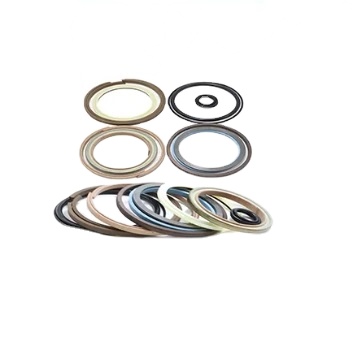


Deliver Fast Hydraulic Cylinder Seal Kit Excavator Rubber Seal Mechanical Oil Seal
$0.23 - $1.05
MOQ: 1000 Pieces


Comprehensive Sourcing Guide
Caterpillar Excavator Seal Kit Sourcing Guide
Procuring replacement seals for heavy construction equipment requires a disciplined approach to specification matching and supplier verification. The core keyword "Caterpillar Excavator Seal Kit" points to a specialized category of hydraulic and structural components designed to maintain pressure integrity and prevent fluid leakage in high-stress environments. Buyers must recognize that while the term is widely used, the actual product listings often encompass a broader range of mechanical seal kits, O-ring sets, and repair kits that may or may not be strictly OEM-compliant. The sourcing process begins with understanding that these kits are critical for maintaining the operational efficiency of boom, arm, and bucket assemblies, where failure can lead to costly downtime and environmental contamination.
This guide provides a structured framework for evaluating suppliers and products based on observed market signals and technical realities. It focuses on helping procurement professionals navigate the complexities of material selection, certification requirements, and commercial terms without relying on unverified claims. By adhering to the evidence-based observations provided, buyers can mitigate the risk of receiving incompatible parts or substandard materials. The following sections detail the specific attributes, compliance needs, and verification steps necessary to secure reliable supply chains for excavator maintenance and repair operations.
Product Scope and Observed Listing Signals
The observed product landscape for excavator seal kits reveals a diverse array of configurations, ranging from simple O-ring sets to comprehensive repair kits for specific hydraulic cylinders. Listings frequently highlight "O Ring Kit Set" and "Excavator repair seal kit" as primary product models, indicating that buyers are often looking for complete solutions rather than individual components. The material composition varies significantly across listings, with some products specifying NBR (Nitrile Butadiene Rubber) for general oil and water resistance, while others offer NBR+FKM+Metal combinations for more demanding applications. This variation suggests that buyers must carefully match the material specification to the specific hydraulic fluid and operating conditions of their machinery to ensure longevity and performance.
Color and hardness are frequently listed as key differentiators, with black being the most common color for NBR products, while FKM variants may appear in black, brown, or customized colors. Hardness ratings typically range from 20 to 90 Shore A, with 90 Shore A being a common specification for standard O-rings, providing a balance between compression set resistance and sealing capability. The packaging methods observed include PE bags inside cartons or box+carton combinations, which are essential for protecting delicate seals from contamination and physical damage during transit. Buyers should note that some listings mention "Standard" or "Nonstandard" standards, implying that while many kits follow industry norms, custom or non-standard sizes are available for older or specialized equipment models.
Technical Specifications to Verify
Verifying the technical specifications of a seal kit is paramount to ensuring compatibility with the target excavator model. Buyers must cross-reference the kit's part number, such as "093-8388/093-6167" or "42 Size, 572 PCS," with the official equipment manual to confirm that the included seals match the cylinder dimensions and configurations of the boom, arm, and bucket. The structure of the kit, often described with codes like "Tc Tb Htcr Htcl Sc," indicates the specific types of seals included, such as piston seals, rod seals, and wipers, which must correspond to the hydraulic circuit design. Misalignment between the kit's contents and the machine's hydraulic architecture can lead to immediate failure or accelerated wear of other components.
Material compatibility is another critical technical factor that requires rigorous verification. While NBR is suitable for standard petroleum-based hydraulic oils, environments involving high temperatures or specific synthetic fluids may require FKM (Viton) seals. The observed listings mention features like "Oil Resistance" and "High Temperature Resistance," but buyers should not assume these properties apply to all items in a mixed-material kit. It is essential to confirm the working medium compatibility, which may include oil, water, atmosphere, or sunshine exposure, to prevent chemical degradation of the seals. Additionally, the speed and pressure ratings of the mechanical seals within the kit must align with the operational parameters of the excavator's hydraulic system to prevent extrusion or blowout under load.
Compliance and Safety Documentation
Compliance with international standards and certifications is a non-negotiable aspect of sourcing industrial seals, particularly for equipment operating in regulated environments. The observed listings mention certifications such as IATF 16949:2016, RoHS, Reach, PAHs, and FDA, which indicate a supplier's adherence to quality management systems and environmental regulations. IATF 16949:2016 is particularly relevant for automotive and heavy industry supply chains, suggesting that the supplier has implemented robust quality control processes. Buyers should request valid certification documents to verify that these credentials are current and applicable to the specific products being purchased, as counterfeit or expired certificates are a known risk in the global trade of industrial components.
Environmental and safety regulations also dictate the permissible substances in seal materials, making RoHS and Reach compliance critical for exports to regions with strict chemical restrictions. PAHs (Polycyclic Aromatic Hydrocarbons) testing is another important factor, as certain rubber compounds may contain harmful substances that are regulated in many markets. While some listings mention CE certification, this is often a low-confidence signal and should be treated with caution; buyers must verify that the CE marking is legitimate and that the product meets the relevant EU directives for machinery safety and environmental protection. Ensuring that the seals do not contain prohibited substances protects the buyer from regulatory penalties and reputational damage.
Cost Drivers and Commercial Terms
The cost of excavator seal kits is influenced by several factors, including material composition, kit complexity, and order volume. Kits containing FKM or metal-reinforced seals are typically more expensive than those made solely of NBR due to the higher raw material costs and specialized manufacturing processes. The number of pieces in a kit, such as the observed "572 PCS" set, also impacts the price, as more comprehensive kits require greater inventory management and assembly effort. Buyers should analyze the unit price in the context of the total value provided, considering that a higher-priced kit with complete coverage may reduce overall maintenance costs by minimizing the need for multiple partial orders.
Commercial terms such as MOQ (Minimum Order Quantity) and lead time are critical for supply chain planning. The observed MOQ range of 1-2000 sets offers flexibility for both small repair shops and large fleet operators, but buyers must confirm the specific MOQ for their desired product variant. Lead times, such as the observed "7 Workingdays" delivery time, should be verified with the supplier, as production schedules and raw material availability can cause delays. Payment terms, shipping methods, and return policies should be clearly defined in the contract to mitigate financial risk. Buyers should also consider the total landed cost, including duties and freight, when comparing quotes from different suppliers.
Supplier Qualification and Quality Control
Supplier qualification is the first line of defense against receiving substandard or counterfeit seal kits. Buyers should conduct a thorough due diligence process, verifying the supplier's business license, manufacturing capabilities, and export history. The observed listings mention origins in Shenzhen and Hebei, China, which are major hubs for rubber and mechanical seal production. However, buyers must distinguish between trading companies and actual manufacturers, as manufacturers often offer better pricing and technical support. Requesting factory audits or third-party verification reports can provide additional assurance of the supplier's operational integrity and quality management systems.
Quality control measures implemented by the supplier are equally important. Buyers should inquire about the supplier's incoming material inspection, in-process quality control, and final product testing procedures. The ability to provide batch-specific test reports or material certificates is a strong indicator of a supplier's commitment to quality. Additionally, buyers should assess the supplier's customer service responsiveness and their willingness to provide samples for pre-production testing. Establishing a clear communication channel for addressing quality issues and returns is essential for maintaining a reliable supply chain. Suppliers who proactively engage in quality improvement and customer feedback loops are generally more reliable partners.
Long-Term Procurement Checks
Long-term procurement success depends on continuous monitoring of supplier performance and product quality. Buyers should establish key performance indicators (KPIs) such as on-time delivery rate, defect rate, and response time to quality issues. Regular audits and performance reviews should be conducted to ensure that the supplier maintains the agreed-upon standards over time. The dynamic nature of the industrial supply chain means that suppliers may change materials or manufacturing processes without notice, so buyers must stay vigilant and request notifications of any changes that could affect product performance.
Building a diversified supplier base can mitigate the risk of supply disruptions. Relying on a single supplier for critical components like excavator seal kits can be risky, especially if that supplier faces production issues or financial instability. Buyers should identify and qualify alternative suppliers who can meet the same technical and compliance requirements. This strategy provides leverage in negotiations and ensures continuity of supply in case of emergencies. Finally, maintaining detailed records of all transactions, communications, and quality reports is essential for tracking supplier performance and resolving any disputes that may arise.
FAQs
What materials are used for the excavator seal kit?
The seal kit uses NBR, FKM, and metal materials. These materials provide oil resistance and high-temperature resistance suitable for heavy machinery applications like excavators.
Can I customize the logo and packaging for this kit?
Yes, customization is available for logos, packaging, and graphics. The product supports OEM requests and offers flexible packaging options including PE bags and cartons.
What is the minimum order quantity for this seal kit?
The minimum order quantity is one set. This low MOQ allows buyers to test the product quality before committing to larger bulk orders for their machinery needs.
How long does it take to deliver the seal kit?
The delivery time is seven working days. This lead time applies to standard orders and ensures quick turnaround for urgent repair needs on construction equipment.
Which certifications does the product hold?
The product holds IATF 16949:2016, RoHS, Reach, PAHs, and FDA certifications. These standards ensure the seal kit meets international safety and quality requirements for industrial use.
What is the hardness rating of the O-ring seals?
The hardness rating is 90 Shore A. This specific hardness ensures durability and effective sealing performance under high pressure and varying temperature conditions in excavators.
Where is the product manufactured and shipped from?
The product originates from Shenzhen and Hebei in China. These locations serve as the primary production and shipping hubs for the excavator repair seal kits.