Source Caterpillar Turbocharger for Engines Generators Trucks
Find and compare 30 Caterpillar Turbocharger options including models 3116, 3406, and 3412. Buyers can review specifications like part numbers, certifications, and lead times from verified Chinese manufacturers offering custom packaging and OEM services.
Key considerations
Products List


Diesel Engine Parts 3406 1795922 Turbocharger for Caterpillar Excavator
$200.00 - $350.00
MOQ: 2 Pieces


Genuine Original Turbocharger for Caterpillar Diesel Engines and Parts
$200.00 - $500.00
MOQ: 20 Pieces

Genuine Original Turbocharger for Caterpillar Marine Engines and Generators
$200.00 - $500.00
MOQ: 20 Pieces

New Genuine Original Turbocharger for Caterpillar Marine Diesel Engines
$200.00 - $500.00
MOQ: 20 Pieces

Genuine Original Turbocharger for Caterpillar Marine Diesel Engines and More
$200.00 - $500.00
MOQ: 20 Pieces

Genuine Original Turbocharger for Excavators and Marine Diesel Engines
$200.00 - $500.00
MOQ: 20 Pieces

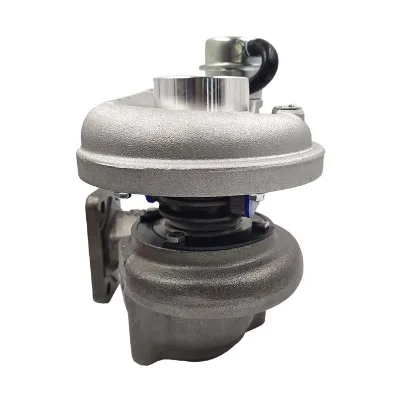


Caterpillar OEM Turbocharger 435-4500A for Excavator 330 336gc, Wheel Loader 950 962
$980.00 - $1000.00
MOQ: 1 Pieces


C15 750058-0001 362-0846 3620846 239-9988 Turbocharger for Caterpillar
$325.00 - $350.00
MOQ: 1 Pieces

S300AG072 475477 473704 Turbocharger for Caterpillar Vehicle with C7 Engine
$239.00 - $259.00
MOQ: 1 Pieces

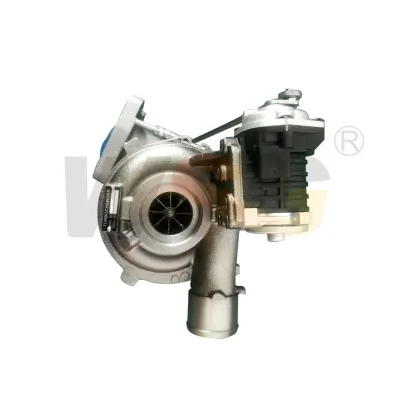


Good Quality Oil Cooled Turbocharger 3066T TD06H 49179-02390 for Caterpillar
$85.00 - $102.00
MOQ: 1 Pieces
Comprehensive Sourcing Guide
Strategic Sourcing Guide for Caterpillar Turbocharger Procurement
The global demand for heavy-duty engine components continues to drive the necessity for precise sourcing strategies, particularly for critical powertrain elements like turbochargers. For procurement professionals focusing on the Caterpillar ecosystem, the complexity lies not merely in acquiring a replacement part but in ensuring compatibility, verifying technical integrity, and navigating the specific logistical constraints of the supply chain. The market presents a diverse array of options ranging from specific engine series like the 3116 and 3406 to general high-performance units. This guide outlines the essential factors buyers must evaluate to secure reliable supply chains while adhering to strict quality and compliance standards.
Technical Specifications and Engine Compatibility
The foundation of any successful procurement cycle for turbochargers is the rigorous alignment of technical specifications with the target engine architecture. The available inventory highlights a distinct segmentation based on engine series, which dictates the physical and performance characteristics of the unit. Buyers must distinguish between the Caterpillar 3116, 3406, and 3412 engine families, as each requires a unique configuration. For the 3116 series, the specific part number 0r6724 is identified as the critical identifier, whereas the 3406 series corresponds to part number 0r6333. Furthermore, the 3412 series is associated with part number 4W1238.
Beyond the primary part numbers, secondary identifiers such as 1795922, 7C7582, and 4573636 appear in the product data, suggesting a complex mapping of legacy and updated component codes. The 1795922 model, for instance, is noted with a distinct lead time of 7 days and a low minimum order quantity (MOQ) of 2 pieces, contrasting sharply with the 50-piece MOQ observed for the 3116 series. This variance indicates that procurement strategies must be tailored to the specific urgency and volume requirements of the project. The material composition is predominantly iron, and the manufacturing technique involves pressing, which are standard attributes for heavy-duty turbine housings. Additionally, the cooling method is specified as water cooling, a critical parameter for integration into diesel generator sets and mobile equipment.
Compliance and Certification Verification
In the heavy machinery sector, certification is not merely a formality but a prerequisite for operational safety and regulatory adherence. The supply chain data indicates that products may carry the ISOTS16949 certification, a standard specifically tailored for the automotive and heavy equipment industry to ensure quality management systems. However, buyers must exercise caution, as the data also references a composite certification string including TSCE, ISO, CCC, COP, E-Mark, RoHS, and TSETS. This aggregation suggests that different suppliers or product batches may hold varying levels of compliance.
The presence of the CE mark and ISO standards implies adherence to European safety and environmental directives, which is essential for equipment operating in international markets. The "Standard Component" designation appears alongside specific certification tags, reinforcing the need to verify that the "Standard" classification aligns with the specific operational requirements of the buyer's fleet. It is imperative to confirm that the "TSCE" and "ISO" references are current and applicable to the specific batch being procured, rather than relying on generic marketing claims. The "Material: Iron" specification further supports the durability claims, but the certification status must be validated against the specific engine application to ensure no regulatory gaps exist.
Cost Drivers and Minimum Order Quantity Analysis
The financial landscape of sourcing turbochargers is heavily influenced by Minimum Order Quantities (MOQ) and the resulting economies of scale. The observed data reveals a significant disparity in entry barriers for different product lines. The Caterpillar 3116 turbocharger carries an MOQ of 50 pieces, which necessitates a substantial upfront capital outlay and inventory management capacity. In contrast, the 3412 series and the general turbocharger model (1795922) offer MOQs as low as 1 or 2 pieces, making them accessible for immediate replacement needs or small-scale fleet maintenance.
This variation in MOQ directly impacts the unit cost structure. While the observed price range spans from 10 to 1000 USD, the specific price point for any given unit is likely contingent on the volume ordered. High-volume orders for the 3116 series may benefit from negotiated pricing tiers, whereas single-unit purchases for the 3412 or 7C7582 models will likely incur a premium per unit. Buyers must calculate the total cost of ownership, including the capital tied up in inventory for high-MOQ items versus the higher per-unit cost of low-MOQ items. The "Aahama" and "Netural Packing" options also play a role in logistics costs, as specialized packaging may reduce damage rates but increase shipping weight and volume.
Typical Applications and Operational Context
Understanding the end-use application is vital for selecting the correct turbocharger variant. The product data explicitly links these components to Diesel Generators, specifically noting their usage in Common Units, Standby Units, and Emergency Crew setups. This indicates that the primary market is the power generation sector, where reliability during standby and emergency scenarios is non-negotiable. The "Conditions of Use" field lists Land Use, Marine, Trailer Type, and Car Type, suggesting a versatile deployment across mobile and stationary platforms.
The "Installation Method" is described as "Portable," which implies that these units are designed for relatively straightforward replacement in the field, a crucial feature for minimizing downtime in remote locations. The "Warranty" period of 3-6 months provides a baseline for performance expectations, though this should be verified against the specific supplier's terms. The "Quality" attribute is listed as "High Quality," but in a B2B context, this is a subjective claim that must be substantiated by the supplier's quality control protocols and the specific certification standards mentioned earlier. The "Fuel Type" is consistently Diesel, aligning with the heavy-duty nature of the Caterpillar engine series.
Supplier Evaluation and Logistics Assessment
When evaluating potential suppliers, buyers must scrutinize the logistical capabilities and lead times provided in the product data. The supply chain for these components exhibits a wide range of delivery windows. The Caterpillar 3116 series has a stated lead time of 50 days, which is substantial and requires advanced planning for production schedules. Conversely, the 1795922 model offers a rapid 7-day lead time, suitable for urgent operational needs. This dichotomy requires procurement teams to maintain a dual-strategy approach: maintaining strategic stock for high-MOQ, long-lead items while relying on agile suppliers for immediate replacements.
The shipping port is identified as Shanghai, a major global logistics hub. This location influences freight costs and transit times to various regions. Buyers should assess the supplier's ability to manage "Boxed or Crated, 1-2 Units, Palletized" shipping configurations to ensure safe transport. The "Customization: Available" attribute suggests that suppliers may offer tailored solutions, such as specific packing requirements or minor modifications, which can be a differentiator in the supplier selection process. However, the "OEM: Acceptable" status must be carefully interpreted; it indicates that the supplier accepts OEM specifications but does not necessarily guarantee that the product is an original equipment manufacturer part, which is a critical distinction for warranty and performance guarantees.
Quality Control and Long-Term Procurement Considerations
Ensuring long-term reliability requires a robust quality control framework that extends beyond the initial purchase. The "Condition" is listed as "New," but this must be verified through physical inspection or third-party testing upon receipt. The "Standard Component" and "STD" designations suggest that the parts meet baseline industry specifications, but buyers should request detailed test results or performance data to confirm that the "High Quality" claim holds true under specific load conditions. The "Press" technique used in manufacturing is a standard process, but the precision of this operation determines the final tolerance and balance of the turbocharger.
For long-term procurement, the "Warranty" of 3-6 months serves as a critical risk mitigation tool. Buyers should negotiate terms that extend beyond the standard period, particularly for high-volume contracts. The "Customization" availability allows for future-proofing the supply chain, enabling adjustments to part specifications as engine models evolve. Additionally, the "Packing" variations, from "Aahama" to "Netural Packing," should be standardized to minimize confusion and damage during transit. Finally, the "Location" of origin, China, is a key factor in supply chain resilience. Buyers should diversify their supplier base to mitigate risks associated with regional disruptions, ensuring that the 50-day lead time for the 3116 series does not become a bottleneck for critical operations.
Comparative Analysis of Key Product Attributes
To facilitate decision-making, the following table summarizes the critical attributes of the primary turbocharger models identified in the market data. This comparison highlights the trade-offs between volume requirements, lead times, and specific part numbers.
| Part Number | Engine Series | MOQ | Lead Time | Packaging | Certification Notes |
|---|---|---|---|---|---|
| 0r6724 | 3116 | 50 PCS | 50 Days | Aahama | ISOTS16949 |
| 0r6333 | 3406 | Not Specified | Not Specified | Not Specified | Standard Component |
| 1795922 | General | 2 PCS | 7 Days | Netural Packing | Not Specified |
| 4W1238 | 3412 | 1 PCS | Not Specified | Not Specified | TSCE, ISO, Standard Component |
| 7C7582 | General | 1 PCS | Not Specified | Not Specified | ISO, Material: Iron |
| 4573636 | General | Not Specified | Not Specified | Not Specified | CE, CCC, RoHS |
This table underscores the necessity of aligning procurement volume with operational urgency. The 3116 series demands significant planning due to its high MOQ and long lead time, while the 3412 and 1795922 models offer flexibility for immediate deployment. By adhering to these data-driven insights, buyers can construct a resilient supply chain that balances cost efficiency with operational reliability.
FAQs
What certifications do these turbochargers hold?
Products may carry ISOTS16949 certification, which is tailored for the automotive and heavy equipment industry. Some listings also reference composite tags including TSCE, ISO, CCC, COP, E-Mark, RoHS, and TSETS. Buyers must verify that these specific certifications apply to the batch being procured.
Which part numbers correspond to specific engine series?
The Caterpillar 3116 series uses part number 0r6724, while the 3406 series corresponds to 0r6333. The 3412 series is associated with part number 4W1238. Other identifiers like 1795922 and 7C7582 appear in the data for general or legacy models.
Can I order small quantities for immediate replacement?
Yes, some models like the 1795922 and 3412 series offer minimum order quantities as low as 1 or 2 pieces. However, the Caterpillar 3116 series requires a minimum order of 50 pieces. Buyers should check specific product listings to determine the entry barrier for their needs.
How long does it take to receive the parts?
Lead times vary significantly by model, ranging from 7 days for the 1795922 unit to 50 days for the 3116 series. This variance requires procurement teams to maintain strategic stock for long-lead items while relying on agile suppliers for urgent replacements.
What is the origin and shipping location for these units?
The products originate from China and are shipped from the Shanghai port. This location influences freight costs and transit times to various global regions. Buyers should assess the supplier's ability to manage specific shipping configurations like palletized or crated units.
What are the warranty terms for these turbochargers?
The standard warranty period listed for these new units is between 3 and 6 months. This provides a baseline for performance expectations, though terms should be verified against the specific supplier's policies. High-volume contracts may allow for negotiation of extended warranty periods.