Source CE Certified Adjustable Utility Bench for Home Gym and Community
Find 30 CE Certified Adjustable Utility Bench options for home gyms, community centers, and commercial facilities. Buyers can compare models like HQ-3005 and SPL808 with varying dimensions and load capacities to match specific strength training needs.
Key considerations
Products List


Commercial Quality Multi Function Adjustable Bench for Gym Use Adjustable Bench
$85.00 - $90.00
MOQ: 50 Pieces


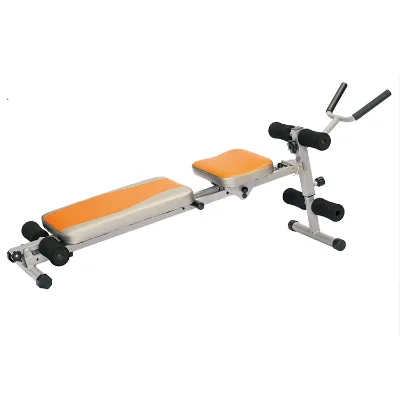


Exercise Utility Bench for Upright, Incline, Decline, and Flat Exercise
$50.00 - $155.00
MOQ: 2 Pieces
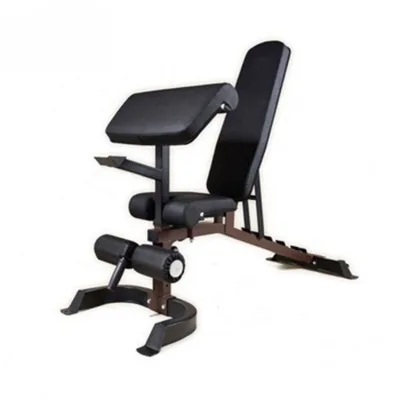


Comprehensive Sourcing Guide
Strategic Sourcing Guide for CE Certified Adjustable Utility Benches
The global market for commercial and home fitness equipment has seen a significant surge in demand for versatile strength training apparatuses. Among these, the adjustable utility bench stands out as a critical component for comprehensive strength training routines. For procurement professionals and facility managers, identifying a CE Certified Adjustable Utility Bench requires a nuanced understanding of technical specifications, regulatory compliance, and supply chain reliability. This guide provides an evidence-based framework for sourcing these assets, focusing on verified product attributes and industry standards without relying on unverified supplier claims.
Technical Specifications and Structural Integrity
When evaluating an adjustable utility bench, the primary focus must be on the structural design and material composition. The supplied data indicates that high-quality units are predominantly constructed from steel, a material chosen for its durability and load-bearing capacity. Buyers should verify that the steel grade meets commercial or commercial-use quality standards, as this directly correlates with the equipment's lifespan in high-traffic environments such as gyms and community centers.
A critical technical parameter is the maximum bearing capacity. Market observations suggest that robust models are engineered to support loads of 200kg or more. This specification is essential for ensuring safety during heavy lifting exercises like bench presses and weighted squats. The structural design often includes adjustable features, allowing the bench to be set at various angles to target different muscle groups, including the chest, waist, and legs. The "folded" or "unfolded" state is another specification to consider; while some units are designed for permanent installation in an unfolded state, others may offer space-saving configurations, though the primary data points to units that are typically used in an unfolded configuration for stability.
The physical dimensions of the bench are equally vital for facility planning. Observed standard dimensions for these units vary, with specific models cited at sizes such as 1331493692 mm, 1465730420 mm, and larger configurations reaching 166017351225 mm. Procurement teams must cross-reference these dimensions with their available floor space to ensure proper fit and safe usage clearance. The product model numbers, such as HQ-3005, HQ-6619, and SPL808, serve as unique identifiers for these specific dimensional and functional configurations.
Compliance and Certification Verification
The core keyword emphasizes "CE certified," making regulatory compliance a non-negotiable aspect of the sourcing process. The CE mark indicates conformity with health, safety, and environmental protection standards for products sold within the European Economic Area. The provided data confirms that CE certification is a standard attribute for these utility benches, often appearing in conjunction with ISO certifications. This dual certification suggests a manufacturer that adheres to both European safety directives and international quality management systems.
Buyers must verify that the certification applies specifically to the product category of fitness equipment. The data also references RoHS (Restriction of Hazardous Substances) certification for certain models, indicating compliance with regulations regarding the use of specific hazardous materials in electrical and electronic equipment. While many utility benches are manual and do not require electrical compliance, the presence of RoHS certification signals a broader commitment to environmental safety and material purity.
Furthermore, the Harmonized System (H.S.) Code 9506911900 is a crucial identifier for customs and trade purposes. This code specifically categorizes goods under "Articles and equipment for general physical exercise, gymnastics, athletics and other sports," ensuring that the product is classified correctly for import duties and regulatory tracking. Procurement teams should request valid certification documents that explicitly link the CE and ISO marks to the specific product model being purchased, rather than relying on general company-level certifications.
Cost Drivers and Pricing Structures
Understanding the cost drivers for adjustable utility benches is essential for budgeting and negotiation. The observed price range in the market spans from $1 to $700 USD, reflecting a wide spectrum of product quality, from basic home-use models to heavy-duty commercial units. However, for a CE certified bench with commercial-grade steel and adjustable features, the price typically falls within the mid-to-high range of this spectrum. Specific data points indicate a price bracket of US $75-150 per piece for certain models, which serves as a benchmark for standard commercial-grade units.
Several factors influence the final landed cost. The material grade is a primary driver; "Commercial Use Quality" steel commands a higher price than standard residential grades. The complexity of the adjustment mechanism also impacts cost; benches with multiple adjustment points and locking mechanisms require more precise engineering and assembly. Additionally, the packaging method plays a role. Data shows options ranging from simple carton packing to plywood cases and sea transportation crates. Plywood cases offer superior protection during long-distance shipping but add to the overall cost.
The Minimum Order Quantity (MOQ) is another significant cost factor. The observed MOQ range is 1 to 500 units. Buyers purchasing small quantities may face higher per-unit costs due to the lack of economies of scale, while bulk orders can significantly reduce the unit price. It is important to note that the price per unit is often contingent on the total order volume and the specific customization requirements.
Typical Applications and Usage Scenarios
The versatility of the adjustable utility bench makes it suitable for a diverse range of applications. The data highlights usage in home settings, gymnasiums, community centers, and even parks. This adaptability is driven by the bench's ability to support various exercises, including strength training, bench press, bodybuilding, and ab workouts. The "Unisex" and "Adult" designations confirm that these units are intended for general use by the adult population, regardless of gender.
In commercial gymnasiums, the bench must withstand high-frequency usage. The "Durable" and "Adjustable" features are critical here, allowing trainers to quickly modify the equipment for different clients and workout routines. The "Fixed" speed control mentioned in the data likely refers to the non-motorized, manual nature of the adjustment, which ensures reliability and reduces the risk of mechanical failure in a busy environment.
For community centers and parks, the focus shifts slightly towards robustness and safety. The "New" condition and high bearing capacity ensure that the equipment remains safe for public use. The "Movable" feature noted in some models is particularly valuable for facilities that need to reconfigure their spaces for different events or activities. Whether for a home gym or a large fitness center, the utility bench serves as a foundational piece of equipment for developing strength and muscle mass.
Supplier Evaluation and Operational Capabilities
Selecting the right supplier involves more than just verifying certifications; it requires an assessment of their operational capabilities and logistical reliability. The data indicates that the products originate from China, specifically from the Shandong region, which is a known hub for fitness equipment manufacturing. Buyers should verify the supplier's ability to provide OEM (Original Equipment Manufacturer) services, as the data confirms that OEM is acceptable for these products. This capability allows buyers to brand the equipment with their own logos or specifications, which is often required for corporate or institutional procurement.
Lead times and sample availability are critical operational metrics. The data suggests a sample lead time of 10 working days, which is a standard benchmark for evaluating a supplier's responsiveness. Buyers should request samples to physically inspect the build quality, finish, and adjustment mechanisms before committing to a large order. The "Customization" attribute being available suggests that suppliers can tailor dimensions, colors, or features to meet specific client needs, but this should be confirmed with a detailed specification sheet.
Packing and shipping methods are also key evaluation criteria. Options include sea transportation, carton packing, and plywood cases. For international shipments, the choice of packaging can significantly impact the condition of the goods upon arrival. A supplier that offers robust packaging solutions, such as plywood cases for heavy-duty units, demonstrates a commitment to product integrity. Buyers should also inquire about the supplier's experience with H.S. Code 9506911900 to ensure smooth customs clearance.
Quality Control and Long-Term Procurement Considerations
Quality control is paramount when sourcing fitness equipment, especially for commercial applications. The "Commercial Quality" and "Commercial Use Quality" grades mentioned in the data are indicators of a higher standard of manufacturing. However, buyers must implement their own quality assurance protocols. This includes verifying the steel thickness, the integrity of the welding points, and the smoothness of the adjustment mechanisms. The "Durable" and "Adjustable" features must be tested under load to ensure they do not degrade over time.
Long-term procurement considerations extend beyond the initial purchase. Buyers should evaluate the availability of spare parts and the supplier's warranty policies. While specific warranty terms are not provided in the data, a reputable supplier should offer support for defects in materials and workmanship. The "Customized" standard option suggests that some manufacturers can produce bespoke solutions, which may require a longer lead time but offers a better fit for specific facility requirements.
Finally, buyers should consider the total cost of ownership, which includes maintenance, potential repairs, and the lifespan of the equipment. A bench with a 200kg bearing capacity and commercial-grade steel is likely to have a longer service life than a lighter alternative, justifying a higher initial investment. By focusing on verified specifications, certifications, and supplier capabilities, procurement teams can secure high-quality, CE certified adjustable utility benches that meet the rigorous demands of modern fitness environments.
FAQs
What certifications do these utility benches hold?
The benches hold CE and ISO certifications, with some models also featuring RoHS compliance. These marks indicate conformity with European safety standards and international quality management systems, ensuring the equipment meets regulatory requirements for export and use.
Which material grade is used for commercial models?
Commercial-grade steel is the standard material used for these benches to ensure durability. This specific grade supports high-traffic environments like gyms and community centers, providing the necessary structural integrity for heavy lifting exercises such as bench presses.
How much weight can the bench support safely?
The maximum bearing capacity is at least 200kg for the listed commercial models. This high load limit ensures safety during intense strength training sessions, allowing users to perform weighted exercises without compromising the structural stability of the equipment.
Can buyers request customization for these benches?
Yes, customization is available for these utility benches to meet specific client needs. Buyers can request tailored dimensions or features, though this may require a detailed specification sheet and potentially affect the lead time and final pricing of the order.
What is the typical sample lead time for orders?
The sample lead time is typically 10 working days for these products. This standard duration allows buyers to inspect build quality and finish before committing to a larger bulk order, ensuring the equipment meets the required commercial or home gym standards.
Where are these benches manufactured and shipped from?
These benches originate from Shandong, China, a known hub for fitness equipment manufacturing. The products are shipped using various methods including carton packing or plywood cases, depending on the specific model and the protection required for long-distance sea transportation.
What is the price range for these certified benches?
The observed price range spans from 1 to 700 USD, with commercial models often priced between 75 and 150 USD per piece. The final cost depends on factors like material grade, adjustment complexity, and the minimum order quantity required by the supplier.