Source CE Certified Crystal Pendant Light for Office, Hotel, Living Room
Find 30 CE Certified Crystal Pendant Light options for offices, hotels, and living rooms. Compare specifications like voltage, wattage, and warranty periods to select the ideal fixture for your project needs; compare the available evidence and request quotations based on your requirements.
Updated
Key considerations
Products List


Customized Crystal Light LED Pendant Chandelier Light for Home Decoration
$156.00 - $670.00
MOQ: 20 pieces


Modern LED Crystal Ceiling Pendant Light Chandelier Crystal Lights Luxury
$59.97 - $265.45
MOQ: 20 pieces
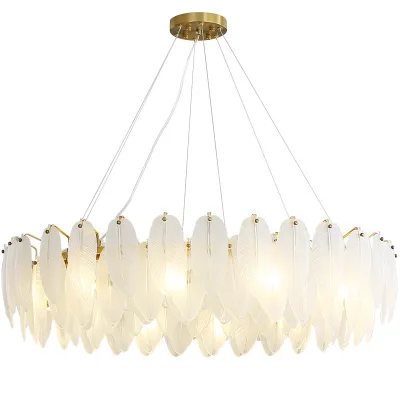
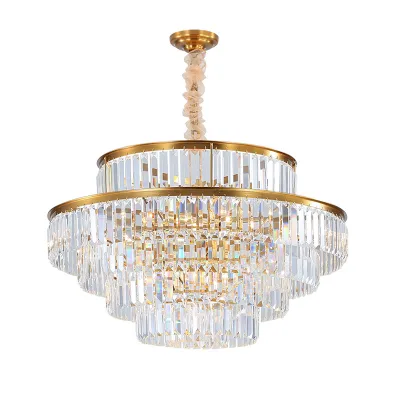



Comprehensive Sourcing Guide
CE Certified Crystal Pendant Light Sourcing Guide
Sourcing a CE Certified Crystal Pendant Light from Chinese manufacturers requires disciplined verification of both compliance documentation and product specifications. The listings observed in this category span a wide commercial range, from modest single-unit purchases at around twenty dollars to premium statement pieces approaching six hundred seventy dollars, with minimum order quantities that can be as low as one piece or as high as fifty. This spread reflects genuine differences in crystal grade, body material, light source type, and fixture scale, so buyers should treat the category as segmented rather than uniform.
The strongest listings combine explicit CE and RoHS certification, stated warranty periods of three to four years, and detailed dimensional and packing data. Products originate largely from Guangdong, China, where supply capacity is reported at five thousand pieces per month and typical lead times run around fifteen days. Customization is available on many lines, which matters for projects requiring specific finishes, crystal types, or sizes. This guide walks through each procurement decision in sequence.
Product Scope and Observed Listing Signals
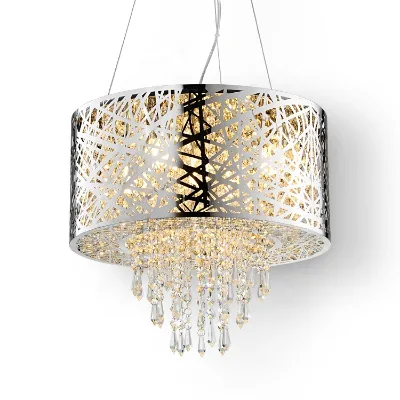
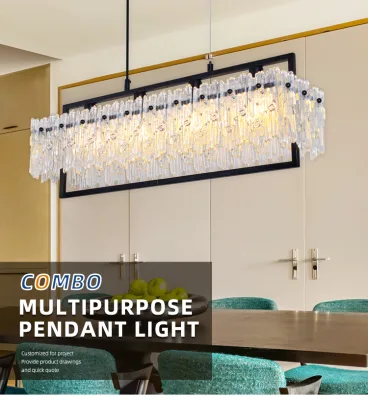
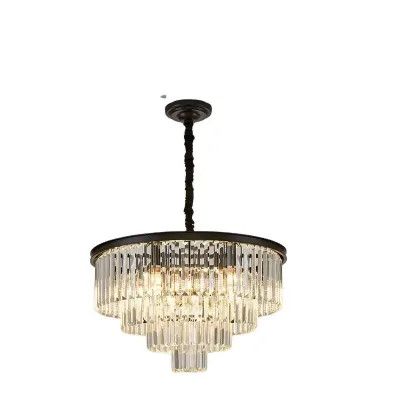
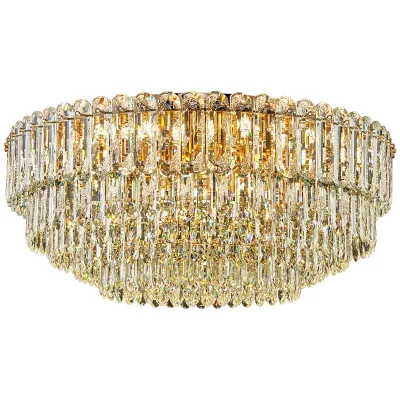
The observed product scope centers on crystal ceiling and pendant fixtures with contemporary styling, LED light sources, and K9 crystal paired with polished chrome stainless steel or aluminum bodies. Typical irradiated areas fall between ten and thirty square meters, making these fixtures suitable for living rooms, dining rooms, bedrooms, kitchens, offices, and study rooms, with some lines explicitly positioned for hotels, restaurants, and luxury residential projects. Model families such as GD-A091, GD-A021, GD-A015, GD-A28-12, TP-B2011-B, and TP-E66015 illustrate the range of sizes available, from roughly 600 by 480 millimeters up to 950 by 750 millimeters.
Buyers should read listing signals carefully as observations rather than guarantees. Where a listing states a warranty of three or four years, a specific packing dimension, or a voltage window such as AC110-240V or AC85-265V, treat it as a claim to be confirmed in writing before ordering. Note that some observed listings list incandescent lamp holders (E14/E26/E27/E39) and traditional styling alongside LED contemporary models, so confirm the exact light type, style, and configuration for the specific model quoted, not the category default.
Technical Specifications to Verify
Begin with electrical compatibility. Observed listings show input voltages of AC110-240V and AC85-265V, and one listing shows a 90V-260V window. Confirm which range applies to your destination market and request the driver or transformer specification in writing, because a wide-range driver reduces inventory complexity for multi-market distributors. Also verify wattage, since one observed model is rated at 102W, which affects both lighting output expectations and electrical installation requirements. Confirm working lifetime claims, such as the 30000-hour figure seen in listings, by asking for the basis of the rating rather than accepting it at face value.
Then verify physical and optical parameters. Request the actual fixture dimensions against stated standards, for example L950 by W750 by H200 millimeters or L700 by W500 by H210 millimeters, and confirm packing dimensions such as 1050 by 850 by 250 millimeters so you can plan container utilization and freight cost accurately. Clarify crystal grade, since observed listings reference K5, K9, and Egyptian crystals, and these grades differ meaningfully in clarity and refraction. Confirm body material, aluminum versus stainless steel in chrome, plus the finish, and request photos or samples of the actual crystal and metal under lit conditions.
Compliance and Safety Documentation
CE marking is the headline compliance signal in this category, and several observed listings pair it with RoHS, while one adds CCC and ISO references. Do not rely on the certification text in a listing alone. Request the CE declaration of conformity, identify which directives it covers, and ask for the test reports behind it. Verify that the certificate names the exact model number you are ordering, such as GD-A021 or TP-E66015, because certificates issued for a different variant of the same family have limited value in an audit or customs check.
Ask which safety and electromagnetic compatibility standards the product was tested against, and request the laboratory reports showing scope and results. For luminaires, buyers should expect testing aligned to recognized luminaire safety and EMC frameworks; the specific standard editions and report numbers should come from the supplier rather than from your assumption. If you sell into markets beyond the EU, confirm separately whether CCC or other national marks are held for the specific model. Finally, check that RoHS documentation covers the full assembly, including the crystal mounting hardware, metal finish, and LED driver, not only the light source.
Cost Drivers and Commercial Terms
Price variation from twenty to six hundred seventy dollars within this category is driven primarily by crystal grade and quantity, fixture size, body material, and light source. A large 102W LED fixture with K9 crystal and a stainless chrome frame will sit far above a small incandescent-socket model. Size matters directly: a 950 by 750 millimeter fixture uses more crystal strands, more metal framing, and more packaging volume than a 600 by 480 millimeter unit. Request itemized quotations that separate fixture cost, crystal grade, driver, and packing so you can compare models on a like-for-like basis.
On commercial terms, observed MOQs range from one piece to fifty, with several lines at ten or thirty pieces. Low MOQs ease sampling and market testing but often carry higher unit prices; confirm whether the quoted price assumes the full MOQ. Lead times are reported at around fifteen days, and supply capacity at five thousand pieces per month, which supports repeat ordering but should be confirmed for your specific model and season. Agree incoterms, payment structure, and packing specifications in writing, and ask whether customization affects the quoted lead time or MOQ.
Supplier Qualification and Quality Control
Qualify suppliers by verifying business credentials, production capability, and export history before committing to volume. Ask for evidence of the stated five thousand pieces per month capacity, such as production line photos or a virtual factory tour, and confirm which processes are in-house versus outsourced, particularly crystal cutting, metal forming, and LED driver assembly. Customization claims should be tested with a concrete request, such as a specific finish or crystal configuration, and evaluated on responsiveness, feasibility feedback, and quotation quality rather than on the claim itself.
Build quality control into the order rather than hoping for it. Approve a golden sample covering crystal quality, chrome finish, weld points, and light output before mass production. Define an inspection protocol with an agreed sampling plan covering appearance, dimensional conformity to stated standards, electrical safety checks, and function testing of every unit or a defined sample. For fragile goods like crystal, specify packing requirements explicitly, referencing the stated packing dimensions, and require protective materials adequate for sea or air freight. Consider a pre-shipment inspection, either third-party or in-person, especially for first orders and for the larger, higher-value fixtures.
Long-Term Procurement Checks
Plan repeat orders around confirmed, written parameters rather than listing data. Lock the model specification, including dimensions, crystal grade, finish, wattage, and driver specification, into a controlled specification sheet that both parties reference on every purchase order. Track warranty performance against the stated three or four year periods, and agree in advance how warranty claims are handled: which failures qualify, what evidence is required, and whether remedies are replacement parts, credit notes, or refurbished units. This prevents disputes when field failures eventually occur.
Monitor consistency across production runs, because crystal批次 variation and finish drift are common risks in decorative lighting. Keep retained samples from each shipment and compare new deliveries against them for crystal clarity, chrome plating quality, and color temperature consistency of the LED source. Reconfirm certification validity periodically, especially if the supplier updates drivers or materials, since component changes can affect compliance. Finally, review pricing annually against crystal and aluminum market conditions and volume commitments, and use the reported fifteen-day lead time and customization availability as levers when negotiating longer-term supply agreements or launching new fixture variants.
FAQs
What certifications do these crystal pendant lights have?
These lights hold CE and RoHS certifications, ensuring compliance with European safety and environmental standards. Some models also include CCC and ISO certifications. This multi-certification approach supports global sourcing needs and helps buyers meet specific regional regulatory requirements for commercial and residential installations.
Can I customize the design of these ceiling lights?
Yes, customization is available for these contemporary and traditional style lights. Buyers can request specific colors, crystal types like K9, and dimensions. The supplier offers lighting and circuitry design services to tailor the product to unique project requirements, ensuring the final fixture matches the intended interior aesthetic perfectly.
What is the warranty period for these LED fixtures?
The warranty period is typically three years for standard models, with some specific items offering a four-year warranty. This coverage protects against manufacturing defects and ensures long-term reliability. Buyers should verify the specific warranty terms for each model, such as GD-A091 or TP-B2011-B, during procurement.
What is the minimum order quantity for these lights?
The minimum order quantity varies by model, ranging from 10 to 50 pieces. Some items have an MOQ of 30, while others require 50 units. This flexibility allows buyers to place smaller initial orders for testing or larger bulk purchases for extensive commercial projects, depending on the specific product code.
Where are these crystal chandeliers manufactured?
These fixtures are manufactured in Guangdong, China. The production facility specializes in aluminum lamp bodies and polished chrome finishes. Sourcing from this region provides access to established supply chains for K9 crystals and LED components, ensuring consistent quality and competitive pricing for international buyers seeking contemporary lighting solutions.
What is the lead time for production?
The standard lead time is 15 days for production. This timeframe allows for efficient manufacturing and quality control before shipment. Buyers planning large orders should account for this duration when scheduling installations. The supply ability supports up to 5000 pieces per month, ensuring steady availability for ongoing project needs.