Source CE Certified Half Squat Rack for Home Gym and Community
Compare 30 CE Certified Half Squat Rack options from verified Chinese manufacturers. Buyers can evaluate specifications like weight capacity, dimensions, and folding features for home, gymnasium, or community use.
Key considerations
Products List


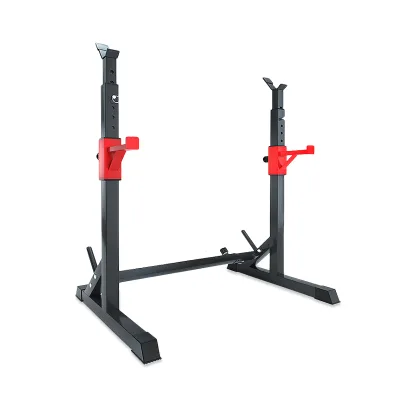
Fitness Gym Exercise Equipment Half Rack Gym Strength Training Half Squat Rack
$155.00 - $166.00
MOQ: 1 Sets


Gym Exercise Body Building Weight Lifting Half Squat Rack Power Rack Fitness
$112.00 - $120.00
MOQ: 2 Pieces




Comprehensive Sourcing Guide
Strategic Sourcing Guide for CE Certified Half Squat Racks
Understanding the Technical Landscape of Half Squat Racks
The procurement of a half squat rack requires a precise understanding of the structural and functional attributes that define this category of fitness equipment. Unlike full power racks, half squat racks are designed to provide a stable platform for heavy lifting while offering easier access to the barbell from the front. Based on the observed product data, these units are predominantly constructed from steel, a material choice that ensures the necessary rigidity to support high loads during weightlifting exercises. The primary function of these racks is explicitly categorized as bodybuilding and squat rack utility, indicating their suitability for strength training routines that involve compound movements.
When evaluating the technical specifications of available units, buyers must note the variability in dimensions and weight capacities. The observed product data reveals a range of standard sizes, with specific models adhering to dimensions such as 1830400870mm, 9708301630mm, and larger configurations reaching 150014001800mm. These variations suggest that the "half squat" designation does not imply a single uniform footprint but rather a class of equipment designed for specific spatial constraints. Furthermore, the weight of the units themselves is a critical specification; observed net weights (Nw) and gross weights (Gw) range from 22kg to 40kg, with some models potentially exceeding these figures depending on the specific configuration. The adjustable width feature, observed in the range of 97-137cm, allows for customization to accommodate different user stances or attachment points, a vital consideration for commercial gym setups where user diversity is high.
The structural design also includes features regarding portability and storage. Some units are observed to be "Folded," while others are listed as "Unfolded," indicating that the market offers both permanent installation options and space-saving solutions. The packaging methods vary significantly, ranging from standard carton boxes to cloth wraps and even plywood cases for larger or more delicate shipments. This variation in packing, such as the "Cloth Wrap" or "Plywood Case" observed in specific models, directly impacts the logistics and handling requirements during the shipping phase. Buyers must align their storage space and shipping logistics with the specific packing configuration of the chosen model to avoid damage or storage inefficiencies.
Compliance Verification and Certification Standards
In the B2B procurement of fitness equipment, particularly items marketed as "CE certified," verifying compliance is not merely a formality but a critical risk mitigation strategy. The provided product data explicitly lists "CE" and "RoHS" alongside "ISO" as certifications associated with the supply chain. However, the distinction between a product bearing a certification mark and a product that has undergone rigorous third-party verification is essential for the buyer. The data indicates that certifications such as CE, ISO, and RoHS are present in the product attributes, but the specific standard numbers (e.g., ISO 9001) are noted as low-confidence background information. Therefore, procurement teams must treat these certifications as claims that require validation rather than absolute guarantees.
When sourcing CE certified half squat racks, the buyer's primary objective is to ensure that the equipment meets the safety directives applicable in the target market. The CE mark signifies conformity with health, safety, and environmental protection standards for products sold within the European Economic Area. However, the presence of the mark on a product listing does not automatically confirm that the specific batch of goods has passed the relevant testing protocols. Buyers should request the specific test reports or Declaration of Conformity (DoC) that accompany the shipment. The observed data mentions "CE, ISORoHS" as a combined attribute, suggesting that suppliers often bundle these certifications. It is imperative to verify that the "ISO" reference corresponds to a recognized quality management standard like ISO 9001, rather than a generic claim, and to confirm that the RoHS compliance specifically addresses the restriction of hazardous substances in the steel and coating materials used.
Furthermore, the origin of the product plays a significant role in the certification process. The data indicates that the majority of these products originate from Hebei, Dingzhou, and Shandong, China. While these regions are established manufacturing hubs, the regulatory oversight can vary between facilities. A supplier in Hebei Dingzhou may have a robust internal quality control system, but the buyer must ensure that the specific factory producing the half squat rack has the necessary audit trails to support the CE claim. The "H.S Code" of 9506911900 is observed for these items, which classifies them under sports equipment. This classification is relevant for customs clearance but does not replace the need for safety certification verification. Buyers should explicitly ask suppliers to provide the certificate numbers and the issuing bodies for the CE and RoHS marks to ensure they are valid and not merely self-declared.
Cost Drivers and Pricing Dynamics
The pricing of half squat racks in the B2B market is influenced by a complex interplay of material costs, manufacturing complexity, and logistical factors. The observed price range for these products spans from $26 to $552, a significant variance that reflects differences in specifications, build quality, and included features. The lower end of this spectrum likely corresponds to simpler, lighter-weight units with basic steel construction and minimal finishing, while the higher end represents heavy-duty racks with advanced features, larger dimensions, and more robust packaging.
Material costs are a primary driver of price. Since the core material is identified as steel, fluctuations in global steel prices will directly impact the final cost of the rack. The weight of the unit, ranging from 22kg to 40kg in observed data, serves as a proxy for the amount of steel used. A rack weighing 40kg will inherently cost more in raw materials than one weighing 22kg, assuming similar steel grades and processing. Additionally, the "Standard" specifications, such as the 20kg/set or 1830400870mm dimensions, indicate different levels of material density and structural reinforcement.
Logistics and packaging also contribute significantly to the total cost. The observed shipping methods include sea freight, and the packaging varies from simple carton boxes to plywood cases. Plywood cases, while offering superior protection for international shipping, add to the material and labor costs, which are passed on to the buyer. The origin location, specifically Hebei Dingzhou and Shandong, influences the base manufacturing cost due to regional labor rates and supply chain efficiencies. Furthermore, the "Customization" attribute being available suggests that bespoke orders may incur additional costs for tooling or setup, affecting the final price point.
The Minimum Order Quantity (MOQ) is another critical factor in cost management. The observed MOQ range is 1 to 30 units. For buyers looking to minimize upfront capital expenditure, a supplier with an MOQ of 1 allows for sample testing or small-scale procurement. However, larger orders typically benefit from economies of scale, potentially lowering the unit price. The payment terms, observed as a 30% deposit and 70% balance, also affect cash flow management. Buyers must factor in the cost of capital when negotiating these terms, as a higher deposit requirement ties up working capital for a longer period before the goods are shipped.
Typical Applications and Functional Versatility
The functional versatility of half squat racks makes them suitable for a wide array of applications, ranging from residential home gyms to large-scale commercial facilities. The product data explicitly lists the appliance categories as "Home," "Gymnasium," "Community," and "Park." This broad applicability indicates that the design of these racks is adaptable to different environments and user demographics. For home users, the "Folded" or "Unfolded" options provide flexibility in managing limited space. The "Adult" age group specification confirms that these units are designed for general adult populations, though the adjustable width of 97-137cm allows for customization to fit various body types.
In commercial settings such as gyms and community centers, the durability and stability of the rack are paramount. The "Steel" construction and the "Bodybuilding" function highlight the equipment's suitability for high-intensity training. The observed "Exercise Part" being "Arm" suggests that some models may include specific attachments or configurations for arm training, although the primary function remains the squat rack. The "Squat Rack Cross Fitness Power Rack" designation in the product name further emphasizes the equipment's role in comprehensive fitness programs that include powerlifting and cross-training elements.
The "Weight Lifting" feature is a core attribute, indicating that these racks are engineered to handle significant loads. This makes them ideal for facilities that cater to serious athletes or strength training enthusiasts. The "Community" and "Park" applications suggest that some models are designed for outdoor or semi-outdoor use, which may require specific corrosion-resistant treatments or finishes. The "Manual" power source confirms that these are passive resistance devices, relying on the user's strength and gravity, which is standard for squat racks.
Supplier Evaluation and Operational Capabilities
Selecting the right supplier is as critical as selecting the right product. The observed data provides several key indicators of supplier capabilities, including lead times, customization options, and shipping methods. The "Sample Lead Time" of 15 days and the general "Lead Time" of 20 days after receiving the initial payment are standard operational metrics that buyers should use to plan their inventory and project timelines. These timelines suggest a relatively efficient production cycle, but buyers must verify if these times are consistent across different order volumes.
The "OEM/ODM: Acceptable" attribute is a strong indicator of a supplier's flexibility. It suggests that the manufacturer is willing to customize the product design, branding, or specifications to meet the buyer's specific requirements. This is particularly valuable for buyers looking to create a private label or adapt the rack for a specific niche market. The availability of customization also implies that the supplier has the technical capacity to modify the standard models, such as adjusting the dimensions or adding specific features.
Shipping and logistics capabilities are also essential. The "Seaport" is listed as "Tianjin Xingang," a major port in northern China. This indicates that the supplier has established logistics channels for international shipping. The "Shipping Method" of "Sea Freight" is the most common and cost-effective option for heavy equipment like squat racks. Buyers should evaluate the supplier's experience with sea freight, including their ability to handle documentation, customs clearance, and container loading. The "Warranty" of 1 year is a standard offering, but buyers should clarify the terms of the warranty, including what is covered and the process for claims.
Quality Control and Long-Term Procurement Considerations
Ensuring the long-term reliability of half squat racks requires a robust quality control (QC) strategy. Given the "Steel" construction and the "Weight Lifting" function, the structural integrity of the rack is non-negotiable. Buyers should implement a QC protocol that includes pre-shipment inspections to verify dimensions, weld quality, and finish. The observed "Standard" specifications, such as 20kg/set or specific millimeter dimensions, should be used as benchmarks for acceptance. Any deviation from these standards could indicate a manufacturing defect or a non-compliant product.
The "Package" and "prod_packing" attributes, ranging from "Carton Box" to "Cloth Wrap" and "Plywood Case," highlight the importance of protective packaging. Poor packaging can lead to damage during transit, which may compromise the structural integrity of the rack. Buyers should ensure that the packaging is sufficient to protect the product during sea freight, especially for international shipments. The "1year" warranty is a baseline, but buyers should consider the long-term maintenance requirements of the equipment. Steel racks are prone to rust if not properly treated, so the quality of the paint or coating is a critical factor in the product's lifespan.
Long-term procurement considerations also involve the scalability of the supply chain. If a buyer plans to expand their gym or community facility, they need a supplier who can consistently deliver high-quality products at scale. The "Customization" availability and "OEM/ODM" acceptance suggest that the supplier can grow with the buyer's needs. However, buyers should establish a long-term partnership based on clear communication, consistent quality standards, and reliable lead times. The "30% Deposit, 70% Balance" payment term is a common practice, but buyers should negotiate terms that align with their cash flow and risk tolerance.
Summary of Key Specifications and Compliance Checklist
To facilitate a streamlined procurement process, buyers should utilize the following checklist to verify critical attributes before finalizing an order. This summary consolidates the observed data into actionable verification points.
| Attribute Category | Key Verification Points | Observed Data Reference |
|---|---|---|
| Certification | Verify CE, RoHS, and ISO documentation validity. | CE, ISORoHS listed; ISO 9001 background. |
| Material & Weight | Confirm steel grade and weight capacity (Nw/Gw). | Material: Steel; Nw: 40kg, Gw: 22kg. |
| Dimensions | Check specific model dimensions against space requirements. | 1830400870mm, 9708301630mm, etc. |
| Customization | Confirm OEM/ODM capabilities and customization options. | Customization: Available; OEM/ODM: Acceptable. |
| Lead Time | Validate sample and production lead times. | Sample: 15 days; Production: 20 days. |
| Packaging | Ensure packaging type matches shipping needs. | Carton Box, Cloth Wrap, Plywood Case. |
| Origin | Verify manufacturing location for compliance and logistics. | Hebei Dingzhou, Shandong, China. |
| Warranty | Clarify warranty terms and coverage. | 1 year. |
By adhering to this structured approach, buyers can navigate the complexities of sourcing CE certified half squat racks with confidence, ensuring that the final procurement meets both safety standards and operational requirements. The combination of technical verification, compliance checks, and supplier evaluation creates a robust framework for successful B2B transactions in the fitness equipment sector.
FAQs
What certifications are listed for these half squat racks?
The products are listed with CE, ISO, and RoHS certifications. Buyers should verify specific test reports or Declarations of Conformity to ensure compliance with target market safety directives before finalizing orders.
How long is the sample lead time for these units?
The sample lead time is 15 days. Full orders typically ship within 20 days after receiving the initial payment, requiring buyers to plan inventory timelines accordingly.
Which materials are used to construct these squat racks?
These racks are constructed from steel to ensure rigidity for heavy lifting. The material choice supports the primary function of bodybuilding and weightlifting exercises in various settings.
Can buyers customize the specifications of these racks?
Customization is available for these products. Buyers can request specific dimensions or features, though bespoke orders may involve additional costs for tooling or setup compared to standard models.
What is the payment term structure for these orders?
The payment terms require a 30% deposit followed by a 70% balance. This structure affects cash flow management, so buyers should factor in capital availability before confirming orders.
Where are these half squat racks manufactured?
Products originate from China, specifically Hebei Dingzhou and Shandong. These regions are established manufacturing hubs, but buyers must verify the specific factory's audit trails to support certification claims.