Source CE Certified Leg Curl and Extension Machine for Home Gymnasium Community
Find 30 CE Certified Leg Curl and Extension Machine options for home, gymnasium, and community use. Compare specifications including weight stacks, dimensions, and customization features from verified suppliers in Shandong, China.
Key considerations
Products List


Premium Seated Leg Curl and Extension Machine for Complete Lower Body Workout
$370.00 - $450.00
MOQ: 1 Pieces

Universal Leg Curl Extension Machine Dual Function Leg Training Gym Equipment
$730.00 - $915.00
MOQ: 1 Pieces


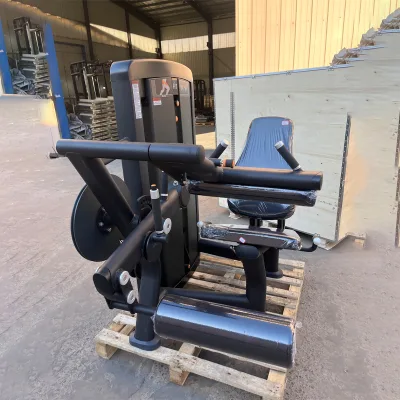


High Quality Commercial Gym Equipment Included Seated Leg Extension Curl Machine
$377.00 - $417.00
MOQ: 1 Pieces

Commercial Fitness Body Building Leg Strength Curl /Leg Extension Machine
$377.00 - $417.00
MOQ: 1 Pieces

High Quality Wholesale Commercial Gym Equipment Leg Curl Leg Extension Machine
$377.00 - $417.00
MOQ: 1 Pieces

Comprehensive Sourcing Guide
Strategic Sourcing Guide for CE Certified Leg Curl and Extension Machines
The global market for commercial and home fitness equipment has seen a significant shift toward specialized strength training apparatuses, with the leg curl and extension machine standing out as a critical component for comprehensive lower-body development. For procurement professionals and facility managers, the core keyword "CE Certified Leg Curl and Extension Machine" represents a specific intersection of regulatory compliance, mechanical safety, and functional versatility. Sourcing this equipment requires a disciplined approach that moves beyond simple price comparisons to a rigorous evaluation of technical specifications, certification validity, and supply chain reliability. This guide provides a structured framework for buyers to navigate the complexities of acquiring these machines, ensuring that the final procurement aligns with safety standards and operational requirements.
Technical Specifications and Functional Architecture
When evaluating leg curl and extension machines, the primary focus must be on the mechanical architecture that supports the specific exercise movements. The observed product data indicates a diverse range of configurations, from standalone units to integrated gym trainers. A critical distinction in the market is the distinction between manual resistance systems and weight stack mechanisms. The available data highlights models with weight stacks ranging from 65kg to 160kg, suggesting that buyers must carefully assess the load requirements of their target demographic. For commercial gyms serving heavy users, a 160kg stack may be necessary, whereas community centers or home facilities might prioritize the 70kg or 65kg configurations.
The physical dimensions of the equipment are equally vital for space planning. The observed specifications reveal a wide variance in footprint, with standard dimensions appearing around 1520mm x 1490mm x 1140mm, while larger integrated units can extend to 2260mm x 1530mm x 2110mm. Buyers must verify that the chosen model fits within the allocated floor space while maintaining the necessary clearance for safe user movement. The material composition is predominantly steel, a standard for durability in high-traffic environments. However, the specific grade of steel and the thickness of the frame are not always explicitly stated in general listings, necessitating a direct inquiry with the supplier regarding structural integrity.
Furthermore, the functional classification of the machine is a key differentiator. Some units are marketed specifically as "Muscle Relex Apparatus" or "Comprehensive Fitness Exercise" stations, implying a dual-functionality that allows for both leg curl and leg extension movements in a single footprint. Others are designated as "Large Loader" or "Integrated Gym Trainer," which may suggest a more complex assembly or a multi-station design. The exercise part is consistently identified as the "Leg," but the specific biomechanics—whether seated, prone, or standing—must be confirmed. The data mentions "Seated Prone Leg Curl & Extension Machine" as a specific product name, indicating that the user position is a critical variable in the selection process.
Compliance and Certification Verification
The requirement for CE certification is non-negotiable for sourcing equipment intended for the European market or for facilities adhering to international safety standards. The provided facts confirm that CE is a recurring attribute across the product listings, alongside ISO and RoHS mentions. However, the presence of a "CE" label on a product page does not automatically guarantee that the specific unit being purchased has undergone the rigorous conformity assessment required by the European Union. Buyers must treat the "CE" attribute as a starting point for verification rather than a definitive guarantee of compliance.
The distinction between "CE" and "ISO" certifications is important in the procurement process. While CE focuses on health, safety, and environmental protection for products sold within the European Economic Area, ISO standards (such as ISO9001) relate to quality management systems. The data lists both CE and ISO as potential attributes, but the specific ISO standard is not always detailed. A prudent buyer should request the specific Declaration of Conformity (DoC) for the model in question, ensuring that the CE marking corresponds to the relevant machinery directives. Additionally, the mention of RoHS (Restriction of Hazardous Substances) is a positive indicator regarding the environmental safety of the materials used, particularly the paints and plastics applied to the steel frames.
It is crucial to note that the "CE" certification mentioned in the source data is listed as a high-confidence fact for some entries but appears as a low-confidence background fact in others. This inconsistency underscores the need for due diligence. Procurement teams should verify that the certification covers the specific model number, such as SA1618, GW601, SN1516, or SN020, rather than a generic brand certification. The certification should explicitly cover the mechanical safety aspects of the machine, including the stability of the weight stack, the integrity of the pivot points, and the safety of the user interface.
Cost Drivers and Pricing Dynamics
The pricing landscape for leg curl and extension machines is influenced by a complex array of factors, including material costs, manufacturing complexity, and shipping logistics. The observed price range in the market spans from $338 to $1,112 USD. This significant variance suggests that the lower end of the spectrum likely corresponds to simpler, manual resistance models or smaller units intended for home use, while the higher end reflects commercial-grade units with advanced weight stacks, integrated features, and robust construction.
The Minimum Order Quantity (MOQ) is another critical cost driver. The data indicates an MOQ range of 1 to 5 units. This flexibility is advantageous for small gym owners or startups that may not have the capital to purchase a full container load of equipment. However, buyers should be aware that purchasing at the single-unit level often incurs a higher per-unit cost compared to bulk orders. The "Customized Packing" and "Wooden Case" options mentioned in the specifications also add to the overall cost. While wooden cases provide superior protection during international shipping, they are more expensive than standard cardboard packaging.
Shipping and logistics costs are substantial hidden variables in the total cost of ownership. The origin of the products is listed as Shandong, China, a major manufacturing hub. The dimensions of the machines, particularly the larger models exceeding 2 meters in length, will significantly impact freight charges. Buyers must calculate the total landed cost, which includes the unit price, packaging fees, insurance, and freight. The "N.W" (Net Weight) values observed, ranging from 113kg to 265kg, further influence shipping costs, as heavier items require more robust handling and potentially higher freight rates.
Typical Applications and User Demographics
The versatility of leg curl and extension machines allows them to be deployed in a wide variety of settings, from private residences to large commercial complexes. The data identifies "Home," "Gymnasium," and "Community" as the primary application areas. This broad applicability means that buyers must tailor their selection to the specific needs of their facility. For home users, the focus is often on compactness, ease of use, and aesthetic integration. The "Unfolded" state of the machines suggests that some models may be designed for storage, although the data indicates that the standard configuration is "Unfolded," implying that space-saving folding mechanisms may not be a universal feature.
Commercial gyms and fitness centers require equipment that can withstand high-frequency use by a diverse user base. The "Applicable People" attribute lists "Female," "Adult," "Universal," "Youth," and "Kid," indicating that these machines are designed to accommodate a wide range of body types and fitness levels. The "Adjustable" feature mentioned in the product attributes is essential for this demographic, allowing users of different heights and leg lengths to use the machine safely and effectively. The "Safe" and "Durable" features are particularly critical for commercial environments where liability and equipment longevity are paramount.
Community centers and rehabilitation facilities may prioritize the "Muscle Relex Apparatus" function, which suggests a focus on therapeutic or low-impact exercise. The "Comprehensive" function classification implies that these machines can be part of a broader training regimen, addressing multiple muscle groups or serving as a central piece of a circuit training setup. The "Seated Prone" configuration is particularly relevant for rehabilitation settings, as it provides support and stability for users with limited mobility or those recovering from injury.
Supplier Evaluation and Origin Analysis
Evaluating suppliers for fitness equipment requires a deep understanding of the manufacturing landscape, particularly in the region of Shandong, China. This region is known for its concentration of steel fabrication and fitness equipment manufacturers. However, the presence of a manufacturing location does not guarantee quality or reliability. Buyers should verify the supplier's production capacity, quality control processes, and history of exporting to their target market.
The "Customized Logo Available" and "Customized Packing" attributes indicate that many suppliers are willing to offer OEM (Original Equipment Manufacturer) services. This is a significant advantage for buyers looking to brand the equipment for their specific facility or gym chain. However, customization can also introduce complexity into the supply chain, potentially extending lead times and increasing the risk of errors. Buyers must ensure that the customization process is clearly defined in the contract, including the approval of design proofs and the timeline for production.
The "Warranty" period is a key indicator of supplier confidence in their product. The observed data mentions a "1 Year" warranty, which is a standard baseline for the industry. Buyers should investigate whether this warranty covers parts, labor, or both, and whether it is valid internationally. A 1-year warranty may be insufficient for commercial equipment that sees heavy daily use, and buyers should negotiate for extended coverage or additional service agreements.
Quality Control and Long-Term Procurement Considerations
Quality control is the final barrier between a successful procurement and a costly failure. Given the mechanical nature of leg curl and extension machines, the risk of wear and tear, structural fatigue, and component failure is real. Buyers should implement a rigorous quality control protocol that includes pre-shipment inspections. This inspection should verify the structural integrity of the steel frame, the smooth operation of the weight stack, and the accuracy of the CE certification documentation.
The "Eco-Friendly" feature mentioned in the product attributes is an emerging consideration for modern procurement. While not always a primary driver, the use of environmentally friendly materials and manufacturing processes can be a differentiator for buyers with sustainability goals. Buyers should inquire about the recyclability of the materials and the environmental impact of the production process.
Long-term procurement considerations also include the availability of spare parts. The "Steel" construction suggests a long lifespan, but components like bearings, cables, and padding will eventually require replacement. Buyers should ensure that the supplier maintains a stock of spare parts and that the parts are compatible with the specific model numbers identified in the sourcing process. The "1 Year" warranty should be viewed as a minimum, and buyers should plan for a total cost of ownership that includes maintenance and potential part replacements over the lifespan of the equipment.
Comparative Analysis of Key Product Attributes
To facilitate decision-making, the following table summarizes the key attributes observed in the market for leg curl and extension machines. This comparison highlights the variability in specifications and helps buyers identify the features most relevant to their specific needs.
| Attribute Category | Observed Variations | Strategic Implication |
|---|---|---|
| Weight Stack | 65kg, 70kg, 160kg | Match stack weight to target user intensity; 160kg for commercial heavy use. |
| Dimensions | ~1520x1490x1140mm to 2260x1530x2110mm | Verify floor space; larger units may require dedicated zones. |
| Material | Steel (Primary) | Essential for durability; verify steel grade for commercial longevity. |
| Certification | CE, ISO, RoHS (Variable confidence) | Request specific DoC for model; verify CE covers machinery directives. |
| MOQ | 1 to 5 Units | Flexible for small buyers; bulk orders may reduce per-unit cost. |
| Packing | Wooden Case, Plywood Case, Muxiang | Wooden cases offer better protection but increase shipping cost. |
| Function | Leg Curl, Extension, Comprehensive, Muscle Relex | Ensure the machine supports the specific exercise movements required. |
| Warranty | 1 Year (Standard) | Negotiate extended terms for commercial applications; check coverage scope. |
Final Procurement Recommendations
Sourcing a CE Certified Leg Curl and Extension Machine is a strategic decision that requires balancing technical requirements, regulatory compliance, and cost efficiency. The market offers a wide range of options, from compact home units to robust commercial trainers, each with distinct specifications and price points. Buyers must prioritize the verification of certification documents, the assessment of mechanical specifications against their facility's needs, and the evaluation of supplier reliability.
By adhering to a disciplined procurement process that focuses on evidence-based decision-making, buyers can mitigate risks and ensure the acquisition of high-quality equipment that enhances the safety and effectiveness of their fitness facilities. The observed data provides a solid foundation for understanding the market landscape, but the ultimate success of the procurement depends on the buyer's ability to conduct thorough due diligence and negotiate terms that protect their long-term interests.
FAQs
What certifications do these machines have?
The machines hold CE certification, with some listings also noting ISO and RoHS attributes. Buyers should verify the specific Declaration of Conformity for the model number rather than assuming generic compliance.
Which weight stack capacities are available?
Weight stacks range from 65kg to 160kg depending on the specific model. Commercial gyms often require the 160kg stack, while home or community facilities may prioritize the lower 65kg or 70kg configurations.
Can I customize the logo and packaging?
Yes, customized logos and packing options like wooden cases are available. Buyers should confirm the specific customization terms and potential impact on lead times before placing an order.
What are the standard dimensions for these units?
Standard dimensions vary, with common sizes around 1520mm by 1490mm by 1140mm. Larger integrated units can reach up to 2260mm in length, so verify floor space requirements before purchasing.
Where are these machines manufactured?
The products originate from Shandong, China, a major manufacturing hub for fitness equipment. Buyers should verify the specific factory's quality control processes and export history for their target market.
What is the minimum order quantity?
The minimum order quantity ranges from 1 to 5 units, offering flexibility for small buyers. Purchasing single units may incur higher per-unit costs compared to bulk orders.