Source CE Manual Hand Push Seeder for Corn Rice Wheat
Find 30 CE Manual Hand Push Seeder options for sowing corn, rice, and wheat. Compare specifications including ditching modes, row counts, and certifications like SGS and ISO9001 from verified Chinese manufacturers.
Key considerations
Products List


$40.00 - $42.00
MOQ: 50 Pieces


$24.00 - $27.00
MOQ: 50 Pieces

$38.00 - $40.00
MOQ: 100 Pieces


Comprehensive Sourcing Guide
CE Manual Hand Push Seeder Sourcing Guide
Selecting the right manual hand push seeder requires a careful balance between ergonomic design, planting precision, and operational cost. These machines are designed to reduce labor intensity while maintaining the simplicity and low maintenance costs associated with non-motorized agricultural tools. Buyers must evaluate how the specific mechanism aligns with their crop types, soil conditions, and field sizes to ensure that the investment yields tangible efficiency gains. This guide provides a structured approach to sourcing these devices, focusing on verified specifications, compliance requirements, and commercial terms to mitigate procurement risks.
The market for manual seeders is diverse, ranging from simple dibble tools to more complex multi-row drilling units. Understanding the distinction between broadcasting, drilling, and dibbling methods is critical for selecting the appropriate machinery. Buyers should prioritize machines that offer customization options to match their specific agronomic needs, such as adjustable row spacing or interchangeable seed plates. By focusing on verified product attributes and supplier transparency, procurement teams can secure reliable equipment that enhances planting accuracy and reduces seed waste.
Product Scope and Observed Listing Signals
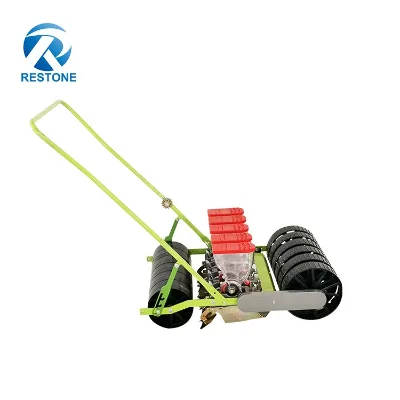
The observed product landscape for manual hand push seeders reveals a wide range of configurations tailored to various agricultural applications. Listings indicate that these machines are primarily designed for sowing crops such as corn, rice, wheat, tubers, peanuts, beans, and even fruit trees. The core function is sowing, with specific mechanisms including broadcast seeding, drilling, and dibbling. This variety suggests that buyers should not assume a one-size-fits-all solution; instead, they must identify the specific sowing method that best suits their crop profile and field preparation standards.
Observed listing signals highlight significant variation in physical specifications and packaging. Product dimensions range from compact handheld units measuring approximately 58x23x53 cm to larger frame structures around 120x14x89 cm. Weight observations vary from 10 kg to 17 kg, indicating differences in material durability and structural robustness. Packaging is typically listed as 1 piece per carton, though some suppliers offer bulk handle packaging. These physical attributes are crucial for logistics planning, as they directly impact shipping costs and storage requirements in the destination warehouse.
Technical Specifications to Verify
When evaluating technical specifications, the power source is a primary differentiator. Most manual hand push seeders rely on manual labor, eliminating the need for fuel or electricity. This makes them ideal for small to medium-sized farms or areas where mechanization is limited. Buyers should verify the mechanization level, noting that some models are classified as "simple planting machines" while others may offer more advanced features like intermittent or continuous ditching modes. The choice between intermittent and continuous ditching depends on the soil type and the desired seed placement depth, affecting both planting speed and seed survival rates.
The number of rows and mouth configurations are critical technical factors that determine planting efficiency. Available configurations include 1, 2, 3, 4, 5, and 6 rows, with specific models offering 5, 6, 7, or 8 mouths. These variations allow for precise control over seed spacing and density. Buyers must verify the compatibility of the seeder with their existing farm equipment and field dimensions. Additionally, the condition of the machinery is typically listed as "New," but it is essential to confirm the quality of core components, as these directly influence the machine's longevity and performance under heavy use.
Compliance and Safety Documentation
Certification is a key indicator of manufacturing quality and regulatory compliance. Observed listings frequently mention CE certification, which is essential for products sold in the European market and often serves as a benchmark for global safety standards. Some suppliers also provide SGS certification, indicating third-party verification of product quality and safety. Buyers should request valid certification documents to ensure that the machinery meets the necessary electrical and mechanical safety requirements, even for manual devices, to avoid potential liability issues.
Warranty and machinery test reports provide additional layers of assurance for procurement teams. A standard warranty period of one year is commonly observed, covering defects in materials and workmanship. Buyers should verify the scope of this warranty, including whether it covers wear-and-tear parts or only major structural components. Furthermore, the availability of machinery test reports is a positive signal, suggesting that the supplier conducts rigorous quality checks before shipment. These documents should be reviewed to confirm that the seeder has been tested for durability and operational efficiency under simulated field conditions.
Cost Drivers and Commercial Terms
The price range for manual hand push seeders is broad, typically spanning from $0.55 to $300 USD. This wide variance is driven by factors such as the number of rows, material quality, and additional features like fertilizer attachment capabilities. Buyers should analyze the cost per unit in the context of the machine's capacity and durability. Lower-priced models may be suitable for small-scale or occasional use, while higher-priced units with multiple rows and robust construction are better suited for commercial farming operations. Understanding these cost drivers helps in aligning the budget with the expected return on investment.
Minimum Order Quantity (MOQ) and payment terms are significant commercial considerations. Observed MOQs range from 1 to 1000 units, offering flexibility for both individual farmers and large agricultural distributors. Buyers should negotiate MOQs based on their storage capacity and sales forecast. Additionally, packaging details, such as 1 piece per carton or bulk packaging for handles, can influence shipping efficiency and cost. Clear communication regarding these terms ensures that the total landed cost is accurately calculated, preventing unexpected expenses during the logistics phase.
Supplier Qualification and Quality Control
Supplier qualification is paramount when sourcing agricultural machinery. Buyers should verify the supplier's place of origin, with many manufacturers located in regions like Shandong and Taizhou in China. These regions are known for their manufacturing capabilities in agricultural equipment. However, geographic location alone is not a guarantee of quality. Buyers should assess the supplier's production capacity, quality control processes, and after-sales support. Requesting references or case studies from previous clients can provide valuable insights into the supplier's reliability and product performance.
Quality control measures should be integrated into the procurement process. Buyers should insist on pre-shipment inspections to verify that the products meet the agreed-upon specifications. This includes checking the dimensions, weight, and functionality of the seeders. Additionally, verifying the brand name and model numbers ensures that the products are genuine and not counterfeit. Establishing a clear quality assurance protocol with the supplier helps in maintaining consistency across orders and reduces the risk of receiving defective or substandard machinery.
Long-Term Procurement Checks
Long-term procurement success depends on the ability to monitor supplier performance and product reliability over time. Buyers should establish key performance indicators (KPIs) such as defect rates, delivery times, and customer satisfaction scores. Regular audits and feedback loops with the supplier can help identify areas for improvement and foster a collaborative relationship. By continuously evaluating supplier performance, buyers can ensure that they are receiving consistent quality and value for their investment.
Maintenance and spare parts availability are critical for the long-term usability of manual hand push seeders. Buyers should verify the availability of spare parts and the supplier's willingness to provide technical support. This includes access to user manuals, troubleshooting guides, and replacement components. Ensuring that the machinery can be easily maintained reduces downtime and extends the lifespan of the equipment. By planning for long-term support, buyers can maximize the utility of their manual seeder investments and sustain operational efficiency in their agricultural activities.
FAQs
What certifications do these manual seeders have?
These manual hand push seeders are available with CE and SGS certifications. Some listings also reference ISO9001 standards for quality management. Buyers should verify specific documentation with suppliers to ensure compliance with local agricultural regulations and safety requirements for machinery operation.
Can the seeder be customized for specific crops?
Yes, customization is available for these planting machines. They support sowing for corn, rice, wheat, tubers, peanuts, beans, and fruit trees. The models offer various mouth configurations, including 5, 6, 7, and 8 mouths, allowing adaptation to different seed types and planting densities.
What is the typical weight and packaging of the unit?
The net weight is approximately 10 to 10.5 kgs, with some models weighing up to 17 kgs. Packaging is typically 1 piece per carton or bulk handling for handles. The standard dimensions are around 58x23x53 cm, ensuring compact storage and efficient shipping for agricultural operations.
Which sowing modes are supported by these machines?
The machines support multiple sowing modes including broadcast seeding, drilling, and dibble seeding. Ditching modes vary between intermittent and continuous options. This versatility allows farmers to choose the appropriate method for their specific crop requirements and soil conditions without needing additional specialized equipment.
What is the warranty period for these planting machines?
The standard warranty period provided is 1 year. This coverage typically applies to core components and general machinery performance. Buyers should confirm specific warranty terms with the manufacturer, as conditions may vary based on the specific model, usage, and the supplier's after-sales service policy.
Where are these manual seeders manufactured?
These seeders are manufactured in China, with specific origins noted in Taizhou and Shandong provinces. The products are classified as simple planting machines powered by manual labor. Buyers can source directly from these regions to leverage established manufacturing hubs for agricultural equipment and machinery.