Source Chain Trencher for Cable Laying, Pipe Installation, and Orchard Ditching
Find 30 Chain Trencher units suitable for agriculture and infrastructure projects. Buyers can compare trench widths from 12cm to 100cm, depths up to 2.5m, and tractor power requirements ranging from 30 to 150HP for various field applications.
Key considerations
Products List


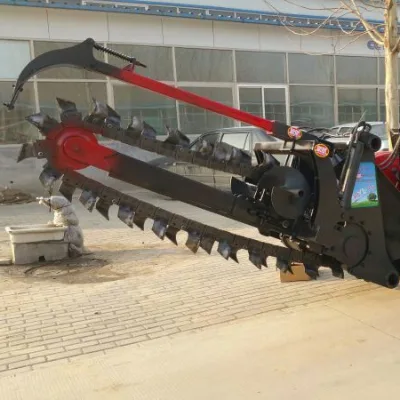
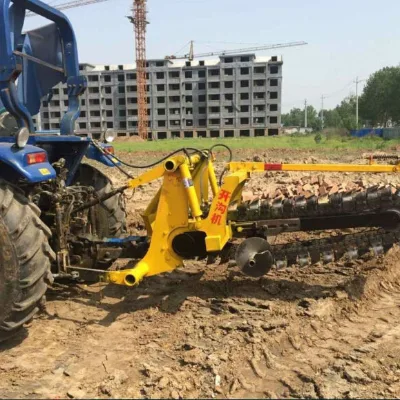
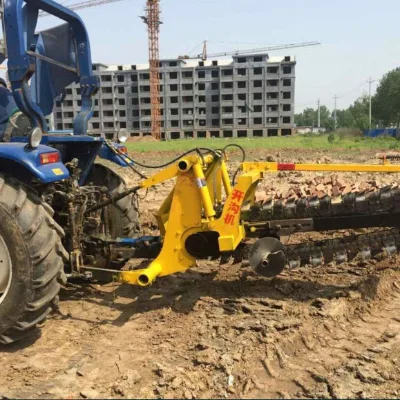
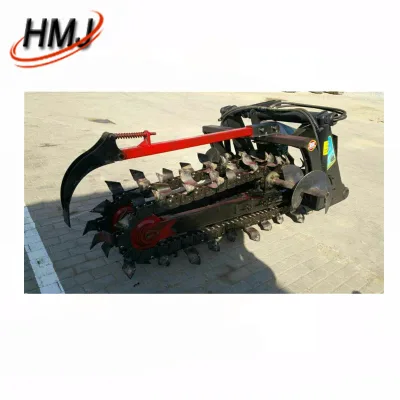
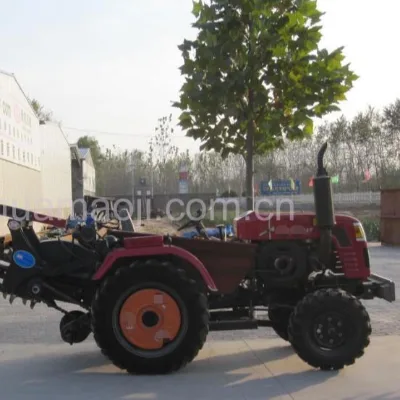
Manufacturers Sell High-Performance Excavator Trencher Disk Chain Trencher
$3500.00 - $9000.00
MOQ: 1 Pieces



Comprehensive Sourcing Guide
Strategic Sourcing Guide for Chain Trencher Equipment
Understanding Technical Specifications and Operational Capabilities
When sourcing a Chain Trencher, the primary objective is to align the machine's mechanical capabilities with specific field requirements. The core mechanism relies on a rotating chain equipped with digging teeth, driven by a power source to excavate trenches with varying widths and depths. Based on available market data, the operational spectrum for these machines is broad. The trench width typically ranges from a narrowest specification of 12cm to a widest capability of 100cm, allowing for flexibility in applications ranging from fiber optic cable laying to agricultural furrow creation.
Depth performance is another critical variable. While some units are rated for a maximum trenching depth of 2000mm, other configurations in the market offer specific depths such as 600mm, 700mm, or 900mm. Buyers must verify the specific depth requirement for their project, as the "Deepest" observed specification reaches 2.5m, but this is not a universal standard for all listed models. The digging speed is generally observed in the range of 150-600 meters per hour, though operational modes vary significantly. Some units are designed for a "Low Speed Once Into a Ditch" operation, which may prioritize stability and precision, while others utilize a "High-speed Repeatedly Into a Ditch" approach to maximize throughput in continuous trenching scenarios.
The power requirements are substantial, with these machines typically requiring a tractor with a power output between 30 and 150 HP. The tractor interface often necessitates a low-speed crawling gear to ensure sufficient torque for heavy soil penetration. The moving mechanism is predominantly wheel-based, providing mobility across various terrains. The chain configuration itself can vary, with options for 1PC or 2 PCS chains, and some structural designs feature a double-disc configuration. The working width for certain models is specified as 100-300mm or 150mm/300mm, indicating that the physical dimensions of the digging assembly must match the intended trench profile.
Compliance, Certification, and Regulatory Standards
Navigating the regulatory landscape is essential for international procurement, particularly when importing heavy machinery. The supply chain for chain trenchers often includes specific certifications that validate the equipment's safety and environmental compliance. Observed certification data indicates that many units carry EPA, CE, EU, and ECE marks. The CE certification is particularly prevalent, suggesting adherence to European health, safety, and environmental protection standards. However, buyers should not assume that every listed product possesses all these certifications; verification of the specific certificate for the chosen model is mandatory.
The production standards for these machines vary by manufacturer. Some products adhere to standards defined by their trench width capabilities, ranging from 12cm to 100cm, while others may have specific weight standards, such as a unit weighing 326kg. The origin of the majority of these machines is China, which influences the supply chain dynamics and shipping logistics. When evaluating compliance, buyers must request documentation that explicitly links the certification to the specific product model, as certifications are often model-specific rather than brand-wide.
Cost Drivers and Pricing Variables
The pricing structure for chain trenchers is highly variable, reflecting the diversity in specifications, power requirements, and customization options. The observed price range in the market spans from $15 to $9,000 USD. This wide disparity is driven by several factors. The most significant cost driver is the power source and the associated tractor compatibility. Units requiring higher horsepower tractors (up to 150 HP) generally command higher prices than those designed for smaller agricultural tractors. Additionally, the complexity of the digging mechanism, such as the number of chains or the structural design (e.g., double-disc), impacts the manufacturing cost.
Customization is a key factor influencing the final price. Many suppliers offer customization services, allowing buyers to tailor the trench width, depth, or specific attachments to their unique operational needs. This flexibility comes at a premium compared to standard off-the-shelf models. The Minimum Order Quantity (MOQ) also plays a role in unit pricing, with observed ranges from 1 to 500 units. Bulk purchases typically leverage economies of scale, reducing the per-unit cost, whereas single-unit orders may incur higher prices due to setup and logistics costs. Packaging requirements, such as standard export wooden packages or wooden boxes, also contribute to the overall cost, especially for international shipping.
Typical Applications and Field Use Cases
Chain trenchers are versatile tools designed for a multitude of applications across different industries. The primary application field is agriculture, where these machines facilitate a wide range of tasks. Specific uses include laying cables, creating ditches for laying pipes, and preparing furrows for fertilization in orchards. In the agricultural sector, they are also utilized for farmland irrigation systems and loosening soil for the harvest of specific crops like Chinese Yam. The ability to dig ditches for sugar cane further highlights their adaptability to different crop types.
Beyond agriculture, these machines are critical for infrastructure and utility projects. They are extensively used for laying natural gas pipes and optic fiber cables. The specific designation of "Cable Digging Trench Machine" and "Fiber Optic Cable Trenching Machine" underscores their role in the telecommunications and energy sectors. The capacity to handle different trench widths allows them to accommodate various pipe diameters and cable bundles. The "Use 1" through "Use 7" classifications in product descriptions illustrate the breadth of utility, from simple soil loosening to complex utility installation. Buyers should match the machine's width and depth capabilities to the specific application; for instance, a 12cm width is suitable for narrow cable trenches, while a 100cm width is necessary for broader irrigation or pipe laying.
Supplier Evaluation and Procurement Strategy
Evaluating suppliers requires a rigorous approach to ensure reliability and product quality. Buyers should prioritize suppliers who provide clear documentation regarding the product model, such as "ZXZP-(80-130)" or "DR-KGJ," and who can verify the origin and certification status. The availability of customization is a strong indicator of a supplier's flexibility and technical capability. When assessing a supplier, buyers must verify the "Safeguard" features, which are described as "Easy" in some listings, implying user-friendly maintenance and safety mechanisms.
The production capacity and lead times are critical factors in the procurement timeline. While specific lead times are not universally standardized in the provided data, the capacity to produce units ranging from 1 to 500 MOQs suggests varying levels of production scale. Buyers should inquire about the supplier's ability to meet specific deadlines, especially for large-scale projects. The "Moving way" and "Operation" modes should be discussed to ensure the supplier understands the operational context of the buyer. For example, a supplier offering a "High-speed Repeatedly Into a Ditch" machine must be able to demonstrate the durability of the chain and drive system under continuous high-speed operation.
Quality Control and Long-Term Maintenance
Ensuring the long-term reliability of a Chain Trencher involves a focus on quality control during the manufacturing process and maintenance planning post-purchase. The structural integrity of the machine, such as the "Double-Disc" configuration, is a key quality indicator. Buyers should verify the materials used for the chain and the digging teeth, as these are high-wear components. The "Chain Trencher Chain" keyword suggests that the chain itself is a critical component that may require replacement or upgrading.
Maintenance considerations include the ease of operation and the availability of spare parts. The "Safeguard" attribute being "Easy" suggests that the design prioritizes user safety and maintenance accessibility. However, buyers must confirm the availability of replacement chains, teeth, and other wear parts. The power source, typically diesel, requires regular engine maintenance, and the tractor compatibility must be maintained to ensure optimal performance. The "Product Name" and "Keywords" such as "Trench Digging Machine Automated Canal" indicate that some models may have automated features that require specialized knowledge for troubleshooting.
Comparative Analysis of Key Product Attributes
To facilitate decision-making, the following table summarizes the key attributes observed in the market, highlighting the range of options available to buyers. This comparison aids in identifying the specific configuration that best fits the project requirements.
| Attribute Category | Observed Range / Options | Key Considerations for Buyers |
|---|---|---|
| Trench Width | 12cm - 100cm (Standard: 12-100cm) | Match to pipe/cable diameter; 12cm for cables, 100cm for irrigation. |
| Trench Depth | 600mm - 2500mm (Max 2.5m) | Verify soil conditions; deeper trenches require more power. |
| Power Source | Diesel (30-150 HP Tractor) | Ensure tractor compatibility; low-speed crawling gear required. |
| Operation Mode | Low Speed Once / High Speed Repeatedly | Select based on soil hardness and project timeline. |
| Chain Configuration | 1PC or 2 PCS | Double chains may offer stability; single chain for lighter duty. |
| Certification | EPA, CE, EU, ECE | Verify specific model certification; CE is common. |
| Origin | China | Consider shipping costs and import regulations. |
| Packing | Wooden Box / Standard Export Wooden Package | Essential for international transport; check for damage protection. |
| Customization | Available | Request specific width/depth modifications if standard models fail. |
Final Procurement Considerations
The procurement of a Chain Trencher is a strategic decision that balances technical specifications, regulatory compliance, and cost efficiency. Buyers must carefully analyze the specific needs of their project, whether it involves agricultural irrigation, fiber optic installation, or utility pipe laying. The wide range of available specifications, from 12cm to 100cm width and 600mm to 2500mm depth, offers significant flexibility but requires precise selection to avoid under- or over-specifying the equipment.
Compliance with certifications like CE and EPA is non-negotiable for international trade, and buyers must verify these documents for each specific model. The cost drivers, including power requirements and customization, must be weighed against the budget, keeping in mind the observed price range of $15 to $9,000. Supplier evaluation should focus on their ability to provide customization, clear documentation, and reliable after-sales support. Finally, long-term maintenance planning, including the availability of spare parts and the ease of operation, will determine the total cost of ownership. By adhering to these evidence-based guidelines, buyers can secure a Chain Trencher that meets their operational demands while ensuring safety and regulatory compliance.
FAQs
What is the maximum trenching depth for a Chain Trencher?
The maximum trenching depth reaches 2.5 meters, though some models offer depths of 600mm to 900mm. Buyers must verify the specific depth requirement for their project as capabilities vary significantly between units.
Which tractor power is required to operate this machine?
These machines typically require a tractor with a power output between 30 and 150 HP. The tractor interface often necessitates a low-speed crawling gear to ensure sufficient torque for heavy soil penetration.
Can I customize the trench width for specific applications?
Customization is available for trench width, which typically ranges from 12cm to 100cm. Buyers should request specific modifications to match their unique operational needs for cables or irrigation pipes.
What certifications do these chain trenchers usually carry?
Many units carry EPA, CE, EU, and ECE marks for safety and environmental compliance. Buyers must verify the specific certificate for the chosen model as certifications are often model-specific rather than brand-wide.
How fast can a Chain Trencher dig a trench?
The digging speed is generally observed in the range of 150 to 600 meters per hour. Operational modes vary, with some units designed for low-speed precision and others for high-speed repeated trenching.
What are the primary applications for a Chain Trencher?
Primary applications include laying cables, creating ditches for pipes, and agricultural furrow creation. They are also used for farmland irrigation, soil loosening for harvest, and laying natural gas pipes.