Source China Mainland 3D Printer for Gifts, Office, and Art
Explore 30 listings for China Mainland 3D Printer options including SLA models and printing presses. Buyers can compare specifications like forming accuracy, laser types, and packing details to find suitable equipment for business gifts, office use, and art collection.
Key considerations
Products List


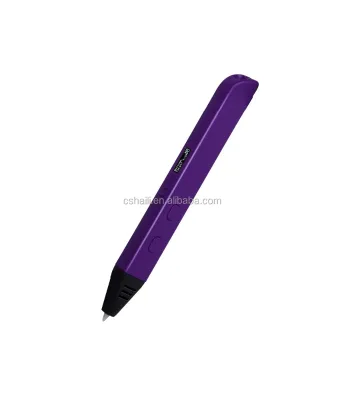


$619.00
MOQ: 1 Pieces

$50000.00 - $150000.00
MOQ: 1 Pieces


Comprehensive Sourcing Guide
China Mainland 3D Printer Sourcing Guide
Sourcing additive manufacturing equipment from the China mainland offers access to a diverse ecosystem of manufacturers ranging from entry-level desktop units to high-precision industrial systems. The market is characterized by rapid technological iteration and competitive pricing structures, particularly for Stereolithography (SLA) and Direct-to-Film (DTF) printing technologies. Buyers must navigate a landscape where product listings often aggregate multiple distinct machine types under broad category headers. Understanding the specific technological distinctions between resin-based curing, laser marking, and textile printing is essential for aligning procurement with actual production needs.
The observed market signals indicate a wide variance in product capabilities, with listings covering everything from small-scale office pens to large-format industrial printers. Key product models identified in current listings include the GN-M20, DTF PRINTER, SLA300, RL-SLA450, RL-SLA600, and RL-SLA300. These models represent different technological approaches, including automatic grade systems, laser printing machines, and UV curing equipment. Procurement teams must carefully distinguish between these distinct categories to avoid misalignment between technical specifications and operational requirements, ensuring that the selected hardware supports the intended workflow, whether for prototyping, artistic collection, or mass production.
Product Scope and Observed Listing Signals
The product scope in the current market spans multiple additive and subtractive manufacturing domains, with a strong emphasis on SLA 3D printing and related UV curing technologies. Listings frequently highlight models such as the SLA300 and RL-SLA series, which are described as additive manufacturing equipment and 3D additive printing machines. These systems typically utilize SLA forming technology with laser printing mechanisms, supporting file formats like STL, VRML, PLY, FBX, and STEP. The presence of multi-colour printing press attributes and USB3 interfaces suggests a convergence of traditional printing interfaces with modern digital fabrication tools, requiring buyers to verify the specific input/output capabilities of each unit.
In addition to pure 3D printing, the market includes specialized devices such as the GN-M20 and DTF PRINTER, which serve niche applications in business gifts, holiday gifts, and home decoration. These units often feature automatic grade operations and wooden packaging, indicating a focus on durability during transit. The observed product attributes also include laser printing machines with diode pump source lasers and maximum scanning speeds up to 18,000 mm/s. Buyers should note that some listings combine disparate technologies, such as paper printers and cloth printers, under single product pages. This aggregation necessitates a rigorous review of the specific model number and technical description to ensure the purchased equipment matches the intended material and application scope.
Technical Specifications to Verify
When evaluating SLA 3D printers, forming accuracy and layer thickness are critical parameters that determine the quality of the final output. Observed specifications for models like the SLA300 and RL-SLA series indicate a forming accuracy of 0.1mm and a forming layer thickness ranging from 0.05mm to 0.25mm. The forming range for these units is typically around 300x300x300mm, which suits medium-sized prototypes and detailed models. Buyers must verify the spot diameter, which is observed to be between 0.1mm and 0.2mm, as this directly impacts the resolution of fine features. Additionally, the coating thickness, observed between 0.04mm and 0.25mm, should be cross-referenced with the resin material compatibility to ensure optimal curing and surface finish.
For non-SLA equipment, such as the GN-M20 and DTF PRINTER, structural dimensions and interface compatibility are paramount. The GN-M20 is noted to have a formed size of 130x100x20mm and utilizes a platen press structure with a USB3 interface. In contrast, the DTF PRINTER and larger SLA units have significantly larger footprints, with dimensions such as 1860x676x1840mm and 750x980x1680mm respectively. Buyers should confirm the system support, with Windows XP being a listed compatibility for some units, although modern operating systems may require driver updates. The nozzle number, observed as 4 for certain models, and the printer material, specified as resin for SLA units, are also key verification points that influence maintenance schedules and consumable costs.
Compliance and Safety Documentation
Safety and regulatory compliance are foundational requirements for industrial procurement, particularly for equipment involving high-energy lasers and UV curing processes. The observed market includes references to CE certification, which is a standard requirement for machinery sold within the European Union and often adopted as a baseline for global safety standards. Buyers must request valid CE certificates and test reports for the specific model being purchased, verifying that the laser type, identified as a diode pump source laser, meets international safety classifications. The presence of an OLED display on some models, such as the RL-SLA300, suggests user-friendly interfaces, but the underlying electrical safety and laser shielding must be independently verified through documentation.
Beyond electrical safety, buyers should assess the environmental and operational safety protocols associated with resin-based printing. SLA 3D printing involves the use of liquid photopolymers, which require proper ventilation and handling procedures. While specific chemical safety data sheets are not listed in the observed attributes, procurement teams must ensure that suppliers provide comprehensive safety manuals detailing the handling of SLA resin and UV curing equipment. The automatic grade nature of some printers reduces manual intervention, but the risk of exposure to uncured resin and UV light remains. Buyers should verify that the equipment includes necessary safety interlocks and that the supplier offers adequate training or documentation on safe operation and waste disposal.
Cost Drivers and Commercial Terms
The cost structure for 3D printers from the China mainland is influenced by technological complexity, material specifications, and packaging requirements. Observed price ranges span from approximately $17.47 to $150,000, reflecting the disparity between simple accessories and high-end industrial systems. The minimum order quantity (MOQ) ranges from 1 to 100 units, indicating flexibility for both single-unit purchases and bulk procurement. Buyers should note that higher-priced units, such as the RL-SLA600, likely incorporate advanced features like broader file format support and larger forming ranges, which justify the premium. Understanding the correlation between price and technical capability is essential for budgeting and avoiding over-specification for simpler applications.
Commercial terms also include packaging and logistics considerations, which can impact the total landed cost. Products are frequently packed in wooden boxes or wooden cases, which provide robust protection for delicate optical and mechanical components during international shipping. The origin of these products is primarily Zhejiang, China, a hub for manufacturing and export. Buyers should clarify whether the quoted price includes export packaging standards and if the supplier offers free spare parts as an after-sales service, a feature observed in some listings. Negotiating clear terms for shipping, insurance, and potential customs duties is crucial, as these factors can significantly affect the final cost and delivery timeline.
Supplier Qualification and Quality Control
Supplier qualification in the 3D printer sector requires a focus on technical support capabilities and quality assurance processes. The availability of customization services and free spare parts indicates a supplier commitment to long-term customer support. Buyers should verify the supplier’s ability to provide technical documentation, including user manuals, driver software, and maintenance guides, particularly for systems with specific operating system requirements like Windows XP. The presence of multiple product names for the same technology, such as "SLA 3D Printer" and "Additive Manufacturing Equipment," suggests that suppliers may rebrand or market products under various identifiers, necessitating careful verification of the actual manufacturer and model number.
Quality control measures should extend beyond the initial purchase to include post-sale support and warranty terms. Buyers should inquire about the supplier’s process for handling defective units and the availability of replacement parts for critical components like lasers and resin tanks. The observed forming accuracy and scanning speed specifications should be treated as baseline expectations, with buyers requesting test prints or performance data to validate these claims. Establishing a clear communication channel for technical support is essential, especially for complex systems like the RL-SLA series, which support a wide array of file formats and require precise calibration.
Long-Term Procurement Checks
Long-term procurement success depends on the sustainability of the supply chain and the adaptability of the technology. Buyers should monitor the evolution of file format support and software compatibility, as the industry moves away from older operating systems like Windows XP towards more modern platforms. The ability of the supplier to provide software updates and driver support for newer operating systems is a critical factor in the longevity of the investment. Additionally, the availability of compatible consumables, such as SLA resin and UV curing materials, should be assessed to ensure that production is not disrupted by supply chain bottlenecks.
Finally, buyers should establish a framework for periodic performance reviews and maintenance planning. The observed forming layer thickness and coating thickness specifications provide benchmarks for evaluating print quality over time. Regular maintenance of the laser source, optical lenses, and resin tanks is essential to maintain the 0.1mm forming accuracy and 18,000 mm/s scanning speed. Buyers should also consider the scalability of their operations, assessing whether the current equipment can handle increased volumes or if additional units are needed. By focusing on these long-term factors, procurement teams can maximize the return on investment and ensure the continued reliability of their additive manufacturing infrastructure.
FAQs
What models of SLA 3D printers are available from China?
Available models include GN-M20, SLA300, RL-SLA450, RL-SLA600, and RL-SLA300. These machines support various forming ranges and layer thicknesses suitable for additive manufacturing applications.
Can I customize the 3D printer specifications for my needs?
Yes, customization is available for these products. Buyers can request specific configurations to match their operational requirements while maintaining the core technology standards provided by the manufacturer.
What is the typical packing method for these printers?
The products are packed in wooden boxes or wooden cases to ensure safe transport. This packaging method protects the equipment during shipping from the origin in Zhejiang, China to the destination.
Which file formats are supported by the SLA 3D printers?
Supported file formats include STL, SLC, VRML, PLY, FBX, ZPR, CLI, IGES, and STEP. These formats allow compatibility with various design software for additive manufacturing processes.
What is the forming accuracy of the SLA 3D printing machines?
The forming accuracy is specified as 0.1mm for the listed equipment. This precision supports detailed printing tasks within the defined forming range of 300 by 300 by 300mm.
How is the laser type defined for these printing machines?
The technology utilizes a Diode Pump Source Laser for the printing process. This laser type enables precise layer thickness control ranging from 0.05mm to 0.25mm during operation.
What is the minimum order quantity for these 3D printers?
The observed minimum order quantity ranges from 1 to 100 units depending on the specific product configuration. Buyers should verify the exact MOQ with the supplier for their selected model.
Where are these 3D printers manufactured and shipped from?
The products originate from China, specifically the Zhejiang region. This location serves as the primary manufacturing and shipping point for the listed automatic grade 3D printing equipment.