Source China Jewelry Box for Packing Storage and Gifts
Explore 30 listings of China Jewelry Box options including paper, velvet, and leather styles. Buyers can compare specifications, customization availability, and packaging details for arts and crafts, electronics, and cosmetic storage needs.
Key considerations
Products List


Jewelry Box Home Ring Box Earrings Necklace Earrings Storage Jewelry Box
$1.67 - $1.91
MOQ: 100 Pieces


Jewelry Box Storage Box, Stud Earrings Storage Box, Ring Jewelry Storage Box
$5.83 - $20.23
MOQ: 50 Pieces


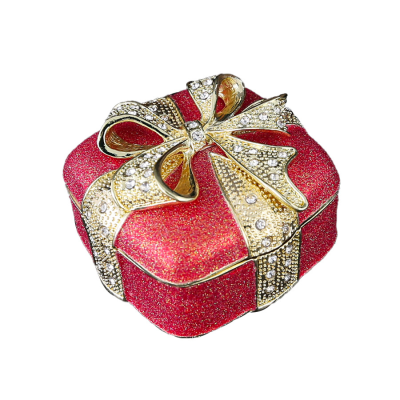
Comprehensive Sourcing Guide
Strategic Sourcing Guide for China Jewelry Box Procurement
Navigating the market for jewelry packaging in China requires a disciplined approach that balances aesthetic requirements with rigorous supply chain verification. The core keyword "China Jewelry Box" encompasses a diverse array of products ranging from simple paper cartons to complex leather and velvet sets. Buyers must distinguish between generic stock items and fully customized solutions, as the specifications, material origins, and production standards vary significantly across the supply base. This guide provides a structured framework for evaluating suppliers, understanding technical parameters, and mitigating procurement risks without relying on unverified market claims.
Material Composition and Structural Specifications
The foundation of any jewelry box procurement strategy lies in the precise definition of material and structural specifications. The available product data indicates a primary reliance on paper-based materials, specifically Art Paper and Cardboard, which are often used for models such as AR-JB090, AR-JB093, and AR-JB095. These materials are favored for their versatility in printing and their ability to provide a premium feel when finished correctly. However, the market also includes non-paper alternatives, with specific listings identifying "Leather Jewelry Box" and "Velvet" as distinct material categories.
When evaluating technical specifications, buyers must look beyond the generic name of the product. For instance, the standard dimensions for certain paper-based models are explicitly listed as 555532mm or fully customized. In contrast, leather and velvet options may adhere to different standard sizes, such as H 6cm Width 6cm, or specific model numbers like HDX2221 and HDX2219. The shape is another critical variable; while many units are square, others may be medium-sized or designed for specific jewelry sets.
The opening mechanism is a functional specification that directly impacts user experience. The data highlights "Clamshell" and "Pull-out" as common opening ways. A clamshell design typically offers a secure, hinged closure, whereas pull-out mechanisms may provide a more dramatic presentation. Buyers should verify that the chosen opening mechanism aligns with the weight and fragility of the jewelry being packaged. Additionally, the internal structure must be compatible with the intended contents, whether for arts and crafts, electronic products, or cosmetic items, as usage scenarios vary widely across the catalog.
Customization Capabilities and Branding Options
One of the primary advantages of sourcing from China is the extensive availability of customization. The product attributes confirm that "Customization" is available across the board, allowing buyers to tailor dimensions, colors, and branding elements. Color options are diverse, with listings noting Pink, Grey, Blue, and Yellow as standard choices, though custom color matching is often implied by the "Customized" standard designation.
Logo printing is a critical service offered by many suppliers, with specific attributes confirming "With Logo Printing" capabilities. This allows brands to imprint their identity directly onto the packaging, enhancing brand recognition. The paper type, specifically Art Paper, is particularly suitable for high-quality offset printing and embossing. For leather and velvet boxes, the customization may involve the texture of the material or the type of lining used inside the box.
Buyers should be aware that customization often influences the Minimum Order Quantity (MOQ). While some listings show an MOQ as low as 2 pieces for standard items, others indicate "Customized" MOQs which may range significantly higher. The production model numbers, such as MY-JB-009 or Paper Gift Box, often serve as the baseline for these custom orders. It is essential to clarify whether the customization fee is included in the unit price or charged separately, as this can affect the total cost structure.
Compliance, Certification, and Quality Verification
In the realm of packaging, compliance and certification are often areas of confusion for new buyers. While the supplied product facts do not explicitly confirm ISO 9001 or ISO 14001 certification status for all listed items, these standards are frequently referenced in the broader industry context. Buyers should not assume that a supplier possesses these certifications unless explicitly verified through documentation. Similarly, while FSC certification is a trusted standard for sustainable paper sourcing, it must be treated as a specific request rather than a default attribute of all paper-based jewelry boxes.
The origin of the products is a key compliance factor. The data indicates that products originate from China, with specific mentions of "Shen Zhen" as a production hub. Shenzhen is a major manufacturing center, but buyers should verify the specific factory location to ensure it aligns with their logistical and ethical sourcing requirements. The packaging itself must also meet export standards. Attributes such as "Standard Export Carton with Damp Proof Bag" and "Logistics Transportation Independent Packaging" suggest that suppliers are aware of international shipping requirements. However, buyers must confirm that the damp-proof measures are sufficient for the specific climate conditions of the destination market.
Quality verification should focus on the physical integrity of the materials. For paper boxes, the stiffness of the cardboard and the precision of the cuts are vital. For leather and velvet options, the durability of the stitching and the quality of the adhesive used are critical. Since the data lists "High Quality with Factory Prices" as an attribute, buyers must treat this as a marketing claim and verify quality through physical samples or third-party inspection reports before placing large orders.
Cost Drivers and Pricing Dynamics
Understanding the cost drivers for jewelry boxes is essential for budgeting and negotiation. The observed price range in the market spans from $0.02 to $110, a wide variance that reflects differences in material, complexity, and customization. The lower end of the spectrum typically corresponds to simple paper cartons with minimal printing, such as the 3X3X1cm models with a single gross weight of 0.003kg. The higher end of the range likely includes complex leather or velvet boxes with intricate designs, custom molds, and premium finishes.
Several factors influence the final unit price. Material selection is the primary driver; leather and velvet are inherently more expensive than standard cardboard. Customization adds significant cost, particularly for unique shapes, special printing techniques, or non-standard dimensions. The order quantity is another critical factor; while some suppliers offer an MOQ of 2 pieces, larger orders usually result in lower unit costs due to economies of scale.
Shipping costs also play a role in the total landed cost. The data mentions shipping methods such as DHL, UPS, FedEx, and EMS. For small, lightweight items like the 3X3X1cm boxes, air freight may be cost-effective. However, for larger orders or heavier leather boxes, sea freight might be necessary to keep costs down. Buyers should calculate the total cost of ownership, including packaging, shipping, and any potential duties, rather than focusing solely on the unit price.
Supplier Evaluation and Operational Due Diligence
Evaluating a supplier requires a systematic approach that goes beyond the initial product listing. The presence of multiple model numbers, such as AR-JB090 through AR-JB116, suggests a supplier with a broad product range, which can be advantageous for sourcing a complete line of packaging. However, buyers must verify the supplier's capacity to handle the specific order volume and timeline.
Key evaluation criteria include the supplier's response time, their ability to provide samples, and their transparency regarding production processes. The "Standard Export Carton" and "OPP Bag" packaging attributes indicate a level of professionalism, but buyers should confirm that these standards are consistently applied. Additionally, the "Single Selling Unit" attribute suggests that some suppliers may be willing to sell individual items, which is useful for prototyping but may not be scalable for bulk orders.
Buyers should also assess the supplier's logistical capabilities. The origin in China, specifically Shen Zhen, offers access to a robust supply chain, but it also means managing international logistics. Clear communication regarding lead times, production schedules, and shipping arrangements is vital. Suppliers who provide detailed packing lists and tracking information are generally more reliable partners.
Quality Control Protocols and Long-Term Procurement
Implementing a robust quality control (QC) protocol is essential for maintaining product standards. Given the wide range of materials and designs, a one-size-fits-all QC approach is insufficient. For paper boxes, inspections should focus on print alignment, color consistency, and structural integrity. For leather and velvet boxes, checks should include material texture, stitching quality, and the functionality of the opening mechanism.
Long-term procurement considerations involve building a relationship with a supplier who can scale with the buyer's needs. This includes the ability to maintain consistent quality over multiple production runs and the flexibility to adapt to changing design trends. The "Customized" nature of many orders means that the supplier must be capable of managing complex design files and ensuring that changes are implemented accurately.
Buyers should also consider the environmental impact of their packaging choices. While the data does not explicitly confirm sustainable practices, the use of paper and cardboard offers opportunities for eco-friendly sourcing. Buyers can request information on the recyclability of the materials and the sustainability of the supply chain. Establishing a long-term partnership with a supplier who prioritizes quality and sustainability can lead to better pricing, improved service, and a more resilient supply chain.
Typical Applications and Market Segmentation
The versatility of jewelry boxes allows them to serve a wide range of applications. The product attributes list usage scenarios including Arts and Crafts, Jewelry, Gifts, Electronic Products, Food, Garment & Shoes, Greeting Cards, Letters, Cosmetic, and Health Care Products. This broad applicability means that a single supplier can cater to multiple market segments, but buyers must ensure the packaging is tailored to the specific product being sold.
For jewelry, the packaging must protect delicate items while enhancing their visual appeal. The "Jewelry Set Box" and "Square" shape attributes suggest designs optimized for rings, necklaces, and earrings. For cosmetics and health care products, the packaging may need to be more robust and resistant to moisture. The "High Quality with Factory Prices" attribute implies that these boxes are suitable for premium branding, but the actual quality must be verified through samples.
Understanding the target market is crucial for selecting the right packaging. A luxury brand may require high-end leather boxes with custom embossing, while a mass-market brand might prefer simple, cost-effective paper cartons. The "Cute Cartoon" model number suggests a design style suitable for children's products or novelty items. Buyers should align their packaging choices with their brand identity and customer expectations to maximize the impact of the product presentation.
Final Procurement Considerations
In conclusion, sourcing jewelry boxes from China offers a vast array of options but requires careful planning and execution. Buyers must navigate the complexities of material selection, customization, compliance, and quality control to ensure a successful procurement process. By focusing on the specific technical specifications, verifying supplier capabilities, and maintaining rigorous quality standards, buyers can secure high-quality packaging that meets their business needs. The wide price range and diverse product models provide flexibility, but the key to success lies in detailed due diligence and clear communication with suppliers.
FAQs
What materials are used for china jewelry boxes?
Common materials include paper, cardboard, leather, and velvet. Specific models use Art Paper or Cardboard, while others feature Leather or Velvet. Buyers should verify the material type for each model number to ensure it matches their packaging needs.
Can I customize the size and logo on these boxes?
Yes, customization is available for dimensions, colors, and logo printing. Standard sizes like 55*55*32mm can be customized, and logo printing is offered on Art Paper. Buyers must confirm specific customization requirements with the supplier before ordering.
What is the minimum order quantity for these boxes?
The minimum order quantity varies, with some listings starting at 2 pieces. Other options may have customized MOQs ranging up to 1000 units. The specific MOQ depends on whether the order is for standard stock or fully customized designs.
How are the jewelry boxes packed for shipping?
Boxes are typically packed in Standard Export Cartons with Damp Proof Bags. Some items use Logistics Transportation Independent Packaging or OPP Bags. This ensures protection during transit, especially for international shipping from China or Shenzhen.
Which opening styles are available for these boxes?
Available opening ways include Clamshell and Pull-out mechanisms. These styles are designed for different presentation needs, such as secure closure or dramatic reveal. The choice depends on the specific jewelry item and the desired user experience.
Where are these jewelry boxes manufactured?
Products originate from China, with specific production hubs in Shen Zhen. This location provides access to a robust supply chain for various materials like paper and leather. Buyers should verify the exact factory location for logistical planning.
What is the price range for these packaging solutions?
The observed price range spans from 0.02 to 110 USD per unit. Lower prices typically apply to simple paper cartons, while higher costs reflect complex leather or velvet designs. Final pricing depends on material, customization, and order volume.