Source Chromium Carbide Flux Cored Wire for Steel Making, Hardfacing, and Alloy Repair
Compare 30 listings for Chromium Carbide Flux Cored Wire from verified Chinese manufacturers. Buyers can evaluate specifications like hardness, diameter, and packaging to find suitable options for steel making and hardfacing applications.
Key considerations
Products List
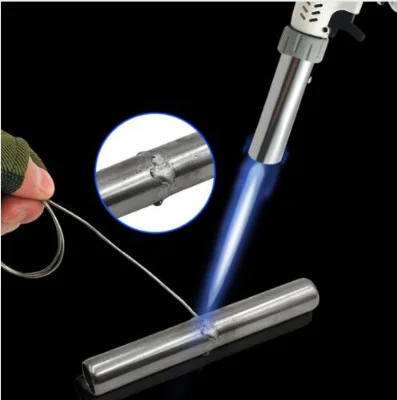


Ferro Calcium Cored Wire/ Feca Cored Wire /Ferro Calcium Cored Wire Price
$1200.00 - $1500.00
MOQ: 25 Tons


Comprehensive Sourcing Guide
Strategic Sourcing Guide for Chromium Carbide Flux Cored Wire
Understanding the Product Category and Technical Variability
The search for "Chromium Carbide Flux Cored Wire" requires a nuanced understanding of a diverse product landscape where specific metallurgical properties define performance. In the current market, this category encompasses various welding consumables designed for hardfacing applications, where the primary objective is to enhance surface resistance against abrasion and wear. The core material composition often centers on nickel or copper alloys, with specific formulations engineered to achieve high hardness levels. For instance, observed market data indicates products with a microstructure containing above 50% volume fraction of chromium carbide, which is critical for extreme wear resistance.
However, buyers must recognize that not all flux-cored wires in this search category share identical chemical or physical profiles. Some listings describe materials with a melting point ranging between 380-480 degrees Celsius, while others specify different alloy bases such as copper or aluminum alloys. The distinction is vital because a wire intended for steel making may possess different flux characteristics compared to one designed for high-hardness overlay welding. The slag characteristic is another differentiator; some products are noted for producing acidic slag, while others generate alkaline slag, influencing the cleaning process and the final weld bead quality.
Furthermore, the physical form of the wire varies significantly. Diameters observed in the market range from 1.6mm to 5.0mm, with specific standard sizes including 1.6mm, 2.0mm, 2.4mm, 3.2mm, and 4.0mm. The hardness of the deposited metal is a key performance metric, with some high-performance variants achieving Rockwell C hardness (HRC) between 57-65 or Vickers hardness (Hv) between 650-840. These numerical values are not universal but represent specific high-hardness product lines. Buyers must verify if the specific wire they are sourcing matches the hardness requirements of their application, as lower hardness variants may be intended for different structural purposes rather than abrasive wear protection.
Critical Technical Specifications and Verification Protocols
When evaluating Chromium Carbide Flux Cored Wire, the technical specifications provided by suppliers must be scrutinized against the intended operational environment. The most critical specification is the microstructure, specifically the volume fraction of chromium carbide. A claim of "Above 50% Volume Fraction Chromium Carbide" suggests a material designed for severe abrasion resistance, likely suitable for mining, cement, or heavy machinery components. However, without independent verification, this remains an observation rather than a guaranteed standard for every listed product.
Diameter consistency is another paramount specification. The market shows a wide range of available diameters, from 1.6mm up to 5.0mm. The selection of diameter depends heavily on the welding process parameters, the thickness of the base material, and the desired deposition rate. For instance, a 1.6mm wire is typically used for precision work or thin sections, whereas 4.0mm or 5.0mm wires are reserved for heavy-duty applications requiring high deposition rates. Buyers should verify the standard diameter list provided by the supplier, which may include 1.6mm, 2.0mm, 2.4mm, 3.2mm, 4.0mm, and 5.0mm, to ensure compatibility with their existing welding equipment.
The flux content within the wire is a defining characteristic that differentiates flux-cored wires from solid wires. While some product listings explicitly state "Flux Containing: Containing Flux," others may list "Flux Content: No," indicating a potential classification error or a specific type of solid wire mislabeled in the search results. For true flux-cored wires used in hardfacing, the flux is essential for shielding the weld pool, stabilizing the arc, and forming a protective slag layer. The nature of this slag, whether acidic or alkaline, dictates the post-weld cleaning requirements and the chemical compatibility with the base metal.
Additionally, the physical dimensions of the packaging and the wire itself must be verified. Single package sizes can vary, with observations ranging from 54x12x9 cm for smaller units to bulk pallets containing 500kg or 1000kg. The gross weight of individual packages, such as 1.200 kg for a single unit, helps in logistics planning. Buyers should also check the "Extended Length" specifications, which can range from 10-20mm to over 20mm, affecting the spooling process and the continuity of the weld.
Compliance, Certification, and Origin Verification
In the global procurement of welding consumables, verifying the origin and compliance of the product is essential for ensuring quality and regulatory adherence. The supply chain for Chromium Carbide Flux Cored Wire often originates from specific industrial hubs in China. Observed data points to origins in Anhui, Inner Mongolia, and Tongling, each potentially representing different manufacturing capabilities and quality control standards. For example, one product line lists its origin as Anhui, while another specifies Inner Mongolia, and a third indicates Tongling. These geographical distinctions can influence the raw material sourcing, such as the availability of specific nickel or copper alloys, and the local environmental regulations governing production.
While specific certification names are not universally listed in the provided data, buyers must insist on documentation proving compliance with international standards. The absence of a specific certification claim in a product listing should not be interpreted as a lack of certification, but rather as a need for further inquiry. Buyers should request Mill Test Certificates (MTC) or Chemical Composition Reports that verify the chromium carbide content and the mechanical properties like hardness. The standard "13+/-0.5mm" mentioned in some contexts likely refers to a specific dimensional tolerance or a packaging standard, but it does not replace the need for material certification.
The "place of origin" is a critical factor for trade compliance and logistics. Products originating from China, specifically from regions like Anhui or Inner Mongolia, may have different export regulations compared to those from other countries. Buyers must ensure that the supplier can provide all necessary export documentation, including certificates of origin, to facilitate smooth customs clearance. Furthermore, the "OEM" (Original Equipment Manufacturer) acceptance capability indicates that suppliers are willing to customize the product, which may involve altering the chemical composition or packaging to meet specific buyer requirements. This flexibility is a positive indicator of a supplier's capability to adapt to compliance needs.
Cost Drivers and Economic Considerations
The pricing of Chromium Carbide Flux Cored Wire is influenced by several volatile factors, primarily the cost of raw materials such as nickel, copper, and chromium. Given that the material composition often includes Nickel / Nickel Alloy or Copper / Copper Alloy, fluctuations in the global commodities market directly impact the final price. The observed price range in the market spans from $1 to $2700, a wide variance that reflects differences in packaging, quantity, and specific alloy formulations. A unit priced at $1 likely represents a small sample or a single item, whereas the $2700 figure may correspond to a bulk pallet or a specialized high-hardness variant.
The Minimum Order Quantity (MOQ) is another significant cost driver. The market data indicates an MOQ range from 1 to 1000 units. Some suppliers offer "No Limit" on MOQ, allowing for small batch testing, while others may require bulk purchases of 500kg or 1000kg per pallet to achieve economies of scale. For buyers with high-volume needs, negotiating a lower price per kilogram based on a larger order volume is a standard strategy. Conversely, for R&D or prototyping, suppliers offering free samples or low MOQs are essential, even if the unit cost is higher.
Packaging and logistics also contribute to the total cost of ownership. The product packing specifications vary from "1mt/Bag" to "500kg/Pallet" or "1000kgs/Pallet." Bulk packaging reduces the cost per unit but requires significant storage space and handling equipment. The single gross weight of 1.200 kg for a small package versus the 500kg pallet weight highlights the scale differences. Buyers must calculate the total landed cost, including freight, insurance, and customs duties, which can vary significantly depending on the origin location and the shipping method.
Typical Applications and Performance Expectations
The primary application for Chromium Carbide Flux Cored Wire is in hardfacing and wear-resistant overlay welding. The high hardness levels, such as HRC 57-65, make these wires ideal for protecting machinery components that are subjected to severe abrasion. Common industries include mining, where equipment like crusher liners, bucket teeth, and conveyor belts require frequent maintenance; cement production, where grinding rollers and mill liners face constant wear; and steel making, where the wire is used to reinforce surfaces exposed to high temperatures and abrasive materials.
The "Usage: Steel Making" attribute found in some listings suggests that these wires are also employed in the repair and maintenance of steel production equipment. The "Feature: Excellent Welding Performance" indicates that the wire is designed to provide a stable arc, minimal spatter, and good slag removal, which are crucial for efficient production in industrial settings. The microstructure, with its high volume fraction of chromium carbide, ensures that the deposited weld metal retains its hardness even under high-temperature conditions, preventing softening and premature failure.
However, buyers must match the specific wire type to the application. For instance, a wire with a melting point of 380-480 degrees might be suitable for lower-temperature applications, while others designed for high-heat environments may have different thermal properties. The "Slag Characteristic" also plays a role; acidic slag may be preferred for certain base metals, while alkaline slag is better for others. Understanding the specific wear mechanism—whether it is sliding abrasion, impact abrasion, or erosive wear—is essential for selecting the correct wire.
Supplier Evaluation and Quality Control Strategies
Evaluating a supplier for Chromium Carbide Flux Cored Wire requires a multi-faceted approach that goes beyond price comparison. The first step is to verify the supplier's production capabilities and location. With origins listed in Anhui, Inner Mongolia, and Tongling, buyers should investigate the industrial ecosystem of these regions to understand the supplier's access to raw materials and technical expertise. A supplier located in a major industrial hub may have better quality control infrastructure and more consistent production standards.
Quality control is paramount in welding consumables. Buyers should request detailed test reports that verify the chemical composition, mechanical properties, and microstructure of the wire. The claim of "Above 50% Volume Fraction Chromium Carbide" must be backed by independent laboratory testing. Additionally, the "Hardness: HRC 57-65/Hv 650-840" specification should be validated through sample testing. Buyers should also check the "Extended Length" and diameter consistency to ensure the wire meets the required tolerances for their welding equipment.
The "Customization: Available" attribute suggests that suppliers are open to tailoring the product to specific needs. This flexibility is a strong indicator of a reliable partner. Buyers should engage in discussions about customizing the flux composition, diameter, or packaging to optimize performance. The "OEM: Accept OEM" capability further demonstrates the supplier's willingness to work with the buyer's brand and specifications.
Finally, the "Sample: free" offering is a valuable tool for initial evaluation. Buyers should always request samples to test the welding performance, slag removal, and final weld quality before committing to a large order. This practical testing phase is the most effective way to validate the supplier's claims and ensure the product meets the specific requirements of the application.
Long-Term Procurement and Supply Chain Resilience
Establishing a long-term relationship with a supplier of Chromium Carbide Flux Cored Wire is crucial for maintaining operational continuity and cost efficiency. The "MOQ: No Limit" and "Customization: Available" features indicate that suppliers are capable of supporting both small and large orders, which is beneficial for scaling operations. However, buyers should also consider the lead times and production capacity of the supplier. While specific lead times are not provided in the data, buyers should inquire about the production schedule and the ability to handle peak demand periods.
Supply chain resilience is another key consideration. With multiple origins in China, buyers should diversify their supplier base to mitigate risks associated with geopolitical tensions, logistics disruptions, or production delays. Verifying the "place of origin" and ensuring that the supplier has a robust logistics network is essential for timely delivery. The "prod_packing" options, such as 500kg/Pallet or 1000kgs/Pallet, should be aligned with the buyer's storage and handling capabilities to optimize inventory management.
Finally, the "Keywords: Welding Wire, Welding Material, Hardfacing" highlight the broad applicability of these products. Buyers should maintain a clear understanding of their specific needs within this broad category to avoid purchasing incompatible products. By focusing on technical specifications, verifying quality through testing, and building strong supplier relationships, buyers can ensure a steady supply of high-quality Chromium Carbide Flux Cored Wire that meets their demanding industrial requirements.
FAQs
What is the melting point of Chromium Carbide Flux Cored Wire?
The melting point ranges between 380 and 480 degrees Celsius. This thermal range is observed in specific product listings and varies by alloy composition, so buyers should verify the exact specification for their welding process requirements.
Which diameters are available for Chromium Carbide Flux Cored Wire?
Available diameters include 1.6mm, 2.0mm, 2.4mm, 3.2mm, 4.0mm, and 5.0mm. These standard sizes allow selection based on the thickness of the base material and the desired deposition rate for specific hardfacing applications.
Can buyers request free samples of Chromium Carbide Flux Cored Wire?
Yes, free samples are available for many product listings. This allows buyers to test the welding performance and slag characteristics before committing to a larger order, provided the supplier accepts the sample request.
What is the hardness level of the deposited metal?
High-performance variants achieve a hardness of HRC 57-65 or Hv 650-840. This level is critical for severe abrasion resistance, though lower hardness options exist for different structural purposes rather than extreme wear protection.
Where are Chromium Carbide Flux Cored Wire products manufactured?
Products originate from locations such as Anhui, Inner Mongolia, and Tongling in China. These regional hubs influence raw material sourcing and production capabilities, so buyers should confirm the specific place of origin for quality assurance.
What is the minimum order quantity for Chromium Carbide Flux Cored Wire?
The minimum order quantity ranges from 1 unit to 1000 units depending on the supplier. Some vendors offer no limit on MOQ for testing, while others require bulk purchases like 500kg per pallet for standard pricing.
Does the wire contain flux for shielding the weld pool?
Some listings specify that the wire contains flux, while others indicate no flux content. Buyers must verify this attribute as it distinguishes true flux-cored wires from solid wires and affects the slag characteristic and cleaning process.