Source Classic Steel Vertical Radiator for Home, Office, and Hotel
Explore 30 listings for the Classic Steel Vertical Radiator, comparing options with CE and ROHS certifications. Buyers can evaluate features like powder coating, wall thickness, and customization availability for bathroom or central heating needs.
Key considerations
Products List


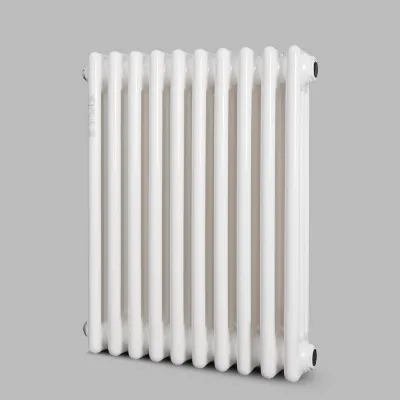


Radiator Steel Designer Radiator Central Heating Hot Water Radiator for Sale
$10.60 - $29.80
MOQ: 50 Pieces


Comprehensive Sourcing Guide
Sourcing Strategy for Classic Steel Vertical Radiators
Understanding Product Attributes and Design Variations
When sourcing a Classic Steel Vertical Radiator, buyers must first distinguish between the specific product categories available in the current market. The core keyword implies a focus on vertical configurations, yet the supply base often includes both electric and water heating variants. Evidence from the product catalog indicates that the primary material composition is steel, though cast iron options also exist in the broader category. The "classic" designation in this context often aligns with a "Square Tube in Tube" design structure, which provides a robust aesthetic suitable for traditional or modern interiors.
The physical form factor is critical for procurement planning. The observed product attributes highlight a "Square Tube in Tube" shape, which is distinct from flat-panel designs. This structural choice influences the heating surface area and the visual profile of the unit. Furthermore, the finish is a significant differentiator. The market data confirms that surface finishes typically include a "White Finish" achieved through a "Powder Coating" process, alongside options for "Chrome," "Anthracite," and "Black." The "Surface Polish" and "Surface Polishing" processes are also noted, suggesting that some units may offer a metallic sheen prior to or in addition to the coating layer.
Buyers should note that customization is a dominant feature in this sector. The attribute "Customization: Available" and "Customized: Acceptable" appear frequently, indicating that manufacturers are prepared to alter dimensions and colors to meet specific project requirements. The "Design Style" is listed as "Modern," which suggests that even "classic" vertical radiators in this supply chain often blend traditional vertical proportions with contemporary sleekness. The color palette is versatile, ranging from standard "White" and "Black" to custom requests, allowing for integration into various interior design schemes.
Technical Specifications and Performance Metrics
Technical due diligence is essential when evaluating steel vertical radiators, as performance varies significantly based on construction details. The supplied data reveals specific wall thickness ranges, with one entry noting "1.2-1.5mm." This metric is a critical indicator of durability and pressure resistance. A thicker wall generally correlates with higher longevity and the ability to withstand higher operating pressures, which is vital for central heating systems. The "Testing Pressure" for certain models is explicitly stated as "1.5 MPa," providing a concrete benchmark for safety and performance verification.
The heating method is another technical variable that defines the product's application. The catalog lists both "Central Heating" and "Self-Heating" (Electric) options. For a Classic Steel Vertical Radiator intended for a central heating system, the connection caliber is a primary specification. The observed calibers include "DN15," "DN20," and "DN25," which dictate the pipe size required for installation. Buyers must ensure that the selected unit's connection points align with their existing plumbing infrastructure.
Dimensions are highly flexible in this category. The "Size" is listed as "Customized," and specific standard models show dimensions such as "1800mm" in height or specific package sizes like "1001050cm." The "Wall Thickness" is a recurring specification, and while some entries list it as a generic attribute, others provide the 1.2-1.5mm range. The "Height" attribute for specific models, such as "BZ-576," is noted as "576," which likely refers to a specific dimension in millimeters or a model code. Buyers should verify the exact height and width requirements against the "Standard Accessories" list, which includes "Expansion Nail," "Hook," and "Releas" components, ensuring that the necessary mounting hardware is included for "Wall-Mounted" or "Standing" installation methods.
Compliance, Certification, and Safety Standards
Navigating the regulatory landscape is a non-negotiable aspect of sourcing industrial heating products. The product data explicitly lists a robust set of certifications: "CE," "ROHS," "ISOGOST," "TUV," and "EAC." These certifications indicate compliance with European safety standards, environmental restrictions on hazardous substances, and specific regional requirements for Eurasian markets. The presence of "CE" and "TUV" is particularly significant for buyers targeting the European Union, as these marks verify that the product meets essential health, safety, and environmental protection requirements.
The "ISO" certification, often paired with "material" in the data, suggests adherence to international management system standards, though the specific ISO standard number is not detailed in the provided text. Buyers should request the specific certificate documents to verify the scope of the ISO certification, particularly regarding quality management (ISO 9001) or environmental management (ISO 14001). The "EAC" mark is crucial for products destined for the Eurasian Economic Union, confirming that the goods meet the technical regulations of that region.
In addition to product certifications, the "Standard Accessories" and "prod_standard" fields provide insight into manufacturing consistency. While "prod_standard" is listed as "customized" in several instances, the presence of specific model numbers like "LT-001," "SD0029," and "SP006" suggests that manufacturers operate with defined internal standards for each model line. Buyers must verify that the "Testing Pressure" of 1.5 MPa is consistently met across all batches, as this is a key safety parameter for pressurized heating systems. The "Standard Accessories" list confirms that mounting hardware is typically provided, but the quality and compatibility of these accessories should be inspected upon receipt.
Cost Drivers and Pricing Dynamics
The pricing structure for classic steel vertical radiators is influenced by a complex interplay of factors, including material costs, customization levels, and order volume. The observed price range in the market spans from $3.3 to $2000 USD. This wide variance reflects the difference between small, standard-sized units and large, custom-engineered systems. The lower end of the spectrum likely corresponds to basic models with standard dimensions and finishes, while the upper end represents custom-sized units with specialized coatings or complex configurations.
The "MOQ" (Minimum Order Quantity) is a significant cost driver, with observed values ranging from 1 to 7000 units. For buyers seeking a single unit or a small batch, the per-unit cost will be higher due to the setup and processing fees associated with smaller runs. Conversely, bulk orders can leverage economies of scale, potentially reducing the unit price. The "Customized" nature of the product means that any deviation from standard sizes or colors will likely incur additional costs. The "Layer" attribute, specifically "Powder Coating," adds to the manufacturing cost, as this process requires specialized equipment and curing time.
Payment terms also play a role in the financial planning of the procurement. The accepted payment methods include "L/C," "T/T," "Western Union," "Moneygram," and "Cash." The "L/C" (Letter of Credit) option is particularly relevant for large international transactions, offering security for both parties. The "Sampling Time" of "15 Days After Your Payment" and the "Lead Time" of "30-45 Days" or "7-15 Days After Deposit Received" indicate that production schedules are tightly linked to payment confirmation. Buyers should factor in these timelines when calculating the total cost of ownership, including potential storage or rental costs for the interim period.
Supplier Evaluation and Operational Capabilities
Selecting the right supplier requires a thorough assessment of their operational capabilities and reliability. The product origin is consistently listed as "China," which is a major manufacturing hub for steel radiators. However, the location alone does not guarantee quality; buyers must evaluate the supplier's specific production capacity and quality control measures. The "Lead Time" varies significantly, with some entries showing "30-45 Days" and others "7-15 Days After Deposit Received." This discrepancy suggests that lead times are highly dependent on the order size, customization level, and current production load.
The "prod_packing" details offer insight into the supplier's logistics competence. Options include "Bubble Sheet," "Plastic Covers," "Cotton Package," and "Pallet" packaging. The use of "Cotton Package" and "Pallet" for larger units indicates a commitment to protecting the product during transit, which is essential for preventing damage to the powder-coated surfaces. The "Inner Packaging" description of "Bubble Sheet, Plastic Covers" suggests a multi-layered approach to protection. Buyers should verify that the packaging standards align with their shipping requirements, especially for international transport where humidity and rough handling are risks.
The "Sampling Time" of 15 days is a critical metric for supplier responsiveness. It indicates the time required to produce a sample unit for buyer approval before full-scale production begins. This step is vital for verifying that the "Color," "Finish," and "Dimensions" meet the buyer's expectations. The ability to accept "Customized" orders and provide "Customized Size" options demonstrates flexibility, but buyers must ensure that the supplier has the technical capacity to maintain quality during these custom runs. The presence of multiple model numbers (e.g., "LT-001," "SD0029," "SP006") suggests a diverse product line, but buyers should confirm that the specific model they are sourcing is actively manufactured and not a discontinued item.
Quality Control and Long-Term Procurement Considerations
Ensuring long-term reliability requires a rigorous quality control (QC) strategy. The "Testing Pressure" of 1.5 MPa is a key performance indicator that must be validated. Buyers should request third-party test reports or witness the pressure testing process to ensure that the "Wall Thickness" of 1.2-1.5mm is consistent throughout the product. Variations in wall thickness can lead to weak points that may fail under pressure, especially in older building systems where pressure fluctuations are common.
The "Surface Polish" and "Powder Coating" processes are critical for corrosion resistance, particularly in humid environments like bathrooms. The "Function of Bathroom Hot Water Radiator" is explicitly listed as "Bathroom Heating," which implies that the product is designed to withstand moisture. However, the quality of the powder coating application is paramount. Buyers should inspect samples for uniformity in color, absence of bubbles or peeling, and proper curing. The "Color" options of "Chrome," "White," "Anthracite," and "Black" require different coating formulations, and the supplier must demonstrate expertise in applying these finishes without compromising the steel's integrity.
Long-term procurement considerations also involve the availability of spare parts and after-sales support. The "Standard Accessories" list includes "Expansion Nail," "Hook," and "Releas," which are essential for installation. Buyers should verify that these accessories are of sufficient quality and that replacement parts are available if needed. The "Installation Method" of "Wall-Mounted/Standing" offers flexibility, but the supplier should provide clear installation guidelines to ensure the radiator is mounted securely and safely.
Finally, the "Customized" nature of the product means that buyers must maintain clear communication with the supplier regarding design changes. The "prod_standard" being listed as "customized" suggests that each order may have unique specifications. Buyers should establish a clear protocol for design approvals and change orders to avoid misunderstandings. By focusing on these quality control and operational aspects, buyers can secure a reliable supply of classic steel vertical radiators that meet their technical and aesthetic requirements.
FAQs
What certifications do classic steel vertical radiators have?
These radiators typically hold CE, ROHS, ISO, TUV, and EAC certifications. Buyers should verify specific certificate documents for each model to ensure compliance with European and Eurasian safety standards before placing orders.
Can I customize the size and color of the radiator?
Yes, customization for size and color is available and acceptable for most suppliers. You can request specific dimensions and finishes like Chrome, White, or Anthracite, though custom orders may extend the lead time and affect pricing.
How long is the lead time for production and delivery?
Lead times vary between 7 to 45 days depending on the order specifics. Standard samples may take 15 days after payment, while bulk production typically requires 30 to 45 days or 7 to 15 days after deposit receipt.
What is the testing pressure rating for these units?
The testing pressure rating for specific models is 1.5 MPa. This metric indicates the unit's ability to withstand operating pressures safely, making it a critical verification point for central heating system compatibility and durability.
Which payment methods are accepted for these orders?
Accepted payment methods include L/C, T/T, Western Union, Moneygram, and Cash. Buyers should confirm the specific terms with the supplier, as large international transactions often utilize Letters of Credit for security.
What is the minimum order quantity for a custom order?
The minimum order quantity ranges from 1 to 7000 units depending on the supplier and customization level. Small batches may incur higher per-unit costs, while bulk orders can leverage economies of scale to reduce the price.
How are these radiators packaged for international shipping?
Packaging options include bubble sheets, plastic covers, cotton packages, and pallets. Suppliers use multi-layered protection to prevent damage to the powder-coated surfaces during transit, especially for larger units requiring palletized shipping.