Source Clear Glass Cooking Pot with Handle for Kitchen, Office, and Laboratory
Explore 30 listings for the Clear Glass Cooking Pot with Handle, featuring customizable logos and OEM options. Buyers can compare specifications like capacity, size, and stove compatibility across verified Chinese manufacturers.
Key considerations
Products List


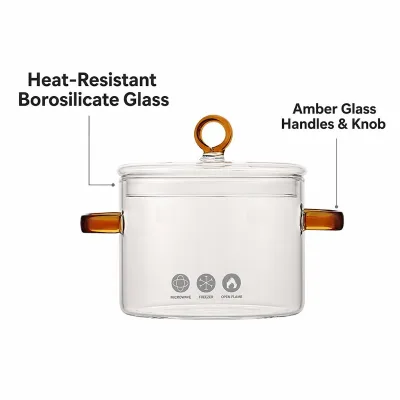
Fire Safe Borosilicate Glass Soup Cooking Pot with Glass Handle and Cover
$3.44 - $4.49
MOQ: 1000 Pieces


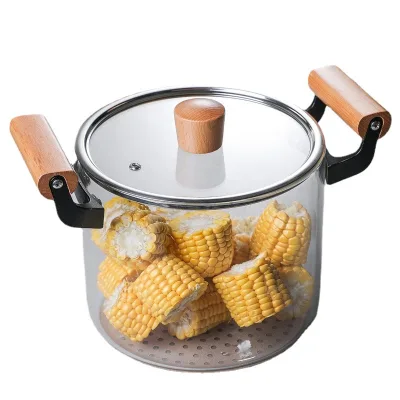
Heat Resistant Clear High Borosilicate Glass Cooking Pot With Wooden Handles
$8.00 - $8.50
MOQ: 100 pieces

New Clear Glass Lid Cooking Pot Cookware Set with Stainless Steel Handles
$20.40 - $25.30
MOQ: 1000 Sets


High Quality 1.9L Clear Glass Pot Cooking Stove Glass Cookware Simmer Pot
$3.44 - $3.48
MOQ: 280 Pieces



Comprehensive Sourcing Guide
Strategic Sourcing Guide for Clear Glass Cooking Pots with Handles
Defining the Product Category and Technical Specifications
The procurement of a Clear Glass Cooking Pot with Handle requires a precise understanding of the material properties and structural design that define this category. Based on the available product data, the core material is identified as glass, specifically noted as borosilicate glass in several listings. This distinction is critical because borosilicate glass offers superior thermal shock resistance compared to standard soda-lime glass, a necessary trait for cookware subjected to direct heat. The product listings explicitly mention a safe operating temperature range of -20 to 150 degrees Celsius, which serves as a primary benchmark for thermal performance verification. Buyers must ensure that the specific unit under consideration meets or exceeds this thermal tolerance to prevent failure during cooking operations.
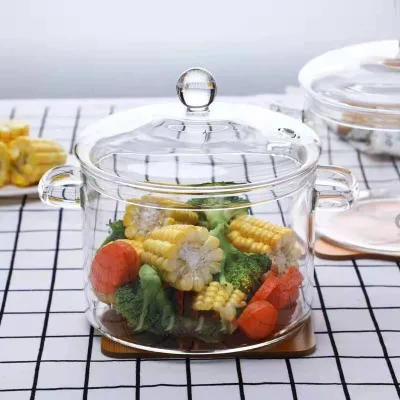
The physical configuration of these pots varies, with specific models indicating dimensions such as 14-17cm, 10-13cm, and 18-21cm. The presence of a handle is a defining feature for the "with handle" variant, often described in the context of cup accessories or general pot design. The shape is predominantly cylindrical, providing a uniform heat distribution profile. Furthermore, the transparency of the glass is a key aesthetic and functional attribute, described as "colorless" and "clear," allowing users to monitor cooking progress without lifting the lid. The inclusion of a glass cover is standard for many of these units, enhancing the pot's versatility for simmering and steaming. The closure type for related glass containers in the same supply chain is often a cork stopper, though for cooking pots, the focus remains on the lid and handle integration.
Compliance, Certification, and Safety Standards
When sourcing glass cookware, verifying compliance with international safety standards is non-negotiable. The supplied data highlights specific certifications such as LFGB (German Food Safety Law) and CE/EU (Conformité Européenne). These certifications indicate that the product has undergone testing for chemical stability and physical safety, ensuring that no harmful substances leach into food during heating. For a clear glass cooking pot, the absence of lead and cadmium is a primary concern, and these certifications serve as the evidence that such limits have been met.
Buyers should not assume that all listed products automatically possess these certifications unless explicitly stated in the supplier's documentation. The standard dimensions provided, such as 252520cm or 201515cm, often refer to the packaging dimensions rather than the product itself, so verification of the actual product size against the intended stove or oven capacity is essential. The "All Purpose" stove designation suggests versatility, but the specific "Gas Cooker" and "Electromagnetic Oven" mentions in the data indicate that compatibility varies by model. Procurement teams must request test reports confirming that the specific glass type can withstand the thermal expansion rates associated with induction heating or open flame gas cooking without cracking.
Cost Drivers and Pricing Dynamics
The pricing for clear glass cooking pots with handles is influenced by a complex interplay of material quality, customization, and order volume. The observed price range in the market spans from 0.88 to 25.3 USD, a wide variance that reflects differences in glass thickness, handle construction, and branding. The lower end of this spectrum likely corresponds to standard, non-customized units with basic packaging, while the higher end may include premium borosilicate glass, custom logo application, and specialized packaging solutions.
The Minimum Order Quantity (MOQ) is another significant cost driver, with observed ranges between 10 and 1200 units. Lower MOQs allow for smaller, more agile orders but often come with a higher unit cost due to the fixed costs of production setup. Conversely, larger orders can leverage economies of scale but require a significant upfront capital commitment. The "Customization" attribute, including the acceptance of customized logos and OEM/ODM services, adds a layer of cost. Suppliers offering these services typically charge a setup fee or a premium per unit. Additionally, the "Handmade" craft attribute mentioned in the data suggests that labor-intensive production methods may be employed for certain designs, which can further elevate the price point compared to fully automated manufacturing lines.
Typical Applications and Usage Scenarios
The versatility of clear glass cooking pots with handles extends across various kitchen and commercial applications. The primary usage is identified as cooking, with specific references to cooking oil and general kitchen supplies. The "Eco-Friendly" style designation aligns with modern consumer preferences for sustainable, non-toxic cookware that does not leach chemicals. The transparency of the glass makes these pots ideal for applications where visual monitoring of the food is required, such as simmering sauces, boiling pasta, or preparing delicate dishes that require precise temperature control.
In a commercial setting, these pots are suitable for restaurants and catering services that value presentation and safety. The "Crystal Glass" and "Glass Office Cup" mentions in the broader data suggest that the same manufacturing facilities may produce both cookware and serving ware, indicating a high degree of material consistency. The capacity ranges from 501-700 ml to 1300-1500 ml, offering options for both individual servings and family-sized meals. The "Simple" and "Elegant" styles indicate that these products are designed to fit into both modern minimalist kitchens and more traditional settings. The ability to withstand temperatures up to 150 degrees Celsius makes them suitable for oven use, provided the handle material is also heat-resistant, a detail that buyers must verify.
Supplier Evaluation and Sourcing Strategy
Selecting the right supplier for clear glass cooking pots requires a rigorous evaluation process focused on reliability and capability. The data indicates that the origin of these products is primarily Hebei, China, a region known for its glass manufacturing capabilities. When evaluating potential suppliers, buyers should prioritize those who explicitly state their willingness to accept OEM orders and customized logos. The "Logo Craft: OEM/ODM" attribute suggests that the supplier has the infrastructure for branding, which is crucial for businesses looking to build a distinct product line.
Suppliers should be assessed based on their production standards and packaging methods. The "Packed in Cartons" and "Box" options indicate different levels of protection and retail readiness. For international shipping, the robustness of the packaging is vital to prevent breakage, a common risk with glass products. Buyers should also inquire about the supplier's quality control processes, specifically how they test for thermal shock resistance and structural integrity. The "Standard Packing" mentioned in the data may be sufficient for domestic sales but might require reinforcement for export. Additionally, the "Customized Logo Acceptable" feature should be evaluated for print quality and durability, ensuring that the branding does not compromise the glass surface or safety.
Quality Control and Long-Term Procurement Considerations
Maintaining consistent quality in glass cookware procurement involves establishing clear acceptance criteria and long-term relationship management. The "Safe Temperature" range of -20 to 150 degrees Celsius is a critical quality metric. Buyers should implement a sampling plan that includes thermal shock testing to verify that the pots can transition from cold to hot environments without cracking. The "Glass Type: Clear Glass" and "Single Wall" specifications suggest that the thickness of the glass is a key factor in durability; thinner glass may be more prone to breakage under stress.
Long-term procurement considerations include the stability of the supply chain and the ability to scale production. The "MOQ" range of 10-1200 units offers flexibility, but buyers should negotiate terms that allow for volume discounts as order sizes increase. The "Customization" and "OEM" capabilities should be locked into a long-term agreement to ensure consistent branding and product specifications. Furthermore, the "Eco-Friendly" nature of the product aligns with global sustainability trends, which can be a competitive advantage in marketing. Buyers should also consider the lifecycle of the product; high-quality borosilicate glass is durable and reusable, reducing waste compared to single-use alternatives.
Comparative Analysis of Product Attributes
To facilitate decision-making, the following table summarizes the key attributes observed in the market for clear glass cooking pots with handles, highlighting the variations that buyers must navigate.
| Attribute Category | Observed Variations | Procurement Implication |
|---|---|---|
| Material | Glass, Borosilicate Glass | Verify thermal shock resistance; Borosilicate is preferred for high heat. |
| Dimensions | 10-13cm, 14-17cm, 18-21cm, 22-25cm | Match size to intended stove or oven capacity; check packaging dimensions. |
| Capacity | 501-700 ml, 1300-1500 ml | Select based on target market (individual vs. family use). |
| Certification | LFGB, CE/EU | Mandatory for food safety; request test reports for verification. |
| Customization | Custom Logo, OEM/ODM, Handmade | Adds cost but enables branding; verify print quality and lead times. |
| Packaging | Packed in Cartons, Box, Standard Packing | Ensure packaging protects against breakage during transit. |
| Stove Compatibility | Gas Cooker, Electromagnetic Oven, All Purpose | Confirm compatibility with the buyer's target appliance types. |
| Price Range | 0.88 - 25.3 USD | Wide variance; correlate price with material quality and customization. |
| MOQ | 10 - 1200 Units | Lower MOQs for testing; higher volumes for cost efficiency. |
This comparative view underscores the importance of aligning specific product attributes with business requirements. A buyer seeking a premium, branded product for a high-end market will prioritize the "Handmade" and "Custom Logo" attributes, accepting a higher price point. Conversely, a buyer focusing on volume sales for a mass-market retailer may prioritize the "Standard Packing" and lower MOQ flexibility, ensuring that the "All Purpose" stove compatibility covers the widest range of consumer appliances. By carefully evaluating these factors, procurement teams can secure a supply of clear glass cooking pots that meets both quality standards and commercial objectives.
FAQs
What material is used for clear glass cooking pots?
The pots are made of clear glass, specifically borosilicate glass for superior thermal shock resistance. This material ensures safety during cooking and allows users to monitor food progress without lifting the lid.
Can these pots be used on gas cookers?
Yes, the product listings explicitly state compatibility with gas cookers. Some models also support electromagnetic ovens, making them versatile for various kitchen stove types.
What is the safe temperature range for these pots?
The safe operating temperature range is from -20 to 150 degrees Celsius. This thermal tolerance prevents cracking during heating and cooling cycles when used correctly.
Which certifications ensure food safety for these glass pots?
Products are certified with LFGB and CE/EU standards to guarantee food safety. These certifications confirm the glass is free from harmful substances like lead and cadmium during heating.
How does customization work for these glass cooking pots?
Customization is available with options for customized logos and OEM services. Buyers can request specific branding or designs, though this may affect the unit price and lead time.
What capacity options are available for these glass pots?
Capacity ranges from 501-700 ml to 1300-1500 ml depending on the model. This variety allows selection for individual servings or larger family-sized cooking needs.
Where are these glass cooking pots manufactured?
The products originate from Hebei, China, a region known for glass manufacturing. Buyers should verify specific factory details as origin is a key factor in sourcing decisions.