Source Clear PFA Heat Shrink Tubing for Medical, Industrial, and Electronics
Find and compare 30 listings for Clear PFA Heat Shrink Tubing from verified suppliers. Buyers can evaluate specifications like shrink ratio, thermal rating, and certifications to select the right insulation sleeve for medical, industrial, or electronics applications.
Key considerations
Products List
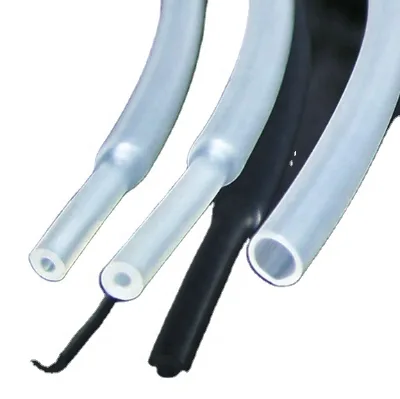


$0.09 - $0.12
MOQ: 500 Meters


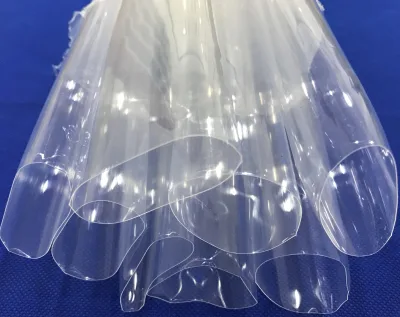

Heat-Resistant and Corrosion-Resistant PFA Ultra-Thin Heat Shrink Tubing
$0.50 - $10.00
MOQ: 100 Meters


Comprehensive Sourcing Guide
Strategic Sourcing Guide for Clear PFA Heat Shrink Tubing
Understanding Material Properties and Technical Specifications
When sourcing clear PFA (Perfluoroalkoxy) heat shrink tubing, buyers must first distinguish the material from other fluoropolymers like PTFE or FEP. The supplied data indicates a specific focus on inorganic and hybrid insulation materials, with some entries explicitly noting PE (Polyethylene) and thermosetting plastics. However, for the specific requirement of clear PFA, the procurement strategy must prioritize materials that offer high-temperature resistance and chemical inertness. The observed thermal ratings in the dataset range from 200°C to 260°C, with specific mentions of working temperatures between -65°C and 260°C. This aligns with the industry standard for PFA, which typically maintains integrity at temperatures up to 260°C.
The optical clarity of the tubing is a critical observation point. The dataset lists "Transparent" and "Black" as available color attributes, alongside features such as "Excellent Clarity." For applications requiring visual inspection of the wire or cable inside the insulation, the "Transparent" attribute is non-negotiable. Buyers should verify that the "Clear" designation corresponds to the specific PFA grade, as some suppliers may offer clear FEP or PE tubing that does not meet the thermal or chemical resistance requirements of PFA. The shrink ratio is another vital technical parameter; observed values in the market include 1.3:1, 3:1, and 4:1. A higher shrink ratio (e.g., 4:1) allows for greater flexibility in fitting over irregularly shaped components, but the activation temperature must be confirmed. The data notes a shrink temperature of 120°C, which is a standard activation point for many heat shrinkable polymers, though PFA often requires precise temperature control to avoid material degradation during the shrinking process.
Dimensional consistency is paramount. The provided specifications list inner diameters ranging from 1mm to 100mm, with specific models cited as ID10mm, ID2.5mm, and a standard diameter of 25mm. The product standard section mentions a range of 1.0mm to 100.00mm, suggesting a broad availability of sizes. However, buyers must ensure that the "Clear PFA" specific product matches the required inner diameter and wall thickness. The dataset also references a standard of "diameter 25mm" and a contraction percentage of less than 0.4%, which indicates high dimensional stability after shrinking. When evaluating a potential supplier, the procurement team should request a technical data sheet that explicitly confirms the PFA material composition, the specific shrink ratio, and the exact inner diameter tolerance for the clear variant.
Compliance, Certification, and Regulatory Standards
In the B2B procurement of industrial components, particularly those used in medical or high-reliability electronics, certification is a primary filter for supplier qualification. The dataset provides evidence of several relevant certifications, including RoHS and ISO. Specifically, one entry lists "ISO, RoHS," while another highlights "ISO 10993 or USP Class VI" for biocompatibility. For clear PFA tubing intended for medical usage, the ISO 10993 standard for biological evaluation of medical devices and USP Class VI for plastic materials are critical benchmarks. These standards ensure that the material does not elicit adverse biological reactions, a requirement for applications involving direct contact with biological systems or sensitive pharmaceutical environments.
RoHS (Restriction of Hazardous Substances) compliance is another mandatory check. The presence of RoHS in the observed data confirms that many suppliers in this category adhere to restrictions on lead, mercury, cadmium, and other hazardous substances. However, buyers must not assume that all "clear" tubing is RoHS compliant without verification, as some additives used to achieve clarity or specific shrink properties might introduce restricted substances. The dataset also mentions "Hydrolytic Degradable" features for certain plastics, which is a specific property that may or may not be desired depending on the application. For PFA, which is inherently resistant to hydrolysis, a claim of "hydrolytic degradable" might indicate a different material blend or a specific coating. Procurement teams should verify that the "Clear PFA" product does not carry conflicting feature claims that suggest it is not a pure fluoropolymer.
Furthermore, the dataset references "Inorganic Insulation" and "Hybrid Insulation Materials." While PFA is a fluoropolymer, the classification of the insulation material must be precise. Buyers should confirm that the "Hybrid" or "Inorganic" label does not imply a composite material that reduces the chemical resistance or dielectric strength expected of pure PFA. The "Medical Usage" application tag in the data reinforces the need for rigorous certification checks. If the tubing is destined for medical devices, the supplier must provide valid, up-to-date certificates of conformity for ISO 10993 and USP Class VI. Relying solely on a general "ISO" certification is insufficient for medical-grade components. The procurement process must include a request for the specific test reports that validate these claims, ensuring that the clear PFA tubing meets the regulatory requirements of the target market, whether it be the European Union, the United States, or other regions with strict medical device regulations.
Cost Drivers and Pricing Dynamics
The pricing structure for Clear PFA Heat Shrink Tubing is influenced by several variables, including material purity, dimensional tolerances, and certification status. The observed price range in the dataset spans from $0.01 to $18.23 USD. This wide variance suggests a significant difference between commodity-grade tubing and high-performance, certified medical-grade PFA. The lower end of the price spectrum likely corresponds to standard PE or FEP tubing, or bulk orders of PFA with looser tolerances. The higher end of the range ($18.23) likely reflects specialized clear PFA tubing with strict biocompatibility certifications, custom inner diameters, or smaller order quantities that do not benefit from economies of scale.
Minimum Order Quantity (MOQ) is a critical cost driver. The data shows an MOQ range from 1 unit to 2000 units, with specific mentions of 25 meters per roll and 5 rolls as a minimum. The variation in MOQ (e.g., 25m vs. 5 rolls) indicates that suppliers have different production setups and inventory strategies. For a buyer seeking a small quantity of clear PFA tubing for prototyping, an MOQ of 1 unit is advantageous, but the unit price will likely be at the higher end of the spectrum. Conversely, a large-scale production run can leverage the lower MOQ of 25 meters per roll to reduce the per-unit cost. Buyers should calculate the total cost of ownership, including the impact of MOQ on inventory holding costs. Ordering 2000 units of a high-cost item might result in significant capital tie-up, whereas ordering 5 rolls of a lower-cost item might be more efficient for just-in-time manufacturing.
Packaging and logistics also contribute to the final cost. The dataset lists packaging options such as "25m/Roll, 16rolls/Carton" and "in Cartons." Standard packaging is generally more cost-effective than custom packaging. If the clear PFA tubing requires specialized handling to maintain clarity or prevent contamination (e.g., for medical use), the packaging cost will increase. Additionally, the origin of the product, noted as "China, Jiangsu" or "Suzhou," influences shipping costs and lead times. While these regions are major manufacturing hubs, buyers should factor in potential tariffs or shipping delays when calculating the landed cost. The payment terms, listed as "Tt" (Telegraphic Transfer) or "Tt/Paypal," also affect cash flow. Buyers should negotiate payment terms that align with their financial cycles, as Tt is the standard for international trade but may require upfront payment, whereas other terms might offer more flexibility.
Typical Applications and Performance Requirements
The versatility of Clear PFA Heat Shrink Tubing makes it suitable for a diverse range of applications, from general electronics to specialized medical devices. The dataset explicitly mentions "Medical Usage" as a primary application, supported by the biocompatibility standards. In medical contexts, the transparency of the tubing allows for visual monitoring of fluid flow or wire integrity within catheters, sensors, or implantable devices. The high-temperature resistance up to 260°C is essential for sterilization processes, such as autoclaving, which often require temperatures exceeding 120°C. The "Excellent Clarity" and "High Flame Resistance" features noted in the data further enhance its suitability for medical and aerospace applications where safety and visibility are paramount.
Beyond medical usage, the tubing is applicable in "General Plastics, Engineering Plastics, and Specialty Plastics" sectors. The "Inorganic Insulation" and "Hybrid Insulation Materials" classifications suggest use in environments where chemical resistance is critical. PFA is renowned for its resistance to almost all chemicals, making it ideal for protecting wires and cables in harsh industrial environments, such as chemical processing plants or semiconductor manufacturing facilities. The "Working Temperature" range of -65°C to 260°C ensures performance in extreme thermal conditions, from cryogenic applications to high-heat processing. The "Low Water Absorption" (<0.01%) and "Contraction Percentage" (<0.4%) indicate high dimensional stability, which is crucial for maintaining electrical insulation properties in wet or humid environments.
The "Heat Shrinkable" type with shrink ratios of 3:1 or 4:1 is particularly useful for bundling cables, protecting splices, and insulating connectors. The ability to shrink tightly around irregular shapes ensures a secure fit that prevents moisture ingress and mechanical damage. For "Engineering Plastics" applications, the tubing can serve as a protective sleeve for moving parts or as an insulating barrier in high-voltage equipment. The "Maximum Voltage" of <10KV observed in the data suggests that the tubing is suitable for low to medium voltage applications, but buyers must verify the specific dielectric strength for their intended voltage class. The "Flame Resistance" feature is a key differentiator for applications requiring compliance with fire safety standards, such as those in transportation or building infrastructure.
Supplier Evaluation and Quality Assurance
Evaluating suppliers for Clear PFA Heat Shrink Tubing requires a rigorous assessment of their technical capabilities and quality management systems. The dataset indicates that suppliers are located in "China, Jiangsu" and "Suzhou," regions known for their manufacturing expertise. However, the presence of a location does not guarantee quality. Buyers should verify the supplier's production capacity, specifically their ability to maintain the "Transparent" color consistency and the precise "Inner Diameter" tolerances (1-100mm range). The "Customization" attribute listed in the data suggests that suppliers can offer tailored solutions, but buyers must assess the supplier's ability to handle custom orders without compromising quality.
Quality control should be a central part of the supplier evaluation process. The "After-Sales Service" of "on-Line Service" and a "Warranty" of "1 year" are positive indicators, but these should be backed by concrete quality assurance protocols. Buyers should request a copy of the supplier's quality control manual, focusing on their testing procedures for thermal rating, shrink ratio, and material composition. The "ISO, RoHS" certifications mentioned in the data are good starting points, but buyers should also inquire about internal testing for "Hydrolytic Degradable" features if applicable, ensuring that the material properties match the claims. The "Standard Package" and "Packing" details should be reviewed to ensure that the packaging prevents contamination and maintains the clarity of the tubing during transit.
Supplier reliability is another critical factor. The "Payment" terms of "Tt" and "Tt/Paypal" indicate standard international trade practices, but buyers should also assess the supplier's financial stability and delivery track record. The "Lead Time" is not explicitly provided in the data, but the "MOQ" and "Packing" details suggest that suppliers may have varying production schedules. Buyers should establish clear communication channels and request a detailed production timeline before placing an order. The "Feature1" and "Feature2" attributes, such as "Excellent Clarity" and "High Temperature Resistant to 260°C," should be verified through third-party testing or sample evaluation. A reliable supplier will provide samples for testing and be transparent about any limitations in their product line.
Long-Term Procurement Considerations and Supply Chain Resilience
Sourcing Clear PFA Heat Shrink Tubing is not just a one-time transaction but a long-term strategic decision that impacts the reliability and safety of the buyer's products. The "Warranty" of "1 year" and "After-Sales Service" indicate a commitment to product performance, but buyers should also consider the long-term availability of the material. The "Customization" availability suggests that suppliers can adapt to changing needs, but buyers should ensure that the supplier has the capacity to scale production if demand increases. The "MOQ" range of 1 to 2000 units offers flexibility, but buyers should plan for future growth and potential supply chain disruptions.
Supply chain resilience is crucial in the current global market. The "Origin" of the products being "China, Jiangsu" and "Suzhou" highlights a concentration of manufacturing in specific regions. Buyers should assess the risk of supply chain interruptions due to geopolitical factors, natural disasters, or logistical bottlenecks. Diversifying the supplier base or establishing a strategic partnership with a reliable manufacturer can mitigate these risks. The "Standard" and "Specification" details, such as the "Inner Diameter" and "Shrink Ratio," should be standardized across the supply chain to ensure consistency. Buyers should also consider the environmental impact of the product, as the "Hydrolytic Degradable" feature suggests a potential for eco-friendly options, which may be increasingly important for corporate sustainability goals.
Finally, the "Payment" and "Packing" terms should be reviewed in the context of long-term contracts. Negotiating favorable payment terms, such as letters of credit or extended payment periods, can improve cash flow. The "Packing" standards should be agreed upon to ensure that the product arrives in optimal condition, minimizing waste and returns. By focusing on these long-term considerations, buyers can build a robust and resilient supply chain for Clear PFA Heat Shrink Tubing, ensuring that their products meet the highest standards of quality and performance.
FAQs
What certifications are available for Clear PFA Heat Shrink Tubing?
Certifications include RoHS and ISO standards, with some options offering ISO 10993 or USP Class VI for medical usage. Buyers must verify specific biocompatibility reports for medical applications rather than assuming general ISO compliance covers all regulatory needs.
Which inner diameter sizes are available for this tubing?
Available inner diameters range from 1mm to 100mm, with specific models like ID10mm and ID2.5mm listed. The product standard also supports a diameter range of 1.0mm to 100.00mm to accommodate various wire and cable protection requirements.
Can the tubing be customized for specific applications?
Yes, customization is available for buyers requiring specific dimensions or properties. This allows for tailored solutions in medical or industrial sectors where standard sizes may not fit the precise engineering needs of the project.
How does the working temperature range affect usage?
The tubing operates effectively between -65°C and 260°C, making it suitable for extreme thermal conditions. This wide range supports sterilization processes and high-temperature environments while maintaining material integrity and dimensional stability.
What is the typical minimum order quantity for this product?
Minimum order quantities vary, with some listings starting at 1 unit and others requiring 5 rolls or 25 meters. Buyers should check specific supplier terms as MOQs range from 1 to 2000 units depending on the vendor and product configuration.
Where are the manufacturers of this tubing located?
Manufacturers are primarily located in China, specifically in Jiangsu and Suzhou regions. These locations are known for producing insulation materials and heat shrinkable tubing with various certifications and specifications for global export.