Source GPS and Beidou Satellite Timing Server for Server, Workstation, Smart Substation
Find 20 GPS and Beidou Satellite Timing Server units from Chinese manufacturers with ISO and RoHS certifications. Buyers can compare models like HTP-NTP7106 and GB8007 featuring timing accuracy under 30ns and support for Ethernet, Irig-B, and LAN ports for server, workstation, and smart substation applications.
Key considerations
Products List


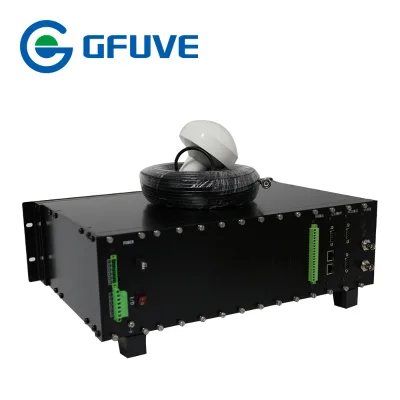
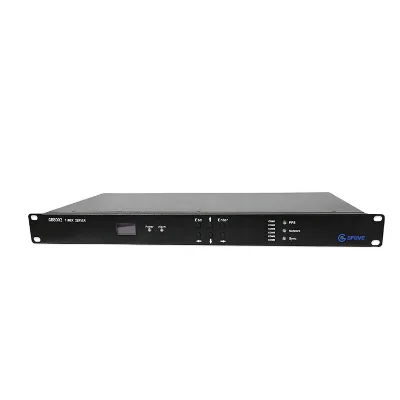
GPS Beidou Synchronizer Dual Mode Gnss Timing Device with Ntp Server
$1500.00 - $2000.00
MOQ: 5 Pieces


Comprehensive Sourcing Guide
Strategic Sourcing Guide for GPS and Beidou Satellite Timing Servers
Understanding Core Technical Specifications and Signal Architecture
When evaluating GPS and Beidou satellite timing servers, buyers must first distinguish between the underlying signal architectures and the specific timing accuracies required for their infrastructure. The market offers devices that integrate both Global Positioning System (GPS) and Beidou satellite signals to ensure redundancy and global coverage. In the observed product data, specific models demonstrate distinct signal capabilities. For instance, certain units are engineered to receive the GPS L1 signal at 1575.42 MHz, while others are optimized for Beidou-1 signals, which operate at frequencies such as 1561 MHz (B1 Signal) or 2491.75 MHz. The carrier frequency for Beidou-1 is noted as 1615.68 MHz in specific configurations.
Timing accuracy is a critical differentiator in this category. High-performance servers often claim timing accuracies of less than 30 nanoseconds, while others provide accuracy levels of 100 nanoseconds or better. Some advanced units achieve a precision of 0.06 microseconds for GPS pulse outputs. The operating principle for these devices typically relies on code-related type synchronization, ensuring that the time data extracted from satellite signals is processed with high fidelity. Buyers should verify the specific receiver sensitivity, as some units boast capture sensitivities below -160 dBw and tracking sensitivities below -163 dBw, which are essential for maintaining lock in challenging environments. Furthermore, the capture time for Beidou-1 receivers can vary significantly, with some models achieving a hot start in under 10 seconds and a cold start in 35 seconds or less.
Compliance, Certification, and Regulatory Standards
Compliance with international and regional standards is non-negotiable for industrial procurement. The supplied product facts indicate that reliable timing servers must carry certifications such as ISO, RoHS, and CE. Specific models may also adhere to ISO/TS ISO ISOFCC standards, which are crucial for telecommunications and data integrity. In addition to general certifications, the physical and operational standards of the equipment must align with industry norms. Many units are designed to meet the 1u rack-mount standard, facilitating easy integration into existing server racks.
Regional standards also play a pivotal role in procurement decisions. Products originating from China often adhere to specific national standards such as GB8007 or GB8002. For example, a model designated as GB8002 may be explicitly rated for a 100ns timing accuracy standard. Furthermore, international telecommunications standards like ITU-T and ETSI are frequently cited for devices intended for broader network integration. Buyers must ensure that the supplier provides documentation confirming these certifications, as they validate the product's safety, environmental compliance, and interoperability. The presence of a "Wooden Crate Structure" or "Standard Export Wooden Box" in the packing specifications often correlates with the rigorous handling requirements associated with high-precision electronic equipment, further indicating a commitment to quality during transit.
Cost Drivers and Pricing Dynamics
The pricing structure for GPS and Beidou timing servers is influenced by a complex array of factors, including timing accuracy, signal redundancy, and build quality. The observed market data reveals a wide price range, extending from approximately 90 USD to nearly 100,000 USD. This variance suggests that entry-level units may be priced accessibly, while high-end servers with superior accuracy, extensive port configurations, and robust industrial certifications command significantly higher premiums.
Several specific attributes drive these costs. First, the timing accuracy is a primary cost driver; units offering sub-30ns or 0.06us precision generally cost more than those limited to 100ns. Second, the complexity of the signal processing, such as the ability to handle both Beidou-1 and GPS signals simultaneously, adds to the manufacturing cost. Third, the physical construction and packaging play a role; devices requiring "Wooden Crate Structure" for protection or those built to specific weight constraints (e.g., 2kg vs. 5kg) may have different cost structures based on materials and logistics. Finally, the integration type and the number of available ports (Multichannel vs. single) influence the final price. Buyers should note that the Minimum Order Quantity (MOQ) is generally low, ranging from 1 to 5 units, which allows for flexible procurement strategies without significant upfront volume commitments.
Typical Applications and Deployment Scenarios
The versatility of GPS and Beidou timing servers makes them indispensable across a wide spectrum of critical infrastructure sectors. The primary application identified in the product data is the "Smart Substation," where precise time synchronization is vital for grid stability, fault detection, and data logging. In these environments, the server acts as the central timing source, ensuring that all protective relays and monitoring devices operate in perfect unison.
Beyond power utilities, these servers are extensively used in "Server" and "Workstation" environments where network time protocol (NTP) synchronization is required for data integrity. The "Data" information content suggests their role in maintaining accurate timestamps for transaction logs and system events. Additionally, the "Dispatching Control System" application highlights their use in transportation and logistics, where real-time coordination depends on millisecond-level precision. The "Ethernet" support network indicates that these devices are designed to integrate seamlessly into modern IP-based networks, allowing for remote management and monitoring. Whether deployed in a 1u rack in a data center or a ruggedized unit in a substation, the core function remains the same: providing a reliable, high-accuracy time reference derived from satellite constellations.
Supplier Evaluation and Operational Capabilities
Selecting a supplier for timing servers requires a rigorous evaluation of their technical capabilities and supply chain reliability. Buyers should prioritize suppliers who demonstrate a clear understanding of the specific standards relevant to their region, such as the GB8002 or GB8007 standards for Chinese-origin equipment, or ITU-T and ETSI for international markets. The "Product Name" and "Model Number" (e.g., HTP-NTP7106, CL-1072, GB8007, GB8002) serve as unique identifiers that should be cross-referenced with technical datasheets to ensure the claimed specifications match the actual product.
The "Operating System" is another critical evaluation point. The observed products run on "Linux," which is a standard for stability and security in industrial networking equipment. Buyers should verify that the supplier provides robust support for this operating system, including firmware updates and security patches. Additionally, the "Support Network" being "Ethernet" implies a need for suppliers who can provide comprehensive documentation on network configuration, VLAN support, and security protocols. The "Customization" availability is a significant factor; suppliers offering customizable solutions can tailor the device to specific port requirements or signal configurations, adding value to the procurement process. Finally, the "Condition" of the product should always be verified as "New," ensuring that buyers receive fully functional, warranty-covered units rather than refurbished or used equipment.
Quality Control and Long-Term Procurement Considerations
Ensuring long-term reliability requires a focus on quality control measures and the durability of the equipment. The "Weight" of the units, ranging from 2kg to 5kg, can indicate the density of the internal components and the robustness of the chassis. Heavier units often suggest more substantial shielding and cooling mechanisms, which are beneficial for long-term operation in harsh environments. The "Installation" method, typically "1u" rack-mount, must be compatible with the buyer's existing infrastructure to avoid costly retrofitting.
For long-term procurement, buyers should consider the "Port" configurations. Devices offering a mix of "IrIG-B, 10/100m LAN, RS232, and Pulse Port" provide greater flexibility for integrating with legacy systems and modern networks. The "Timing Accuracy" specifications, such as "≤100 Ns (Unidirectional)" or "≤20 Ns (Bidirectional)," should be reviewed against the specific needs of the application to ensure the device will not degrade over time. Furthermore, the "Packing" standards, such as "Carton" or "Standard Export Wooden Box," are indicative of how well the supplier protects the device during shipping, which directly impacts the condition upon arrival. Buyers should also inquire about the "Beidou-1 Capture Time" and "Acceptance Sensitivity" to ensure the device can maintain lock under various environmental conditions, reducing the risk of downtime. By focusing on these technical and logistical details, buyers can secure a supply chain that delivers consistent, high-performance timing solutions.
Comparative Analysis of Key Product Attributes
To facilitate a clearer decision-making process, the following table summarizes the key attributes observed across different models in the market. This comparison highlights the diversity in specifications, allowing buyers to match product features with their specific operational requirements.
| Attribute | Model HTP-NTP7106 | Model CL-1072 | Model GB8007 | Model GB8002 |
|---|---|---|---|---|
| Primary Signal | GPS and Beidou | Beidou, GPS | Beidou/GPS | Beidou-1, GPS |
| Timing Accuracy | <30ns | <=100 Ns | 0.06us GPS Pulse | ≤100 Ns (Uni), ≤20 Ns (Bi) |
| Receiver Frequency | Single Frequency | Beidou-1: 1561 MHz | Beidou-1: 2491.75 MHz | GPS: 1575.42 MHz |
| Standard | 1u | ITU-T & ETSI | GB8007 | GB8002 100ns |
| Certification | ISO | ISO, RoHS, CE | ISO, RoHS, CE | ISO, RoHS, CE |
| Port Configuration | Multichannel | IrIG-B, LAN, RS232, Pulse | IrIG-B, LAN, RS232, Pulse | IrIG-B, LAN, RS232, Pulse |
| Weight | Not specified | 5kg | 2kg | Not specified |
| Packing | Wooden Crate Structure | Box | Standard Export Wooden Box | Carton |
| Operating System | Linux | Linux | Linux | Linux |
| Usage | Server, Workstation | Smart Substation | Smart Substation | Smart Substation |
This comparative view underscores that while all listed products serve the core function of satellite timing, their specific configurations vary significantly. Buyers must carefully align these attributes with their technical requirements, ensuring that the chosen model meets the necessary accuracy, signal, and integration standards for their specific deployment environment.
FAQs
What timing accuracy can I expect from these servers?
Timing accuracy varies by model, ranging from less than 30 nanoseconds to 100 nanoseconds. Some advanced units achieve 0.06 microseconds for GPS pulse outputs, while others offer bidirectional accuracy of 20 nanoseconds.
Which certifications are standard for these timing devices?
Standard certifications include ISO, RoHS, and CE. Specific models may also adhere to ISO/TS ISO ISOFCC standards or regional standards like GB8007 and GB8002 depending on the origin and application.
Can these servers support both GPS and Beidou signals?
Yes, many models integrate both GPS and Beidou satellite signals for redundancy. Specific units receive GPS L1 signals at 1575.42 MHz and Beidou-1 signals at frequencies like 1561 MHz or 2491.75 MHz.
How are these units typically installed in data centers?
Most units are designed for 1u rack-mount installation to fit standard server racks. They operate on Linux and support Ethernet networks for seamless integration into existing infrastructure.
What is the typical minimum order quantity for these servers?
The minimum order quantity generally ranges from 1 to 5 units. This low MOQ allows for flexible procurement strategies without requiring significant upfront volume commitments from buyers.
Which applications benefit most from this timing technology?
Primary applications include smart substations, server environments, and dispatching control systems. These sectors require precise time synchronization for grid stability, data integrity, and real-time coordination.