Source CNC Machined Aluminum Exhaust Manifolds for Engines
Compare 30 verified listings for CNC Machined Aluminum Exhaust Manifolds suitable for metal processing machinery, valve components, and general machinery accessories. Buyers can evaluate customization options, material grades, and delivery timelines directly from suppliers in China.
Key considerations
Products List


Customized Manifold Hydraulic Manifold Aluminum Manifold with High Quality
$19.00 - $80.00
MOQ: 1 Pieces


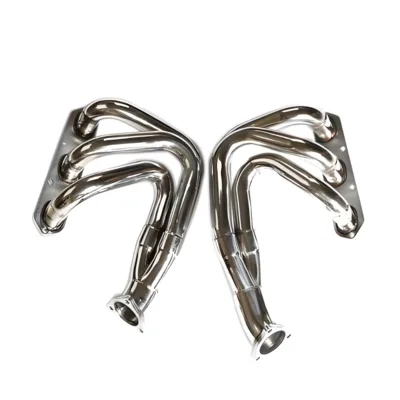

Comprehensive Sourcing Guide
Strategic Sourcing Guide for CNC Machined Aluminum Exhaust Manifolds
Understanding Technical Specifications and Material Variability
When sourcing CNC Machined Aluminum Exhaust Manifolds, buyers must first establish a clear understanding of the material properties and machining tolerances that define product viability. The core material for these components is often specified as Aluminum, Alloy, or specific Steel Alloys, depending on the thermal and structural demands of the application. In the current market landscape, materials such as Aluminum Stainless Steel, Iron, Carbon Steel, and various Alloy Steels are frequently observed in listings for similar high-temperature components. The selection of the base material directly influences the thermal expansion characteristics and the final weight of the manifold, which are critical for performance in automotive and industrial machinery.
Precision is paramount in the manufacturing of exhaust manifolds. The machining process typically involves CNC Turing and CNC Machining centers to achieve the complex geometries required for efficient gas flow. Buyers should verify that the supplier utilizes advanced CNC Machining capabilities to ensure dimensional accuracy. A critical specification to observe is the tolerance class. While some high-precision steel alloy machining parts may offer tolerances as tight as 0.01mm, other applications may operate within a tolerance class of 0.26% to 0.8%. The specific tolerance required depends on the mating components and the operating pressure of the system. For instance, a Two Dimensional Adjustable feature might be necessary for specific inlet configurations, requiring the supplier to demonstrate capability in producing adjustable air inlets with precise alignment.
The surface treatment of the manifold is another vital technical consideration. To withstand the harsh environment of exhaust systems, components often undergo processes such as Sand Blasted treatments or Anodizing. These processes not only enhance corrosion resistance but also improve the aesthetic finish and surface durability. The standard production method often cited is CNC Machining, but buyers must confirm if the supplier also offers Type of Manufacturing methods like Sand Casting for specific custom geometries before the final machining step. The combination of casting and subsequent CNC machining ensures that the internal passages are smooth and the external dimensions are exact.
Compliance, Certification, and Regulatory Standards
Navigating the compliance landscape is essential for international procurement, particularly when sourcing from regions like China, where major manufacturing hubs such as Qingdao and Zhejiang/Ningbo are located. Buyers must verify that the supplier holds valid certifications that align with the target market's regulatory requirements. Common certifications observed in the industry include ISO 9001, ISOGS, RoHS, and CE. The presence of ISO 9001 certification indicates a commitment to quality management systems, which is crucial for maintaining consistency in batch production.
Standards compliance extends beyond general quality management to specific industry codes. Exhaust manifolds must often adhere to rigorous standards such as BS, ANSI, JIS, GB, GOST, ASTM, and DIN. These standards dictate the mechanical properties, chemical composition, and testing procedures for the materials used. For example, the ASME and JIS Code standards are frequently referenced for pressure vessel and piping components, ensuring that the manifolds can safely handle the internal pressures and temperatures generated by the engine or machinery. Additionally, the EN and GB standards provide specific guidelines for European and Chinese markets, respectively.
Buyers should also be aware of the "As drawing" standard, which implies that the product is manufactured strictly according to the provided design specifications rather than a generic catalog item. This is particularly relevant for custom orders where the "prod_standard" is listed as customization. The "80*40" specification might refer to a specific packaging or dimensional standard for a particular component variant, but it is not a universal standard for all manifolds. Therefore, verifying the specific standard applicable to the order is necessary. The "ISO 9001:Machining:Machining Center" certification suggests a specialized focus on the machining process, ensuring that the facility is equipped and certified for high-precision metalworking.
Cost Drivers and Pricing Dynamics
The pricing of CNC Machined Aluminum Exhaust Manifolds is influenced by a complex interplay of factors, including material costs, machining complexity, order volume, and logistics. The observed price range in the market spans from $0.08 to $110 per unit, a wide variance that reflects the diversity of product sizes, material grades, and customization levels. A unit priced at the lower end of this spectrum is likely a standard, off-the-shelf component with minimal machining requirements, while a unit at the higher end may involve complex geometries, high-grade alloys, or extensive post-processing like sand blasting and anodizing.
Material costs are a primary driver. The use of specialized materials such as Alloy Steel or specific Aluminum alloys will significantly increase the base cost compared to standard Iron or Carbon Steel. Furthermore, the "Tolerance:0.01mm" requirement for steel alloy machining parts implies a higher level of precision, which necessitates more time on the machine and potentially more expensive tooling, thereby increasing the unit cost. The "Two Dimensional Adjustable" feature also adds complexity to the design and manufacturing process, contributing to a higher price point.
Order volume plays a critical role in determining the final price. The Minimum Order Quantity (MOQ) ranges from 1 to 500 units. Suppliers often offer tiered pricing structures where the per-unit cost decreases as the order quantity increases. For small batch production or prototyping, buyers may face higher per-unit costs due to the setup time required for CNC machines. Conversely, for massive delivery orders, the cost per unit can be optimized through economies of scale. The "Production Type: Batch Production" indicates that the supplier is capable of handling both small and large runs, but the efficiency of the batch process will impact the lead time and cost.
Logistics and packaging also contribute to the overall cost. The "prod_packing" options include Pallet, Europe Standard Packing, Wooden Cases, Plastic Boxes, and Cartons. The choice of packaging depends on the fragility of the product and the shipping method. For international shipments, "Europe Standard Packing" or "Wooden Cases" may be required to prevent damage during transit, adding to the cost. The "Shipping Way" options, including Express, Air Shipment, or Ocean Shipment, further influence the total landed cost. Express shipping is faster but more expensive, while ocean shipment is cost-effective for large volumes but requires longer lead times.
Typical Applications and Industry Use Cases
CNC Machined Aluminum Exhaust Manifolds are integral components in a wide range of industries, primarily serving as critical parts for machinery that generates significant heat and requires efficient gas expulsion. The "Application" field in supplier listings frequently cites "Metal Processing Machinery Parts" and "Machinery Accessory," indicating their use in industrial environments where heavy-duty equipment operates continuously. These manifolds are also essential in "Metal Casting Machinery," where they help manage the exhaust gases produced during the casting process.
In the automotive sector, these components are vital for engine performance. The "Product Item: Valve Component" classification suggests that these manifolds may be part of a larger valve assembly system, regulating the flow of exhaust gases to optimize engine efficiency and reduce emissions. The "Adjustable Air Inlet" feature is particularly useful in applications where airflow needs to be fine-tuned for different operating conditions, such as in high-performance engines or specialized industrial turbines.
The "Placement: Pump Barry" attribute might refer to a specific mounting configuration or a brand-specific application, though it generally points to the integration of the manifold into pump systems or similar fluid-handling machinery. The "Supersonic Inlet: External Pressure" and "Shock Wave Number: 3 Wave" specifications suggest that these manifolds are designed for high-speed gas flow applications, possibly in aerospace or high-pressure industrial systems where shock waves and supersonic speeds are a factor.
Buyers should also consider the "Condition: New" status, which ensures that the components are manufactured to current standards and have not been refurbished or used. This is crucial for applications where reliability and safety are paramount. The "Quality Control: Guaranteed" and "Process Management: Guaranteed" attributes further reinforce the suitability of these components for critical applications where failure is not an option.
Supplier Evaluation and Capability Assessment
Selecting the right supplier requires a thorough evaluation of their capabilities, infrastructure, and track record. Buyers should prioritize suppliers who demonstrate a strong commitment to quality and process management. The "Process Management: Guaranteed" and "Quality Control: Guaranteed" attributes are strong indicators of a supplier's dedication to maintaining high standards. However, buyers must verify these claims through audits or by requesting detailed quality control reports.
The "Place of Origin" is a significant factor in supplier evaluation. Major manufacturing hubs like Qingdao and Zhejiang/Ningbo in China are known for their robust metalworking industries. Suppliers located in these regions often have access to a skilled workforce and advanced machinery. However, buyers should also consider the "Main Market: North America" to ensure that the supplier has experience exporting to their target region and understands the specific regulatory requirements of that market.
The "Delivery Time" is another critical aspect of supplier evaluation. The observed "15 Days" delivery time for standard orders and "7-10 Days" for making samples, along with "30-60 Days" for massive delivery, provides a baseline for planning. Buyers should assess whether these lead times align with their production schedules. The "Make Samples for Delivery" lead time is particularly important for prototyping and validation phases, as it allows buyers to test the product before committing to a large order.
Supplier flexibility is also a key consideration. The "Customization: Available" and "Customized" attributes indicate that the supplier can accommodate specific design requirements. This is essential for buyers with unique application needs. The "Customer Visit: Accepted" policy suggests that the supplier is open to transparency and allows buyers to inspect their facilities, which can build trust and ensure that the supplier's capabilities match their claims.
Quality Control and Long-Term Procurement Considerations
Maintaining consistent quality is the cornerstone of successful long-term procurement. Buyers should implement a robust quality control strategy that includes incoming inspection, in-process monitoring, and final acceptance testing. The "Tolerance Class: 0.26..0.8%" and "Tolerance:0.01mm" specifications highlight the need for precise measurement tools and calibrated equipment at the supplier's facility. Buyers should request evidence of the supplier's calibration records and inspection procedures to ensure that the tolerances are consistently met.
The "Hot Treatment: Customized" attribute indicates that heat treatment processes may be tailored to the specific requirements of the application. This is crucial for enhancing the mechanical properties of the material, such as hardness and tensile strength. Buyers should verify that the supplier has the capability to perform these treatments and that they follow established procedures to ensure repeatability.
Long-term procurement considerations also include the reliability of the supply chain. The "Production Type: Batch Production" suggests that the supplier can handle varying order volumes, but buyers should assess the supplier's capacity to scale up production in response to demand fluctuations. The "Standard: customization" and "Standard: 80*40" attributes indicate that the supplier can adapt to different standards, but buyers should ensure that the supplier has a clear process for managing these variations to avoid errors.
Finally, buyers should consider the "Shipping Way" options and the associated logistics. The "Express, Air Shipment or Ocean Shipment" options provide flexibility, but buyers should evaluate the reliability and cost-effectiveness of each method. For long-term partnerships, establishing a consistent shipping schedule and negotiating favorable terms can help mitigate risks and ensure a steady supply of high-quality exhaust manifolds. By focusing on these key areas, buyers can build a resilient and efficient supply chain that meets their operational needs.
FAQs
What materials are used for CNC Machined Aluminum Exhaust Manifolds?
These manifolds are typically made from Aluminum, Alloy, Steel, Iron, or Brass. The specific material depends on the required thermal and structural properties for the application.
Can suppliers provide customized CNC Machined Aluminum Exhaust Manifolds?
Yes, customization is available for these components. Buyers can request specific designs based on drawings or custom standards to meet unique machinery requirements.
What is the typical delivery time for these manufactured parts?
Standard delivery usually takes 15 days, while making samples requires 7 to 10 days. Massive delivery orders may take between 30 and 60 days to complete.
Which certifications do these manufacturers typically hold?
Common certifications include ISO 9001, ISOGS, RoHS, and CE. These indicate compliance with quality management systems and specific industry safety standards.
What is the minimum order quantity for these parts?
The minimum order quantity ranges from 1 to 500 units. This flexibility allows buyers to order small batches for prototyping or large volumes for production.
How are these products packaged for international shipping?
Packaging options include Pallets, Wooden Cases, Plastic Boxes, and Cartons. Some suppliers use Europe Standard Packing to ensure safety during ocean or air shipment.
What machining tolerances are achievable for these parts?
Steel alloy machining parts can achieve tolerances as tight as 0.01mm. Other applications may operate within a tolerance class of 0.26% to 0.8%.
Where are these manufacturers primarily located?
Major manufacturing hubs are located in Qingdao and Zhejiang/Ningbo, China. These regions are known for their robust metalworking industries and export capabilities.