Source CNC Machined Turbo Downpipe for Racing, Tuning, and Performance Upgrades
Compare 30 listings for the CNC Machined Turbo Downpipe from verified factories in China. Buyers can evaluate stainless steel construction, custom sizes, and delivery times ranging from 10 to 30 days to find the right fit for their exhaust system needs.
Key considerations
Products List


CNC Tubes Exhaust Pipe CNC Tube Bending Machine Pipe Bending Machine Hydraulic
$6000.00 - $11000.00
MOQ: 1 Pieces
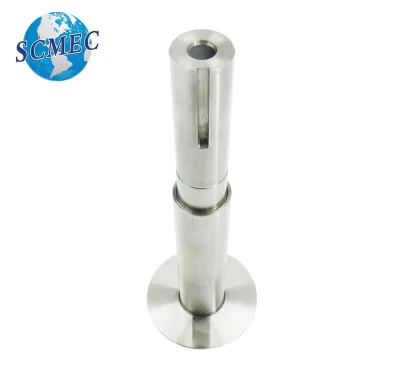


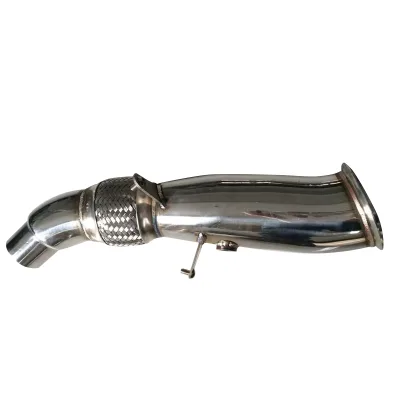


CNC Machining Turning Stainless Steel Intake Manifold Pipe Tube Fitting
$6.00 - $15.00
MOQ: 100 Pieces



Comprehensive Sourcing Guide
Strategic Sourcing Guide for CNC Machined Turbo Downpipes
Understanding the Core Product and Technical Architecture
The term "CNC Machined Turbo Downpipe" refers to a critical component within an automotive exhaust system, specifically designed to connect the turbocharger outlet to the rest of the exhaust piping. In the context of the available market data, this component is often categorized under "Exhaust Pipe" or "Auto Exhaust Flexible Pipe" depending on the specific design. While the core keyword implies a rigid, precision-machined structure, the observed product landscape includes variations such as "Exhaust Flexible Pipe" with a "Base Without Inner Braid" structure or "Bellow" construction. Buyers must distinguish between rigid CNC-machined flanges and flexible bellow sections, as the latter offers vibration dampening but differs significantly in manufacturing techniques.
The primary material observed in this sector is Stainless Steel, specifically grades 201 or 304. These materials are selected for their resistance to high temperatures and corrosion, which is essential for components exposed to exhaust gases. The "Body Material" is also noted as Steel in some listings, indicating that while the main body may be stainless, the construction might involve different steel alloys for specific fittings or flanges. The manufacturing technique for these components often involves "Casting" for the flanges or complex bends, followed by CNC machining to ensure precise fitment. The "Connection" method is typically "Welding," requiring high-integrity joints to prevent leaks under pressure.
Technical specifications vary widely based on the application. The "Size" of these pipes can range from specific dimensions like "ID45X102" to "ID89X152" or general ranges like "1.5"~4"". The "Overall Length" is frequently customizable, with standard increments such as 4", 6", 8", up to 12". The "Working Pressure" capacity is a critical metric, with observed data indicating a range of 0-5 MPa. Furthermore, the "Temperture Range" is a vital safety parameter, with products observed to withstand conditions from -20 to 650 Degrees. Buyers must verify that the specific downpipe they source can handle the peak thermal and pressure loads of their specific turbocharger setup, as exceeding these limits can lead to catastrophic failure.
Compliance, Certification, and Standard Verification
When sourcing automotive exhaust components, verifying compliance with international standards is non-negotiable. The market data indicates that products may carry certifications such as "TSISOStandard Component" or "ISOCE," alongside a general reference to "ISO 9001:2015" as a background standard. While the specific certification status of every listed product cannot be universally asserted without individual verification, the presence of these standards suggests a baseline for quality management systems. Buyers should explicitly request the Certificate of Conformity (CoC) for the specific batch of downpipes being purchased.
The "Standard or Nonstandard" attribute is another critical compliance factor. Many products are listed as "Standard," implying they adhere to established industry dimensions and tolerances. However, the "Customized" nature of many exhaust components means that buyers often require non-standard solutions. In these cases, the "Standard" reference may apply to the raw material grade or the manufacturing process rather than the final geometry. It is essential to confirm whether the "prod_standard" aligns with the specific vehicle's requirements or if the component is a universal fitment.
Additionally, the "OE No." (Original Equipment Number) is often listed as "Performance" in the data, which suggests these are aftermarket performance parts rather than direct OE replacements. This distinction is crucial for warranty and insurance purposes. Buyers must ensure that the component meets the emission standards of the target market, particularly in regions with strict environmental regulations. While the data mentions "TSISOStandard," buyers should verify if this includes specific environmental compliance marks required for North America or other target markets, as the "Main Market" is noted as North America for some suppliers.
Cost Drivers and Pricing Dynamics
The pricing for CNC machined turbo downpipes is influenced by several dynamic factors, including material costs, manufacturing complexity, and order volume. The observed price range in the market is extremely broad, spanning from $0.08 to $100,000. This vast disparity indicates that the "Core keyword" covers everything from simple, small-diameter flexible sections to complete, high-performance, custom-machined systems with complex flanges and sensors. The lower end of the spectrum likely represents basic flexible pipes or small clamps, while the higher end represents full downpipe assemblies with precision CNC machining, high-grade 304 stainless steel, and custom engineering.
Material composition is a primary cost driver. Stainless Steel 304 is significantly more expensive than Stainless Steel 201 due to its superior corrosion resistance and high-temperature performance. The "Body Material" being Steel in some listings suggests a cost-saving measure, but this may compromise longevity in high-performance applications. The manufacturing technique also impacts cost; "Casting" followed by CNC machining is more labor-intensive and expensive than simple bending or welding. The "Customization" availability allows for tailored solutions but inherently increases the unit cost compared to stock items.
Order volume plays a decisive role in the final price. The "MOQ" (Minimum Order Quantity) varies from "No Special Requirement" to 500 PCS or even up to 10,000 units. Buyers purchasing small quantities will face higher per-unit costs, while those placing large orders can negotiate better rates. The "Packing" method, whether "Neutral Pack," "Carton," or "According to Your Request," also adds to the logistics cost. Furthermore, the "Delivery Time" of 10-15 days or 25-30 days after deposit affects cash flow and inventory planning, which can indirectly influence the total cost of ownership.
Typical Applications and Vehicle Fitment
The application of CNC machined turbo downpipes is diverse, ranging from passenger vehicles to heavy-duty industrial machinery. The data explicitly mentions "Car Fitment" for specific brands like "Saab," indicating that these components are used in various passenger car models. However, the "Product Keywords" such as "Exhaust Flexible Pipe Hks Muffler" suggest a strong presence in the performance and tuning market. These downpipes are often used to improve exhaust flow, reduce backpressure, and enhance engine performance in modified vehicles.
The "Usage" of these components extends beyond simple exhaust routing. Some listings describe the product as a "Pipe Clamp" or "Butt Joint Exhaust Band Clamp," indicating that the downpipe assembly may include various connection hardware. The "Construction" type, specifically "Bellow," is ideal for applications requiring vibration isolation, such as connecting the turbocharger to the rigid exhaust system. This flexibility prevents stress fractures in the piping due to engine movement or thermal expansion.
The "Market" for these products is split between "OEM" (Original Equipment Manufacturer) and "After Market." OEM buyers require components that meet strict original specifications, while the After Market focuses on performance enhancements and customization. The "Employee" count of "More Than 200" in some factories suggests a capacity to handle large-scale OEM contracts, while smaller suppliers may focus on the niche After Market. Buyers must align their sourcing strategy with their specific application needs, whether they are replacing a worn OEM part or upgrading a vehicle for racing.
Supplier Evaluation and Operational Capabilities
Selecting the right supplier is critical for ensuring the quality and reliability of CNC machined turbo downpipes. The data indicates that suppliers can be classified as either "Factory" or "Trading Company." Direct factory sourcing often provides better control over the manufacturing process, material selection, and lead times. The "Factory" classification is explicitly mentioned in the attributes, suggesting that many suppliers have direct production capabilities. Buyers should verify the factory's capacity, specifically looking for "Employee" counts of "More Than 200" as an indicator of scale and stability.
The "Location" of the supplier is another key factor. The data points to "China (Mainland)" and specifically "Zhejiang, China (Mainland)" as the primary origin. Zhejiang is a known hub for automotive parts manufacturing, offering a robust supply chain and competitive pricing. However, buyers should be aware of the logistics implications of sourcing from this region, including shipping times and potential tariffs. The "Delivery Time" of 10-15 days or 25-30 days after receiving a deposit is a standard metric to evaluate supplier responsiveness.
Quality control capabilities are paramount. The presence of "Certification" such as "TSISOStandard" and "ISOCE" suggests that the supplier has established quality management systems. Buyers should request a copy of the supplier's quality control procedures and ask for sample testing reports. The "Warranty" of "3 Years" is a significant indicator of supplier confidence in their product. However, buyers must understand the terms of this warranty, including what constitutes a defect and the process for claims.
Quality Control and Long-Term Procurement Considerations
Implementing a robust quality control (QC) process is essential for mitigating risks associated with sourcing CNC machined turbo downpipes. The "Technics" of "Casting" and "Welding" require strict inspection to ensure structural integrity. Buyers should verify that the "Size" tolerances are within acceptable limits, as even minor deviations can lead to fitment issues or exhaust leaks. The "Working Pressure" of 0-5 MPa and "Temperture Range" of -20 to 650 Degrees must be validated through independent testing, especially for high-performance applications.
Long-term procurement considerations involve building a sustainable relationship with the supplier. The "Customization" availability allows for continuous improvement and adaptation to new vehicle models or performance requirements. Buyers should establish clear communication channels for technical queries and ensure that the supplier can maintain consistent quality over time. The "Packing" method, such as "Neutral Pack" or "Carton," should be standardized to prevent damage during transit.
The "MOQ" of 500 PCS or "No Special Requirement" offers flexibility for buyers at different stages of growth. For new entrants, suppliers with low MOQs are preferable, while established businesses may benefit from the economies of scale offered by higher volume orders. The "Lead Time" of 10-15 days or 25-30 days should be factored into inventory planning to avoid stockouts. Finally, the "Product Keywords" and "Model No" should be clearly documented to ensure that the correct parts are ordered and replaced in the future, maintaining consistency in the supply chain.
Comparative Analysis of Product Attributes
To facilitate decision-making, the following table summarizes key attributes observed in the market for CNC machined turbo downpipes and related exhaust components. This comparison highlights the variability in specifications and helps buyers identify the most suitable options for their specific needs.
| Attribute | Observed Range/Options | Relevance to Buyer |
|---|---|---|
| Material | Stainless Steel 201, 304, Steel | Determines corrosion resistance and thermal durability. |
| Structure | Base Without Inner Braid, Bellow, Casting | Affects flexibility, vibration dampening, and manufacturing method. |
| Size | ID45X102 to ID89X152, 1.5"~4", Customized | Must match turbo outlet and exhaust pipe dimensions. |
| Temperature Range | -20 to 650 Degrees | Critical for high-performance and racing applications. |
| Working Pressure | 0-5 MPa | Indicates the maximum pressure the pipe can withstand. |
| Connection | Welding | Determines installation method and required tools. |
| MOQ | No Special Requirement to 10,000 PCS | Influences initial investment and inventory strategy. |
| Delivery Time | 10-15 Days, 25-30 Days | Affects project timelines and cash flow. |
| Certification | TSISOStandard, ISOCE, ISO 9001:2015 | Ensures compliance with quality and safety standards. |
| Origin | China (Mainland), Zhejiang | Impacts shipping costs and lead times. |
This table serves as a reference point for buyers to evaluate suppliers and products. By cross-referencing these attributes with their specific requirements, buyers can make informed decisions that balance cost, quality, and performance. The variability in these attributes underscores the importance of detailed specification checks before placing an order.
FAQs
What material is used for the main body of the downpipe?
The main body is constructed from Stainless Steel 201 or 304 to ensure high temperature resistance. This material choice allows the component to withstand operating temperatures ranging from -20 to 650 degrees while maintaining structural integrity under pressure.
How long does delivery take after receiving the deposit?
Delivery typically occurs within 10 to 15 days after the deposit is received. Some suppliers may require 25 to 30 days depending on the specific order volume and customization requirements, so confirm the exact timeline before placing an order.
Can the product size be customized for specific vehicle needs?
Yes, the product size is fully customizable to meet specific vehicle requirements. Available options include standard sizes like ID45 or ID89, as well as custom lengths ranging from 4 inches to 12 inches or more based on the buyer's request.
Which certifications are available for these exhaust components?
Products may carry certifications such as TSISOStandard or ISOCE to verify quality management systems. Buyers should verify specific batch compliance, as the presence of these standards indicates adherence to established industry requirements for automotive parts.
What is the minimum order quantity for purchasing these parts?
The minimum order quantity varies, with some suppliers having no special requirement while others require 500 pieces. Buyers should check specific supplier terms as the range can extend up to 10,000 units depending on the customization level needed.
Where are these exhaust pipes manufactured and shipped from?
These products originate from factories located in China, specifically in the Zhejiang region. This location serves as a primary hub for automotive parts manufacturing, offering a robust supply chain for both domestic and international buyers.
How is the product packed for export and shipping?
Packing options include neutral packs with one piece per PE bag or standard export cartons. Some suppliers offer custom packing according to buyer requests, ensuring the components are protected during transit to prevent damage before arrival.