Source CNC Vertical Slotting Machine for Metal Cutting, Shaping, and Planing
Compare 30 CNC vertical slotting machines from verified suppliers in China. Buyers can evaluate specifications like table diameter, RAM length, and automation levels to find the right equipment for metal cutting, shaping, and planing tasks.
Key considerations
Products List


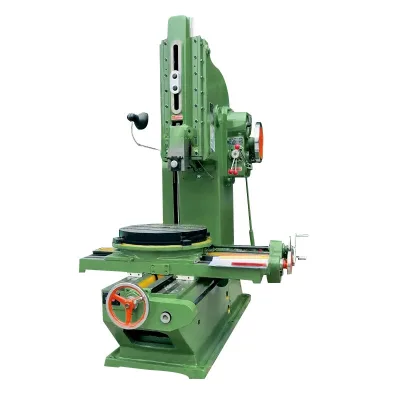

Metal Vertical CNC Slotting Machine Bk5018 CNC Vertical Slotting Machine
$12000.00 - $20000.00
MOQ: 1 Pieces

Good Price CNC Slotting Machine Bk5018 Good Quality CNC Automatic Vertical Slotting Machine
$12000.00 - $20000.00
MOQ: 1 Pieces


High Precision CNC Vertical Slotting Machine Price Bk5018 Slotting Machine for Metal
$15000.00 - $15200.00
MOQ: 1 Pieces


New tech vertical slotting machine BK5035 cnc slotting machine for metal
$17800.00 - $23000.00
MOQ: 1 Sets


BK5018 CNC Slotting Machine Heavy Duty Vertical Slotting Machine with High Precision
$15000.00 - $18000.00
MOQ: 1 Sets


Comprehensive Sourcing Guide
CNC Vertical Slotting Machine Sourcing Guide
The vertical slotting machine is a specialized metalworking tool designed for precision machining of internal and external surfaces, keyways, and grooves in heavy workpieces. Unlike standard milling operations, this equipment utilizes a reciprocating ram to drive a single-point cutting tool, making it ideal for large, rigid components that require high stability during the cutting process. Buyers in the heavy machinery, automotive, and mold manufacturing sectors often rely on these machines for tasks where the workpiece is too large to be moved through a standard milling center, necessitating a stationary tool approach.
When sourcing a CNC Vertical Slotting Machine, procurement teams must distinguish between manual and automated variants, as the control system fundamentally alters the operational workflow and labor requirements. The observed market includes models ranging from basic manual shapers to advanced CNC units capable of high-precision, automated cycles. Understanding the specific automation level required is the first critical decision, as it dictates the necessary operator skill set, the complexity of the programming interface, and the overall return on investment for the facility.
Product Scope and Observed Listing Signals
Market listings for vertical slotting machines reveal a distinct segmentation based on the maximum slotting length and table capacity, which are primary indicators of the machine's intended workload. Data indicates that available models support a maximum slotting length of up to 500mm, with specific configurations like the BC5050 offering a table diameter of 1000mm to accommodate large circular workpieces. Conversely, other listings highlight a maximum RAM slotting length of 180mm, suggesting these units are optimized for smaller, more intricate components or lighter duty applications.
Buyers should carefully cross-reference the observed physical dimensions and weight against their shop floor constraints, as the footprint and mass of these machines vary significantly. The supply data shows machine dimensions ranging from approximately 1916x1305x1995mm to larger configurations measuring 3400x2850x3307mm, with corresponding machine weights spanning from 2200kg to over 10,000kg. This variance implies that a single procurement order may require different foundation specifications and handling equipment, making it essential to verify the exact model dimensions before finalizing the purchase to ensure facility compatibility.
Technical Specifications to Verify
The core mechanical performance of a vertical slotting machine is defined by the ram's movement characteristics, specifically the adjusting travel and the frequency of vertical strokes per minute. Verified specifications indicate an adjusting travel of 80mm for the ram, which determines the depth of cut capability, while the operating frequency typically ranges between 20 and 120 strokes per minute. Procurement teams must confirm that the specific model selected offers a stroke frequency that aligns with the required production rate, as higher frequencies generally improve throughput but may impact surface finish quality depending on the material being cut.
Electrical and control system specifications are equally critical, as they determine the machine's compatibility with existing plant infrastructure and the level of automation available. The observed power requirements include voltages of 380V and 220V, with power consumption figures around 3kW for certain models, though larger industrial units may demand higher capacity. Furthermore, the controlling mode varies between artificial manual control and full CNC automation, with some units featuring high precision capabilities and others operating at normal precision levels. Buyers must explicitly verify the controlling mode and precision class to ensure the machine meets the tolerance requirements of their specific machining tasks.
Compliance and Safety Documentation
Safety and regulatory compliance are non-negotiable aspects of sourcing industrial machinery, and the documentation provided by suppliers must align with international standards. The observed product listings frequently cite certifications such as CE, ISO 9001, and RoHS, which indicate adherence to European safety directives and quality management systems. However, buyers should treat these certifications as observations of the specific listing rather than universal guarantees for all inventory, and they must request valid, current certificates for the exact serial number of the machine being purchased to ensure legal compliance in their destination country.
Beyond general certifications, specific safety documentation regarding the machine's electrical and mechanical systems must be reviewed to mitigate operational risks. The core components of these machines, such as the gearbox and motor, are critical points of failure that require detailed maintenance manuals and safety interlock documentation. Procurement teams should verify that the supplier provides comprehensive safety manuals that cover emergency stop procedures, guarding requirements, and electrical grounding protocols, ensuring that the machine can be operated safely by the intended workforce without violating local occupational health and safety regulations.
Cost Drivers and Commercial Terms
The pricing structure for vertical slotting machines is heavily influenced by the level of automation, precision class, and the specific configuration of the work table and ram. Market observations show a wide price range, typically spanning from 2000 to 50,000 USD, which reflects the significant difference between basic manual shapers and high-end CNC vertical slotting machines. Buyers should understand that the cost differential is driven by the inclusion of advanced control systems, higher precision components, and larger work capacities, rather than just the raw material weight of the machine.
Commercial terms regarding packaging and shipping logistics also play a substantial role in the total cost of ownership and delivery timeline. The observed packaging methods include wooden cases, plywood cases, and pallets, each offering different levels of protection during transit. Since the machine weights can exceed 10,000kg, the choice of packaging directly impacts the freight costs and the complexity of unloading at the destination. Procurement teams must clarify whether the quoted price includes the specific packaging required for safe international transport and whether the supplier offers video outgoing inspection services to verify the condition of the machine before it leaves the factory.
Supplier Qualification and Quality Control
Supplier qualification for vertical slotting machines requires a rigorous assessment of their manufacturing location and their ability to provide post-sales support. The supply data indicates origins in regions such as Tengzhou City in Shandong Province and Beijing, China, which are known hubs for heavy machinery manufacturing. Buyers should verify the specific factory location of the supplier to ensure they are dealing with a direct manufacturer or an authorized distributor, as this distinction often affects the availability of spare parts and the responsiveness of technical support teams.
Quality control processes must be validated through the supplier's inspection protocols and warranty terms. The observed listings mention a standard one-year warranty and the provision of video outgoing inspections, which are positive indicators of a supplier's confidence in their product quality. However, buyers should not rely solely on these general statements; instead, they must request detailed quality control checklists that cover the assembly of core components like the gearbox and motor, as well as the final precision testing of the ram and table alignment. Establishing a clear protocol for third-party inspection before shipment is essential to mitigate the risk of receiving a machine that does not meet the agreed-upon specifications.
Long-Term Procurement Checks
Sourcing a vertical slotting machine is a long-term investment that requires planning for maintenance, spare parts availability, and potential upgrades. The mechanical nature of these machines, particularly those with manual or semi-automatic controls, means that wear and tear on components like the ram guides and cutting tools will be a recurring cost. Buyers should establish a relationship with the supplier that guarantees the long-term availability of spare parts, ensuring that the machine remains operational for its intended lifespan without facing extended downtime due to component shortages.
Future-proofing the procurement decision involves evaluating the machine's adaptability to evolving production needs and technological standards. While some models are currently listed with manual controlling modes, the industry trend is shifting toward CNC automation for improved precision and repeatability. Buyers should assess whether the selected machine allows for future upgrades to a CNC system or if it is a dedicated manual unit that may become obsolete as production requirements evolve. Additionally, verifying the supplier's commitment to providing updated technical documentation and training materials is crucial for maintaining the machine's performance and safety standards over many years of operation.
FAQs
What customization options are available for this machine?
Customization is available for this vertical slotting machine to meet specific production needs. Buyers can request adjustments to dimensions or features while maintaining the core mechanical drive and electric power source specifications provided by the manufacturer.
What is the maximum weight capacity of the worktable?
The maximum weight of the worktable is 2100kg for this model. This capacity supports heavy-duty metal processing tasks while ensuring stability during the vertical slotting operation with a table diameter of 1000mm.
Which certifications does the machine hold for safety compliance?
The machine holds ISO, CE, and RoHS certifications for safety and quality compliance. These standards ensure the equipment meets international requirements for electrical safety and environmental protection during industrial manufacturing operations.
How long is the warranty period for this equipment?
The warranty period for this vertical slotting machine is 1 year. This coverage applies to core components like the gearbox and motor, ensuring reliability for new machines manufactured in China.
What is the maximum slotting length of the RAM?
The maximum slotting length of the RAM is 180mm for the BK5018 model. This dimension defines the cutting capacity for vertical planer operations and is consistent across the specified product range.
Can the machine operate with different voltage inputs?
Yes, the machine can operate with 380V or 220V voltage inputs. This flexibility allows installation in various industrial facilities without requiring immediate electrical infrastructure modifications for the electric power source.
What is the precision level of this CNC slotting machine?
This CNC slotting machine offers high precision for metal processing tasks. The controlling mode is automated, ensuring consistent results compared to manual versions while maintaining normal precision standards for general industrial applications.