Source Coarse Bubble Diffuser Pond Aerator for Agriculture, Hospital, Industry
Find 30 verified suppliers offering Coarse Bubble Diffuser Pond Aerator units for industrial, agricultural, and hospital applications. Compare models like HLBQ and QK with customizable sizes, materials including EPDM and PP/ABS, and ISO9001 certifications to meet specific aeration needs.
Key considerations
Products List


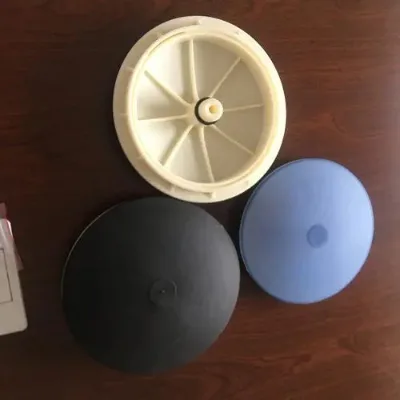


Fine Bubble Aeration Membrane Disc Air Diffuser for Aquaculture Fish Farming
$11.00 - $17.00
MOQ: 20 Pieces
Comprehensive Sourcing Guide
Strategic Sourcing Guide for Coarse Bubble Diffuser Pond Aerator Systems
Selecting the appropriate aeration equipment for pond management and wastewater treatment requires a nuanced understanding of both mechanical specifications and operational requirements. The core keyword "Coarse Bubble Diffuser Pond Aerator" often leads buyers to a broader category of aeration solutions, including fine bubble disc diffusers and submersible aerators. In the current market, products labeled under this search term frequently encompass a variety of technologies, ranging from simple air stones to complex submersible units with patented European technology. Buyers must navigate a landscape where product attributes vary significantly, from the specific bubble size generated to the material composition of the diffuser discs. This guide provides a structured approach to evaluating these systems based on verified product data, ensuring that procurement decisions are grounded in observable facts rather than unverified marketing claims.
Technical Specifications and Performance Metrics
The technical performance of an aeration system is primarily defined by its ability to transfer oxygen efficiently into the water column. In the observed product data, a distinct divergence exists between coarse and fine bubble technologies. While the search term focuses on coarse bubble diffusers, the available inventory includes products with specific bubble sizes ranging from 1-2mm, which are characteristic of fine bubble disc diffusers. For instance, specific models like the HLBQ and QK series feature disc diameters of 260mm or customized sizes, with bubble sizes explicitly listed between 1 and 2mm. Conversely, other entries mention aeration holes in the range of 80-100 micrometers, indicating a fine bubble application.
Buyers must carefully distinguish between these specifications. A coarse bubble system typically generates larger bubbles to create turbulence and mixing, whereas fine bubble systems maximize surface area for oxygen transfer. The product data indicates that materials such as EPDM, PP/ABS, NBR, and Silicon are used in the construction of these discs. The choice of material directly impacts durability and chemical resistance. For example, EPDM and NBR are often selected for their resilience in varying water conditions, while Silicon offers high-temperature stability. The size specifications vary widely, with some units listed as 6, 8, 9, or 12 inches, while others utilize metric measurements like DN 170, 215, 260, and 350mm. When sourcing, the buyer must verify that the selected unit's disc diameter and bubble size align with the specific hydraulic requirements of the pond or tank.
| Product Attribute | Observed Range/Value | Application Context |
|---|---|---|
| Bubble Size | 1-2mm (Fine) | High oxygen transfer efficiency |
| Aeration Hole | 80-100μm | Fine bubble dispersion |
| Disc Diameter | 260mm or Customized | Standard and bespoke installations |
| Material | EPDM, PP/ABS, NBR, Silicon | Chemical and temperature resistance |
| Service Area | 0.35-0.75m² | Coverage per unit |
| Treatment Method | Combined Treatment | Biological and physical processes |
Compliance and Certification Verification
In the industrial and agricultural sectors, compliance with international standards is a non-negotiable aspect of procurement. The product data confirms that many suppliers hold ISO9001 and CE certifications, which are critical for ensuring quality management systems and safety compliance within the European market. Some listings also reference ISO, CE, and GMA certifications, suggesting a broader adherence to global manufacturing standards. However, it is essential for buyers to treat these certifications as observations of specific listed products rather than universal guarantees for every item in the category.
When evaluating a potential supplier, the buyer should request current, valid certificates that match the specific model number being purchased. The data indicates that standards vary by model; some units adhere to a standard of "2 kg," while others follow "Different as Each Model" or specific diameter standards like "260mm diameter." This variability implies that there is no single universal standard for all aeration devices. Buyers must verify that the product's standard matches the regulatory requirements of their local jurisdiction. For instance, if the project is in a region requiring specific environmental discharge permits, the aeration system's efficiency and material safety must be validated against those local regulations. The presence of ISO certification suggests a commitment to quality control, but the specific scope of that certification must be confirmed.
Cost Drivers and Economic Considerations
The pricing structure for aeration equipment is influenced by several factors, including material complexity, customization levels, and production capacity. The observed price range in the market spans from $0.35 to $20,000, a vast disparity that reflects the difference between simple components and complete, automated submersible units. A basic diffuser disc made of standard plastic may fall at the lower end of this spectrum, while a fully automated submersible aerator with patented technology and European engineering features will command a premium price.
Production capacity is another significant cost driver. The data shows a monthly production capacity of 5,000 pieces for certain models, which can influence unit pricing based on economies of scale. Suppliers with higher throughput may offer more competitive rates for bulk orders, provided the Minimum Order Quantity (MOQ) is met. The observed MOQ range is between 1 and 200 units, offering flexibility for both small pilot projects and large-scale industrial installations. Buyers should note that customization is available, which typically incurs additional costs. Customized colors, disc diameters, and specific material compositions will alter the final price. Furthermore, the packaging method, ranging from standard cartons to high-quality wooden boxes and pallets, adds to the logistical cost. For international shipments, the choice between a wooden case and a hard carton can significantly impact freight charges and import duties.
Typical Applications and Operational Context
The versatility of aeration systems allows them to serve a wide array of industries, as evidenced by the usage data. These products are deployed in industrial, agricultural, home, and hospital settings. Specific applications include water storage facilities, hotels, chemical plants, and wastewater treatment plants. The functional description of these units often highlights their role in adding and diffusing air to wastewater, facilitating biological treatment processes.
The choice of application dictates the required specifications. In a hospital setting, reliability and low noise levels might be prioritized, whereas a chemical plant may require materials resistant to corrosive substances. The data indicates that some units are designed for "Combined Treatment," suggesting they can handle multiple stages of water purification. For agricultural ponds, the service area per unit, listed as 0.35-0.75m², is a critical metric for determining the number of units required to cover the total surface area. Additionally, the "Submersible Aerator" models are noted for their ability to function in various conditions, with installation options that can be supplied according to customer demand. This flexibility is crucial for retrofitting existing ponds or integrating new systems into complex treatment facilities.
Supplier Evaluation and Production Capabilities
Evaluating a supplier requires looking beyond the product listing to assess their production capabilities and service offerings. The data reveals that suppliers offer "Turnkey Project" services, indicating they can manage the entire installation process from design to commissioning. This is particularly valuable for complex projects where integration with existing infrastructure is required. The availability of "Video Technical Support" for after-warranty service suggests a commitment to long-term customer assistance, which is vital for maintaining operational continuity.
When assessing a supplier, buyers should verify their origin and production consistency. The products listed originate from Jiangsu, China, a region known for its manufacturing base. However, the specific production standards vary by model, with some adhering to a fixed standard of 2 kg and others varying by model. Buyers should inquire about the supplier's ability to meet the "Different as Each Model" standard requirement to ensure consistency across large orders. The condition of the products is listed as "New," but buyers should confirm the manufacturing date and storage conditions to prevent degradation of materials like EPDM or Silicon. Furthermore, the "Automation" feature, noted as "Automatic" for certain models, implies a higher level of sophistication in the manufacturing process, which may correlate with better quality control.
Quality Control and Long-Term Procurement
Ensuring the longevity and reliability of aeration systems is paramount for long-term operational success. The product data highlights several features that contribute to quality, such as "Company Patented Product" status and the use of "European Technology." These attributes suggest that the products may offer superior performance compared to generic alternatives. However, buyers must verify these claims through independent testing or third-party validation. The material composition, including EPDM, PP/ABS, NBR, and Silicon, should be checked for compatibility with the specific water chemistry of the application site.
Long-term procurement considerations also involve the maintenance and replacement of components. The "Single-Screw" mechanism mentioned in the data suggests a specific type of mechanical drive that may require specialized spare parts. Buyers should establish a relationship with the supplier to ensure the availability of these parts. The "Transport Packing" is described as "Stardanr Packing" (likely Standard Packing) or "High Quality Wooden Box Packaged," which affects the condition of the goods upon arrival. Proper packaging is essential to prevent damage during transit, especially for delicate components like diffuser discs. Finally, the "Customization" option allows buyers to tailor the product to their specific needs, but this requires clear communication of requirements to avoid discrepancies in the final delivery. By focusing on these quality control aspects, buyers can mitigate risks and ensure a successful procurement experience.
FAQs
What materials are used for the diffuser discs?
The diffuser discs are constructed from EPDM, PP/ABS, NBR, or Silicon materials. These materials are selected for their resilience in varying water conditions and chemical resistance, ensuring durability during long-term operation in industrial or agricultural settings.
Which bubble sizes are available for these aerators?
Available bubble sizes range from 1 to 2 millimeters for fine bubble disc diffusers. Some models also feature aeration holes between 80 and 100 micrometers, which are specifically designed for fine bubble dispersion to maximize oxygen transfer efficiency.
Can I customize the disc diameter and color?
Yes, customization is available for disc diameters such as 260mm or other specific sizes. Buyers can also request customized colors including white, black, blue, or other demands to match specific project requirements or facility aesthetics.
What certifications do the manufacturers hold?
Many listed products hold ISO9001, CE, and GMA certifications to ensure quality and safety compliance. Buyers should verify that specific model numbers match the required certification scope for their local jurisdiction or international trade requirements.
How much is the minimum order quantity?
The minimum order quantity ranges from 1 to 200 units depending on the specific product model. This flexibility allows buyers to place small orders for pilot projects or larger orders for full-scale industrial installations without excessive barriers.
What is the production capacity per month?
Certain models have a production capacity of 5,000 pieces per month. This capacity influences unit pricing based on economies of scale and ensures that suppliers can meet bulk order demands for large-scale wastewater treatment projects.
Where are these products manufactured?
The products originate from Jiangsu, China, a region known for its manufacturing base. Buyers should verify the specific origin and production standards for each model to ensure consistency and compliance with local regulatory requirements.
What packaging options are available for shipping?
Packaging options include wooden cases, hard cartons, pallets, and standard packing methods. The choice of packaging affects logistical costs and import duties, so buyers should select options that ensure the goods arrive in optimal condition.