Source Coal Tunnel Roadheader for Mining, Tunnels, and Construction
Compare 30 Coal Tunnel Roadheader models from verified Chinese manufacturers. Buyers can evaluate specifications like cutting power, voltage, and weight to select the right machine for coal mining, tunneling, and construction projects; compare the available evidence and request quotations based on your requirements.
Key considerations
Products List


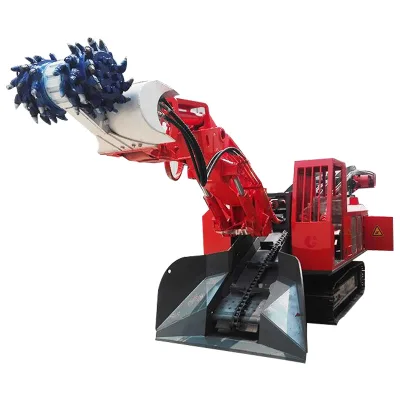


Precision Coal Mining Roadheader for Underground Coal Mines and Tunnel
$730000.00 - $740000.00
MOQ: 1 Pieces

Longitudinal Axis Hydraulic Tunnel Roadheader Machine for Underground Coal Mining Equipment
$730000.00 - $740000.00
MOQ: 1 Pieces

Underground Coal Mining Equipment Large-Slope Tunnel Roadheader Machine
$730000.00 - $740000.00
MOQ: 1 Pieces


Next-Gen Coal Mining Roadheader for Fast, Efficient Tunneling and Exploration
$310000.00 - $380000.00
MOQ: 1 Pieces

High-Performance Coal Mine Roadheader for Efficient Tunneling & Exploration
$310000.00 - $380000.00
MOQ: 1 Pieces

Premium Coal Mining Roadheader Engineered for High-Efficiency Tunneling and Exploration
$310000.00 - $320000.00
MOQ: 1 Pieces


Rocking Tunnel Machine, Roadheader, Tunnel Boring Machine, Hard Rock Roadheader
$19999.00 - $69999.00
MOQ: 1 Pieces

Roadheader High-Hydraulic Load Sensitivity for Coal Tunneling Machine for Sale
$19999.00 - $69999.00
MOQ: 1 Pieces

Mining Machinery Boring Machine Roadheader Efficient Dust Removal for Tunnel Boring Machine
$19999.00 - $69999.00
MOQ: 1 Pieces

Boring Machine Roadheader Tunneling Machine Mining Machine Drilling Rig
$19999.00 - $69999.00
MOQ: 1 Pieces


Ebz260 Tunneling Boring Machine Underground Working Coal Mine Roadheader for Sale
$10000.00 - $150000.00
MOQ: 1 Pieces
Comprehensive Sourcing Guide
Coal Tunnel Roadheader Sourcing Guide
Procuring a Coal Tunnel Roadheader requires a disciplined approach to aligning heavy machinery capabilities with specific excavation parameters. Buyers must prioritize machines that offer robust cutting power and appropriate hydraulic drive modes to handle varying rock hardness levels. The observed market data indicates a wide range of models, from the ML340 to the Ebz160 and Ebz135z, each serving distinct tunnel dimensions and operational needs. Understanding these variations is critical for selecting equipment that matches the geological conditions of the mining site.
This guide focuses on verifying technical specifications, compliance documentation, and supplier qualifications to mitigate procurement risks. With observed prices ranging from $2,800 to $740,000 and a minimum order quantity of one unit, buyers have flexibility but must navigate significant quality disparities. The following sections provide a structured framework for evaluating roadheaders, ensuring that the selected machine meets safety standards, operational efficiency requirements, and long-term maintenance expectations for coal mining applications.
Product Scope and Observed Listing Signals
The current market for coal tunnel roadheaders features a diverse array of models, primarily originating from China, with notable production hubs in Shandong and Hebei provinces. Listings frequently highlight key attributes such as the Ebz160 and Ebz135z models, which are designed for specific excavation diameters ranging from 3 to 5 meters. These machines are typically marketed for coal mining applications, with some listings also noting suitability for construction works and energy sectors. Buyers should observe that customization is widely available, allowing for tailored configurations to meet unique site requirements.
Observed listing signals reveal significant variation in technical specifications, including cutting power, total power, and voltage requirements. For instance, some models feature a cutting power of 160 kW with a total power of 270 kW, while others operate at 135 kW cutting power with a 90 kW pump station motor. Voltage options commonly include 660V or 1140V, reflecting the electrical infrastructure of different mining environments. Additionally, packaging details often specify export-standard packing or international cartons, with some units designed for 40-foot container transport, influencing logistics planning and cost estimation.
Technical Specifications to Verify
When evaluating roadheaders, buyers must verify critical mechanical specifications such as cutterhead structure, material, and drive mode. The cutterhead is often constructed from carbon steel with a spoked plate structure, driven by a hydraulic system to ensure durability and efficient rock breaking. Key performance metrics include the cutting head rotation speed, which may be around 44 R/Min, and the positioning cutting range, typically covering a height of 4.5 meters and a width of 5 meters. These dimensions directly impact the machine's ability to excavate tunnels of specific cross-sections without excessive overbreak.
Hydraulic system performance and overall machine weight are also essential verification points. The hydraulic system pressure, observed at 24 MPa in some listings, indicates the force available for cutting and maneuvering. Buyers should confirm the overall machine weight, which can range from 4,000 kg for smaller units to 31,000 kg for larger models like the Ebz135z. Additionally, gradient ability, often rated at ≤30°, and under-cutting depth, such as 400 mm, determine the machine's versatility in inclined tunnels. Verifying these parameters ensures the selected roadheader can handle the specific geological and operational challenges of the project.
Compliance and Safety Documentation
Safety and compliance documentation are paramount when sourcing heavy mining equipment, particularly for coal tunnel applications where hazardous conditions are prevalent. Buyers must request detailed certificates of conformity, ensuring that the roadheader meets relevant national and international safety standards for mining machinery. Although specific certification statuses like Reach are mentioned in background data, buyers should verify that the machine complies with local mining regulations, including electrical safety standards for the specified voltage (660V/1140V) and explosion-proof requirements if applicable.
Documentation should also include comprehensive operation and maintenance manuals, hydraulic system schematics, and electrical wiring diagrams. These documents are crucial for training local operators and maintenance personnel, reducing the risk of accidents and equipment misuse. Buyers should also inquire about the availability of video outgoing-inspection services, which provide visual verification of the machine's condition before shipment. This step helps ensure that the delivered equipment matches the agreed-upon specifications and is free from manufacturing defects, enhancing overall project safety and reliability.
Cost Drivers and Commercial Terms
The cost of a Coal Tunnel Roadheader is influenced by several factors, including model complexity, power output, and customization options. Observed price ranges from $2,800 to $740,000 reflect the diversity of available machines, from basic units to highly specialized, high-power models. Buyers should consider that higher cutting power and total power ratings, such as 160 kW or 270 kW, typically command higher prices due to increased material and engineering costs. Additionally, customization availability can add to the initial investment but may offer long-term operational benefits by tailoring the machine to specific site conditions.
Commercial terms, including warranty coverage and supply ability, also impact the total cost of ownership. Many suppliers offer a 1.5-year warranty for the overall machine and a 3-year warranty for core components like the engine, which can reduce long-term maintenance expenses. Supply ability, often listed as 10 sets per month, indicates the manufacturer's production capacity and potential lead times. Buyers should negotiate clear terms for delivery, payment, and after-sales support to ensure a transparent and predictable procurement process, avoiding hidden costs associated with delays or inadequate support.
Supplier Qualification and Quality Control
Supplier qualification is a critical step in mitigating procurement risks, requiring buyers to assess the manufacturer's production capabilities and quality control processes. Buyers should verify the supplier's location, with many roadheaders originating from Shandong or Hebei provinces in China, and confirm their ability to provide export-standard packing and international carton packaging. Requesting video outgoing-inspection services allows buyers to visually verify the machine's assembly, finish, and functionality before shipment, providing an additional layer of quality assurance.
Quality control measures should also include checks on core components, such as the engine and hydraulic system, which are critical for machine performance. Buyers should inquire about the supplier's testing procedures and whether they conduct pre-shipment inspections to ensure compliance with specified standards. Additionally, verifying the supplier's brand reputation and history in the mining machinery sector can provide insights into their reliability and commitment to quality. Establishing a strong relationship with a qualified supplier ensures consistent product quality and reliable after-sales support, which is essential for long-term operational success.
Long-Term Procurement Checks
Long-term procurement success depends on establishing robust maintenance and support frameworks for the roadheader. Buyers should verify the availability of spare parts, particularly for high-wear components like the cutterhead and hydraulic seals, to minimize downtime during operations. The warranty terms, including the 1.5-year overall warranty and 3-year core component warranty, should be clearly understood and documented to ensure coverage for potential defects. Additionally, buyers should assess the supplier's technical support capabilities, including remote troubleshooting and on-site service availability, to address any operational issues promptly.
Regular performance monitoring and preventive maintenance are also essential for extending the machine's lifespan and maintaining efficiency. Buyers should develop a maintenance schedule based on the manufacturer's recommendations, focusing on hydraulic system pressure checks, electrical system inspections, and cutterhead wear assessments. Tracking key performance indicators, such as cutting efficiency and fuel consumption, can help identify potential issues early and optimize operational costs. By prioritizing long-term support and maintenance, buyers can ensure that their investment in a Coal Tunnel Roadheader delivers sustained value and reliability throughout its operational life.
FAQs
What is the warranty period for the core components?
The warranty for core components lasts 3 years. This coverage applies to the engine and other critical parts. The overall machine warranty is 1.5 years. Buyers should verify specific terms before purchase.
Which specifications define the cutting power of this machine?
Cutting power is available at 160 Kw or 135kw depending on the model. Total power ranges up to 270kw. These figures ensure efficient operation in coal mining tunnels. Specific models like Ebz160 and Ebz135z offer different ratings.
Can the machine operate on steep gradients?
Yes, the machine handles gradients up to 30 degrees. This capability allows flexible deployment in various tunnel conditions. The hydraulic system supports this performance with a pressure of 24 MPa. It is suitable for challenging underground environments.
How is the product packed for international shipping?
Products use export standard packing or international cartons. They fit into a 40-inch container for dispatch. This method ensures safe transport from China. Buyers can expect robust packaging designed for heavy machinery logistics.
What is the monthly supply capacity for these units?
The supplier can provide 10 sets per month. This capacity supports steady demand for coal mining operations. Customization is available to meet specific project needs. Buyers should plan orders accordingly to align with this production rate.
Which voltage levels does the machine support?
The machine operates on 1140/660V or 660/1140V systems. This flexibility accommodates different power infrastructure in mining sites. It ensures compatibility with standard electrical grids in coal tunnels. Verify local voltage requirements before installation.
Where is the place of origin for this equipment?
The equipment originates from Shandong, China, or Shijiazhuang City. These locations are key manufacturing hubs for mining machinery. The port of dispatch is Qingdao. Buyers can expect reliable logistics from these established Chinese regions.