Source Coat Rack for Living Room, Shop, and Hotel Use
Compare 30 Coat Rack options including metal, wooden, and rattan designs suitable for living rooms, shops, and hotels. These products feature various styles and installation methods to meet diverse display and storage needs.
Key considerations
Products List


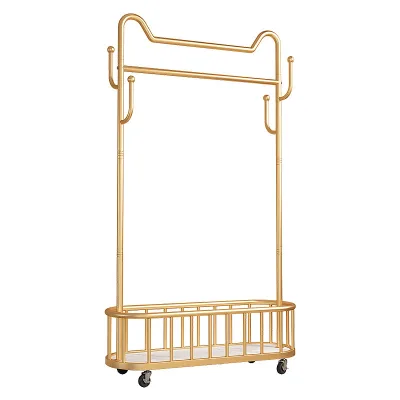
Coat Racks Clothing Stand Coat Rack Vintage Iron Pipe Store Clothing Store Shelf
$45.50 - $49.60
MOQ: 10 Pieces




Comprehensive Sourcing Guide
Strategic Sourcing Guide for Commercial and Residential Coat Rack Procurement
The global market for coat racks has evolved from simple utility items into sophisticated storage solutions that define the aesthetic of modern interiors. For procurement professionals, navigating this sector requires a rigorous understanding of diverse product attributes, material specifications, and compliance standards. The current landscape presents a wide array of options, ranging from floor-mounted metal columns to wall-mounted wooden units and multi-functional display racks. This guide synthesizes available market data to provide a disciplined framework for sourcing coat racks that meet specific operational, aesthetic, and regulatory requirements.
Technical Specifications and Material Analysis
When evaluating coat racks, the primary technical differentiator is the material composition, which dictates durability, weight capacity, and aesthetic finish. The supply chain currently offers products primarily constructed from metal, including stainless steel and standard metal alloys. Specific listings indicate the use of 201 stainless steel as a raw material, a grade often selected for its balance of corrosion resistance and cost-effectiveness in commercial environments. Other variants utilize metal in conjunction with wood, such as the "Wooden Wall Coat Rack" or "Rattan Wall Coat Rack," which introduce organic textures to the design.
The physical dimensions and structural configuration are equally critical. Products are available in "Regular" sizes as well as fully "Customized" dimensions, allowing buyers to tailor units to specific spatial constraints. The shape of the rack varies significantly, with observed models including "Column," "Tree," and standard wall-mounted configurations. The "Tree" shape, for instance, often implies a freestanding unit with branching arms, while "Column" designs suggest a vertical, space-saving profile.
Installation methods are a key technical specification to verify. The market data reveals a split between "Floor Mounted" and "Wall Mounted" options. Floor-mounted units, such as the "Metal Clothes Rack" with model number Es-CH10, typically require a stable base and are suited for high-traffic areas like lobbies or retail shops. Conversely, wall-mounted units, including those with "Fashion" or "Modern" styling, rely on structural integrity of the mounting surface. Buyers must confirm the mounting hardware compatibility and weight-bearing limits for wall installations, as these are not always standardized across all suppliers.
Compliance, Certification, and Safety Standards
In the B2B procurement of furniture and storage solutions, compliance with international standards is non-negotiable. The observed product data highlights "CE" marking as a recurring standard, indicating conformity with health, safety, and environmental protection standards for products sold within the European Economic Area. Some listings also reference "ISO" conditions, suggesting adherence to quality management systems, though specific ISO standard numbers are not universally asserted in the general product descriptions.
For buyers targeting specific markets, verifying the origin of the product is essential for customs and regulatory clearance. The supply chain data points to production origins in "Jiangsu" and "Shandong" in China, regions known for manufacturing metal and wooden furniture. The "CE" certification is explicitly linked to products originating from these regions in the provided context. However, buyers should not assume that all products from these locations carry the same certification status without direct verification.
Safety and quality attributes are often summarized as "High Quality" or "New Condition" in product listings. While these are positive indicators, they are qualitative observations rather than quantitative guarantees. Procurement teams must request specific test reports or compliance certificates that validate these claims, particularly regarding structural stability and finish durability. The "Export Carton" and "1PCS/1CTN" packing standards suggest that packaging is designed to protect the product during international transit, but the specific packaging standards (e.g., ISTA) should be confirmed to ensure the goods arrive without damage.
Cost Drivers and Pricing Dynamics
The pricing structure for coat racks is influenced by a complex interplay of material costs, customization levels, and order volume. The observed market data indicates a price range spanning from $0.10 to $80.00 USD. This wide variance is not merely a reflection of brand premium but is driven by distinct product categories. Lower-priced items often correspond to basic metal racks with standard finishes, while higher-priced units may involve complex designs, premium materials like brushed stainless steel, or extensive customization.
Customization is a primary cost driver. The data shows that "Customization" is available, with some products listed as "Customized" and others as "Non-Customized." Customized units, which may include specific dimensions, colors (such as "Silver," "Brown," or "Silver Gold Black and Brushed"), or branding, invariably command a higher unit price and may require a higher Minimum Order Quantity (MOQ). The observed MOQ range is vast, extending from 1 unit to 10,000 units. This flexibility allows small businesses to test the market with low-volume orders, while large retailers can leverage economies of scale for bulk procurement.
Additional cost factors include the "Style" and "Feature" of the product. Items described as "Folded," "Multi-Function," or "Luxury" often incorporate more complex manufacturing processes, such as folding mechanisms or intricate metalwork, which increase production costs. The "Service" options, including ODM (Original Design Manufacturing) and OEM (Original Equipment Manufacturing), also add to the cost structure, as they involve design and tooling fees beyond the base manufacturing cost.
Typical Applications and Usage Scenarios
The versatility of coat racks allows them to serve a multitude of applications across various sectors. The product data explicitly lists usage scenarios including "Living Room," "Bedding Room," "Hotel," "Dining Room," "Shop," "Office," "Display," "Storage," and "Decoration." This breadth of application requires buyers to select products that align with the specific environmental demands of the intended space.
In retail environments, such as "Clothes Shop" or general "Display" areas, the "Fashion" and "Adjustable" styles are particularly relevant. These units often feature "Multi-Function" capabilities, allowing for the display of clothing, accessories, and promotional materials. The "Tree" shape and "Column" designs are effective in these settings as they maximize vertical space and create visual interest.
For hospitality and residential sectors, the focus shifts to aesthetics and durability. "Hotel" and "Living Room" applications benefit from "High Quality" finishes and "Modern" styles. The "Wooden Wall Coat Rack" and "Rattan Wall Coat Rack" offer a warmer aesthetic suitable for bedrooms and dining areas. In office environments, the "Metal Clothes Rack" with its robust construction and "Silver" or "Black" finishes provides a professional look that withstands heavy daily use. The "Suitable for: Adult" attribute confirms that these units are designed for general adult use, but specific load-bearing requirements should be verified for high-traffic commercial zones.
Supplier Evaluation and Service Capabilities
Selecting the right supplier involves more than just comparing unit prices; it requires a deep dive into their service capabilities and production flexibility. The market data indicates that suppliers offer "ODM" and "OEM" services, which are critical for buyers seeking private labeling or custom design solutions. This capability allows businesses to differentiate their offerings with unique branding or specific functional requirements.
The "Main Market" data suggests that suppliers are experienced in exporting to regions such as the "Middle East," "Africa," and "Canada." This international experience implies that the suppliers are familiar with diverse regulatory environments and shipping logistics. However, buyers should verify the supplier's specific experience with their target market to ensure compliance with local standards.
Packing and logistics are also key evaluation criteria. The observed "Export Carton" and "Carton Packing" standards indicate a baseline level of protection. For fragile items like wooden or rattan racks, the specific packing method (e.g., "1PC/Carton") must be scrutinized to prevent damage during transit. The "Condition: New" attribute is standard, but buyers should request photos of the actual production line or warehouse to ensure that the "New" condition is maintained until shipment.
Quality Control and Long-Term Procurement Considerations
Implementing a robust quality control (QC) protocol is essential for mitigating risks in Coat Rack procurement. The "High Quality" and "New Condition" attributes observed in listings are marketing observations rather than guaranteed metrics. Effective QC strategies should include pre-production sample approval, in-process inspections, and final random inspections (FRI) before shipment. Buyers should specifically inspect the finish quality, particularly for "Silver," "Brown," and "Brushed" coatings, to ensure consistency and resistance to scratching or peeling.
Long-term procurement considerations involve the scalability of the supply chain. The wide MOQ range (1-10,000) suggests that suppliers can accommodate both pilot runs and large-scale deployments. However, buyers must assess the supplier's capacity to maintain consistent quality and lead times as order volumes increase. The "Standard" attribute, which varies from "CE" to specific material thicknesses like "1.0mm" or "1.8CM," highlights the need for precise specification alignment. Inconsistent standards across different batches can lead to quality issues, so buyers should insist on a unified specification sheet for all production runs.
Furthermore, the "Feature" of the product, such as "Folded" or "Multi-Function," introduces mechanical components that require durability testing. For folding racks, the hinge mechanism must be tested for repeated use without failure. For multi-functional units, the stability of the base and the strength of the hooks or arms must be verified under load.
Comparative Analysis of Product Attributes
To facilitate decision-making, the following table summarizes the key attributes observed in the market, helping buyers categorize potential suppliers based on their specific needs.
| Attribute Category | Observed Variations | Procurement Consideration |
|---|---|---|
| Material | Metal, Stainless Steel (201ss), Wood, Rattan | Verify corrosion resistance and structural strength. |
| Installation | Floor Mounted, Wall Mounted | Confirm mounting hardware and wall load capacity. |
| Shape | Column, Tree, Standard | Assess spatial fit and aesthetic alignment with interior design. |
| Customization | Customized, Non-Customized, Custom Size | Determine if ODM/OEM services are required for branding. |
| Finish/Color | Silver, Brown, Black, Brushed, Gold | Request color swatches to ensure finish consistency. |
| Certification | CE, ISO (Condition), Customized | Verify specific certificate validity for target markets. |
| Origin | Jiangsu, Shandong, China | Check for regional trade agreements or tariff implications. |
| Packing | Export Carton, 1PCS/1CTN, Carton | Evaluate packaging robustness for international shipping. |
By systematically analyzing these attributes, procurement professionals can build a comprehensive sourcing strategy that balances cost, quality, and functionality. The diversity of the Coat Rack market offers significant opportunities for customization, but it also demands a disciplined approach to verification and quality assurance. Buyers who prioritize detailed specification checks and supplier capability assessments will be better positioned to secure reliable supply chains that meet the evolving demands of commercial and residential spaces.
FAQs
What materials are used for coat racks?
Coat racks are primarily constructed from metal, stainless steel, wood, or rattan. Specific listings indicate the use of 201 stainless steel as a raw material for durability, while other variants combine metal with wood or rattan for aesthetic appeal.
Can coat racks be customized?
Yes, customization is available for many Coat Rack models. Buyers can request specific dimensions, colors, or branding, though customized units often command a higher unit price and may require a higher minimum order quantity than standard items.
How are coat racks installed?
Installation methods vary between floor-mounted and wall-mounted configurations. Floor-mounted units require a stable base for high-traffic areas, while wall-mounted units rely on the structural integrity of the mounting surface and specific hardware compatibility.
Which certifications do coat racks have?
Many coat racks carry CE marking to indicate conformity with European safety standards. Some listings also reference ISO conditions, though specific standard numbers should be verified directly with the supplier to ensure compliance with target market regulations.
What is the price range for coat racks?
The observed market price range spans from 0.10 to 80.00 USD. This variance is driven by material costs, customization levels, and order volume, with basic metal racks costing less than complex, luxury, or fully customized units.
Where are coat racks manufactured?
Products originate from manufacturing regions in China, specifically Jiangsu and Shandong. These locations are known for producing metal and wooden furniture, and buyers should verify the specific origin for customs and regulatory clearance purposes.