Source Coating Elongation Mandrel Bend Tester for Paint Film, Varnish, Color
Find 30 coating elongation mandrel bend testers from verified Chinese suppliers. Compare models like XHY-24 and LR-G003 with digital displays, AC220V power, and customizable OEM/ODM support for paint film flexibility testing.
Key considerations
Products List

Precise Mandrel Bend Tester for Coating Durability and Adhesion Testing
$200.00 - $400.00
MOQ: 1 Pieces

Xhy-24 Mandrel Bend Tester for Coating Elongation and Cracking Resistance
$200.00 - $400.00
MOQ: 1 Pieces


Xhy-24 Cynical Mandrel Bend Tester for Coating Elongation and Cracking Resistance
$200.00 - $400.00
MOQ: 1 Pieces

Xhy-25 Mandrel Bend Tester for Coating Stripping and Cracking Analysis
$200.00 - $400.00
MOQ: 1 Pieces


ASTM D522 ISO 6860 Tapered Shaft Bending Instrument Paint Film Conical Mandrel Bending Tester
$1000.00 - $3000.00
MOQ: 1 Pieces


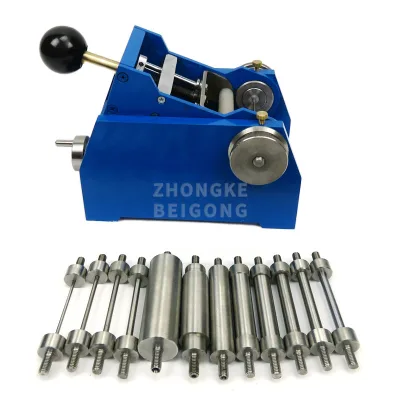
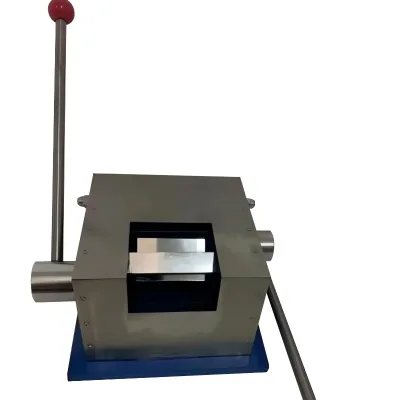

Precision Conical Mandrel Bend Tester for Coating Adhesion and Flexibility Test
$299.99 - $2999.99
MOQ: 1 pieces

Cylindrical Mandrel Bend Tester for Evaluating Paint Flexibility on Metals
$99.99 - $1999.99
MOQ: 1 pieces

Qty-32 Cylindrical Mandrel Bend Tester / Paint Film Cylindrical Bending Test Instrument
$450.00 - $550.00
MOQ: 1 Pieces


Automated Waterproof Material Low-Temperature Bending Tester En 495-5
$10000.00 - $40000.00
MOQ: 1 Pieces


ASTM D 522 Conical Mandrel Tester Conical Mandrel Bend Tests Equipment Apparatus Ga-6003
$1000.00 - $3000.00
MOQ: 1 Pieces


ISO 1519 Cylindrical Mandrel Tester Bend Test Machine Instrument Ga-6004
$1000.00 - $3000.00
MOQ: 1 Pieces


Bgd 564 Cylindrical Mandrel Tester Cylindrical Bending Tester ISO 1519
$640.00 - $700.00
MOQ: 1 Pieces


Tophung Advanced Bending Test Instrument for Wire and Cable Testing
$4699.00 - $38000.00
MOQ: 1 Pieces
Comprehensive Sourcing Guide
Strategic Sourcing Guide for Coating Elongation Mandrel Bend Testers
Understanding the Technical Architecture and Core Specifications
When sourcing a Coating Elongation Mandrel Bend Tester, buyers must first distinguish between the mechanical design of the instrument and the specific test standards it is intended to satisfy. The core function of this equipment is to evaluate the flexibility of color paints, varnishes, and coatings by bending a coated substrate around a cylindrical mandrel. The primary observation from the available market data indicates that these machines often feature a digital display interface, which allows for precise monitoring of the bending process. The power supply requirements are consistently noted as AC220V, with a specific tolerance of 220V±10%V at 50Hz, suggesting that procurement planning must account for local voltage stability and potential transformer needs if the equipment is imported from regions with different grid standards.
The physical dimensions of the testing apparatus vary significantly depending on the model and intended capacity. Observed specifications include a standard footprint of approximately 340×120×300 mm for certain configurations, while other models may present dimensions of 300×300×190 mm or 230×170×110 mm. These variations are critical for laboratory space planning. Furthermore, the weight of individual units ranges from 10.000 kg to 12.000 kg, indicating that the equipment is robust but requires careful handling during installation. The loading method is frequently described as dynamic load or electronic load, which implies a motorized or automated bending action rather than a purely manual lever system. This automation is essential for ensuring repeatability in elongation testing, as manual methods can introduce human error in the speed and force of the bend.
The mandrel diameter range is a pivotal specification for coating elongation. Available data points to a mandrel diameter range spanning from 3.2 mm to 38.1 mm. This wide range allows the tester to accommodate various coating thicknesses and substrate types, from thin films to thicker industrial coatings. The bending angle is another critical parameter, with specific models supporting a 45-degree bend, which is a common requirement for specific industry standards. Buyers should verify if the specific model they are considering supports the full range of angles required by their internal quality protocols, as some units may be limited to specific fixed angles.
Compliance Verification and Standard Alignment
Navigating the compliance landscape for coating elongation testers requires a rigorous approach to standard verification. While general market knowledge often references ISO 6860 for coating flexibility, the supplied data does not explicitly confirm that every listed unit is certified to this specific standard. Instead, the data presents a variety of standard codes and dimensional references, such as 0 - -90 KPa or specific dimensional constraints like 340×120×300 mm. This discrepancy highlights the necessity for buyers to demand explicit documentation from the supplier confirming that the machine's mechanical action and measurement accuracy align with the specific test method required by their industry, whether it be ISO, ASTM, or GB standards.
Certification status, such as CE marking, is mentioned in background contexts but should not be assumed as a guaranteed attribute of every unit without direct verification from the manufacturer. The "Accuracy Grade" listed in the data varies, with some entries noting "0" and others specifying "Computer Control." This suggests a spectrum of precision levels available in the market. Buyers must clarify whether the "Computer Control" designation implies automated data logging and analysis or simply electronic control of the bending mechanism. To ensure compliance, procurement teams should request a calibration certificate and a test report demonstrating that the machine's bending radius and force application meet the tolerance limits of the relevant standard. Relying on generic claims without specific test data can lead to non-compliant results in quality assurance processes.
Cost Drivers and Pricing Structure Analysis
The pricing for coating elongation mandrel bend testers exhibits a substantial range, observed between 16 USD and 40,000 USD. This extreme variance is not indicative of a single product category but rather reflects a broad spectrum of capabilities, from simple manual benchtop units to fully automated, computer-controlled systems. The lower end of the price range likely corresponds to basic mechanical devices with limited mandrel options and manual operation, while the higher end encompasses advanced systems featuring digital displays, electronic loading, and integrated software for data management.
Several factors drive these cost differences. The inclusion of "Computer Control" and "Electronic Load" mechanisms significantly increases the manufacturing cost compared to purely mechanical designs. Additionally, the range of mandrel diameters offered is a major cost driver; a unit capable of handling diameters from 3.2 mm to 38.1 mm requires more complex tooling and adjustment mechanisms than a fixed-diameter tester. The packaging and shipping weight also influence the final landed cost. Units weighing between 10 kg and 12 kg often require plywood cases or wooden packages for protection, which adds to the material and logistics expenses. Buyers should be wary of prices that seem unusually low, as they may indicate a lack of essential features like digital readouts or a limited mandrel range that could restrict the tester's utility in a professional laboratory setting.
Typical Applications and Operational Versatility
The primary application for these machines is the assessment of the film flexibility of color paints and varnishes. This is particularly vital in industries such as automotive, aerospace, and general manufacturing, where coatings must withstand mechanical stress without cracking or peeling. The ability to bend a coated substrate around a mandrel simulates real-world conditions where the material might be subjected to bending, folding, or impact. The specific mention of "film flexibility" in the product attributes confirms that these testers are designed to evaluate the adhesion and ductility of the coating layer itself, rather than the substrate's structural integrity.
The versatility of the equipment is enhanced by the availability of different models, such as the XHY-24, XHY-25, LR-G003, LR-G004, and LR-G007. These model numbers suggest a modular approach where manufacturers offer variations to suit different testing needs. For instance, a model with a specific bending angle of 45 degrees might be optimized for quick pass/fail checks, while a model with a wide mandrel range is better suited for detailed research and development. The "Loading Method" being dynamic load suggests that these machines can simulate repeated stress or specific strain rates, which is crucial for predicting the long-term performance of coatings under dynamic conditions.
Supplier Evaluation and Customization Capabilities
When evaluating potential suppliers, the presence of customization support is a key differentiator. The data indicates that many suppliers offer OEM, ODM, and OBM support, allowing buyers to brand the equipment or modify its specifications to meet unique requirements. This flexibility is particularly valuable for large enterprises that require proprietary testing protocols or specific branding for their internal quality control departments. The "Customization" attribute is listed as available across multiple entries, suggesting that the market is responsive to specific buyer needs regarding dimensions, power requirements, or software integration.
Geographic origin is another critical factor in supplier selection. The majority of the observed products originate from China, with specific mentions of Guangdong and Hebei provinces. While this indicates a strong manufacturing base, buyers must conduct due diligence on the specific factory's quality management systems. The "Place of Origin" should be verified against the supplier's business license and export history. Additionally, the "Brand Name" varies, with some units marketed under names like "Lonroy" or "ZHKEYQ," while others may be unbranded or generic. Buyers should prioritize suppliers who provide transparent information about their manufacturing processes and quality control measures, rather than relying solely on the brand name.
Quality Control and Packaging Standards
Quality control extends beyond the initial purchase to the packaging and shipping of the equipment. The data specifies that products are typically packed in "Plywood Cases" or "Wooden Packages," which are essential for protecting the delicate mechanical and electronic components during international transit. The single package dimensions vary, with sizes like 40X30X30cm and 30X20X30cm noted. These dimensions, combined with the gross weight of 10-12 kg, indicate that the packaging is designed to be sturdy yet manageable for standard freight handling.
Buyers should verify that the packaging includes adequate shock absorption and moisture protection, especially for units with digital displays and electronic controls. The "Single Gross" weight of 10.000 kg to 12.000 kg suggests that the equipment is substantial and requires professional handling to prevent damage. Upon receipt, a thorough inspection should be conducted to ensure that the machine arrives in the condition specified in the order, with all components intact and the digital display functioning correctly. The warranty period, noted as 1 Year for some models, should be clearly understood in terms of coverage for parts and labor, particularly for the electronic and mechanical components that are subject to wear and tear.
Long-Term Procurement and Maintenance Considerations
Long-term procurement planning for coating elongation mandrel bend testers involves considering the total cost of ownership, including maintenance, calibration, and potential upgrades. The "Warranty" of 1 Year is a standard starting point, but buyers should inquire about the availability of extended warranty options or service contracts. Given the electronic nature of many of these units, access to replacement parts for the control boards and motors is crucial for minimizing downtime.
The "Power Source" requirement of AC220V is a fixed constraint that must be maintained throughout the equipment's lifecycle. Any changes in the facility's power infrastructure could necessitate the use of voltage stabilizers or transformers, which adds to the operational complexity. Furthermore, the "Accuracy Grade" and "Control" systems should be regularly calibrated to ensure that the test results remain valid over time. Buyers should establish a maintenance schedule that includes cleaning the mandrels, checking the alignment of the bending mechanism, and verifying the accuracy of the digital display. By proactively managing these aspects, organizations can ensure the longevity and reliability of their coating elongation testing capabilities.
FAQs
What power supply is required for the Coating Elongation Mandrel Bend Tester?
The equipment requires an AC220V power supply with a tolerance of 220V±10%V at 50Hz. Buyers must ensure local voltage stability or use transformers if the grid standards differ from the specified requirements.
Which mandrel diameter range does the machine support for testing?
The machine supports a mandrel diameter range spanning from 3.2 mm to 38.1 mm. This wide range accommodates various coating thicknesses and substrate types, allowing for flexible testing of different film materials.
Can the supplier provide customization support for this testing equipment?
Yes, customization support is available including OEM, ODM, and OBM options. Buyers can request specific branding or modifications to meet unique internal quality protocols and testing requirements.
How is the product typically packed for international shipping?
Products are typically packed in plywood cases or wooden packages to ensure safety during transit. The single package dimensions vary, often around 40x30x30cm, with a gross weight between 10 and 12 kg.
What is the typical warranty period for these coating testers?
Some models come with a standard warranty period of 1 Year. This coverage typically includes parts and labor, though buyers should verify specific terms for electronic and mechanical components.
Which loading method is used for the bending process in this machine?
The loading method is frequently described as dynamic load or electronic load. This implies a motorized or automated bending action designed to ensure repeatability and minimize human error during elongation testing.